
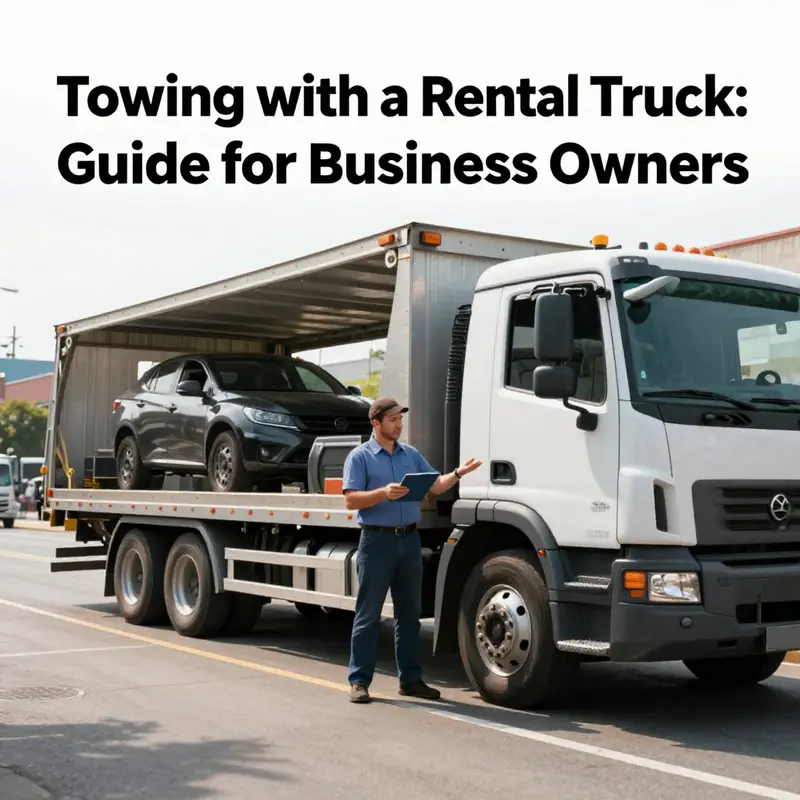
For many business owners, the need to tow equipment or trailers can arise unexpectedly. Understanding the nuances of towing with a rental truck is essential to avoid potential legal and insurance complications. This guide will walk you through the critical aspects of towing, including the rental policies you must be aware of, the necessary equipment to ensure safe towing, and the insurance and licensing implications associated with your rental agreement. By the end, you’ll have a comprehensive understanding of how to tow using a rental truck efficiently and safely, empowering you to make informed decisions for your business.
Tow It Right: A Practical Guide to Towing with a Rental Truck
Towing with a rental truck can be a smart, economical solution when you are moving a small trailer, a boat trailer, or other lightweight towed loads. Yet the act of hitching a trailer to a rental vehicle is not a universal permission slip granted by the mere fact that the truck is available. It comes with a set of policies, ratings, and safety requirements that vary by company, by vehicle, and by the size of the load you intend to pull. The practical challenge is not simply finding a truck with a place to attach a trailer, but ensuring that the entire pairing remains within legal limits, supported by adequate insurance, and executed with proper equipment and careful preparation. The core question can be answered in one line: yes, you can tow with many rental trucks, but you must approach the task with concrete information, deliberate planning, and a respect for the rules that govern the road, the rental agreement, and the vehicle you choose. A closer look at the process reveals how to navigate the path from concept to a safe, compliant tow that serves your moving or hauling needs without turning into a costly complication.
First is the rental agreement itself, the document that defines what is permissible and what is not for the particular truck you plan to rent. Towing policies are not universal across all brands or locations. Some rental companies explicitly permit towing, some allow it under certain conditions, and a few restrict towing altogether for specific models or classes of trucks. The agreement will typically spell out what types of trailers are eligible, whether small utility trailers, car trailers, or boat trailers, and it may specify weight or length restrictions. It may also outline whether you can tow a trailer with a rented truck on a one-way move or only for a local rental period. Reading this document with care is not a formality; it is your first line of defense against ambiguity that could later invalidate insurance or create liability gaps if something goes wrong. If there is any doubt, the safest move is to call the rental location directly and ask for the tow rated model, clarifying the exact limits for your intended trailer and load. This step not only prevents a pickup day surprise but also confirms that the vehicle you plan to drive is appropriate for the job.
Beyond the agreement, the vehicle’s own towing capacity matters. Every rental truck has a maximum towing capacity defined by the manufacturer. This rating is not a marketing figure; it is the engineered limit for how much weight the hitch, frame, and drivetrain can safely pull. The maximum towing capacity is determined by a combination of factors including engine power, transmission, cooling, braking systems, and, critically, the hitch configuration installed on the truck. To determine this rating, you should consult the truck’s owner’s manual or the label located inside the driver’s door jamb. The label will often list both the maximum towing capacity and the Gross Vehicle Weight Rating of the truck. The sum of the trailer’s weight plus the weight of its cargo must stay at or below that prescribed limit. A heavy load resting near or beyond the limit is not just a legal risk; it is a safety risk that affects handling, stopping distance, and the reliability of the brakes and suspension. It is worth repeating in plain terms: do not exceed the truck’s tow rating, and do not assume that a similar truck in the fleet is equally capable. Each unit is a separate machine with its own limits.
Equipment and hitching are the mechanical bridge between the truck and the trailer. In practice, the hitch is more than a simple pin and ball. You may need a compatible hitch adapter or ball mount that matches the trailer’s coupler and the truck’s hitch receiver. The electrical connection is another critical piece. Trailer lights, brake lights, turn signals, and sometimes electric brakes must communicate with the truck’s electrical system. Inadequate wiring or a loose connection can render the trailer invisible to other drivers and law enforcement, creating hazardous situations and potentially violating traffic laws. The rental company may provide the required hitch and electrical harnesses, or they may offer them as add-ons. Either way, you must confirm that the truck you plan to rent has the appropriate hitch class and that you have access to the right safety chains, wiring, and any adapters that may be needed for the trailer you intend to pull. If you are unsure whether the location has the appropriate equipment, ask in advance and arrange to pick up the missing components so you are not forced to improvise on the day of the move.
Insurance is another essential layer. Towing can introduce new liabilities that standard rental coverage may not fully address. Some rental agreements require you to purchase an insurance add-on for towing or for the trailer itself. The risk is not only physical damage to your load but also liability in the event of an accident involving the trailer. Reading the insurance provisions carefully helps prevent a moment of truth later when a claim is filed. You want to verify what is covered and what is excluded, including whether damage to the towed trailer would be the responsibility of the renter or whether a separate policy would be necessary. If there is any ambiguity, request written confirmation from the rental desk and, if possible, obtain a copy of the coverage terms before you commit. The extra cost may be modest relative to the risk of riding with gaps in protection, especially if your load is valuable or your route includes unfamiliar terrain or long stretches of highway.
The driver’s license and licensing requirements for towing can vary by jurisdiction and by the total weight of the truck-trailer combination. The initial guidance to consider is whether the combined weight pushes you into a category that requires a special endorsement or even a commercial license. In some cases, the combined weight of the truck and trailer may cross a threshold that triggers additional licensing requirements or specialized training. This is not universal, but it is a real enough possibility that you should check policy statements or consult local motor vehicle authorities if you expect to travel across state lines or operate in regions with stricter rules. If you anticipate towing weights that approach 10,000 pounds or more, confirm whether the rental company requires an endorsement on your driver’s license for the specific trip and, if so, what documentation you need to present at pickup. The moment you assume a license classification without verification, you risk legal penalties and, more importantly, risk if something goes wrong on the road.
With these structural elements in view—the rental agreement, the vehicle’s tow rating, the hitch and electrical system, insurance, and licensing—your next step is to plan the actual load with a sense of precision that keeps safety at the center. Start by calculating the trailer’s weight and the weight of its cargo. Trailers come in a range of weights that can quickly add up, especially if you are transporting tools, furniture, or appliances. A small utility trailer, for example, can weigh a couple of hundreds of pounds, but the cargo can easily add thousands more. If you are pulling a larger trailer, the load may push you toward the upper end of the truck’s tow rating. A practical method is to list the empty trailer weight, the expected load, and the distribution of weight across the trailer’s axle, then compare the total to the truck’s stated capacity. Do not forget to factor in the weight of any gear you might carry inside the cab or in the bed of the truck if it is tied to the trailer through a hitch. The goal is to create a margin between the sum of the trailer and cargo and the vehicle’s maximum towing capacity. That margin helps keep the system responsive to acceleration, braking, and hill climbs that might demand more torque or more cooling capacity.
If your load involves a heavy trailer, you may encounter another layer of complexity: trailer braking. Some trailers have their own braking systems, which can be activated by the towing vehicle, while lighter trailers may rely entirely on the towing vehicle’s brakes. The presence of electric or hydraulic trailer brakes can affect how you plan your stopping distance and how you adjust your driving. The trailer’s braking configuration is often an indicator of the load’s weight and the investment you should make in appropriate safety features. Discuss with the rental location whether the trailer you plan to tow has its own brakes, and confirm whether you need to engage additional braking safety measures in the truck’s system. In many situations you will rely on the truck’s own braking system, but heavier trailers make a reliable braking setup critical for safe operation and for maintaining vehicle control in emergencies.
Beyond the technicalities, the practical realities of towing with a rental truck come down to a few concrete steps that help you avoid the common missteps. First, plan ahead by selecting a tow rated model. Do not assume that simply booking a large truck guarantees towing capability. Call ahead, verify the specific truck’s tow rating, and request a model that has the appropriate hitch and electrical connections. This proactive step can spare you the disappointment of discovering on pickup day that the vehicle you need does not meet your requirements. Some rental fleets have a dedicated process for tow rated models, and a representative can guide you to the right option and ensure that the truck you reserve is equipped for your trailer. When you are certain about the tow package, reserve the necessary hitch and electrical components as add ons if they are not included by default. The goal is to avoid showing up with a trailer that cannot be wired, lit, or stabilized properly.
Another prudent practice is to confirm insurance coverage and the practical implications for your trip. If your contract requires an insurance add on for towing, arrange it before you reach the counter. Clarify the coverage scope, the deductible, and whether the coverage extends to the trailer itself and the load. If you will be traveling across state lines or into areas with strict towing regulations, consider requesting a confirmation in writing that the coverage applies to your specific tow scenario. The extra time spent clarifying insurance ahead of the move can prevent a situation where you are on the road with ambiguous protection in case something happens.
A nuanced but important point concerns licensing and whether your driving privilege needs to be extended by endorsement for heavy tows. In some jurisdictions a combined weight threshold triggers a special endorsement on the driver license. If your planned tow is close to or above that threshold, consult the relevant licensing authority and the rental company to determine what documentation or tests are required to legally operate the vehicle with a trailer. If you are traveling across state lines, it is particularly important to check the regulations of the destination state, because rules about towing and driver licensing can differ from one state to another. Even if your own state does not require a special endorsement for a given weight class, the destination may, and the rental company may adopt its own safety policy that aligns with local laws and requirements. When in doubt, defer to official guidance rather than relying on informal assurances. The rental desk can help you navigate these requirements, and a clear understanding before you depart helps you avoid a compliance squeeze during the trip.
The actual hands on process of attaching the trailer should be performed with care. Before hitching, inspect the hitch and the trailer coupling for wear, corrosion, or damage. Verify that the coupler latch locks properly and that the safety chains are crossed and connected to the vehicle frame in a way that will prevent the trailer from detaching if the hitch fails. Confirm that all lights, including brake lights and turn signals on the trailer, function in conjunction with the truck’s electrical system. Secure the load using straps or chains that meet the weight and tie down requirements for your trailer and cargo. Check the tires on both the truck and the trailer for proper inflation and tread depth, because improper tire pressure can compound handling hazards on the road. Perform a quick walk around to confirm the trailer is aligned with the hitch, the safety chains are properly connected, and there is no interference with the truck’s wheels or suspension when turning. You do not want a close call with a trailer that shimmies, sags, or rubs against a fender or a wheel well. These checks are a small time investment that pays back in safer handling and reduced risk of damage to the cargo, the trailer, or the rental truck.
Once on the road, adjust your driving to reflect the new dynamic of towing. Your stopping distances will increase, as will your turning radius and the overall maneuverability of the vehicle. The added mass behind you changes weight distribution and increases the momentum you must manage when going around curves or descending grades. Maintain a steady speed that matches posted limits and road conditions, and anticipate longer planning horizons for lane changes and merges. Use lower gears when descending grades to keep the brakes from overheating, especially if you do not have trailer brakes integrated into the trailer. Allow extra following distance to account for the longer stopping distance, and be mindful of winds that can induce trailer sway on exposed stretches of highway. If you encounter wind gusts or a sudden gust cross wind, slow down and smooth out steering inputs to prevent the trailer from swaying. If you notice any sudden change in steering or braking feel, pull over in a safe location and recheck the hitch and connections. It is better to take a few extra minutes to verify the setup than to risk a dangerous situation on a busy highway. With the right setup and careful driving, towing with a rental truck can be a practical and reliable solution for a variety of moving and hauling tasks.
Finally, remember that policy details can evolve. The best course of action for accurate, up to date guidance is to consult the official website or contact the customer service team of your chosen rental provider. These sources can provide the most current weight limits, allowed trailer types, required equipment, and any new safety mandates that may affect your plan. If you want a practical touchstone, consider reviewing policy summaries and FAQs that many rental brands maintain online. These resources help you calibrate expectations before you arrive at the counter and help you prepare a checklist tailored to your exact trailer and destination. In particular, knowing where to find towing information on a provider’s site can spare your trip from misalignment between your plan and the actual policy surface you must operate under. As you gather information, keep your load in mind and think through the trip from start to finish. The planning you invest now will pay you back in smoother pickups, safer driving, and fewer regrets when you arrive at your destination with your cargo intact.
For the most precise and up to date guidance, consult the official towing information page of your rental provider or contact their customer service directly. A reliable resource for current rental policies and vehicle specifications is the enterprise level reference that many readers find accessible for a broad overview of towing considerations, though you should replace any generic references with the specific provider you plan to use. If you want an additional practical perspective tied to one of the industry’s widely used models, you can explore related topics such as how to select a tow rated model or how to arrange trailer hitch installation services. When you are ready to begin, keep a simple mantra in mind: confirm the tow rating, verify the hitch and wiring, secure the load, and drive with caution. If you follow these steps, towing with a rental truck can be integrated into a move or a haul as a responsible, efficient option rather than a risky experiment.
In the end, the question is not simply whether a rental truck can tow. It is whether you can align the particular truck, the trailer, and the load with the rules and the risk management framework that govern the process. By educating yourself about the specific permit requirements, checking the tow rating for the exact model you intend to rent, and taking the time to secure the right equipment and insurance coverage, you can turn a potential stumbling block into a streamlined and safe operation. If you want a concise next step, contact the local rental location and request a tow rated model for your date of pickup. This ensures you are not surprised by a mismatch between the vehicle you reserve and the one you actually drive onto the lot. And if you are considering a one way trip that involves towing, explore the option with a provider who offers trailer rentals as part of their one way service, such as the Penske levers described in their one way resources, for a practical sense of how these arrangements are typically structured. For further context on this topic, you can also review industry guidelines and policy clarifications from authoritative sources. See also the practical guidance accessible via Penske trailer rentals on one way trips for additional considerations on one way moves and the related towing requirements. Penske trailer rentals on one-way trips.
External resource for policy clarity: https://www.enterprise.com/en/about-us/faq.html#towing
Tow or Travel on a Move: A Practical Guide to Towing with a Rental Truck
When you’re moving or transporting gear with a rental truck, the question of towing often comes up with practical urgency. It’s not enough to assume that any large truck will automatically pull a trailer or that you can simply attach a hitch and go. Towing with a rental vehicle is possible, but it hinges on a careful blend of policy awareness, capacity realities, and the right equipment. The chapter you’re about to read stitches together the logic behind that blend, presenting a cohesive view of when towing is permitted, how to assess the truck’s limits, and what steps you should take to move something safely and legally. It’s a conversation that begins with a single, fundamental question: is the truck you’ve rented actually equipped to tow what you intend to pull, and are you cleared to do so under the rental agreement and the law?
To start, the core concept is towing capacity. This is the maximum weight your truck can safely pull, and it isn’t an abstract number but the product of several interlocking systems. The engine’s strength, the transmission’s design, the axle ratio, and whether the truck comes with a towing package all contribute to the final figure. The towing capacity represents what the manufacturer has determined to be the safe limit for sustained use under typical conditions. In the rental market, these numbers are printed in the vehicle specifications, stated in the rental agreement, or posted on a label inside the driver’s door jamb. Your responsibility as a renter is to read these indicators and stay within them. Going over the limit is not just a bad idea; it’s a hazard that can impair braking, handling, and control, especially in adverse weather or on hills.
A practical rule of thumb is simple: if the trailer and its cargo push the total weight toward the truck’s maximum or beyond, you’re stepping outside the safe envelope. The tricky part is that capacity is not a single number that applies to every trailer. It’s a ceiling that depends on the combined weight—the trailer’s own weight plus the load you’re carrying. You must ensure this combined weight stays within the truck’s towing capacity. In addition, the combined weight in some jurisdictions also interacts with the vehicle’s gross vehicle weight rating (GVWR). In plain terms, the truck must be legally able to accommodate the extra weight without violating any still-legal envelope about road safety and vehicle classification. This is why you’ll notice in many rental catalogs a note about maximum trailer weight and tongue weight, and why it’s essential to verify the exact capacity for the exact truck you’ve rented.
Within the rental ecosystem, you’ll find that some trucks are naturally more capable than others. A typical rental pickup may offer a towing capacity in the neighborhood of several thousand pounds, with a common maximum around six thousand pounds, depending on the model and configuration. This is not a universal standard, though. A different truck in the same rental fleet could have a lower or higher rating. The key is not to rely on a memory of a friend’s move or a rumor; you must check your specific truck’s rating in the vehicle’s specifications or the rental agreement. It’s equally important to confirm that your driver’s license and any local or state licensing requirements align with the intended towing work. In many places, once the combined weight of the truck, trailer, and cargo crosses a threshold—often around ten thousand pounds—a special endorsement or license category can come into play. Failing to meet these requirements can lead to legal complications or insurance gaps if something goes wrong on the road.
Beyond the weight rating, the physical compatibility of equipment matters just as much. The hitch and the trailer are a match, and that match is governed by two practical dimensions: the hitch receiver size and the electrical connection. There are two common hitch receiver sizes you’re likely to encounter in rental fleets: the 2-inch and the 2.5-inch varieties. The trailer you intend to pull must be compatible with the truck’s hitch receiver, not only in weight capacity but in the physical connection. If the trailer’s coupler is set up for a different size, you’ll need an adapter, and that adapter adds another layer of complexity to the safety equation. The electrical connector is the other essential piece. The lights on the trailer—the brake lights, turn signals, and taillights—must function properly to communicate with the truck’s lighting system. A functioning electrical connection is not a luxury; it’s a requirement for safe operation and legal compliance when you’re sharing the road with other drivers. Without proper lighting, you risk miscommunication with other road users and potential liability in the event of an incident.
Some rental companies recognize these complexities and offer gadgets or accessories to help renters manage the towing task. A hitch adapter or other mounting hardware may be available for an additional fee, and the rental agency can advise on safety chains and wiring harness options. The prudent path is to check beforehand what equipment you’ll need and how much it will cost to rent or purchase it through the rental company. You don’t want to arrive at the depot thinking you have everything you need, only to find out you must improvise with a less-than-ideal setup at the last minute. The quiet benefit of planning ahead is that you’ll have time to confirm whether the trailer being used complies with the truck’s hitch size and electrical system, and you’ll know whether the box or bed of the vehicle has room for the extra hardware or if you’ll be making a second trip to the hardware store.
Insurance is another critical thread in the towing tapestry. Rental insurance can be a linchpin, but coverage is not universal. Standard rental coverage often focuses on the truck itself and may exclude damage to a trailer, its contents, or any liability arising from towing. If you intend to tow, you should confirm that your policy extends to the trailer and the load, or purchase a supplemental policy that explicitly covers trailer-related incidents. The risk isn’t theoretical: a single mishap can lead to damage to the tow vehicle, the trailer, or the cargo, plus potential liability exposure if another road user is involved. The importance of clearly defined insurance boundaries cannot be overstated. A thorough conversation with the rental agent about what is and isn’t covered helps you avoid a financial surprise when a plan goes awry on the highway.
And then there’s the practical matter of the operator’s license and the driver’s responsibilities behind the wheel. You must possess a valid driver’s license to operate the rental truck and tow a trailer. The licensing rules may shift depending on the total weight you’re pulling. As the combined weight approaches or exceeds certain thresholds, you may be required to demonstrate additional competency or obtain a specific endorsement. The exact standards vary by jurisdiction, so it’s wise to verify with local authorities or legal counsel if you’re unsure. This step isn’t just about legality; it’s about ensuring you have the necessary training to handle a heavier, more complex vehicle configuration on the road. If you’re unsure, it’s often safer to adjust the plan—for example, by reducing the trailer’s load, choosing a smaller vehicle, or arranging a professional towing option—so you stay within the comfort zone of your own driving experience.
The decision to tow with a rental truck, then, rests on a careful triad: capacity, compatibility, and coverage. Capacity is about the weight the truck can safely pull. Compatibility is about whether the hitch and electrical systems align with the trailer. Coverage is about whether the insurance envelope protects both the truck and the towed load. When all three align, the act of towing with a rental truck becomes a controlled, predictable operation rather than a risky expedition. The process is not instantaneous; it requires checklists, questions asked at the counter, and a willingness to pause the plan when any piece of the chain shows a weakness.
To bring the ideas together in a practical frame, you should begin with a deliberate review of your rental agreement. Terms and conditions are not an optional layer to skim; they define what is permitted and what is prohibited for that particular vehicle. Some agreements explicitly state that towing is allowed with certain trailers and under specified weight limits, while others reserve towing for only certain models or disallow it altogether. Because every fleet is managed a little differently, the only reliable source is the contract you signed and the confirmation you receive when you check out the vehicle. This is the moment to separate the general assumption from the specific reality of the truck you have in hand. If you discover any ambiguities or contradictory statements in the agreement, pick up the phone and call the rental office for clarity. A five-minute conversation can save a longer, more expensive misunderstanding later on.
Additionally, you should verify the maximum towing capacity of the exact model you rented, using the vehicle’s owner’s manual or the manufacturer’s labeling that’s typically located near the driver’s door jamb. The combined weight of the trailer and its contents must stay within that rating. If you’re uncertain about the trailer’s weight, there are practical steps to take, such as weighing the trailer separately or using a public scale, ensuring that your tally remains accurate. Don’t overlook weight distribution and tongue weight—the portion of the trailer’s load that sits on the hitch. A heavy tongue load can reduce steering control and affect braking. If you’re towing with a rental truck for the first time, it’s wise to start with light loads and gradually increase any heavier payloads only after you feel confident about handling and balance.
Crucially, you should also consider the logistics of setup. If you’re going to rely on a hitch system, you may need a ball mount, safety chains, and a properly functioning electrical connection. A missed connection is not merely inconvenient; it’s dangerous. If a unit fails to power the trailer lights, you’ll be invisible to other drivers in low-light conditions. If the safety chains are not correctly crossed and secured, the trailer could detach, creating a runaway scenario that endangers everyone around you. The equipment questions are not cosmetic; they are part of the safety framework that makes towing with a rental truck a viable and responsible option.
In terms of practical execution, there are a few everyday strategies that can help you make a safer, smoother tow. Plan your route with larger-than-usual stopping distances, keeping in mind that the combined vehicle will require more brake effort and longer time to come to a complete stop. When turning, make wider arcs to avoid catching the trailer on curbs, and be mindful of tail swing when taking corners. Keep a reasonable pace, avoiding aggressive acceleration or high-speed maneuvers that can destabilize the trailer. Regularly check the hitch and lights during the trip, especially on longer moves. If you’re traveling through unfamiliar terrain or into changing weather, consider a staged approach to the journey—drive shorter legs with planned stops to inspect the rig and ensure everything remains secure.
The recommended approach, then, is to proceed with a plan that treats towing as a well-considered extension of your rental, not a bolt-on afterthought. Start by checking the rental agreement for towing allowances and weight restrictions. Confirm that the truck’s towing capacity accommodates the trailer and cargo combination. Verify hitch size compatibility and the integrity of the electrical system. Ensure your insurance coverage explicitly includes the trailer and its contents. Confirm your license and any endorsements required by your jurisdiction. And finally, confirm the physical fit of all equipment, including safety chains and load distribution, before you take the road. By anchoring your actions in these checks, you minimize surprises and maximize the likelihood of a smooth, compliant towing experience that aligns with the broader purpose of your move.
If you’re seeking a practical point of reference for a hands-on look at hitch setup, you can consult a guide that covers trailer hitch installation in usable detail. It’s worthwhile to review that material to understand the mechanics behind how a hitch and trailer connect and how to secure them properly before you even depart the rental lot. Taking a moment to familiarize yourself with the basics of the connection can save time and reduce risk when you’re in a workday crunch and need to move quickly but safely. The general principles apply whether you’re towing a light utility trailer, a small boat trailer, or a larger, fuller load. The goal is simple: to keep people safe, protect property, and follow the rules that govern road travel.
In the end, towing with a rental truck is a viable option when approached with disciplined preparation. It’s not a matter of luck or guesswork; it’s a project that rewards careful planning, precise measurement, and a respect for the limits built into the truck and the trailer. The decision to tow is a practical one, not a reckless leap. You’ll know you’ve done it right when the trailer tracks true behind you, braking feels predictable, and you meet the road with confidence rather than hesitation. And if at any point the math or the policy doesn’t line up with the move you’re planning, the responsible choice is to adjust your plan—perhaps by borrowing a smaller trailer, choosing a different vehicle, or hiring a specialized towing service for the heavier segments of your load.
Internal link for further reading: trailer hitch installation guide.
External resource: Pickup truck rental information
Tow It Right: Navigating Insurance, Licensing, and Safe Towing with Rental Trucks
Towing with a rental truck enters a space where practicality meets policy, and where a few careful choices can prevent a simple moving task from turning into a financial or safety nightmare. The question itself—can I tow with a rental truck?—is not a simple yes or no. It hinges on the specific vehicle you rent, the equipment you plan to tow, and the precise terms laid out by the rental company. The best approach is careful planning, written authorization, and a respect for physics as well as policy. In practice, the steps are straightforward but require diligence. Start with the rental agreement. Read the terms and conditions with a careful eye for sections that expressly address towing, trailer types, weight limits, and any restrictions on towing equipment. Some agreements permit light towing with small utility trailers or certain types of cargo trailers, while others may restrict towing entirely. When in doubt, contact the rental company directly to obtain explicit confirmation in writing. A clip of a policy in your favor is worth more than a mental note you fear to misinterpret later. Without written authorization, you may find that insurance coverage becomes invalid in the event of an accident or loss involving the towed load, and liability could fall squarely on you. This is not merely a bureaucratic concern; it is a practical safeguard against the kind of claim that could overshadow the move for years. The emphasis on written consent reflects a broader truth in the towing landscape: insurance policies are built on assumptions about risk, and towing often increases that risk in multiple dimensions. The towed load becomes an extension of the vehicle, and if that extension is outside the vehicle’s intended design envelope, the policy can collapse. The moment you receive authorization in writing, you gain a clearer map of the terrain you will traverse and the boundaries you must respect. The second pillar is the vehicle’s capacity. Every rental truck comes with a hitch, but not every hitch is equal. You must verify that the truck has a hitch and that the combined weight of the trailer and its contents does not exceed the truck’s maximum towing capacity. This capacity is not a vague figure; it is a precise ceiling that appears in the owner’s manual, and sometimes on a plate inside the driver’s door jamb. Exceeding that limit changes the physics of the drive in ways that are subtle until they become dramatic: longer stopping distances, more aggressive wheel slip, and the risk of trailer sway that can push the vehicle into dangerous angles during turns or gusts of wind. The term “towing capacity” encompasses not just the trailer’s weight, but the weight of any cargo, fuel, and equipment in the trailer, plus the tongue weight and other dynamic factors that emerge once the road begins to rise, bend, and curve. Because the trailer is a load that moves in sympathy with the truck, the weight distribution matters more than the number on the scale. If the trailer is too heavy relative to the truck’s capabilities, the truck can suffer from reduced braking efficiency and compromised steering control. This is why the owner’s manual or manufacturer’s data plate should be your first reference when calculating safe limits. When you plan to tow, you also need to consider the equipment that makes towing possible in the first place. A hitch is not a decorative accessory; it is the primary connection between the truck and the trailer. You may need a ball mount, a certain ball size, and the correct receiver insert. Depending on the rental company and your destination, you may have the option to rent or purchase these components on site. The safety chains, which act as a backup if the hitch pops loose, and the electrical connectors that power the trailer lights and brakes (if the trailer is equipped with them) are essential. A correct and secure hookup is a prerequisite for any meaningful insurance coverage and for your own safe operation. Some rental options include hitch installation and safety equipment as add-ons, but you should confirm these options in advance. The third pillar is the inspection and securement of the load. Trailers are not inert; they swing, sway, and shift as the vehicle maneuvers. Before departure, you must ensure that the trailer or towed item is properly secured and that the hitch is correctly installed. The load should be balanced to avoid uneven tongue weight and should be secured with appropriate tie-downs and straps. A loose strap or a jutting corner can loosen under acceleration or braking and create hazards for you and for other road users. The details matter as you navigate the road, because the dynamics of a moving load are different from those of the same items when stationary in a parking lot. An additional, often overlooked consideration is the importance of a proper inspection and test drive. A short post-hook checkout—checking lights, signals, and brakes on the trailer—can reveal issues that might not appear in a static inspection. If the lights don’t function properly, if there is a wobble in the hitch, or if steering feels uncertain when reversing, you owe it to yourself to pause and address the issues before you leave the lot. This is not stubborn insistence on perfection but a practical respect for risk management in real-world driving. The insurance dimension is a decisive factor. Confirm, in writing, that the rental agreement covers towing. The typical rental insurance may exclude coverage for damages to the towed trailer or for accidents that involve the trailer’s liability. If the policy excludes towing, or the trailer is not specifically listed as a covered extension, you risk a financial loss in even a minor accident. In some cases, the policy may require you to meet certain conditions—such as maintenance of the towing equipment, proof of proper installation, or adherence to a stated weight limit—that, if unmet, void coverage. This is why the written authorization is not a mere formality. It is the bridge between your responsibilities and the policy that protects you. The licensing layer adds another dimension to the planning. In many jurisdictions, the legality of towing a trailer with a rental truck hinges on the total combined weight of the truck and trailer. A threshold around 10,000 pounds combined weight is frequently cited in official guidance as a point at which licensing endorsements or extra qualifications become relevant. Regardless of the exact threshold in your locale, you should verify the relevant licensing requirements well before you rent and tow. Some regions require a special endorsement or a commercial driver’s license upgrade for heavier combinations. The policy is not only about legal compliance; it is also about ensuring you can handle a heavier, more demanding vehicle on the road. Heavier towing shifts your responsibilities as a driver in practical terms: longer stopping distances, altered acceleration, more measured cornering, and the need to anticipate potential sway or instability under crosswinds or when encountering uneven pavement. The intersection of licensing, insurance, and vehicle capability is where many towing decisions fail, not from a lack of will but from a lack of information. A thorough planning phase reduces ambiguity and places you in a position of strength when you speak with the rental company. It is helpful to document the decision with a checklist that includes: the exact truck model and its towing rating, the trailer type and weight, the combined weight estimate, the hitch type and installation status, the presence of safety chains and electric connectors, and the written authorization from the rental agency. This documentation can be invaluable if questions arise during the trip or if a dispute ever emerges after a move. When you are ready to physically prepare, you should be mindful of the road and weather conditions you will encounter. Towing changes how you brake and accelerate, and it increases the importance of following distance. Allow extra time for braking on grades, and practice cautious acceleration in higher gears to avoid overloading the engine. In windy conditions, trailer sway can become a factor even at modest speeds. If you have a long or tall load, consider using a sway control device or other stabilization aids if the rental company offers them. While not every solution is mandatory, the goal remains constant: predictable handling, steady control, and a clear line of sight through your mirrors. If you take care to match the trailer to the truck’s capacity and to secure the load properly, you can approach the experience with a sense of confidence rather than apprehension. The operational reality is that many major rental companies do permit towing and provide clear guidelines on how to do it safely. A prudent move is to consult the company’s towing guidelines directly and review any company-specific requirements. For instance, some operators publish explicit checklists that address hitch compatibility, safety chain layouts, electrical connections testing, and even pre-trip mechanical checks. Reading these guidelines can reveal small, yet crucial, steps that prevent common mistakes from occurring. A practical way to ground your approach is to integrate policy with physics. The physical demands of towing—extra weight, length, and load distribution—translate into a broader set of driving habits. You should plan routes with more turning radii, wider lanes, and increased stopping distances. You should also be prepared to adjust your speed to maintain safe control, particularly when descending long grades where braking efficiency can drop. In this context, the act of towing with a rental truck becomes a study in disciplined preparation rather than a casual extension of ordinary driving. As you finalize your plans, you may wish to consult additional resources that address a variety of towing scenarios and gear configurations. A relevant internal reference to consider is the Penske trailer hitch installation guide, which can provide practical, scenario-specific guidance on hitch compatibility and installation nuances. See Penske trailer hitch installation. This resource, while targeted at a particular rental fleet’s equipment, embodies the spirit of proactive preparation that underpins successful towing operations across brands. It reinforces the principle that a properly installed hitch is the foundation on which all subsequent safety measures rest. The interconnected nature of policy, equipment, and practice becomes evident as you move from the initial question of permission to the daily realities of road use. Insurance coverage depends on adherence to policy terms; licensing depends on regulatory frameworks; and safety relies on correct equipment installation, correct weight management, and constant vigilance. The aim is not to choose between towing and not towing but to choose a path that aligns with policy, physics, and prudent risk management. In the end, towing with a rental truck is a matter of careful verification and responsible operation. If you treat the process as a collaboration among you, the rental company, and the vehicle’s engineering, you will find that towing can be a manageable, even routine, aspect of moving or transporting gear. By securing written consent, confirming vehicle capacity, ensuring proper hitching and load security, and observing the legal and safety nuances of your route, you create a margin of safety that protects you, your cargo, and other road users. For many people, that margin is the decisive factor between a smooth, successful move and a frustrating, error-prone experience. As with any task that sits at the intersection of policy and practice, the most reliable strategy is humility plus preparation. Before you depart, pause to confirm every item on your checklist, re-check the vehicle’s manual or data plate, and verify again that you are within the permitted limits. Then, when you turn the key, you will not simply be starting an engine—you will be stepping into a thoughtfully planned operation designed to respect the capabilities of the truck, the safety of others, and the expectations of your insurance. If you want additional context or a practical model for how to approach a particular rental scenario, you can explore more guidance from a range of rental-truck resources and guidelines. External resources provide a broader lens on the topic, including official recommendations for towing with rental vehicles and the considerations that accompany different trailer configurations. For a detailed, official perspective on towing with rental equipment, refer to the following external resource: https://www.uhaul.com/rentals/towing-guidelines.
Final thoughts
Towing with a rental truck can be a straightforward endeavor when armed with the right knowledge and preparation. By understanding the specific towing policies dictated by rental companies, ensuring your vehicle is adequately equipped for the load, and clarifying your insurance and licensing requirements, you set the stage for a smooth operation. This awareness not only protects your business but also mitigates risks associated with towing. Be proactive and diligent in your preparations to ensure successful towing with a rental truck.