
Towing a trailer with a rental truck is a task many business owners may face, whether they need to haul equipment, materials, or inventory. Understanding the complexities and requirements of towing safely and legally can make all the difference in operational efficiency and compliance with regulations. This guide will cover the key requirements for towing with rental trucks, exploring the necessary legal compliance in the U.S. and Canada. We will delve into reviewing rental agreements, ensuring they align with your towing needs, and examine various trailer types and their respective towing capacities to help you make informed decisions. Equip yourself with the knowledge you need to tow with confidence and securely foster the growth of your business.
Tow with Confidence: Mastering the Rules, Capacity, and Safety of Trailer Towing with a Rental Truck
Towing a trailer with a rental truck can be a practical solution for a move or a project that requires extra space, but it is not a case of simply hitching up and driving away. The ability to tow hinges on a combination of mechanical design, explicit towing ratings, and legal compliance. A rental truck that is not built or certified for towing may appear sturdy enough, but without the right towing capacity, hitch system, and braking arrangements, the risk of vehicle damage, trailer sway, or a serious accident climbs sharply. The core message is straightforward: yes, you can tow a trailer with a rental truck, but only if the truck is specifically designed for towing and the towing setup is fully rated, inspected, and authorized by the rental company and by governing rules. This means checking the documented capacity, confirming the presence of a factory-installed hitch and wiring, and understanding the constraints that come with the job. It also means knowing when your plan is too ambitious for a light-duty rental truck and choosing an alternative or a heavier-duty option instead.
To begin, the vehicle’s suitability is not a guess. It rests on a clear figure often labeled as the rated towing capacity or the maximum trailer weight in the truck’s documentation. The truck must be able to handle the combined weight of the trailer plus its cargo—the Gross Vehicle Weight Rating (GVWR) of the truck, combined with the trailer’s weight, all of which converge into a limit often summarized as the Gross Combined Weight Rating (GCWR). When you see numbers like these, they are telling you the ceiling you must not exceed. These ratings are not mere suggestions; they are safety thresholds baked into the vehicle’s engineering. A modern, light-duty pickup may offer a wide range of towing capability depending on the engine, drivetrain, and configuration, but those numbers are not universal across all trim levels. Some trucks that look capable on the outside may be limited in a way that makes towing impractical or unsafe for certain trailers. The practical upshot is that you should not rely on eyeballing the truck or assuming a friend’s experience with a different model. You need the official numbers from the vehicle’s window sticker, owner’s manual, or the rental agreement.
Legal and practical compliance go hand in hand. In the United States, the Federal Motor Carrier Safety Administration (FMCSA) framework and state laws require that a vehicle be rated for towing and be equipped with a factory-installed hitch receiver, wiring harness, and a proper braking system for the trailer. This is not about beauty in a brochure; it is about demonstrable fit for purpose. After-market changes, if not performed by an authorized dealer, can be illegal and may invalidate insurance or create a hazard in the event of a claim. The consequences of towing with an improperly equipped vehicle range from fines to liability for damages to an unprepared driver who cannot stop or control a heavy trailer. The law recognizes the difference between a consumer move and commercial hauling; even for personal use, the vehicle must meet the necessary safety and regulatory criteria. When you book a rental, this is precisely the point where you confirm the truck’s towing authorization and the maximum permitted trailer weight. It helps to document this in writing in case a future dispute arises.
Rental policies add another layer of complexity. Each company builds its policies around safety, insurance, and liability. Some rental fleets explicitly allow towing, but you must request it in advance and sometimes pay an additional fee or purchase a separate towing package. Other fleets may restrict towing altogether except when you opt into a special configuration. The key is to have the towing capability clearly stated on the rental agreement and to confirm the maximum trailer weight allowed for the specific truck you pick up. If you are uncertain, ask the rental agent directly and request a written confirmation. This conversation should cover the hitch type, wiring harness compatibility, braking requirements, and whether any additional insurance is required for towing. It is also worth noting that trailer types influence the decision. Smaller utility trailers or pop-up campers may be within the safe envelope of many mid-size rental trucks, while larger travel trailers—particularly those over about 3,000 pounds—often exceed what a light- to mid-duty rental truck can safely manage. In some cases, to tow a heavier trailer, you may need a truck specifically designated for towing or a line of rental trucks with a dedicated tow package, which is precisely the kind of option some fleets advertise to meet customer needs. When you encounter rental pages that describe a tow package or towed equipment, treat them as a direct invitation to confirm your exact vehicle and the trailer you intend to haul. A helpful example of how fleets present towing options can be found on a Penske trailer rentals page, which outlines how to arrange a tow-enabled rental; you can explore that topic here: Penske trailer rentals — one way. This link serves as a reference point for understanding how some rental providers frame towing capability, but you should always verify the specifics for your own rental vehicle.
Equipment integrity and pre-trip readiness matter almost as much as the rating itself. The basics begin with the trailer: tires should be inflated to the recommended pressures, brakes and lights must operate correctly, and the hitch mechanism should be in good condition with proper engagement. The connection to the truck requires the correct hitch hardware that matches the trailer’s weight rating and a secure electrical connection to the truck’s wiring harness. For trailers with their own braking systems, the breakdown protection becomes even more critical, as even slight electrical faults can affect braking performance and trailer braking dynamics. The idea is to verify compatibility before you roll out of the lot. If something feels off—such as a loose connection, a rattling hitch, or nonfunctional lights—do not proceed. Park, inspect, and seek assistance rather than risking an on-road failure. When in doubt, perform a careful, methodical check of your setup and do not assume the issue will resolve itself once underway.
A sober approach to towing also considers the practical realities of vehicle dynamics on the road. A trailer imposes a different load path through the drivetrain, suspension, and brakes. It can affect steering input, braking distance, and acceleration response. Even a well-rated rig will feel different when towing, thanks to added inertia and the potential for trailer sway. The driver must adapt. Slow, steady throttle application, gentle braking, and smooth steering are essential. You should plan for longer stopping distances and maintain greater following distances to account for the trailer’s momentum. On downhills, engine braking becomes a valuable tool to reduce brake fade, and you should avoid overloading your truck’s capacity in the first place. The trailer’s sway is a real concern; if you sense any instability, reduce speed, ease off the accelerator, and pull over to recheck the hitch and load balance. In adverse weather or on uneven surfaces, the margin for error narrows, which makes the pre-trip inspection and adherence to towing limits even more critical.
A crucial part of the preparation is understanding the specific terms of the rental agreement beyond the fact that the truck can tow. The agreement may spell out whether towing is permitted at all, what maximum trailer weight is allowed, and whether additional liability or collision coverage is required when towing. In practice, you should have a plan for a safe departure, a clear route, and a contingency if the trailer’s weight or dimensions push you toward the edge of the truck’s capabilities. If you find yourself facing a trailer that is heavy or wide, or if the road or weather is challenging, consider hiring a professional towing service rather than risking an unsafe operation with a rental vehicle. The literature on towing safety emphasizes that when planning a tow, the task is not simply a matter of connecting and driving; it requires careful alignment of vehicle capability, load weight, hitch integrity, and regulatory compliance.
In the moment of taking the road, the hitch and wiring system must be robust enough to handle the draw of the trailer without giving way. Ensure that safety chains—an essential backup in many jurisdictions—are properly crossed and attached in a way that prevents the trailer from disconnecting if the hitch fails. The lighting system must consistently communicate the trailer’s status to other drivers: brake lights, turn signals, and running lights must function reliably, with the trailer’s electrical circuit tested before departure. If you encounter a problem with any of these components, do not assume the issue will disappear once you’ve left the lot. Address it, or reschedule the tow if needed. The road demands patience and discipline, especially when a trailer is in tow. It is better to delay a move slightly than to risk a preventable accident or a failed trip because the hitch or the trailer’s braking system were not ready for the road.
The moment of completion is as instructive as the moment of departure. When you have finished towing, you should disconnect and park on a flat surface, apply the parking brake on both vehicles, and perform a thorough inspection of both the truck and the trailer for wear, damage, or any signs of fatigue. If you detect issues, document them and contact the rental company. The decision to troubleshoot in-situ or to seek professional help is part of responsible towing practice. For complex tasks, heavy loads, or long-distance movements, it remains prudent to consider professional services. The overarching message remains consistent: towing with a rental truck is permissible only when the vehicle is properly rated, correctly equipped, and used with careful attention to safety, legality, and the vehicle’s true capabilities.
Ultimately, the decision to tow should be guided by a clear understanding of the truck’s rating, compliance with local and federal rules, and the realities of trailer handling. If all three align, a rental truck can handle a trailer with the same careful planning you would apply to any other vehicle operation. If they don’t, the safest course is to adjust the plan—whether that means selecting a heavier-duty rental with explicit towing authorization, renting a trailer that matches the truck’s capability, or engaging a professional mover who offers towing as part of a packaged service. Real-world planning hinges on information that is precise, verifiable, and current. Checking the vehicle’s window sticker, owner’s manual, or rental agreement for towing capacity remains the most reliable first step. Asking direct questions about towing authorization, maximum trailer weight, and required equipment should follow. When you pair this diligence with a measured approach to driving and a careful inspection routine, you can approach a tow with the confidence that safety, legality, and vehicle integrity are maintained throughout the journey. For readers seeking authoritative guidelines on towing, official resources such as the National Highway Traffic Safety Administration’s towing guidelines provide a robust framework for understanding the broader standards that govern towing practices. You can review those guidelines here: https://www.nhtsa.gov/equipment/towing.
In sum, towing a trailer with a rental truck is a viable option, but it is a boundary that must be entered with an exact understanding of the vehicle’s certified capabilities, the rental company’s policies, and the applicable safety requirements. When those elements are in place, the task becomes less a leap of faith and more a controlled, well-planned operation that respects the physics of towing and the obligations of road safety. The road is a shared space, and towing responsibly means recognizing the limits of the machine you are driving and the weight you are asking it to pull. If you can align those factors, you can move forward with the confidence that you are doing right by your vehicle, your payload, and everyone else on the road.
Tow It Right: Navigating Legal and Practical Rules for Towing with a Rental Truck in the U.S. and Canada
Towing a trailer with a rental truck is not a universal option, but when the vehicle is specifically designed and certified for towing, it can be a practical solution for moving gear, equipment, or a lightweight trailer. The idea may seem straightforward, yet the reality behind it is layered with safety, legality, and company policy. This chapter weaves together the essential elements you must understand before you hit the road, so you move efficiently without stepping into legal or safety trouble. The core message is simple: towing with a rental truck is possible, but only when the truck carries a valid towing rating, and when every system associated with towing is correctly configured and legally aligned. If you treat those conditions as gatekeepers rather than optional add-ons, you will reduce risk and unleash the true usefulness of a rental truck for your move or task.
First, the bedrock requirement is mechanical and regulatory. The rental vehicle must have a clearly stated towing capacity that reflects what it can pull safely. This information is usually found on the vehicle documentation, such as the window sticker or the owner manual, and it is also reflected in the maximum weight the truck can tow or the gross combined weight rating, GCWR. The GCWR is about how heavy the vehicle and the trailer together can be when moving. It is not merely a number to glance at; it is the line that separates a well-balanced, controllable load from a stressed drivetrain that could overheat, overextend the braking system, or react poorly in emergency maneuvers. When you see a range, understand that it depends on factors such as engine configuration, drivetrain, and whether the vehicle is equipped with towing aids like a factory hitch and wiring harness. The spectrum can begin around a few thousand pounds and rise toward the upper end into the ten thousand pounds range for light to mid range pickups and large SUVs. Those numbers matter because they define the kind of trailer you may safely tow and the kind of load you can bring with you.
Beyond the numbers, you need to verify that the truck has the equipment necessary to tow legally and safely. In the United States, federal and state rules come into play. The federal framework emphasizes that only vehicles rated for towing should pull trailers, and it also targets the reliability of braking systems, lighting, and hitching hardware when the trailer is involved. In practical terms, this means you should expect a factory installed hitch receiver, a compatible wiring harness, and a braking setup appropriate for the trailer weight, especially once the trailer weighs more than a certain threshold. The idea of simply adding a hitch on the spot or wiring after purchase often does not satisfy regulatory requirements and can expose you to penalties or insurance complications. The same logic carries into Canada, where provincial rules govern similar elements such as brake performance, lighting, and weight distribution. The shared principle is clear: legality hinges on equipment that is part of the vehicle when it leaves the factory or is installed by an authorized process. A trailer that lacks proper braking or lighting can run afoul of law and create unsafe driving conditions, not only for you but for other road users.
In addition to the mechanical and regulatory structure, your rental agreement itself acts as a gatekeeper. Rental companies differ in their policies regarding towing. Some allow towing but require advance notification so they can document and verify the truck model, the hitch, and the expected trailer weight. Others may limit towing to specific fleet configurations or require renting a dedicated tow package, which can include specialized hardware or insurance add-ons. Still others may prohibit towing altogether unless you obtain special authorization. The moment you sign a rental agreement, you are entering a contract that may impose restrictions, extra charges, or mandatory safety checks. It is essential to ask direct questions: Is the particular truck model approved for towing? What is the maximum trailer weight allowed? Are brakes or a brake controller required? Do I need to purchase additional insurance or a towing endorsement? These questions help you avoid discovering at the last mile that your plan is not permitted.
A practical approach to avoid missteps begins with precise verification before you select a vehicle. Start by examining the vehicle’s window sticker or the owner’s manual to locate the towing capacity and the GCWR. If the information is not readily visible, ask the rental agent to provide it in writing and to confirm the exact model year and configuration because small changes across years can alter towing capabilities. Next, confirm that the truck has a factory installed hitch receiver and a wiring harness, as after market modifications or ad hoc wiring can be illegal or unsafe in many jurisdictions. The presence of a properly rated braking system for the trailer is another non negotiable in many places. Trailers that exceed a certain weight threshold or that carry heavy loads often require separate braking systems on the trailer itself, and the vehicle must be able to monitor and control the additional inertia that a trailer introduces to stopping dynamics. This is not merely an optional accessory; it is a safety requirement that can influence insurance coverage, roadworthiness, and the ability to stop in a reasonable distance.
Legal landscapes in the United States and Canada share common concerns yet diverge in important ways. In the U.S., while the federal framework provides overarching standards for commercial and non commercial towing, the actual preferences, limits, and enforcement are state driven. Trailer length restrictions vary by state and so do lighting and signaling standards. Some states have stringent rules around the timing and use of trailer lighting, requiring specific configurations for brake lights and turn signals. There are also variations concerning trailer registration and how to document the towed unit when crossing state lines. Across the border in Canada, provinces enforce their own sets of conditions, often mirroring the same concerns but with local standards for trailer brakes, lighting requirements, and weight distribution. Crossing provincial borders can introduce additional considerations, where weight distribution and braking performance are in focus as part of safe, predictable towing, particularly on highways with higher speeds and longer travel legs. These regulatory layers remind us that towing a trailer with a rental truck is not just about the truck alone; it is about the entire towing system, including the trailer, the load, and the route you plan to travel.
In parallel with regulatory realities, rental company policies deserve careful attention. The decision to tow should come with a clear understanding of what the rental company will and will not support. Some branches offer towing authorization on certain truck configurations but insist that you notify them ahead of time to ensure that the specific vehicle, the hitch, and the wiring harness are approved for such use. Other branches may impose fees or require a separate towing package that ensures you have the appropriate equipment and service coverage. Insurance considerations are also common; you may be required to purchase additional coverage or to demonstrate that your coverage extends to towing scenarios. In other cases, towing may be allowed only for local, in state, or within a limited geographic range. If you book online, many rental sites now present towing capabilities as a feature or option. If you see a notice stating that a truck has a towing package available, treat it as a signal to ask more questions rather than a guarantee of authorization. In every case, aim to obtain written confirmation of towing permission and the maximum allowable trailer weight for the specific truck you plan to rent.
The type of trailer matters as well. Small utility trailers and lightweight travel trailers are generally within the towing envelope of many light to mid range rental trucks, assuming the hitch, braking, and weight distribution are appropriate and within limits. However, larger travel trailers that exceed several thousand pounds can quickly surpass what a smaller or mid range rental truck can safely handle. The relationship between truck and trailer weight is not just arithmetic; it is a dynamic equation that includes wheel base, braking capacity, steering response, and the stability of the overall load on the road. If your plan involves a heavier trailer, the safer course is to choose a larger, purpose built towing vehicle from the rental fleet or to adjust your plan to a move that uses a different transportation method.
So how does a traveler or mover move from planning to actual execution without hitting a maintenance and compliance snag? Start with a careful, documented verification process and a candid discussion with the rental agent. Before you commit to a truck, ask for the explicit towing authorization for that model and configuration. Request written confirmation of the maximum allowed trailer weight and ask whether you need a special hitch, electrical adapter, or braking controller. If the trailer you intend to tow has electric brakes, many jurisdictions require the tow vehicle to be equipped with a brake controller, and some rental agreements require you to install one. This is not simply a suggestion; in many places it is a legal expectation tied to safe stopping distances and brake performance. If you proceed, you should also confirm the presence of appropriate lighting on the trailer and the compatibility of that lighting with the vehicle’s harness. You will be the responsible party for ensuring the load is properly secured, evenly distributed, and balanced to minimize sway and improve steering control at highway speeds. Always perform a pre trip check that includes the hitch connection, the safety chains, the wiring lights, the load securement, and the trailer brakes if present.
In practice, the act of towing with a rental truck should feel like a careful, deliberate collaboration among three players: you, the rental company, and the vehicle’s built in safety systems. Your own role is to know and respect the weight limits, the route, and the conditions under which the load will be transported. The rental company’s role is to provide a vehicle that is properly equipped and to offer guidance on the limitations of the truck and its towing configuration. The vehicle’s safety systems are the on road guardians, automatically adjusting for the extra weight, helping with stabilization, and, when connected correctly, coordinating friction, acceleration, and deceleration in harmony with the trailer. In the end, the success of a towing task lies in meticulous preparation and a risk aware mindset. You should be ready to adjust your plan if the trailer type or the route introduces complexities that exceed the truck’s capabilities or the regulatory allowances.
If you want additional, practical guidance on how to approach the mechanical side of towing, consider resources that cover hitch installation and integration in rental fleets. For a resource focused on the installation and operational considerations of trailer hitches, you can refer to this guide on trailer hitch installation. This material can help you understand the components involved and why a factory installed hitch and wiring are often preferred for rental vehicles. trailer hitch installation.
Ultimately the question of can you tow a trailer with a rental truck is answered by alignment of three conditions: a truck with a verified towing rating, compliance with local and provincial rules, and an rental agreement that explicitly authorizes towing for the specific vehicle you plan to use. When all three are met, towing can be a practical and efficient choice for short moves, on site work, or temporary equipment transport. When any one condition is missing, the risk is not just a failed trip, but a potential legal issue, an insurance claim dispute, or a dangerous situation on the road. The obligation to make a safe choice rests on you and on the people who prepared the rental. Treat the process as a collaboration that begins before you drive away and ends only when the trailer has safely and legally completed its journey.
For formal safety considerations and to stay current with evolving guidance, consult official sources such as the national safety administration sites and transportation authorities. A reliable external reference to safety standards and guidelines can be found at the NHTSA site, which provides authoritative information on towing safety, braking requirements, lighting standards, and best practices for trailers and towing vehicles. External resource: https://www.nhtsa.gov
Tow with Caution: Reading the Rental Agreement and Verifying Towing Eligibility Before Hitching a Trailer
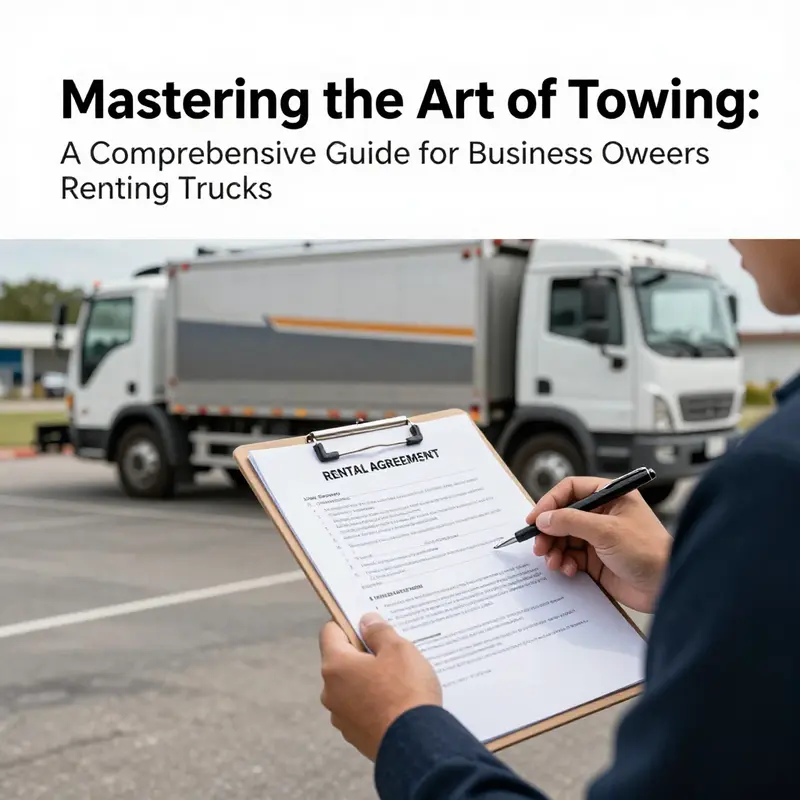
Towing a trailer with a rental truck is a task many people consider when moving or transporting gear. Yet the assumption that any rental truck with a hitch automatically qualifies for towing is a risky misstep. The truth rests in the details tucked into the truck’s specifications and, just as important, in the exact terms of the rental agreement. A clear path from interest to safe, legal towing begins with understanding whether the chosen truck is designed and certified for towing, and whether the rental company permits it under the contract you sign. This chapter moves through the practical, real-world process of confirming towing capability, parsing the fine print, and aligning your plans with safety and legal requirements. It is not a guide to every possible hitch accessory or trailer type, but a measured, grounded approach to making sure the basics are in place before you ever turn the key and head toward the highway with a trailer in tow.
The first hinge of a successful tow is the vehicle’s towing capacity. Chiefs of any towing decision, whether for a light utility trailer or a compact travel trailer, are the numbers that describe what the truck can safely handle. The documentation for a rental truck typically lists a “rated towing capacity” or a “maximum trailer weight,” and many trucks also carry a GCWR—the gross combined weight rating—which reflects the upper combined weight of the truck plus its payload and the trailer and its load. These figures are not mere marketing fluff; they are the safety limits that, if exceeded, increase the risk of axle failure, brake fade, steering trouble, or instability during cornering and braking.
In practical terms, think of it this way: if a rental truck shows a maximum trailer weight of 3,000 pounds, and your trailer weighs 2,600 pounds plus cargo, you are already pressuring the safest operating envelope. If the trailer or the load pushes the combined weight beyond GCWR, the truck’s braking and handling can become compromised. Some light-duty pickups can tow as little as a few thousand pounds, while others operate safely near the upper end of ten thousand pounds or more, depending on engine, drivetrain, and configuration. But those are not universal figures you can assume from a glance at the rental lot. You must verify the exact model’s documented capacity. The window sticker or the owner’s manual often contains this information in a specific “Towing Capacity” or “Max Trailer Weight” line. If you cannot locate it in the truck’s paperwork, you should not proceed with towing. It is essential to obtain confirmation from the rental agent and to check the vehicle’s documentation before attempting to hook up any trailer.
Beyond raw capacity, you must consider the legal and regulatory framework that governs towing. In the United States, towing is not a free-for-all. The Federal Motor Carrier Safety Administration (FMCSA) and state laws require that vehicles be properly rated for towing and that they possess the necessary factory-installed hardware for safe towing. A factory-installed hitch receiver, wiring harness, and an appropriate braking system for the trailer are often prerequisites to legal towing. The requirement that these components be factory-installed, or installed by an authorized dealer, is not just a technical nicety; it represents a safety and compliance standard designed to protect drivers and others on the road. In Canada, similar principles apply, with variations by province, but the core idea remains: you must tow with a vehicle that is certified and equipped to handle the trailer you plan to pull.
Even when a rental truck is rated for towing, it does not automatically grant blanket permission to tow any trailer, any weight, anywhere, under any circumstance. Rental agreements are legal contracts that spell out what is allowed and what isn’t. A common reality across major rental brands is that towing is often restricted or outright prohibited unless you request it in advance and obtain explicit authorization. Some rental companies may allow towing under certain conditions—such as a listed maximum trailer weight, a specific towing package, or a special insurance add-on—while others restrict towing entirely, unless you rent a vehicle that is specifically equipped for this task. Reading the agreement’s towing policy is not a formality; it is the instrument that prevents misunderstandings about liability and coverage. The language can vary widely from one provider to another, even within the same brand, making it all the more important to review the exact wording you will sign before you drive off the lot.
The psychology of rental agreements often tempts people to skim and assume. Yet, the nuances—the language about what is permitted, what requires prior notice, and what costs or coverage changes when towing—is where a trip can either go smoothly or devolve into a dispute after an incident. In the most straightforward terms, you must confirm three interconnected things: towing authorization from the rental company for the truck you are renting, the maximum authorized trailer weight under your agreement, and the presence of any required equipment or insurance add-ons. The last two points—maximum trailer weight and required equipment—bind together with the truck’s own capacity. A truck may be rated for a certain weight but the rental contract may narrow the conditions further. Conversely, a trucking unit with a modest towing capacity may be allowed to tow a small trailer if the agreement aligns with a specific asset or permit. The only reliable way to navigate this is to read the fine print, ask direct questions, and obtain written confirmation before you sign or drive away.
In addition to the contract text, it is wise to verify the physical and technical readiness of the truck and trailer you intend to use. The trailer itself must be compatible with the hitch system, the wiring, and the braking arrangement. A trailer’s brakes, lighting, and weight distribution must be appropriate for the vehicle, and the hitch must be correctly matched to the ball size and capacity. These are not mere conveniences; they are safety-critical elements. If the trailer’s weight plus its cargo would push beyond the vehicle’s GCWR, or if the trailer lacks proper braking when required, you risk compromising braking performance and vehicle stability. Even a well-rated truck can struggle if the trailer’s weight distribution is off or if the hitch and wiring are not correctly configured. In practice, this means you should not rely on the truck’s labeling alone; you should also ensure the trailer’s weight, tongue weight, and cargo distribution are accounted for and properly tied to the vehicle’s limits.
As part of the preparation, inspect the actual hardware that will be used for towing. Confirm the presence of a functional hitch receiver and compatible wiring harness. For trailers with electric brakes, verifies the trailer’s braking system and synchronization with the tow vehicle. In some cases, a brake controller installed in the truck is required to manage the trailer’s brakes effectively. The rental agreement may spell out whether you must have a factory-installed system, or if certain aftermarket components are allowed. Some agreements require customers to obtain additional insurance if towing is permitted. Others may require you to rent a vehicle with a built-in towing package or to add a specific accessory kit to your rental. The fewer surprises you encounter, the more predictable your trip will be. And that predictability is a direct function of clarity in the agreement and the truck’s documented capabilities.
A practical way to guard against misinterpretation is to talk to the rental agent directly. Ask pointed questions: Is this exact truck approved for towing? What is the max trailer weight? Is a trailer braking system required, and if so, is it included or do I need to add it? Does towing affect the daily rate or mileage caps? Are there additional insurance options or waivers I should purchase if I tow? These questions are not just about compliance; they are about risk management. When you receive answers, request them in writing or via an emailed confirmation. A short line in the contract may be easy to overlook, but a written acknowledgment that towing is permitted, with the stated weight limit and required equipment, becomes a crucial document if ever a dispute arises.
In addition to contract-specific concerns, consider the practical realities of your move. Trailer weight is not the only factor; the payload capacity of the truck, its tire load rating, and the availability of a spare tire and roadside assistance for towing scenarios all influence whether a particular tow is wise and safe. A rental truck that is slightly underpowered for a given trailer can still be used if the load is carefully managed, but that often means leaving extra time for braking and acceleration, planning longer stopping distances, and ensuring your route avoids steep grades when possible. On the other hand, a heavier trailer may require a truck with more torque, better cooling, and a terrain-aware approach to driving—factors that can dramatically alter fuel economy and handling.
The legal and safety framework does not end with capacity and contract language. The towing environment imposes additional responsibilities on the driver. You must ensure that the trailer lights, turn signals, and brake lights are properly wired and synchronized with the tow vehicle’s lighting system. If your trailer is over a certain weight, you may be required to use trailer brakes and a brake controller. You must also check your state or provincial laws regarding speed limits, braking distances, and the use of safety chains. The mental checklist becomes long, but each item is a safeguard against an accident or a liability dispute. If you plan to tow a travel trailer or a heavier utility trailer, you should also assess your own experience and comfort level with towing. A higher-stakes task requires more deliberate planning and a willingness to adapt plans if conditions on the road demand it.
As you weave together the technical, contractual, and practical layers, you will find that the central question—can I tow a trailer with a rental truck?—is not a simple yes or no. It is a careful calculation grounded in capacity, compliance, and clarity. The key is not just having a truck with a hitch, but having a truck that the rental contract explicitly authorizes for towing, with a trailer weight within the allowed range and with the necessary equipment and insurance in place. If any of these pieces is missing or unclear, the responsible course is to pause and clarify before you move an inch toward the road. This approach protects you, other drivers, and the people on the receiving end of your move.
To connect this guidance to practical decisions you can make today, consider how you choose the truck and plan your load. If you are uncertain about the trailer’s weight, consult the builder’s specifications for the trailer and estimate the load weight in your cargo. Subtract the weight of people and gear from the truck’s payload rating to determine whether you have sufficient margin for the trailer and cargo. Then cross-check with the truck’s GCWR to ensure your combined weight remains within safe limits. If you suspect anything might push the limits—such as a heavy appliance, a filled tool trailer, or cargo that shifts during transit—rethink your plan. It may be wiser to opt for a larger rental truck or to modify your plans to avoid towing altogether.
It is worth noting a practical caution that often travels with the cautionary tone of legal terms: driving with an improperly rated or illegally modified truck can lead to fines, denial of insurance coverage, or serious accidents. The consequences can be costly and dangerous. This is why the process of verifying towing authorization and capacity is not an optional step but a critical part of any moving or transport plan. The effort invested in confirming the right truck and understanding the contract pays off in a safer trip and greater peace of mind. If you want to explore related practicalities, you can reference our guide on selecting an appropriate truck size for a given load, such as information about a typical 16-foot moving truck, which gives context on how capacity scales with vehicle size. You can read about that topic here: 16-foot moving truck.
In summarizing the path from interest to action, the sequence is simple but essential. First, locate the truck’s towing capacity in its official documentation. Second, verify that the rental agreement permits towing and note any weight restrictions or required equipment or insurance. Third, confirm that the truck you intend to use has a factory-installed hitch, wiring, and braking provisions, and ensure your trailer matches those requirements. Fourth, verify the trailer’s weight, weight distribution, and braking needs, and calculate whether your total load stays within the GCWR. Fifth, confirm all details with the rental company in writing, so your plan is backed by documented authorization. Sixth, conduct a careful pre-trip inspection of the hitch, wiring, and trailer lights, and perform a post-connection safety check before departure. Finally, drive with an awareness of trailer dynamics—the additional stopping distance, wider turning radius, and increased stopping pressure needed for safe operation.
The careful, methodical approach described here reflects the realities of towing with a rental truck. It is a matter of safe driving, legal compliance, and prudent risk management. You should not feel compelled to rush into a tow simply because a truck has a hitch. The right tow is the one that aligns with documented capacity, contractual authorization, and properly installed equipment. As you navigate the process, you will discover that many of the obstacles are not physical but documentary—licenses, confirmations, and a clear line of communication with the rental provider. When you have all the pieces in place, your trailer can ride safely behind a vehicle you know is prepared for that responsibility. When any doubt remains, the safest choice is to pause, seek explicit permission, and proceed only when every requirement is satisfied. The road is an orderly system of weights, laws, and warnings, and towing within that system is not about bravado; it is about discipline.
External resource for broader context: for a formal overview of towing policies and how they are framed in rental contracts, you may consult the rental agreement terms page from a major provider, which outlines the towing restrictions and related implications. This resource provides a comprehensive reference point for understanding how policies can vary and why it matters to obtain explicit written authorization before towing. https://www.hertz.com/rentacar/rental-agreement
Tow the Line: A Cohesive Guide to Trailer Types, Capacity, and Compliance When Using a Rental Truck
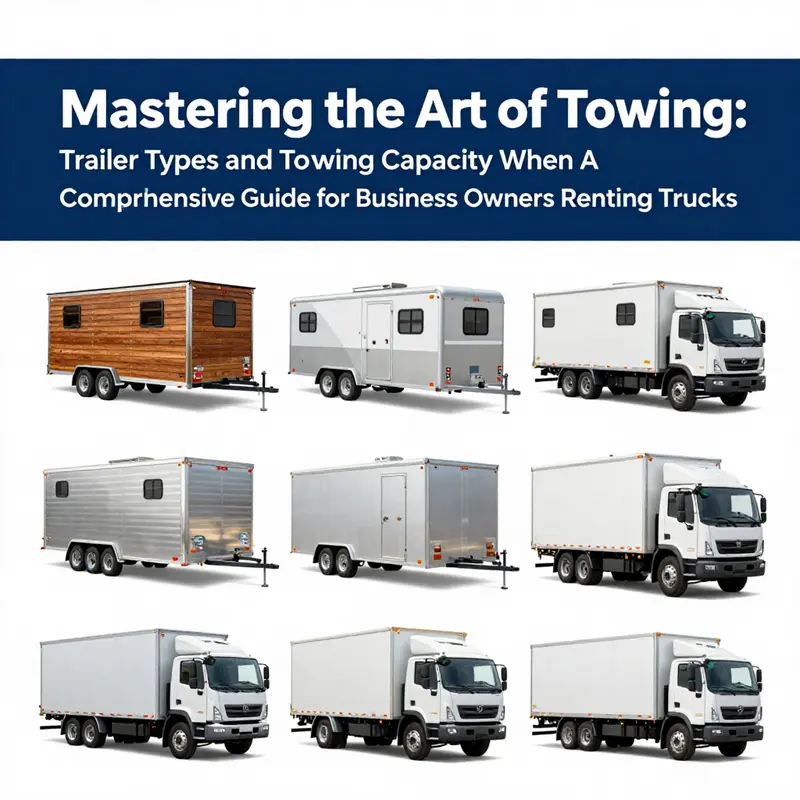
When you rent a moving truck with the intent to tow, you step into a space where weight, balance, and compliance matter as much as convenience. The idea of loading a trailer behind a rental vehicle can make a daunting move feel manageable, but it comes with a set of checks that are easy to overlook in the rush of planning. The core message is simple: you can tow a trailer with a rental truck, but only if the truck is specifically designed and certified for towing, and only if you remain within the vehicle’s documented limits. That distinction—between a vehicle that can tow and a vehicle that should tow—frames the rest of the chapter. It guides you through trailer types, capacity calculations, legal requirements, and the practical steps you must take before you roll out of the lot.
Trailer types and how they interact with a rental truck’s capabilities form the starting point of any sane towing plan. Trailer configurations vary widely, from flatbeds that carry oversized items to enclosed cargo trailers that protect belongings from weather and road debris. There are gooseneck trailers that connect over the hitch area for improved stability, and utility trailers that fill a broad middle ground between size and maneuverability. Each type distributes weight differently and demands a different approach to hitching, braking, and tongue weight. With rental trucks, the primary constraint is not just the trailer’s size but how its weight is distributed and how the truck’s hitch and braking system respond under load. The safer approach is to treat trailer selection as an exercise in matching the trailer’s total practical weight to the truck’s certified towing capacity, while appreciating how braking requirements, tongue weight, and hitch integrity influence overall safety.
To understand capacity, think in terms of the numbers that live in the vehicle’s documentation: the rated towing capacity, the maximum trailer weight, and the gross combined weight rating, or GCWR. The trailer’s weight plus the cargo and the tongue weight all contribute to the load that the truck must manage. Tongue weight—the force the trailer places on the hitch—matters just as much as the total trailer weight. In many guidelines, tongue weight should be at least about 4 percent of the trailer’s total weight, though for practical distribution and steering control, you’ll often see recommendations climbing toward the 10–15 percent range in other contexts. The exact figure depends on the trailer type, whether the trailer is braked, and how the load is distributed between the front and rear axles of the trailer itself. When you combine these considerations with the truck’s payload capacity, rear axle rating, and braking systems, a complex but navigable picture emerges: not every rental truck is a universal tow vehicle, and the safest choice is to verify, verify again, and verify once more before you pull away.
Understanding the trailer’s impact on the truck’s capacity requires a clear sense of how the numbers interlock. The GCWR is the maximum allowable weight of the vehicle plus its load—the trailer and everything on it—so it effectively caps the total you may tow. Then there is the axle load and gross vehicle weight rating, which govern how much weight the truck can carry in its cargo area and how much the rear axle is permitted to support when towing. Finally, the tongue weight is transmitted to the hitch and the truck’s rear suspension. If you miscalculate, you risk exceeding the truck’s limits, which could lead to unstable handling, premature brake wear, or worse, a dangerous failure on the road. The math isn’t mysterious; it’s a matter of adding the trailer’s loaded weight to the vehicle’s own weight and ensuring that the sum stays within the GCWR and the vehicle’s safe operating envelope. For many rental trucks, the cautionary line is here: a smaller or lighter class truck can tow only light and well-balanced trailers, and larger travel trailers may demand a vehicle with a higher GCWR and a properly engineered braking system that can be hooked into the trailer’s brakes.
The practical upshot is straightforward. If you’re considering a travel trailer, a large cargo trailer, or a heavy-duty utility trailer, you need a rental truck that explicitly supports towing that kind of load. Some rental agreements permit towing, but only with pre-authorization and clear limits on the maximum allowable trailer weight. Others may restrict towing altogether without a dedicated “tow package” or specialized equipment. The common thread across these policies is accountability: the rental truck you pick must come with a factory-installed hitch, a compatible wiring harness, and a braking setup that can be paired with the trailer’s braking system when required. After-market add-ons or modifications that aren’t installed or certified by an authorized dealer can invalidate the vehicle’s towing capability and, in many jurisdictions, be illegal to operate. The result is not merely a logistics question but a legal and safety one: if the truck isn’t equipped to tow within the manufacturer’s specifications, towing becomes unsafe and potentially unlawful.
When you begin the process of selecting a trailer type, you should also examine how the trailer’s own weight interacts with the truck’s towing capacity. A travel trailer or a heavier enclosed trailer can push you toward the upper limits of a mid-size pickup’s towing range, while a small utility trailer might be well within the capabilities of a broader class of rental trucks. The guiding principle is balance: the sum of the trailer’s weight, its cargo, and the hitch’s tongue weight must be workable within the truck’s GCWR and rear-axle rating. As weight grows, the necessity for a trailer braking system becomes more pronounced. If the trailer’s gross weight crosses a threshold—approximately 1,650 pounds in some guidelines—a separate braking system with an independent controller becomes not just recommended but legally required in many places. In practice, that means the combined towing capacity you’re allowed to use may be capped when you operate a trailer with its own brakes, because the braking load and weight distribution require precise management that not all rental trucks are prepared to provide. These rules exist to keep you, your cargo, and other road users safe by ensuring that the vehicle is capable of stopping within a reasonable distance and without compromising steering or control.
As you map this out, you’ll naturally have questions about the specifics of your rental truck. The most reliable path to clarity is threefold. First, check the truck’s window sticker or owner’s manual for the exact “Towing Capacity” or “Max Trailer Weight.” This is the primary source document that tells you what the truck is officially approved to pull. Second, speak directly with the rental agent. A simple question—“Is this truck approved for towing? What is the max trailer weight?”—can prevent costly missteps. Third, review the rental listing online before booking. Many rental sites now clearly state whether towing is available on a given truck model and, if so, what the permitted trailer weight limit is. This trio of checks should become a routine part of the planning process, because the consequences of towing with an under-rated vehicle are not merely logistical; they can be dangerous and costly.
The nuance extends to braking, wiring, and hitching. A trailer’s braking system, when present, interacts with the truck’s own braking in ways that affect stopping distance and stability. For trailers without brakes, the vehicle’s braking system must be able to handle the added mass and momentum. A common takeaway is that any trailer heavier than a certain weight—again, different jurisdictions and guidelines vary—will require separate trailer brakes and a properly matched brake controller in the towing vehicle. The responsibility to ensure this compatibility rests with you as the operator, but the rental company can and should provide clear, model-specific guidance. The hitch itself is not a generic connector; it is a precise, certified interface that must be matched to the trailer’s coupler and to the vehicle’s receiver, mounting points, and electrical system. Using a non-factory hitch or an aftermarket wiring setup can void the vehicle’s towing rating and complicate or invalidate insurance coverage in the event of an incident.
With these principles in mind, you can approach a rental truck with towing plans in a way that feels deliberate and safe rather than ad hoc. A practical approach begins with trailer selection that aligns with the truck’s capabilities. If you opt for a travel trailer or a gooseneck configuration, you’ll likely need a vehicle with a high GCWR and a robust braking arrangement. A small enclosed cargo trailer or a utility trailer often sits comfortably within the towing envelope of a mid-sized rental truck, provided the tongue weight and gross trailer weight stay within published limits. In all cases, the goal is to keep the combined weight under the vehicle’s GCWR and to ensure the tongue weight remains within the recommended range. Any higher weight or unbalanced load risks rear squat, reduced steering response, and longer stopping distances, all of which are unacceptable when you’re navigating unfamiliar routes with a trailer in tow.
To help you translate theory into practice, think of the verification process as a simple checklist you can perform before you ever pull out of the lot. First, locate the window sticker or the owner’s manual to confirm towing capacity. If the trailer in question has a braking system, verify whether the truck’s configuration supports a compatible brake controller. Second, consult the rental agreement to learn whether towing is allowed and what the maximum trailer weight is for the vehicle you’re taking. Some agreements require requesting towing authorization in advance or adding a tow package that includes the necessary equipment and insurance considerations. Third, confirm the hitch type and the presence of a wiring harness designed for trailer use. A factory-installed hitch and harness is a critical baseline. If the truck lacks a factory-installed setup, you must not assume that you can retrofit a suitable system in a way that preserves legality or safety. The consequences—fines, insurance denial, or an unsafe towing scenario—are not worth the risk.
As a practical takeaway, the process of selecting a rental truck for towing should blend caution with straightforward arithmetic. The truck’s manufacturer, the trailer’s weight, and the braking needs converge to determine whether the pairing is viable. If you’re unsure, it’s prudent to pause and seek confirmation rather than pressing forward. A straightforward way to ensure you’re making the right choice is to consult the official guidelines provided by the rental company and to cross-check them against the trailer’s weight specification. In many cases, those checks will reveal that a larger or more specialized rental truck is necessary, or that you’ll need a separate arrangement—such as a dedicated tow vehicle or a different trailer type—to complete the move safely.
For readers seeking concrete, actionable steps grounded in real-world practice, the following path is effective. Start by listing the trailer types you’re considering and estimating their loaded weight. Then, compare that figure to the specific truck’s rated towing capacity and GCWR from its documentation. If there’s any doubt about braking needs, assume a braking requirement and verify that the truck either has a built-in braking system or is compatible with an appropriate brake controller for the trailer. Check the tongue weight, aiming for a practical range that supports control without overloading the hitch or rear suspension. Finally, read the rental contract and speak with the rental agent to confirm towing authorization, required insurance, and any additional equipment that must be rented as part of the tow package. If everything aligns—if the truck has the necessary hitch and wiring, if the trailer’s weight and tongue weight fit within the truck’s limits, and if the rental agreement permits towing—then you can proceed with confidence.
In the spirit of practical detail, consider the human factors involved. Loading a trailer properly matters as much as choosing the right trailer and truck combination. Distribute weight evenly, secure loose items, and ensure that the heaviest items ride low and toward the trailer’s axle. Check the hitch connection, avoid cross-threading, and verify that safety chains, lighting, and braking signals work before you depart. Tires deserve attention, too: both the truck and the trailer should be correctly inflated for the load, with spare tires available in case of a roadside contingency. If you follow these steps, you’re not simply following a plan—you’re executing a responsible, safety-forward approach to towing with a rental truck that minimizes risk and maximizes reliability on the road.
For readers who want a concrete, vendor-specific resource while keeping the broader advice intact, here is a practical link that covers hitch installation and towing considerations in more detail: Penske trailer hitch installation. This internal resource can help you understand how a hitch system interfacing with a rental truck is designed, installed, and maintained, offering a tangible reference to the practical aspects of hitch compatibility and safety. It’s important to note that the guidance here should be cross-checked with your specific truck’s terminal documentation and the rental agreement, since configurations and policies can vary by model and location.
The topic of towing with a rental truck is not purely technical; it intersects with legal and safety frameworks that ensure everyone on the road shares the burden of responsible transport. In the United States and many other regions, there are regulatory expectations about a vehicle’s ability to pull a trailer. The vehicle must have a factory-installed hitch receiver, wiring harness, and an appropriate braking system if the trailer requires brakes. The temptation to add a hitch after the fact is understandable for a quick move, but doing so without the right authorization and certification can render the towing attempt illegal and unsafe. This is not merely about compliance with a policy; it is about preventing situations where equipment fails, braking distances lengthen, or steering becomes unstable due to an uneven distribution of weight. A careful, verified approach protects you, your cargo, and everyone else on the road.
In closing, towing a trailer with a rental truck is a viable option when undertaken with disciplined attention to the vehicle’s specifications, the trailer’s weight, and the legal requirements governing towing. The core messages remain consistent: verify the rated towing capacity, GCWR, and tongue weight; ensure the hitch and wiring are factory-installed or otherwise certified for towing; obtain explicit authorization from the rental provider; and choose a trailer type that remains within the truck’s capabilities. If you do these things, you’re not just moving items; you’re moving with a plan that respects physics, law, and safety. The road ahead may be long, but with the right truck, trailer, and process, you can tow with confidence rather than improvisation.
External resource for broader guidance on towing limits, tongue weight, trailer braking requirements, and speed considerations can be found here: https://www.tesla.com/support/vehicle-loading#towing-capacity
Final thoughts
Successfully towing a trailer with a rental truck requires understanding your truck’s capabilities, adhering to legal regulations, and ensuring that your rental agreement allows for towing. By carefully selecting the right truck, verifying compliance, and knowing your trailer types, you can enhance your business operations and avoid potential pitfalls. As you integrate towing into your logistics plans, remember that safety and proper preparation are paramount for successful outcomes.