
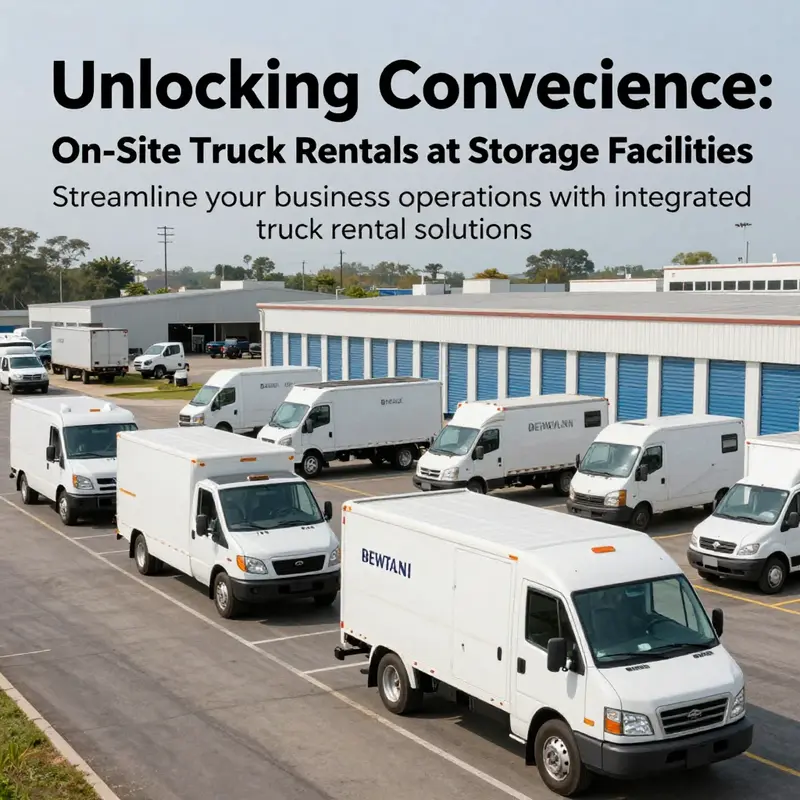
Understanding the availability of rental trucks on-site at storage facilities can significantly enhance operational efficiency for business owners. Storage facilities are evolving to meet customer demands by providing essential services that go beyond traditional storage solutions. This article explores the various aspects of on-site truck rentals, delving into their availability, the types offered, and the streamlined process for securing one. By breaking down these three key areas, business owners can better navigate their logistics needs while ensuring a smooth transition during moves or inventory management.
On-Site Rental Trucks: How Storage Facilities Simplify Moving and Fleet Needs
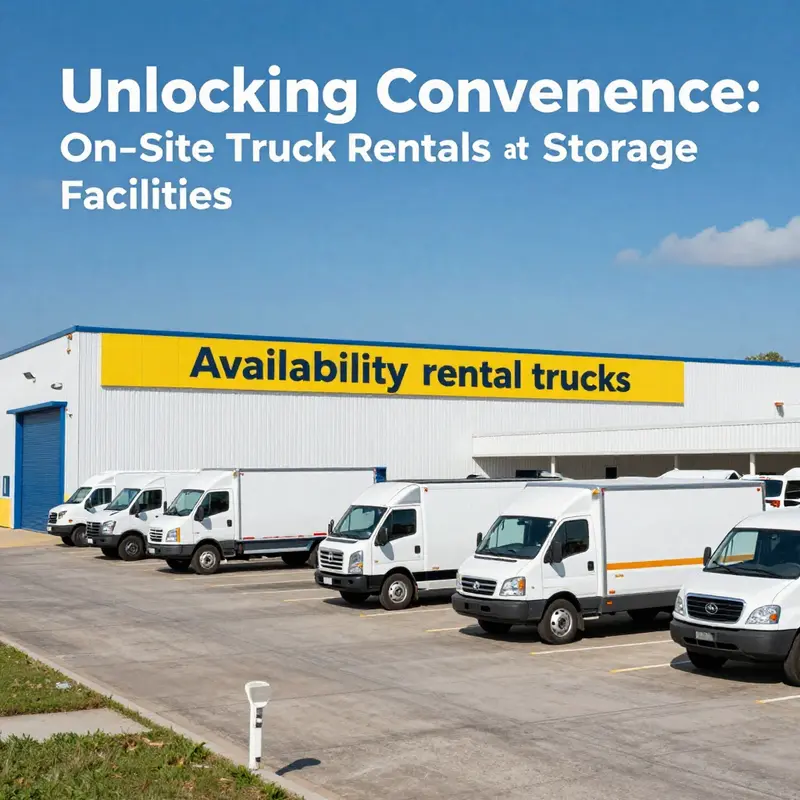
How on-site rental trucks fit storage operations
Many self-storage locations now offer rental trucks directly from their premises. This service reduces a key friction point for customers and operators alike: transporting goods between a pickup location and a unit. The presence of on-site vehicles is not universal, but it is common enough that renters should assume it might be an option and verify availability. Facilities that provide trucks typically do so through partnerships with equipment providers. Those collaborations let a storage operator focus on space and security while a partner handles fleets, insurance options, and vehicle maintenance. When a facility lists on-site trucks, the offering often includes a range of sizes, short-term and one-way rental options, and basic moving accessories like furniture dollies and tie-down straps.
Offering trucks on-site changes how customers plan moves. Instead of arranging a separate pickup at a rental depot, a tenant can reserve a vehicle that waits at the facility. This convenience shortens transit time and reduces coordination errors. It also benefits operators. On-site rentals improve customer experience and can increase unit turnover. For larger operations, integrating vehicle rentals becomes part of a logistics ecosystem. Storage facilities located near distribution hubs, industrial parks, or dense urban neighborhoods can especially benefit by providing flexible transport for short-haul moves.
Availability varies by market and season. Urban and suburban facilities with high unit occupancy tend to maintain on-site rental options more often. Rural locations may have fewer vehicles on hand, and some facilities use call-in arrangements where a truck is delivered on request. Peak moving times produce predictable spikes in demand. Booking early is advisable when the calendar shows heavy activity, such as month-ends, weekends, and regional moving seasons. Facilities that allow reservations through a website or phone line give renters better predictability than those operating strictly on walk-in availability.
Vehicle variety and sizing are important considerations. Typical fleets include small cargo vans, medium box trucks, and larger box trucks suitable for apartment and house moves. Commercial operations may make higher-capacity trucks available for business clients moving inventory between storage and retail or between warehouses. Always match the truck size to the cargo volume and access constraints. A larger truck may reduce the number of trips but can limit access in tight facilities or urban streets. Conversely, too small a vehicle increases round trips and labor costs.
Integration with modern facility systems is increasingly common. Some fleets are equipped with telematics, GPS tracking, and sensor-based maintenance alerts. These technologies improve reliability by identifying issues before they cause breakdowns. They also help operators manage utilization and optimize scheduling. For customers, telematics-enabled vehicles reduce the risk of being stranded and enable real-time updates about availability. When a facility’s reservation system communicates with fleet management software, operators can update availability automatically and reduce double-bookings.
Cost structure is another factor shaping demand. Renting a truck when needed avoids the fixed costs of ownership. Operators and businesses can scale transport capacity without bearing maintenance, storage, and depreciation expenses. For individual renters, an on-site vehicle can eliminate extra time and fuel spent driving to a separate rental center. Pricing models vary: hourly, daily, or by mileage; flat one-way fees for drop-off at a different location; and additional charges for fuel, insurance, or optional equipment. Read the fine print on fuel policy and mileage limits. Some providers include unlimited miles in local rentals but apply fees for one-way trips.
Insurance and liability deserve careful attention. Coverage options include supplementary loss damage waivers, collision protection, and third-party liability extensions. Storage facilities typically clarify their role: they provide access to the vehicle but are not responsible for driving or damage incurred during a rental. Confirm what coverage you have under your personal insurance policy before declining additional protection. Businesses moving inventory should verify commercial auto insurance limits and consider temporary endorsements if needed.
Access, loading, and site logistics influence the practical usefulness of on-site rentals. Many facilities offer ground-level units or drive-up access, which pair well with truck rentals. If your unit is on an upper floor or accessible only by stairs, plan for additional labor or consider whether a lift gate-equipped vehicle is necessary. Loading docks, ramps, and wide drive aisles make loading faster and safer. Facilities with 24-hour gate access provide more flexible pickup and drop-off windows, but confirm vehicle pickup and return policies. Some locations require truck returns during staffed hours, while others allow after-hours returns using a designated area and key-drop system.
Operational policies can differ significantly. Expect deposits, credit-card holds, and identification requirements at pickup. Operators may require proof of a valid driver’s license and a minimum age. They may also enforce local regulations about vehicle size, parking, or idling. Be aware of posted weight limits and turning radii that could affect access for larger trucks.
For business clients, on-site fleet access can be a strategic advantage. Retailers, e-commerce sellers, and service providers use rental trucks at storage facilities for inventory staging and burst capacity. Instead of maintaining a dedicated small fleet, businesses can rely on on-site rentals to handle seasonal surges and promotional events. This approach lowers fixed overhead and simplifies fleet maintenance. It also reduces the administrative burden of managing vehicle registration, periodic inspections, and long-term depreciation accounting.
There are trade-offs. On-site trucks can be more expensive per day than off-site alternatives. Limited local supply can increase demand-based pricing during peak periods. Rental vehicle condition can vary by provider and by location, so inspect the truck carefully before leaving the facility. Finally, one-way rental options are handy, but they may carry a surcharge tied to vehicle repositioning costs.
Planning and booking tips help renters get the most value. Reserve early to lock in vehicle size and rates. Ask the facility about any minimum rental periods and whether they offer one-way or local-only rentals. Confirm fuel policy and whether the provider expects a full tank on return. Inspect the vehicle exterior and interior for existing damage and document it in writing or with timestamped photos. Verify that the truck includes needed accessories like straps, moving blankets, and a ramp or lift gate. If the facility offers additional tools for rent, compare those costs with bringing your own equipment.
Operational details that often catch renters by surprise include mileage limits, additional driver fees, and late return penalties. If you plan multiple stops, clarify whether mileage will be capped. Many providers charge for extra miles beyond an allowance, which can quickly add to the total cost. Ask about additional driver fees—some rental agreements permit only the named renter to drive without incurring extra charges. Clarify the policy on tolls, parking tickets, and citations. These fines are usually the renter’s responsibility.
Storage facility staff can help coordinate loading schedules. If your move requires a staffed loading dock or reserved parking space, request the time slot in advance. This reduces conflicts with other tenants and smooths traffic flow in shared facilities. Facilities that combine on-site truck rentals with packing supply sales create a one-stop experience. When available, this simplifies purchasing boxes, locks, and packing materials.
Alternatives remain valuable when on-site rentals are unavailable or unsuitable. Third-party rental depots may offer lower daily rates or a wider vehicle selection. Local moving companies can provide labor and short-distance transport for a bundled price. Peer-to-peer platforms sometimes list one-way options with flexible pickup and drop-off. Evaluate total cost, convenience, and risk when comparing alternatives.
When storage operators consider offering on-site trucks, they weigh several operational questions. Who manages the fleet? Is it owned or contracted? How will scheduling integrate with reservation systems? What liability and insurance frameworks apply? Market demand analysis helps determine whether to provide a few vehicles or a comprehensive fleet service. For properties near high-density neighborhoods or major roads, the investment is often justified. Smaller facilities may prefer referral partnerships with nearby rental companies to avoid fleet management overhead.
For renters, a simple checklist ensures smoother moves. Reserve a vehicle early and confirm the reservation in writing. Choose a truck size suitable for your load and access constraints. Inspect the vehicle carefully and document any preexisting damage. Verify insurance coverage and purchase additional protection when necessary. Confirm fuel, mileage, and return policies. Reserve a loading window if the facility offers it. Pack strategically to minimize shifting and maximize space. Secure heavy items to prevent damage to the vehicle and your belongings.
The trend toward integrated logistics means more facilities will likely adopt on-site rental solutions or strengthen partnerships with fleet providers. Technologies that improve scheduling, tracking, and vehicle reliability will reduce friction for both renters and operators. This growing convergence of storage space and transport capacity creates a practical value proposition: a single point where goods are stored, retrieved, and transported with fewer steps.
If you want to explore rental options that emphasize flexible mileage and local availability, check resources that help compare policies and features. One such resource for industry trends and market dynamics is available here: https://www.marketsandmarkets.com/Market-Reports/rental-truck-market-1985.html
For a practical example of how local rental options may advertise flexible mileage and nearby pickup choices, see this page on moving-truck-rental-near-me-unlimited-miles: https://larentaltrucks.com/blog/moving-truck-rental-near-me-unlimited-miles/
Overall, on-site rental trucks at storage facilities remove many logistical barriers. They add convenience, reduce travel time, and offer scalable transport capacity for both consumers and businesses. Their availability varies by location and season, so planning, reservation, and clear communication with facility staff are key. When aligned with the right vehicle size, adequate insurance, and efficient loading practices, on-site rentals can transform a moving day into a manageable, predictable process.
On-Site Moving Trucks at Storage Facilities: Convenience, Choices, and the Practical Path Between Move and Storage
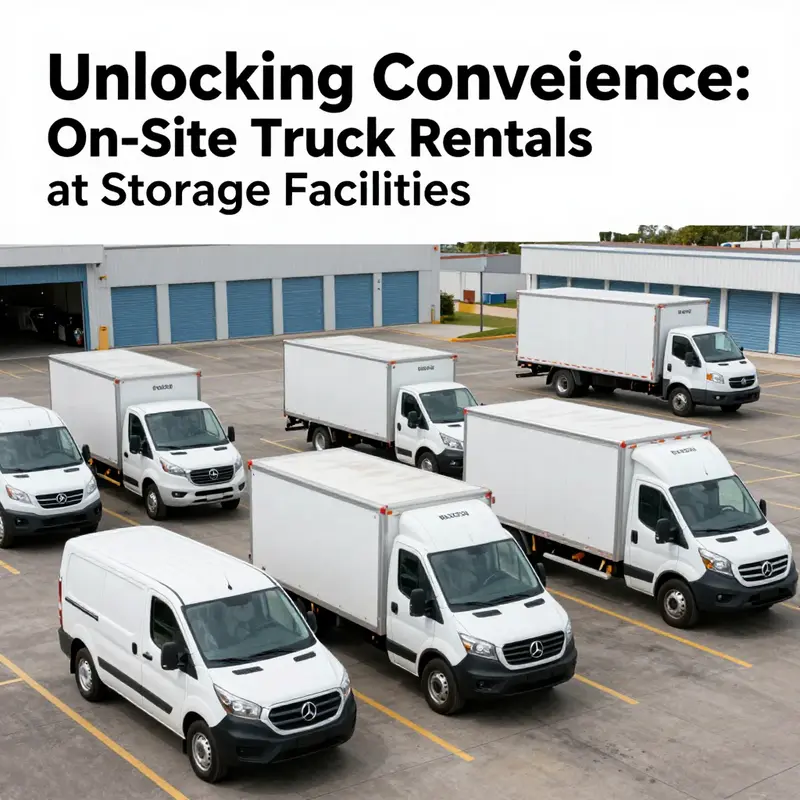
When you rent a storage unit, the ability to spring for a truck right on site can feel like a quiet stroke of luck. It removes the friction of coordinating a separate pickup and drop-off, and it aligns the vehicle you drive with the space you rent. The idea is simple: a moving truck, available at or near your storage facility, so you can load, move, and unload without chasing logistics across town. In practice, this on-site convenience is real in many places, but it is not universal. Availability hinges on the facility’s size, its location, and the partnerships it has formed with moving-truck providers or equipment fleets. In some markets, nearly every large storage operator offers on-site access to a fleet of vehicles; in others, the service is limited to certain properties or regions. The result is a moving landscape that feels both practical and a little variable—dependent on where you store and where you’re moving from.
The kinds of trucks you’ll encounter on-site reflect the broad toolkit of standard moving equipment, yet they tend to cluster around a few reliable formats. Box trucks, often called moving vans, are the workhorse of on-site fleets. They enclose a weather-tight cargo area and shield belongings from rain, wind, and curious weather changes during a move. The typical box-truck category spans roughly from mid-sized to quite capable—commonly ranging from about 12 to 26 feet in length. Inside, you’ll find a spacious cargo area with a flat floor, a tall ceiling, and a roll-up rear door that makes loading furniture, appliances, and a wardrobe of boxes more efficient than a smaller van or sedan could manage. For most tenants dealing with a standard household or apartment-sized load, a 16- or 20-foot box truck is more than sufficient. If you want to plan around one particular size, a practical starting point is to consider how many rooms you’re moving and whether you’ll need to haul heavy furniture and bulky appliances in a single trip. A detailed breakdown of truck sizes and their typical applications is available in industry resources that explain truck dimensions and capacities; see the practical guide on truck dimensions for a closer look at how these boxes translate to real-world moves. For a closer look at one common size, see the article on the 16-foot box truck.
Cargo vans, by contrast, are the leaner cousins of the box truck. They trade some cargo space for greater maneuverability. If you’re moving a smaller apartment or a compact set of items—perhaps a few large desks, several boxes, and a couple of appliances—a cargo van can be the most efficient choice. Their size makes parking in tight spaces and threading through narrow driveways easier, which matters if your storage facility sits inside a crowded campus-like layout or if you’re moving from a storage area located near busy streets. For certain moves, especially where you anticipate lots of small, evenly sized items, a cargo van can be a simpler, more economical solution than a larger box truck. The trade-off, of course, is that you’ll likely need more trips, or you’ll have to be very selective about what fits in a single loading session.
Less common on-site options include flatbed trucks. These open or flat platforms are built for oversized, heavy, or irregular items—think of construction materials, machinery, or a vehicle or two that simply won’t fit in a box or on a van. A flatbed, when available, is typically used for specialty moves rather than everyday household relocation. It requires careful securing with tarps, straps, and sometimes additional crew assistance to ensure the load stays put during transit. If you anticipate carrying unusually long pieces of furniture or bulky lumber or have staged a move that includes equipment, asking about the availability of a flatbed is worth the conversation with the facility manager. The goal is to match the vehicle to the load, reducing the number of trips and the risk of damage or mishandling.
The specific mix of truck types at any given storage facility depends heavily on the property’s size, the neighborhood it serves, and the partnerships it maintains with moving-truck providers. Some facilities co-brand and co-manage fleets, delivering a seamless experience that pairs unit access with vehicle availability. Others simply list on-site trucks as an amenity, leaving the logistics to tenants to arrange with a partner fleet. Either arrangement can work well, particularly when platforms clearly describe what is available and when. If you want to be thorough, start by calling the facility’s front desk or checking its online service listings to confirm which vehicle types are currently on-site and whether you can reserve them ahead of your move.
For tenants who prefer certainty, on-site truck availability is often paired with straightforward reservation options. You can typically reserve a truck ahead of time, either by phone or via a facility’s online portal. In many markets, the same trucks that service on-site loading bays can also be booked for off-site pickups through the same provider, offering a consistent experience if you’re juggling multiple moves or storage facilities. Yet, even with reservations, demand during peak moving seasons can push availability to the limit. If you’re moving during a holiday week, a weekend, or at the start or end of a month when leases turn over, plan to reserve as early as possible and have a backup plan in case your first choice is not available. A practical approach is to map out a couple of alternate sizes and contingency dates, which can save you time when plans shift suddenly.
In tandem with vehicle availability, facilities often provide additional moving amenities that complement on-site trucks. These can include packing supplies, hand trucks or dollies, moving blankets, and even basic guidance on safe loading techniques. Some properties feature a small on-site shop where you can pick up boxes, tape, stretch wrap, and wardrobe boxes, making the entire operation feel like a one-stop move center. This bundle of conveniences can turn what would otherwise be a multi-stop errand into a streamlined process where you load, secure, drive, and unload with a single, familiar point of contact. It’s worth noting that the presence of these services is not universal, and the scope varies by property. When you’re assessing a facility, ask specifically about what comes with the on-site truck—mileage policies, fuel requirements, insurance options, and whether the vehicle comes with standard loading accessories or if you’ll need to rent or bring your own.
The practical realities of on-site truck use also hinge on a few logistical questions you’ll want to answer before your move. First, consider access hours. Some storage facilities limit truck access to certain times to protect property or to synchronize with staff availability. If you’re juggling work schedules or coordinating with a moving crew, aligning your move with these hours is essential. Second, assess parking and maneuvering space. A truck, particularly a box or a flatbed, needs adequate space to turn, back up, and park in a way that doesn’t disrupt other tenants or create a traffic bottleneck. In facilities with tight internal roadways or dense layouts, the staff might guide you to the appropriate loading zone or even help coordinate a staged loading plan that minimizes congestion and risk. Third, think about load security and insurance. Loading large items or valuable belongings in a shared facility means you’ll want reliable security for the time between loading and transport. The on-site provider may offer insurance or require you to carry your own coverage. Clarifying this before you start helps prevent surprises and ensures you’re fully protected should anything shift or become damaged in transit.
A practical way to approach this is to frame on-site truck use as a service that reduces the friction of relocation rather than a guaranteed solution in every situation. If your load is modest, if you’re moving within the same metro area, and if the facility’s on-site fleet aligns with your timing, this option can save you both time and energy. If your load is unusually large, heavy, or requires specialized handling, you might still find the on-site truck a viable starting point, but you may also need to supplement with an external rental, or arrange a multi-leg move that leverages both on-site trucks and off-site resources. Either way, confirm the vehicle type, confirm the reservation, and verify the cost structure well in advance. A clear understanding of base rates, mileage charges, fuel policy, and any insurance premiums helps prevent sticker shock and makes the actual moving day run smoother.
For readers who want a quick, tactile sense of truck sizing before you step foot on-site, exploring the specifics of a common on-site option can be helpful. A detailed look at the 16-foot box truck, widely used for standard apartment moves, offers a practical reference point for what you’ll likely encounter on many properties. You can dive into the specifics at the article on the 16-foot box truck, which explains dimensions, payload estimates, and typical cargo configurations. This kind of resource can help you triage what size you’ll need based on the volume of your belongings and the density of the items you plan to move in a single trip. It’s not a substitute for confirming with your facility, but it can be a helpful mental model as you plan.
The decision to use an on-site truck should also be weighed against other practical realities. If your storage unit is far from your current residence, or if the move involves stairs, elevators, or restricted access routes, you might find that an on-site truck reduces travel time and logistics complexity more than it reduces total cost. Conversely, if your load is light, or you have access to a personal vehicle that can handle a few large pieces, renting on-site might be overkill. In some cases, a one-way moving-truck rental from a portable provider—where the truck is picked up near your destination rather than on-site at the storage facility—could present a better balance of convenience and cost. The key is to harmonize your move plan with the facility’s available vehicles, the date and time of your move, and the practical realities of your load. When you align these elements, you’ll often discover that the on-site truck option is a surprising facilitator, turning what could be a logistical puzzle into a straightforward, efficient process.
In closing, the on-site truck option is a meaningful convenience that many, but not all, storage facilities offer. The types of vehicles you’ll encounter—box trucks, cargo vans, and, less commonly, flatbeds—cover a broad spectrum of moves from a single heavy load to a more incremental, multi-trip plan. Availability tends to be facility-specific and seasonally variable, so making a quick call to confirm what’s on-site during your move window is a prudent step. When you do book, you’ll likely find a seamless experience that pairs convenient storage access with a ready-to-use vehicle, a small but mighty combination that can save time, reduce the number of separate errands, and keep the physical load manageable as you transition between spaces.
External resource: Understanding Storage Truck Dimensions can provide a deeper understanding of how the sizes translate into real moving capacity and load fit. See the external guide here: https://www.uhaul.com/blog/understanding-storage-truck-dimensions/
On-Site Truck Rentals at Storage Facilities: A Seamless Bridge from Locker to Load
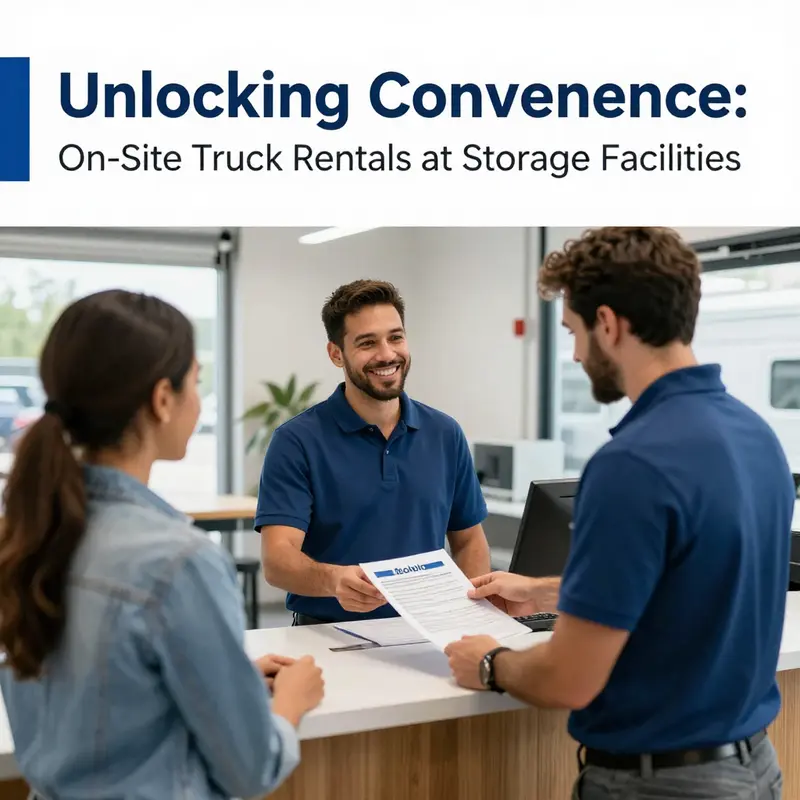
Entering a storage facility on move day often feels like stepping into a logistical crossroads. Between gate access, unit numbers, and the stacks of boxes, the promise of a ready-made moving solution can feel like a lighthouse in a fog of loose ends. For many tenants, the option of renting a truck on-site is not just a convenience; it is a way to reclaim precious hours and reduce the friction that commonly accompanies a self move. The idea that you can move directly from your unit into a vehicle that is waiting in a nearby lot is a feature that more facilities now treat as essential, rather than optional, equipment. This shift—toward on-site truck rentals—reflects a broader trend in the storage industry: turning space beyond storage into a service ecosystem where customers can complete a move in fewer steps and with more predictable costs. The on-site truck rental option has emerged as a natural complement to the core storage offering, a practical extension of service that acknowledges moving as a multi-step journey that benefits from integration rather than isolation.
The on-site truck rental process at these facilities typically begins with a simple choice. A customer can either visit the office, drop by a dedicated kiosk, or sometimes even use a mobile-friendly interface to select a truck size and a rental window that aligns with their schedule. The range often spans from compact cargo vans, which are ideal for single-room moves or apartment clearouts, to mid-size and larger moving trucks capable of handling the bulk of a household or the contents of a two-bedroom unit. Some facilities offer multiple vehicle sizes to accommodate different loads, while others provide mid-range options that balance capacity with cost. The exact mix of vehicles and the length of rental availability can vary depending on the facility’s footprint, regional demand, and partnerships with vehicle providers. It is not unusual for a facility to have a few choice options ready for immediate pickup, with additional sizes available by special arrangement during peak seasons. In practice, a customer might see a screen listing the available models, the daily or hourly rate, mileage terms, and any restrictions tied to use of the lot or access hours. The clarity of this information matters, because it shapes how much planning the move requires up front and how much flexibility remains during the actual loading sequence.
The paperwork that follows is designed to keep the process efficient while protecting both the facility and the renter. At many locations, the rental agreement is processed on-site and can be completed within minutes. A key piece of the contract is payment logistics, which typically rely on a credit card, allowing facilities to securely authorize the rental and capture the charges right away. Insurance verification is another recurring step. Tenants may already carry auto or rental car coverage that extends to a commercial truck, or they may elect to purchase additional protection through the leasing partner or the facility itself. The terms may specify limits, deductible amounts, and who is responsible for damages or fuel costs. In parallel, a driver’s license check is standard practice, ensuring the renter is legally authorized to operate a vehicle of that size. Some facilities may require additional confirmation for drivers who have U.S. out-of-state licenses or who are under a certain age, though age and licensing requirements are usually aligned with the norms of commercial vehicle operation in the jurisdiction.
Once the agreement is signed and the keys are handed over, the handoff is designed to be straightforward. The customer receives concise operating instructions and a brief overview of the pickup process, including how to locate the truck, where to return the vehicle when the move completes, and any facility-specific checkout steps. The convenience of loading directly from a storage unit into the truck cannot be overstated. This streamlined flow eliminates the need to shuttle items between a distant rental location and the storage facility. It also reduces the risk of forgetting important moving accessories or misplacing packing materials. In many infrastructures, the truck is positioned so that tenants can roll their items straight out of the unit and into the cargo area, then secure everything with straps, blankets, or other packing aids that the facility can supply or that the lessee brings. This coordination—from unit to vehicle to road—often benefits from a small but well-practiced choreography. Staff and drivers may coordinate timed access to elevators, loading docks, ramps, and parking spaces to minimize delays and ensure safety. When the process is well-tuned, a move can progress with a clear rhythm rather than a series of ad hoc, last-minute decisions.
The business logic behind on-site truck rentals is as much about customer experience as it is about the economics of storage spaces. Facilities that offer this feature typically partner with established truck leasing or rental providers. The objective is to give customers a fleet of reliable, well-maintained vehicles without the capital investment involved in owning and maintaining an in-house fleet. In turn, this partnership creates a reliable revenue stream for the storage provider, one that complements the core business of shelving and security. It is a symbiotic arrangement: the leasing partner handles maintenance, roadside contingencies, and vehicle availability, while the storage facility provides a touchpoint where customers can arrange transportation in parallel with their storage needs. The arrangement also allows facilities to increase loyalty and lifetime value. A tenant who uses on-site trucks is more likely to extend a storage contract during a move cycle or to reserve more space in the same facility when seeking the added advantage of integrated services. In markets where moving demand is seasonal, the alignment between the storage facility’s occupancy cycles and the truck provider’s fleet availability becomes a strategic factor. A well-synced partnership reduces downtime, enhances utilization, and improves overall profitability for both parties.
The operational efficiency enabled by on-site trucks is not merely about convenience; it is also about risk management and reliability. For the facility, having a consistent partner for the fleet means standardized maintenance, known fuel policies, and predictable performance of vehicles. The leasing partner often brings training programs that equip facility staff with the basics of truck operation, safety protocols, and emergency procedures. This training helps reduce the chances of injuries during loading and handling while creating a more confident customer experience. Staff can guide renters through essential safety checks before departure, such as verifying tire pressure, ensuring that the vehicle’s lighting and signals are functional, and confirming that load limits are respected. The truck provider’s support structure—24/7 roadside assistance, routine maintenance, and rapid swap-out options for malfunctioning vehicles—translates into less disruption for customers and less downtime on the line for the facility’s operation. From a technical standpoint, the on-site model benefits from standardized digital systems that track vehicle availability, rental status, and billing. A well-integrated front desk, kiosk, or mobile interface can reflect real-time inventory, show the closest available vehicle, and reserve a pickup window. The clarity of that data reduces the friction of decision-making for renters and reduces the risk of overbooking or miscommunication about when the vehicle can be picked up or returned.
For tenants, the on-site truck option translates into tangible time savings and a reduced cognitive load during a potentially stressful period. One of the most impactful benefits is convenience. The site is the center of action: the storage unit, the truck, and the loading area are all in proximity, which minimizes the number of trips between disparate locations. That proximity also helps with accuracy in planning. When people know exactly which truck is available at the location they are already in, they can align their packing list, furniture disassembly, and loading order to the truck’s capacity and the space in the unit. The effect is a smoother afternoon, with less back-and-forth between different vendors or locations. Additionally, the reliability of a known vehicle pool can be reassuring. Instead of relying on a distant rental location or the uncertain availability of a third-party mover, tenants can coordinate their schedule around a familiar, on-site resource. The cost picture is often clearer as well. Transparent daily rates and the ability to bundle rental charges with storage fees in a single bill can simplify budgeting. And for those who worry about insurance coverage, many facilities present clearly stated terms that help tenants determine whether their existing auto policy extends to a rental truck, or whether the facility offers a straightforward, modest insurance add-on.
The benefits are not limited to customers. Storage facilities that implement on-site truck rentals can gain a new touchpoint for customer engagement. It is a strategic feature that can set a facility apart in a competitive landscape where hundreds of locations may offer similar storage sizes and security features. The on-site truck program can drive increased occupancy by providing a compelling reason for customers to choose one facility over another when planning a move. It can also unlock a modest but recurring revenue stream that scales with demand. A thoughtful program might include seasonal promotions, flexible rental durations, and perhaps a loyalty element that rewards repeat renters. Some facilities may partner with offer-based promotions or discount codes to entice customers to use the on-site fleet and, as part of the same ecosystem, purchase packing supplies or other moving services on the premises. The cross-selling potential—bundling unit rental with truck use, straps, moving blankets, and tie-downs—offers a more complete turnkey experience for anyone moving into or out of storage.
There are, of course, practical considerations and limitations. Availability is a function of location, demand, and fleet capacity. A facility located in a high-density urban area or near a large apartment complex may experience peak-season demand that stretches its on-site fleet thin. In quieter markets, the on-site option may be readily available on most days, with occasional exceptions around weekends or holidays. To maximize the likelihood of securing a truck when it’s needed, tenants are advised to plan ahead: call the facility, check the website, or use the facility’s kiosk to view live availability and reserve a slot. Some locations support advance reservations, others function on a first-come, first-served basis, and still others provide a hybrid approach where last-minute pickups are possible if a truck is idle. The strongest recommendation is to translate moving plans into a truck request as early as possible in the process, especially during peak moving seasons when demand surges.
The guidelines for safety and liability are an important undercurrent in any discussion of on-site truck rentals. When renters operate a large vehicle in the space of a storage property, a careful approach to risk management is prudent. Drivers should be mindful of vehicle dimensions relative to the loading dock, elevator corridors, and parking areas. Proper tie-downs, blankets, and non-slip mats help prevent shifting loads during transit and protect both the renter’s belongings and the facility’s infrastructure. Insurance coverage remains a core consideration for both parties. A renter might carry coverage through their personal auto policy or through the truck rental, depending on the terms of the agreement. The facility’s staff, in turn, works to ensure that rental terms are clear and that drivers meet the licensing requirements for the vehicle. Before departure, a brief safety check list—including lights, brakes, and tire integrity—can prevent mishaps that might lead to property damage or personal injury. The leasing partner often supports these checks with standard operating procedures and quick-response guidance, further reducing risk.
If this model looks appealing in principle but you’re uncertain how it would fit your specific move, consider how to evaluate an on-site truck program. Begin with a candid assessment of your load: the size of your household, the number of heavy items, and whether you anticipate needing a single truck or multiple trips. Then consider the distance between your storage unit and your destination—short routes are ideal for smaller vehicles, while longer moves may justify a larger truck or several trips. Next, examine the facility’s terms: the rental duration, mileage terms, fuel policy, and whether the price includes tolls or other ancillary charges. Take note of the insurance framework: what is covered automatically, what requires an extra premium, and how a claim would be processed in the event of damage. Finally, map the logistical flow: how and when you will access the truck, how the loading sequence will proceed, and what backup options are available if you encounter delays. When you can see the whole picture—the vehicle, the unit, the loading area, and the planned route—the move becomes a sequence of controlled steps rather than a sequence of unplanned gestures.
In practice, no two moves are exactly alike, and no two facilities will implement their on-site truck programs identically. Some might emphasize the most time-sensitive options, while others enrich the customer experience with additional packing supplies and on-site assistance. The essential takeaway is that on-site truck rentals transform a purely space-centric service into a more holistic moving ecosystem. They underscore a broader trend toward integrating ancillary services into core real estate offerings, turning storage facilities into community hubs for practical moving needs. For anyone who has wrestled with the logistics of moving, this integration can be a meaningful upgrade—one that reduces friction, improves predictability, and ultimately helps people settle into a new space with a clearer sense of control.
As the market continues to evolve, the relationship between storage facilities and their truck partners is likely to grow more sophisticated. Facilities may leverage real-time fleet data, dynamic pricing, and enhanced safety protocols that align with broader industry standards. Customers can expect ongoing improvements in vehicle availability, training, and the consistency of service. And as more facilities publish their on-site offerings—noting the exact truck sizes, rental terms, and support services—tenants gain confidence to plan ahead. If you are looking for more information on how these solutions work at a high level and for direct access to industry resources, consult the moving and storage industry solutions page from a leading truck leasing provider. For a broader industry perspective, see Penske’s Moving and Storage Industry Solutions. Penske Truck Rental Promotion Code. For further industry context, you can also explore related resources from the same ecosystem as you plan a move, and compare offerings across facilities to identify what best aligns with your timing and budget. To deepen your understanding of how these solutions fit into the larger picture of moving and storage, you can refer to external industry resources and official partner pages that outline standards for fleet maintenance, safety protocols, and program scalability within the storage sector.
External resource: Penske Truck Leasing Moving and Storage Industry Solutions
Final thoughts
Choosing to utilize on-site rental trucks at storage facilities can simplify logistics and optimize time management for business operations. By evaluating the availability, types of trucks offered, and the renting process, business owners can make informed decisions that align with their operational needs. This convenience not only enhances efficiency but also supports a seamless transition during moving or inventory management. As you contemplate integrating these services into your business practices, consider engaging with local storage facilities to discover tailored solutions that best meet your requirements.