

As businesses evolve and expand, so do their logistical needs. For many business owners, moving goods efficiently and cost-effectively is a crucial aspect of operations. Understanding the truck rental market, particularly the options for unlimited mileage, can be the key to streamlining these processes. This article delves into the benefits of truck rentals with unlimited mileage, explains the terms surrounding these rentals, and evaluates major rental companies providing these flexible options. Each chapter builds upon the last to offer a comprehensive view tailored for business owners seeking practical solutions in their transportation needs.
Miles Unbound: Navigating Unlimited-Mileage Truck Rentals for Moves and Long Journeys

When a move stretches across state lines or a road trip climbs into the thousands of miles, the promise of unlimited mileage can feel like a lifeline. The idea is simple: drive as far as you need without worrying about per-mile charges. Yet, the reality behind unlimited mileage policies is nuanced. A thoughtful traveler learns to read the fine print, ask the right questions, and align a rental choice with the actual distance, timing, and purpose of the journey. What begins as a straightforward selection—local or one-way, small or large truck—soon reveals itself as a careful balance between distance, cost, and responsibility. For many, unlimited mileage is not a blanket entitlement but a feature that appears under specific conditions, often tied to the rental’s origin, destination, vehicle size, and the duration of the agreement. And in a market where a few major providers now offer unlimited miles on long-distance or one-way rentals, the difference between a truly unlimited plan and a greatly generous cap can matter as much as the sticker price on a daily rate.
The core appeal of unlimited mileage is obvious. When you’re moving across a wide radius, or delivering supplies to distant locations, every mile costs more than the fuel you burn. The idea of not counting miles, of not holding back because the odometer might derail a timeline, is an enduring draw. But as with most strong sales pitches, the details behind the policy determine whether unlimited mileage becomes a practical savings or a nominal promise that doesn’t apply to your route. It’s not uncommon to encounter terms that hinge on the type of rental, the size of the truck, or the particular pickup and drop-off points. Some plans that are marketed as unlimited can still carry caps or conditions that effectively limit true unlimited travel. Other plans might require selecting a specific truck class or booking a one-way trip with certain constraints, such as a minimum rental duration or a higher daily rate that subsidizes the miles you drive. The practical effect is that unlimited mileage can be a powerful tool for planning, but it’s not a universal guarantee.
Consider the common scenarios travelers face when mileage is a major consideration. A cross-country move, particularly when the destination is not fixed or when multiple stops are involved, benefits from unlimited miles. The same is true for a long business delivery route where distance is unpredictable and plans may shift with market demand. In these contexts, unlimited mileage translates into flexibility and predictability. On the flip side, a local move or a round-trip rental often carries mileage limits. Even when a company advertises unlimited miles, the policy may be scoped to one-way trips or to specific vehicle sizes. The difference between “unlimited” and “unlimited, within certain parameters” becomes critical when the clock starts ticking on a rental agreement and the odometer begins its daily tallies. Remember that even a high-cap plan—say, tens of thousands of miles—may still be subject to restrictions or additional charges if certain terms aren’t met. Conscious renters protect themselves by reviewing the contract line by line, asking direct questions, and documenting the final terms in writing.
What does unlimited mileage actually entail in practice? The landscape comprises a mix of promotions, locations, and vehicle classes, each with its own rules. Some providers offer unlimited miles as a standard feature on many one-way rentals, removing the fear of per-mile costs as a driver moves from state to state. This setup is particularly attractive for relocations where distance cannot be precisely predicted at the outset, or for corporate moves that require a lot of travel time between warehouses and distribution centers. In other cases, the unlimited option may be tied to a specific truck size, sometimes excluding the smallest trucks, or it may require booking a more premium package that carries a higher daily rate. The takeaway is that “unlimited” is not a monopoly held across all offerings; it exists as a strategically deployed benefit that executives of rental fleets reserve for certain routes, durations, or vehicle categories. And every rental location can have its own flavor of the rule, shaped by regional demand, fleet availability, and local policies.
For a renter planning a long journey or a substantial move, the practical approach is to start with clarity about the path you intend to take. Think in terms of the entire route, the number of days you will be on the road, and the typical distance you expect to cover daily. If your plan includes segments that may require detours or backtracking, you’ll want to confirm whether the unlimited mileage applies to the entire trip or only to the core route. If the agreement allows unlimited miles only on one-way trips, you should map a possible return or alternative plan so that you do not inadvertently trigger a mileage overage. In some cases, “unlimited” may apply only to specific truck sizes or to particular points in the network, which means you could end up renting a larger, more expensive vehicle to qualify for unlimited mileage while burning through your budget. It’s essential to align the choice with your actual needs, not with the most favorable marketing claim. A clear, direct conversation with a rental agent, followed by a written confirmation, can prevent surprises when the vehicle is loaded and the miles begin to accumulate.
From a planning perspective, unlimited mileage is also a reminder to consider ancillary costs that accompany long-distance travel. Fuel economy, maintenance intervals, and equipment wear all factor into the total cost of operation. Even with unlimited miles, a vehicle with poor fuel efficiency or higher maintenance risk can erode savings. Conversely, a well-suited truck with good miles-per-gallon can amplify the benefit of unlimited miles by keeping fuel expenses in check across hundreds or thousands of miles. A practical mindset is to view the decision as a set of tradeoffs rather than a single feature. The daily base rate, the likelihood of reserve charges for certain locations, the availability of the fleet at the chosen origin, and the flexibility of drop-off options all intersect with the mileage policy to shape the overall value.
To illustrate how these factors play out in real life, imagine a long, multi-leg move with a flexible schedule. The traveler begins with a one-way plan that promises unlimited miles on the chosen truck size. The research landscape suggests that such options are commonly advertised and often highlighted for customers undertaking relocations or expansive trips. The promise of unlimited miles reduces the anxiety around hitting a distance cap, which can be a powerful psychological relief during a stressful process. Yet even in such scenarios, attention to the fine print matters. Are there restrictions on the origin and destination pairs? Are there caps on certain routes or on the number of days the offer remains valid? Is there a required booking window, a minimum rental duration, or a cap on the maximum number of miles per day even within an unlimited plan? Answering these questions helps prevent confusion when the contract is reviewed, and it clarifies how the miles will be tallied as the trip unfolds.
The decision framework for unlimited mileage also benefits from a comparison mindset. It’s not about finding a single, perfect option but about triangulating among several providers to understand where the unlimited-mileage umbrella truly covers your journey. Some providers couple unlimited miles with a higher daily rate, while others might offer the same miles at a modest premium or as part of a bundled package that includes roadside assistance, insurance add-ons, or equipment accessories. The market has evolved to offer more flexible terms, particularly as moves and remote work arrangements push people to relocate with more mobility and fewer geographic constraints. In practice, this means you should collect quotes from multiple sources, specify your route and timing, and request explicit confirmation of the mileage policy in writing. If possible, obtain a sample contract or the precise clause that governs miles, then compare that text across providers to determine where the true value lies. You’ll often find that the most economical choice depends less on the headline unlimited-mileage claim and more on how the terms align with your actual route, duration, and vehicle needs.
As part of the selection process, it’s helpful to consider the broader ecosystem of the rental experience. A robust unlimited-miles offer is usually accompanied by reliable vehicle availability, straightforward booking processes, and transparent pricing for any additional services you might require—such as moving equipment, towing options, or storage solutions at the destination. The right plan also tends to include predictable terms around fuel and mileage calculations, a clear policy on fuel levels at drop-off, and accessible roadside assistance that can reduce stress if you encounter a hiccup on the road. In this way, unlimited mileage is not merely a number on a page; it is part of a broader service proposition that influences how smoothly a long trip or a relocation unfolds from start to finish. When the plan dovetails with your route, your schedule, and your budget, it becomes a strategic enabler rather than a mere marketing promise.
For readers navigating this terrain, a practical habit is to map your route on a simple mile-by-mile basis and to ballpark daily drive times. This helps you estimate not just fuel, but also potential maintenance windows, rest stops, and loading or unloading milestones. If the estimated miles exceed a comfortable threshold for a single driver, you might also want to consider whether the rental agreement allows additional drivers, which can distribute the wear and tear and broaden the window of permissible driving hours. In other words, unlimited mileage should be integrated into a holistic plan that accounts for who is behind the wheel, where you’ll pause for service, and how the logistics of moving or traveling will shape your daily rhythm. The more you can anticipate these elements, the less you will rely on the vague comfort of an “unlimited” label and more on a concrete, well-understood arrangement that matches what you actually need on the road.
In the end, the appeal of unlimited mileage rests on the promise of freedom—the freedom to choose a route, to adjust plans on the fly, and to avoid recalculating costs with every extra mile. The current landscape confirms that unlimited mileage exists in several flavors, and it is especially prevalent in long-distance or one-way rentals. But the strength of the offer is inseparably linked to clarity: the exact terms, the specific vehicle class, and the precise conditions under which unlimited miles apply. A careful renter enters the process with a clear route, a written confirmation of terms, and a plan that accounts for both the obvious costs and the subtle restrictions that packages like unlimited mileage can carry.
If you’re exploring the specifics of one-way options and want a guide focused on how unlimited miles can factor into a relocation or a long journey, you can start with a dedicated overview on one-way moving truck rentals. This resource can give you a sense of how routes, timing, and vehicle size interact with mileage policies, while offering a practical example of how to structure a rental agreement that truly fits a long-distance plan. Explore this guide here: one-way moving truck rental.
As you weigh your choices, keep in mind that the landscape remains dynamic. Availability shifts with seasons, fleet changes, and local demand. Prices can swing with promotions and the introduction of new terms. The most reliable approach is to communicate directly with the rental provider at your origin and destination and to request a written copy of the mileage policy before you sign. When you do, you gain a clear map of the mileage terrain, enabling you to choose a plan that truly aligns with the miles you intend to travel and the life you’re about to move—and to do so with less anxiety about hidden charges or unforeseen caps. The road ahead is easier to navigate when the miles are truly unlimited, but that ease comes from understanding what “unlimited” means in your specific agreement, not just what it promises in advertising.
For readers who want to explore real-world up-to-date guidance and firsthand insights on unlimited-mileage options, a broader look at the policies across major rental providers can be helpful. The landscape includes varied approaches to one-way and local rentals, and the exact terms can differ by location and vehicle class. If you’re planning a move or a lengthy road journey soon, taking the time to compare offerings, ask pointed questions, and secure written confirmation will pay dividends in the peace of mind you gain on the road. It’s not merely about avoiding per-mile charges; it’s about shaping an experience where every mile serves your plan, your budget, and your schedule. The path to that outcome starts with curiosity, diligence, and a willingness to read the fine print so the miles you travel are truly under your control.
External resource for further reference: an authoritative overview of mileage policies and current terms can be found at the provider’s official site. This external reference offers a practical lens into how unlimited mileage is implemented in today’s rental market and what travelers can expect when booking for a move or a long journey: https://www.penske.com/
Miles Without Mileage Madness: Understanding Unlimited Mileage in Truck Rentals

When planning a move or a long road trip, unlimited mileage can feel like a lifeline. It promises freedom from counting miles and worrying about hefty charges at the end of a long journey. But the reality is that unlimited mileage is a policy that is shaped by geography, duration, and the exact wording of the contract. This guide helps you read the terms and compare offers in a way that keeps your plans intact while avoiding surprises.
The first distinction to watch for is the difference between one way and local rentals. Unlimited mileage is common on one way bookings because the provider takes on the risk of returning the truck to a different location. Local or round trip rentals may still advertise generous allowances, but often there is a distance cap or a per mile surcharge after a threshold. In practice, you may see promises of unlimited miles that apply only within a defined geographic area or only for a certain rental period. The practical upshot is a potential mismatch between expectation and reality if your plan includes multiple trips or detours.
Even when unlimited miles are promised, total cost is usually a blend of base rental, insurance options, fuel policies, and various fees. The mileage policy might appear as a single line item or as part of a bundled price. In some contracts, unlimited miles are paired with a lower base rate but higher insurance requirements, or with a separate one time drop off fee. The bottom line is simple: read the contract closely to see how miles relate to the other components and whether any limits apply after a certain distance or time window.
The relationship between duration and vehicle class matters too. A longer rental or a larger truck can shift the cost balance even with unlimited miles, because days add base rate charges and sometimes different insurance terms. It is prudent to compare several vehicle sizes against a realistic miles estimate to find the blend that offers real value for your move or trip.
Insurance deserves special attention. Coverage levels can dramatically affect total cost, and some unlimited mile plans require higher deductibles or more comprehensive protection. If you already expect to travel many miles, a plan with reasonable coverage at a predictable price can be preferable to an apparently cheap base rate with steep optional coverage. Review what is covered, the deductibles, and any exclusions that could apply if you are moving bulky equipment or crossing toll heavy routes.
Donor added fees to watch for include late return charges, administrative fees, delivery or pickup charges, charges for additional drivers, or equipment like tow dollies. Some fees are easy to miss when the focus is on the unlimited miles guarantee. Build a budget that includes the base rental, a realistic insurance estimate, fuel costs, and the likely fees for your route and timing. Ask for an itemized quote so you can compare apples to apples across providers.
A practical evaluation approach is to map your route and estimate miles and days, then request quotes with a clear breakdown. Seek terms that specify the exact geographic coverage for unlimited miles, any time or distance limits, and any caps that could apply in practice. If a deal looks too good to be true, ask for the written policy that defines unlimited miles and a sample end to end cost under your planned plan. If a provider hesitates to commit to a written explanation, it is worth shopping around for a more transparent option.
For readers navigating a move or a longer road itinerary, the takeaway is that unlimited mileage can be valuable but only when the contract offers clarity and predictable costs. The most reliable path is to compare several offers, verify the full price, and test the terms with a short rental if possible. With preparation, you can secure an unlimited miles arrangement that serves your plan without turning miles into a surprise bill.
Unlimited Miles on the Move: How Major Truck Rentals Reshape Long-Distance Moves and Local Journeys
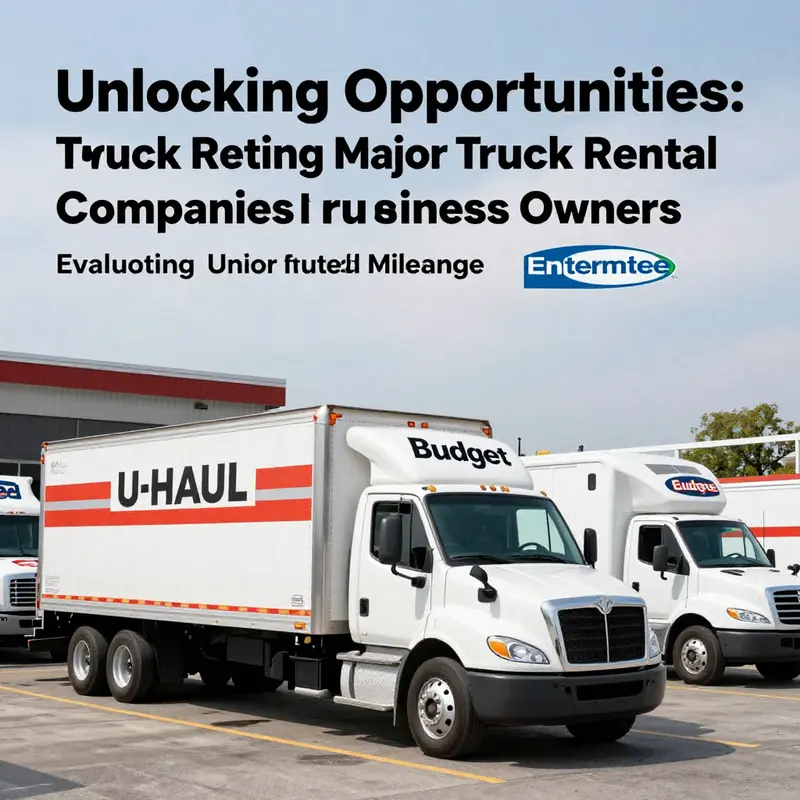
When people start planning a move or a cross-country road trip with a truck, the mileage policy often becomes the most consequential detail. Unlimited mileage promises the freedom to chart a route that isn’t constrained by per-mile charges, turning a long journey into a single, predictable expense. Yet the reality behind that promise is nuanced. The practical difference between a rental that advertises unlimited miles and one that genuinely charges nothing per mile hinges on a web of terms, exceptions, and the specific rental scenario. What follows is a careful look at how major truck rental providers approach unlimited mileage, how one-way and long-distance moves are treated, and what that means for the person who wants to drive farther without worrying about the odometer.
At first glance, the unlimited-miles feature feels straightforward: you pay a daily rate, and miles don’t add up into extra costs. That simplicity is especially attractive for long-haul moves, cross-country road trips, and any plan that turns a loading-and-delivery window into a broad, exploratory route rather than a tightly scheduled dash from origin to destination. The appeal is practical: no need to estimate miles in advance, no patchwork of fees for extra driving. In the real world, however, the absence of per-mile charges is not guaranteed across every rental agreement, and the exact terms can shift with vehicle size, rental duration, pickup and drop-off locations, and even the intended purpose of the rental.
The standout story in this landscape is the nationwide provider that has made unlimited miles a hallmark of its one-way rentals. In practice, this particular company has built its reputation around no additional mileage charges on one-way trips, removing a common cost barrier for customers who are moving long distances or traveling far with a truck in tow. This policy is especially relevant for people who need to move their household goods across state lines or embark on an extended driving journey without the fear of escalating fees as the odometer ticks upward. The appeal here is not only the lack of per-mile fees, but also the reliability that comes with a long-standing national network: you can plan a route with confidence, knowing that the mileage policy remains consistent across many pickup and drop-off points nationwide.
Beyond the headline feature, the broader picture includes a few companion factors that influence the true value of unlimited mileage. First, there are discounts that can compound the savings, turning a standard rental into a more compelling choice. Some providers extend special offers to groups such as members of automobile associations, students, or military personnel. Those discounts may be layered on top of any unlimited-mileage terms, creating a package that delivers both simplicity and value. It’s worth noting, though, that discounts and unlimited mileage do not always travel together in every city or for every vehicle class. Availability can vary by location, and the precise combination of terms can shift with seasonality, local demand, and promotional periods. A careful reader will verify the exact terms for the vehicle size you need and the pickup location you plan to use, because a seemingly simple “unlimited” label can hide nuanced constraints.
When you compare unlimited-mileage offerings, the contract language matters as much as the headline. In many cases, what counts as “unlimited” may appear straightforward in marketing materials, but the rental agreement itself could spell out caps in certain contexts. For example, a provider might advertise unlimited miles for a one-way move yet impose a high cap for certain classes of vehicles or for domestic trips that involve specialized equipment. A typical one-way, unlimited-mileage policy might still come with safeguards designed to prevent abuse, such as mileage caps for oversized vehicles in specific regions or during particular promotional windows. The bottom line is simple in intent, but the execution requires careful reading: the difference between genuine unlimited mileage and a plan that includes a very high but finite cap can be subtle and non-obvious until you sign the contract.
To navigate these terms with clarity, the practical approach is to map out your route in advance and align that plan with the rental terms you’re considering. Start by identifying the vehicle size you’ll need. The class of truck you select—whether it’s a compact moving truck for a studio apartment or a larger 20- or 26-foot model for a full household—will influence both the daily rate and the availability of unlimited-mileage options. Availability matters far beyond the price tag. If your move involves a dense urban departure point or a rural pickup location, the options you actually face may differ. In some markets, a company’s unlimited-mileage promise is easier to secure for certain truck sizes than for others, and that nuance can shift your decision from a theoretical ideal to a practical choice.
The discussion of one-way moves also invites a broader look at how unlimited mileage intersects with other rental terms. Some providers offer unlimited miles on one-way rentals but still require a fuel plan or a certain level of insurance coverage, which adds to the total cost. Others include a basic all-in rate that covers both the vehicle and the miles, effectively bundling the essence of unlimited miles into a single, predictable daily price. In practice, the most value tends to come from a combination: confirmed unlimited miles for one-way travel, a transparent accounting of any required fees (such as environmental or location-specific charges), and the assurance that the vehicle you select is in good condition, with a clean safety and maintenance history. Those are non-negotiables for a smooth, stress-free experience, especially when the miles ahead are many and the road is the main stage of your move.
The reliability of the provider’s fleet and the accessibility of the rental locations also feed into the overall value of unlimited mileage. A company renowned for well-maintained, modern trucks and a robust network of pickup and drop-off sites is more likely to deliver a seamless experience, particularly when you’re on a tight schedule or moving during peak demand. A vehicle that is comfortable to drive and easy to load translates directly into fewer delays and a more predictable itinerary, which matters just as much as the miles you drive. In the end, unlimited mileage is an attractive feature, but it is most valuable when it sits on a foundation of dependable vehicles, straightforward terms, and transparent pricing.
To illustrate how this plays out in practice, consider the contrast between local round-trip rentals and one-way long-distance arrangements. Local rentals almost always come with mileage limits designed to reflect shorter, repeat-use patterns. In such cases, unlimited mileage is the exception rather than the rule, and customers must weigh whether the convenience of more miles justifies potential cost differences. For someone planning a multi-state move or a substantial road trip, one-way arrangements tend to be where unlimited mileage is most relevant. The logic is practical: you aren’t paying to return the truck to its original location with a fixed plan, so a policy that eliminates per-mile charges on the journey itself aligns with the customer’s objectives. Still, the one-way promise is not a blanket guarantee at every location. The specific origin and destination, along with the vehicle class, will shape whether the miles are truly unlimited, or capped only after a very high threshold.
A key takeaway emerges from weighing these nuances: unlimited mileage is not a universal standard across all rental plans. It is a property of the contract that varies by provider, by vehicle type, and by rental duration. The best approach is to treat unlimited mileage as a highly desirable feature to pursue actively, but to validate it through the actual rental agreement before committing. A thorough review of the terms—especially any footnotes about caps, exceptions, or regional restrictions—will prevent unpleasant surprises after you’ve hit the road. And while the specifics matter, the central benefit remains tangible: the freedom to drive your own route without watching the meter climb, a freedom that can make a long move feel less like a logistical puzzle and more like a straightforward, navigable journey.
For many planners, the decision boils down to a practical question: does the promise of no mileage charges on a one-way rental align with your route, your truck size, and your budget? If the answer is yes, then the math can be remarkably favorable. The cost savings from avoiding mile-based surcharges can offset the premium you might pay for the convenience of a one-way move. The savings aren’t purely incremental; they can be multiplied by multiple factors, including avoided trips back to a pickup location for returns, reduced time spent coordinating deliveries, and the psychological comfort of a predictable budget. This is the kind of value that moves from abstract appeal to concrete decision when you’re balancing time, distance, and the personal cost of moving-day stress.
To make this more concrete, consider how one carefully mapped route and a careful reading of the contract could alter your total expense. Suppose you’re planning a cross-country move that spans three weeks of driving, with a blend of loading, driving, and unloading at a handful of stops. If you choose a plan that truly includes unlimited miles on a one-way path, the only variables left are the base daily rate, the vehicle’s size, the duration of the rental, and the extras you select—things like insurance, enhanced roadside assistance, or optional equipment such as a dolly or tie-downs. Each of these elements can be quantified, and together they determine the final tally. But the critical insight remains this: when unlimited miles come with a robust one-way framework, the incremental costs that once loomed as a barrier to long moves can fade into the background, letting the journey lead the way.
To help you navigate from interest to action, a practical recommendation is to engage directly with major rental providers to confirm the current terms, as policies can shift with market conditions, regional promotions, and fleet updates. In this context, the most reliable signal is a clear confirmation that miles on a one-way trip will not incur additional charges, paired with a transparent outline of any exceptions. If you see a combination of straightforward mileage terms, generous vehicle availability, and accessible pickup locations, you have a strong basis to plan your move with confidence. If you want to explore one specific path in depth, you can refer to a detailed guide dedicated to the one-way, unlimited-mileage option and its practical implications for moving and long-distance travel. That resource lays out how the policy works across different routes and how to leverage discounts that may apply to certain groups, further informing your decision.
For readers who want a concise payoff from this overview, the practical bottom line is simple: unlimited mileage on a one-way rental can deliver real value when you’re moving far or driving more than a few dozen miles in a single stretch. However, always pair that promise with a careful read of the rental agreement, a check on vehicle availability, and a clear understanding of any ancillary charges. Do not assume that unlimited miles means no extra costs; instead, treat it as a doorway to potentially substantial savings, but only after you verify the exact terms for your chosen vehicle size and pickup location. When you proceed with confidence in the terms and a plan that aligns with your route, unlimited mileage becomes less about a feature and more about a reliable framework that supports your entire journey from start to finish.
In this way, the question, are there any truck rentals with unlimited mileage, transforms from a generic inquiry into a precise, route-specific decision. Yes, there are, but the value is maximized when you confirm the terms for your exact vehicle, location, and move plan. The practical steps—verify policy details, compare vehicle classes, assess availability, and factor in discounts—remain the same whether you’re moving locally with a short-haul truck or venturing across state lines with a larger model. With those steps in hand, you can approach the choice not as a gamble on a marketing promise, but as a reasoned decision grounded in the terms that will govern your miles on the road.
To explore a detailed example of how the no-mileage policy manifests in one prominent option, you can read more about the specific one-way, unlimited-mileage framework in the Penske guidance for pickup truck rental, which highlights both the policy and the potential discounts that may apply. For a deeper dive into Penske’s one-way option and its moving-truck strategy, you can visit the Penske one-way moving truck rental resource: Penske one-way moving truck rental.
Beyond the specifics of one provider, the broader landscape invites you to consider how mileage terms align with your overall move plan. The most valuable outcomes come from an approach that treats unlimited mileage as part of a larger system: the reliability of the fleet, the transparency of the contract, the cost structure, and the ease of securing the exact truck size you need when you need it. A thoughtful, research-driven approach helps ensure that the difference between a smooth, predictable move and a last-minute scramble isn’t the miles you drove, but the clarity with which you understood the terms before you hit the road.
In sum, unlimited mileage is a real feature offered by major truck rental providers, most notably for one-way, long-distance moves. The practical advantage is not just about not paying per mile; it’s about turning a potentially complex logistics puzzle into a straightforward budgeting exercise. The caveats—locations, vehicle sizes, and contract nuances—are not obstacles so much as essential checkpoints to ensure you’re truly benefiting from the policy. When you align your route, vehicle needs, and rental terms, unlimited mileage can be a powerful enabler of efficient, less stressful moves and explorations alike. For anyone weighing a cross-country move, this is a reminder to verify the exact terms, ask about any caps or exclusions, and consider how the miles you’ll drive fit into a clear, predictable plan rather than an opaque, escalating bill at the end.
External reference: For a detailed external perspective on Penske’s unlimited-mileage guidance, see this external resource: https://www.carinterior.com/penske-pickup-truck-rental-unlimited-miles-guide/.
Final thoughts
In summary, understanding truck rental options, especially those offering unlimited mileage, is vital for business owners looking to enhance their operational efficiency. By exploring various companies and comprehending rental agreements, businesses can find the best solutions that minimize transportation costs while maximizing logistical flexibility. With the right information and strategic planning, leveraging unlimited mileage truck rentals can significantly simplify your moving and logistical endeavors.