
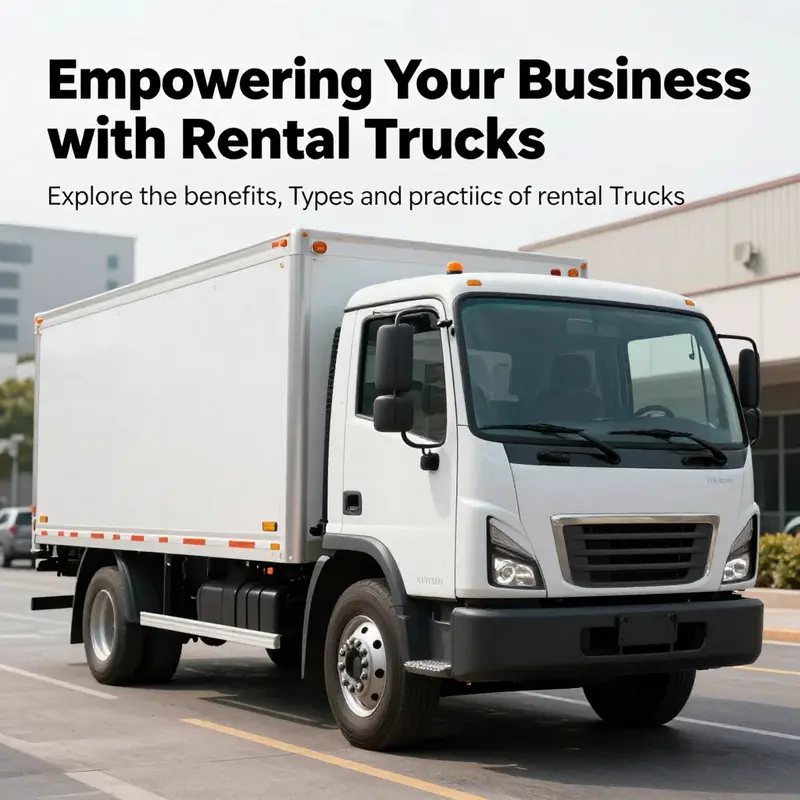
In today’s dynamic business landscape, efficient logistics and transportation are crucial for success. Rental trucks provide businesses with a flexible solution for moving goods, whether you’re transporting office equipment, delivering products, or handling large-scale projects. This article will delve into the different types of rental trucks available to cater to specific needs, highlight the leading truck rental companies and their offerings, and provide essential insights into the regulations and best practices that can help you maximize your rental experience. By understanding these facets, business owners can make informed decisions that enhance their operational efficiency and cost-effectiveness.
Choosing the Right Rental Truck: A Practical Guide
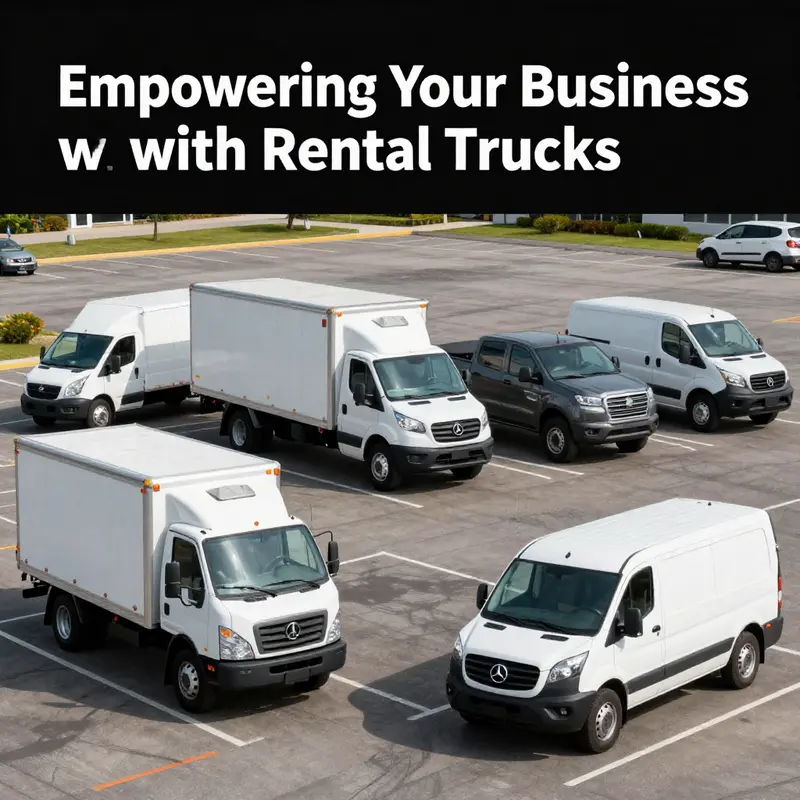
Choosing a rental truck is about aligning a temporary logistics partner with your task. The goal is to match capacity and handling to what you intend to move, where you’ll drive it, and how long you’ll need it. This planning mindset reduces the decision to a structured evaluation rather than a spur-of-the-moment choice. Start with the load—size, weight, shape, and arrangement inside the cargo area. Then consider the route—urban streets, highways, detours, and loading/unloading realities. Finally, review rental terms—billing, insurance, and what happens if plans shift. The right truck is therefore a planning exercise as much as a vehicle choice.
Estimate the load using two dimensions: volume (cubic space) and weight (payload). Think in terms of a packing plan: how many boxes fit along length, width, and height, and how much each layer weighs. For reference, familiar dimensions such as a 16-foot box truck can ground your estimates. See 16-foot box truck dimensions for standard measurements. This kind of planning helps avoid over- or underestimating capacity.
Space and payload drive the choice between light-duty, medium-duty, and heavy-duty configurations. Light-duty suits small moves in tight spaces; medium-duty offers higher payloads with reasonable maneuverability; heavy-duty handles large loads, longer distances, and tougher terrains but with larger turning radii and higher fuel use.
Beyond capacity, consider route characteristics and access. In congested city blocks, a smaller unit may simplify parking; on long highway legs, a larger, steadier chassis can protect goods and reduce shifting. Fragile, temperature-controlled, or oddly shaped items may require specialized configurations.
Review terms and features: mileage policies, insurance levels, pre-trip inspections, and required driving credentials for larger trucks. Realize that deposits, fuel surcharges, and mileage penalties can affect total cost. Build in flexibility to swap vehicles if plans change.
Finally, remember that rental ecosystems increasingly offer online booking, real-time pricing, and digital checklists. A thoughtful approach to planning—load estimation, space planning, route awareness, and terms comprehension—will help you select a truck that minimizes risk and costs while keeping goods moving smoothly from origin to destination.
Moving Solutions on Wheels: How Rental Truck Providers Shape Flexibility, Costs, and Compliance
A rental truck is more than a vehicle with a steering wheel and a tailgate; it is a portable workspace, a temporary warehouse, and a logistical hinge that binds plans to outcomes. When a family stacks furniture and boxes for a fresh start, or when a small business readies inventory for seasonal demand, the rental truck becomes a trusted partner capable of adapting to shifting needs. The fleet that makes up these rental options ranges from nimble pickups and cargo vans to box trucks and the larger, heavier configurations that can haul substantial loads across long distances. In practice, this spectrum lets a mover or operator choose the precise footprint for the job at hand. A purchaser weighing a weekend move against a long-haul delivery might compare a compact, fuel-efficient cargo van for a few loads with a larger box truck that can swallow considerable amounts of household goods in a single trip. For a distributor or a contractor orchestrating a mid-size project, the option to scale up or down without long-term commitments provides a level of agility that is rarely matched by traditional, fixed fleets. The flexibility is not merely about size; it is about configurations that suit cargo type, loading requirements, and schedule realities. Some jobs require a dry, climate-controlled environment; others demand reinforced tie-downs, mechanical ramps, or specialized trailers. The fleet landscape is designed to meet these realities with a mix of box trucks, flatbeds, refrigerated vans, and trailers that complement the trucks, creating a complete end-to-end solution for moving, storing, and delivering goods.
The leading rental truck providers in the United States have built their offerings around the idea that organizations and households need more than just access to a vehicle. They need a platform that can deliver the right tool for the job, when the job demands it. Short- and long-term rentals are standard features, with options for one-way or round-trip arrangements that are appealing for relocations, temporary projects, or fleet expansions. This is particularly valuable for businesses experimenting with new markets, seasonal demand, or project-based logistics that do not justify purchasing a full-time asset. In many cases, a company can mix and match fleet types to align with evolving needs, borrowing a van for a week to pilot a delivery route and then stepping back to a smaller configuration once the trial ends. The value lies not only in the vehicle but in the accompanying services that help keep operations moving smoothly. These often include maintenance and insurance packages, maintenance coverage that reduces unplanned downtime, and simplified driver management through coordinated scheduling and fleet visibility. For some customers, the appeal extends to equipment beyond the truck itself—tailgates, ramps, lift gates, GPS tracking, and adjustable shelving or secure cargo partitions that help ensure goods arrive intact and organized.
The practical decision to rent versus own is anchored in cost and risk assessment. Renting a truck can be considerably less capital-intensive than purchasing a vehicle and assembling a supporting infrastructure of maintenance, insurance, and depreciation. When a business experiences seasonal spikes, a rental strategy can match capacity to demand without committing to fixed costs for an asset that sits idle most of the year. For individuals making a move, the math often starts with a simple comparison: the total cost of a rental truck, including mileage, fuel, and insurance, against the combined price of hiring a moving crew, renting a van, and renting moving supplies. In many situations, the rental option wins on convenience, especially when time is a critical factor and the plan hinges on a precise delivery window. Yet every renter should enter the process with a clear understanding of the terms—mileage limits, deposits, insurance options, and the need for a valid driver’s license appropriate to the vehicle class. Larger trucks require additional credentials, heavier loading considerations, and more deliberate inspection routines before departure. These factors—cost clarity, risk management, and regulatory compliance—define a prudent approach to renting.
From a renter’s perspective, the scope of offerings extends beyond the vehicle itself. Short- and long-term rentals are commonly paired with fleet-management services that take on the burdens of maintenance, insurance, and even driver management for businesses that regularly deploy transportation assets. In practice, this means a company can access a broader toolkit: a spectrum of vehicle types—box trucks for protected cargo, flatbeds for oversized items, refrigerated vans for temperature-sensitive goods—and the logistical support that keeps fleets operating. Specialized equipment becomes an essential part of the decision. A truck with a lift-gac or ramp simplifies loading and unloading, while a vehicle with power outlets or integrated GPS can improve route planning and job-site efficiency. Depending on the job, a customer might need trailers in addition to the truck, such as dry vans or utility trailers, to extend carrying capacity without committing to a larger, more expensive truck.
The rental experience is increasingly shaped by digital convenience. Online booking platforms, real-time pricing, and mobile app support streamline the process from initial inquiry through return of the vehicle. This technology-enabled experience helps renters compare options, reserve the right truck for the job, and adjust plans on the fly when disruptions arise. It also enables better price transparency and easier schedule coordination, both of which matter when time is a primary constraint. Yet behind the screens lies a practical discipline: thorough vehicle inspection, clear contract terms, and a conversation about driver readiness. Before pulling away, renters should inspect the truck for any pre-existing damage, verify the fuel level, and confirm that safety features—such as mirrors, braking systems, and lights—are fully functional. They should also verify that insurance options align with the cargo, value at risk, and the legal requirements applicable to the vehicle class. If the trip involves a larger vehicle, it may require a license class or endorsements in some jurisdictions, and the renter should ensure that their credentials meet the vehicle’s requirements.
A prominent theme in the rental industry is resilience. The market has observed cycles where direct sales to buyers slow and rental fleets become an essential corridor for keeping capacity flowing. In this context, rental and contract-hire services act as a stabilizing force that helps manufacturers and distributors weather downturns by keeping demand for vehicles steady and allowing the fleet to repurpose capacity quickly. A recent industry snapshot highlighted that the rental sector was contributing to market stability in a period of softness. The story extends beyond solo trips or single projects. It touches the broader manufacturing and supply-chain ecosystem, where rental fleets enable manufacturers to continue operations, even when new direct sales are slower than expected. A concrete illustration of this dynamic is a major fleet operator’s investment into hundreds of additional trailers for its rental fleet, a strategic move intended to bring more capacity online by the end of a specified period. The implication is clear: rental fleets are not a stopgap; they are an instrument of market balance, enabling producers and service providers to align production, distribution, and demand more flexibly. This macro-level impact reinforces the practical, everyday value of rental trucks for individuals and businesses alike.
Amid these market dynamics, the practical value proposition remains anchored in simplicity and reliability. For households moving across town or state lines, a rental truck can translate into a straightforward, controlled process: select the right size, secure the necessary loading equipment, and complete the move within a window that works for the family. For small or mid-sized businesses, the rental option supports project-based logistics with predictable costs and diminished exposure to long-term capital commitments. It also offers a hedge against peak-season demand, when owning a truck would mean idle capacity or costly investments in non-core assets. In both cases, the service ecosystem is designed to remove friction. It includes clear rental terms, transparent mileage policies, and options to tailor the contract with add-ons—ramp access, liftgates, GPS, or cargo protection plans—so the customer can match the tool to the task.
For those seeking a practical route through the process, one-way options emerge as a particularly compelling strategic choice for relocations or deployments that do not require returning to the origin. One-way rental configurations enable customers to pick up a vehicle at one location and drop it off at a different destination, aligning with itinerary constraints and reducing the downtime that can accompany a round-trip arrangement. This flexibility is especially valuable for long-distance moves or multi-stop deliveries where time and travel costs are the dominant levers. For readers exploring this path, a concise guide on one-way moving-truck rental offers a clear breakdown of what to expect, how to map routes, and how to coordinate logistics so the vehicle remains a facilitator rather than a bottleneck. one-way moving-truck rental
From the perspective of someone planning a move, a construction site, or a temporary distribution operation, these rental options are more than a budget choice. They are a strategic tool that allows the organization to scale capacity in line with activity, respond to volatility in demand, and manage risk by outsourcing maintenance and insurance to a partner who specializes in transportation assets. The value proposition becomes particularly compelling when the job involves tight deadlines or complex site constraints. In urban settings, where parking, loading zones, and curb space are tightly allocated, the right rental truck can minimize disruption and maximize efficiency. The fleet can be tuned to the site’s geometry—length, turning radius, maneuverability—and outfitted with features that simplify the work and improve safety for drivers who may be new to large vehicles. The result is a practical balance of control and flexibility: a vehicle that carries the cargo, a route that respects the timeline, and a service framework that shoulders the administrative overhead so the user can concentrate on the core task at hand.
The contemporary rental landscape also reflects a broader shift toward data-enabled customer experiences. The ability to compare options, view live pricing, and book instantly is matched by a growing emphasis on transparency around insurance, liability, and limits. Market participants recognize that clarity about mileage caps, fuel policies, and deposits matters as much as the vehicle’s physical capabilities. The best-in-class offerings pair a robust vehicle roster with clear terms and responsive support, ensuring renters understand what is included in the price and what might incur additional charges. In practice, this reduces disputes, accelerates decision-making, and gives customers confidence to allocate resources with precision. As online platforms evolve, the emphasis on reliability, predictability, and service quality becomes a differentiator even in a crowded field.
The chapter’s arc returns to the core idea: rental trucks empower people and organizations to move, assemble, and deliver with fewer constraints. They level the playing field by giving smaller companies access to a range of vehicle types that would otherwise be cost-prohibitive to own. They enable households to execute moves with fewer logistical headaches. They support seasonal peaks, project-based work, and contingency planning in ways that promote resilience across the economy. The practical implications are tangible: tighter schedules, smoother transitions, and better alignment between capacity and demand. In short, rental trucks are not only a transportation solution; they are a strategic enabler of agility in a world where plans must adapt quickly to changing conditions.
For readers who want to explore the practicalities of a move or a project with a rental truck, consider the affordability and convenience of one-way configurations, which can reduce downtime and simplify the logistics calculus. More specifically, one-way moving solutions allow customers to optimize travel routes, limit backtracking, and align delivery windows with site readiness. This approach is particularly advantageous when the destination is a new facility, a newly rented space, or a temporary deployment. The ability to secure a vehicle at one location and end at another streamlines the timeline and often reduces the number of independent tasks a person or team must coordinate. It is a reminder that the rental ecosystem is designed not only to provide a vehicle but to orchestrate a broader logistics choreography that improves overall outcomes. For a concise demonstration of this approach and practical considerations, consult a detailed guide on one-way moving-truck rental.
As the industry continues to evolve, those who use rental trucks will benefit from a deeper understanding of terms, options, and services that extend beyond the metal and tires. The discussion touches on insurance design—how coverage aligns with cargo value and risk tolerance—on how mileage policies shape cost, and on how deposits function as a security against incidental damage. It also encompasses the importance of verifying driver readiness for larger vehicle classes, an area where training, practice, and careful route planning can significantly reduce risk. In the end, the value proposition for rental trucks rests on three pillars: the right vehicle at the right time, a service framework that reduces administrative burden, and a market ecosystem that keeps capacity aligned with demand. When these elements converge, a rental truck becomes not just a means of transport but a reliable partner in a broader effort to move plans forward with confidence.
External resource: For a broader industry overview of how rental fleets operate and support manufacturers, see this external resource about a leading truck rental provider’s platform and services: https://www.enterprise.com/en/truck-rental.html
Internal link reference: For a practical example of planning a move with a rental truck’s one-way option, see this guide on a one-way moving-truck rental: one-way moving-truck rental
The Rules of the Road for Your Rental Truck: Regulations, Safeguards, and Smart Moves
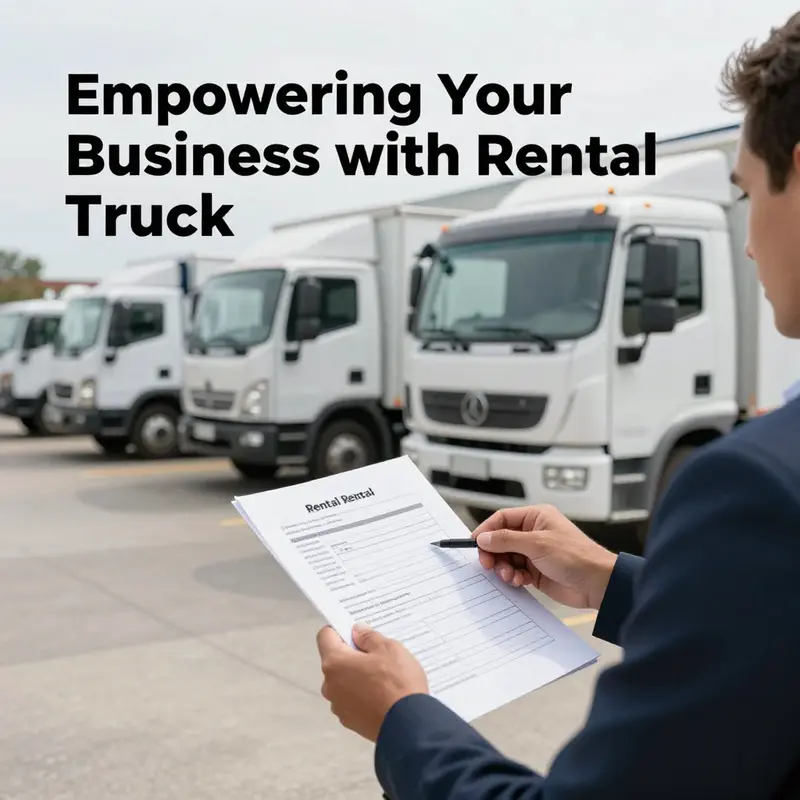
Every time someone rents a truck to move a life, a workshop, or a growing business, the real work begins long before the first mile is traveled. The vehicle itself is a tool, but the process surrounding its use—age limits, licensing, insurance, size choices, and adherence to rules—shapes the entire experience. A rental truck can offer remarkable flexibility and cost efficiency, yet it also carries responsibilities that people often underestimate. This chapter threads together the legal anchors and practical habits that keep a rental project safe, legal, and efficient, turning a temporary arrangement into a dependable extension of one’s plans rather than a source of friction at the curbside or on the highway. It does not shy away from the realities of today, where regulatory standards meet everyday moving needs, and it emphasizes a mindset rather than a checklist, a way of thinking that helps anyone navigate the process with confidence and calm.
First, as with any vehicle that becomes part of a legal or commercial undertaking, the starting point is compliance. In many places, the minimum age to rent a truck is 21, though some carriers restrict certain vehicle classes or high-value rentals to drivers 25 and older. The policy landscape shifts from state to state and from one rental company to another, so the best practice is to verify the specific terms before booking. A valid government issued license is non negotiable, and while some providers accept licenses from across the country or from abroad, the key is that the license be current and usable for the vehicle class you intend to drive. In practice, this means you will often need a standard license for a basic moving van, while larger box trucks may impose more stringent criteria. The momentum of the process then moves to identification and financial responsibility. A current driver’s license, a credit card in the renter’s name for the security deposit and potential charges, and a clear record of the payment method are typically required. Debit cards are sometimes restricted, or they trigger additional verification steps. In some situations, a light credit check may accompany longer rental periods or higher value vehicles. These measures, while sometimes inconvenient, exist to protect both parties—the renter from hidden liabilities and the company from unseen losses.
Choosing the right vehicle is not merely a matter of need; it is a calculation of space, weight, route, and ease of operation. Trucks come in several sizes, and the decision has a practical horizon. A smaller 10–12 foot truck can meet the needs of a studio or a one-bedroom move, but a multi-bedroom household or a fuller cargo load requires a longer canvas. A 17–26 foot truck becomes a common fit for growing households with more furnishings and boxes, while a 26–28 foot option is often the most efficient choice for large moves or when items must be spread across several rooms. The goal is to align capacity with the actual volume of belongings and the length of the drive, avoiding both an underutilized vehicle and a strained, overpacked one. Online sizing calculators, supplied by rental companies, offer quick, practical guidance and can help renters translate rough estimates of belongings into a confident pick. For a quick reference, see the 16-foot truck size guide. 16-foot truck size guide
Beyond the geometry of space, there is a layer of practical logistics that governs how a truck will perform on the road. The fuel economy and the handling of a vehicle of this class depend on its configuration, weight, and how well the load is balanced. The drive itself becomes part of the cost calculus, not just the rental price. Renters should assess the fuel plan offered by the rental company, understand how refueling is handled at return, and recognize that fuel policies vary. In many cases, the vehicle will arrive with a full tank and must be returned with a full tank, or else a refueling charge will be applied. This seemingly small rule helps keep the process transparent and minimizes postshipment surprises, which can sour a move late in the day or complicate a business delivery schedule.
Insurance and liability are not afterthoughts; they are core to risk management. A basic level of liability coverage is often included in the base rate, but many renters opt for additional protection to address gaps in personal auto policies or to simplify what happens if a return trip is interrupted by an accident. Options commonly offered include a Collision Damage Waiver, which reduces financial responsibility for collision damage; Personal Accident Insurance, which covers medical expenses if an accident occurs; and a Loss Damage Waiver, which covers theft or damage under a broad set of scenarios. The decision to purchase extra coverage hinges on a few factors: whether the renter already has coverage through a personal auto policy, the value of the load, and the renter’s tolerance for risk. If the load is fragile, valuable, or critical to a business, the extra coverage often makes sense. In all cases, a candid discussion with the insurer about the specifics of the rental can prevent overlap or gaps in protection.
Pre-rental inspections form the practical backbone of accountability. Before pulling away from the lot, the driver should perform a meticulous check of the exterior and interior, noting any pre-existing damage, and verifying that mechanical systems are in good order. This includes tires and tread depth, lights and signals, mirrors, brakes, windshield wipers, and the instrument cluster. Recording the odometer reading is standard practice, and capturing photos or video of the vehicle in its starting condition is a prudent safeguard. The signing of the rental agreement should occur only after these checks confirm that the vehicle is sound and the documentation reflects its true condition. If damages are identified, they should be documented with time stamps and specific notes so that claims, if any, can be resolved on their own terms. This preflight ritual reduces the friction that often emerges when the truck is returned with a claim that feels incongruent with the vehicle’s starting state.
The regulatory landscape that governs truck rental in the United States is a mosaic of federal and state rules designed to maintain safety, ensure transparency, and protect consumers. Federal safety and leasing standards create a baseline that rental companies must meet, including vehicle safety checks and reliable recordkeeping. The Federal Motor Carrier Safety Administration, which governs commercial carriers, does not typically apply to private individuals renting trucks for non-commercial use. Nevertheless, rental providers must comply with general safety standards, proper registration, and adequate insurance coverage. State and local regulations then fill in the gaps—weight restrictions on certain roads, parking rules in dense urban environments, and rules about commercial vehicle operation where the lines between private and commercial use blur during long-distance moves or business relocations. The upshot is clear: renters should expect a structured process that includes verification of driving credentials, careful vehicle selection, transparent pricing, and fair enforcement of terms. A good provider will present a clear contract that enumerates fees, mileage terms, and responsibilities, reducing the potential for confusion at the end of the rental period.
To move through this responsibly, renters should also consider how the rental fits into broader regulatory expectations that govern vehicle use in urban environments. Local jurisdictions may impose weight restrictions on streets, height limits for tunnels, or parking restrictions that require permits or special arrangements. If a move or delivery takes place in a city center, planning for loading zones, street cleaning days, and temporary prohibitions can save time and prevent tickets. Best practices thus extend beyond the vehicle and into the planning of the move itself. A well-planned route that anticipates street width, traffic patterns, and potential detours can shorten travel time and reduce fuel consumption. It also helps you maintain even distribution of the load, which in turn improves stability and control on uneven surfaces or during sudden lane changes.
In the spirit of responsible practice, keeping the truck in good condition during the rental period matters as well. If the trip involves long distances or remote routes, consider carrying a basic roadside assistance plan. The aim is to minimize downtime and anxiety in case of a minor issue, such as a tire problem or a warning light that appears en route. A proactive approach to maintenance—checking fluid levels, ensuring emergency equipment is present, and confirming that the vehicle lights function as required—adds a layer of resilience to the journey. It is also wise to familiarize yourself with the local rules around commercial vehicle use in any jurisdiction you will pass through, particularly when heavy traffic or narrow streets magnify risk. While the rental agreement streamlines many of these concerns, the driver who knows the terrain and anticipates edge cases tends to experience fewer last minute disruptions and more predictable costs.
Return is not a simple formality, either. The end of the rental period should reflect the same care that accompanied the start. Cleaning the interior, removing trash and debris, and returning the vehicle with a full tank (or paying the required refueling fee) are practical steps that prevent disputes. Returning keys and any equipment promptly allows the rental company to complete its checks efficiently. The vehicle may pass through a post-rental inspection, which can illuminate minor issues that would otherwise become charged liabilities if not addressed promptly. If there is any disagreement about damages, disputing the claim promptly with supporting documentation helps protect the renter. And as with all parts of the process, the goal is to close the rental on fair terms, so a move or a delivery can begin or end with clarity rather than conflict.
When thinking about this entire process, it helps to hold the rental truck not as a single object but as a system that integrates logistics, regulation, risk management, and operational discipline. The tension between flexibility and accountability is where most moving and delivery adventures either thrive or stumble. A well-executed rental experience respects the rules of the road—literally and figuratively—while leveraging the convenience and scale that a truck rental provides. The best practice is to approach the rental with a plan that foregrounds these elements: confirm age eligibility and licensing, prepare documentation, select the right size based on actual needs, understand insurance options and their implications, conduct a thorough pre-rental check, map a practical route, and have a plan for the return that keeps the end of the project smooth and predictable. In doing so, renters can unlock the capacity of the truck to move not just objects, but also plans, timelines, and expectations with confidence.
For readers who want to explore the practical dimension of truck sizes and how to pick the right one for a given move, consider the 16-foot options as a reference point in your planning and use the linked guide as a quick orientation. 16-foot truck The broader takeaway is not a single decision but a disciplined approach to the entire rental experience, one that respects regulatory boundaries while embracing the adaptability that makes rental trucks such valuable tools for households and businesses alike. The road to a successful rental begins with a careful frame of reference and ends with a clear, well-documented, and unambiguous agreement that aligns expectations with reality. In that frame, the truck becomes not an obstacle, but a dependable partner in getting from one place to the next.
External resource: For up to date rental requirements and policy details, see https://www.uhaul.com/rental-requirements.
Final thoughts
Understanding the diverse options available in rental trucks, along with the various services offered by leading companies and the necessary regulations and best practices, is vital for business owners. Rental trucks represent a cost-effective means of logistics that can scale with your changing needs. By leveraging this versatile resource, businesses can optimize their operations, ensure timely deliveries, and meet customer demands more effectively. Equip your business with the right rental truck, and witness improvements in efficiency, productivity, and customer satisfaction.