
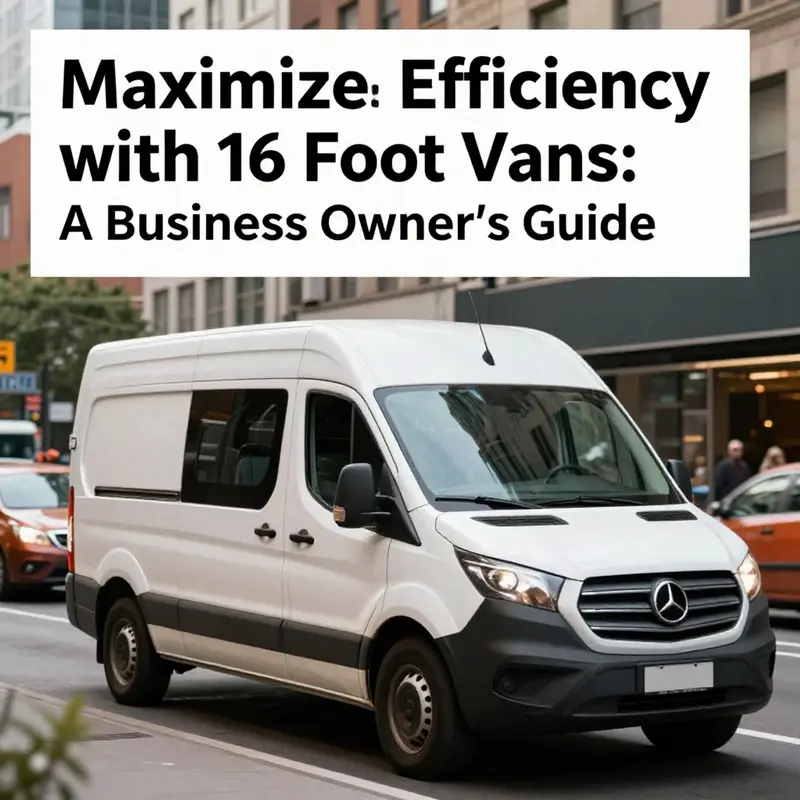
The 16 foot van is an integral part of the logistics landscape, offering a perfect balance of size and capacity. This medium-sized box truck is ideal for business owners seeking an efficient solution for transporting goods in urban settings. In this guide, we will delve into the technical specifications that make the 16 foot van a robust choice for various logistical needs. We will also examine its applications within the logistics and transportation sectors, highlighting its versatility for B2C deliveries and inter-business transport. Finally, we will explore the future of 16 foot vans, particularly in the context of emerging electric vehicle trends that are shaping the landscape of commercial transportation.
The 16-Foot Van: Space, Power, and Fleet Flex
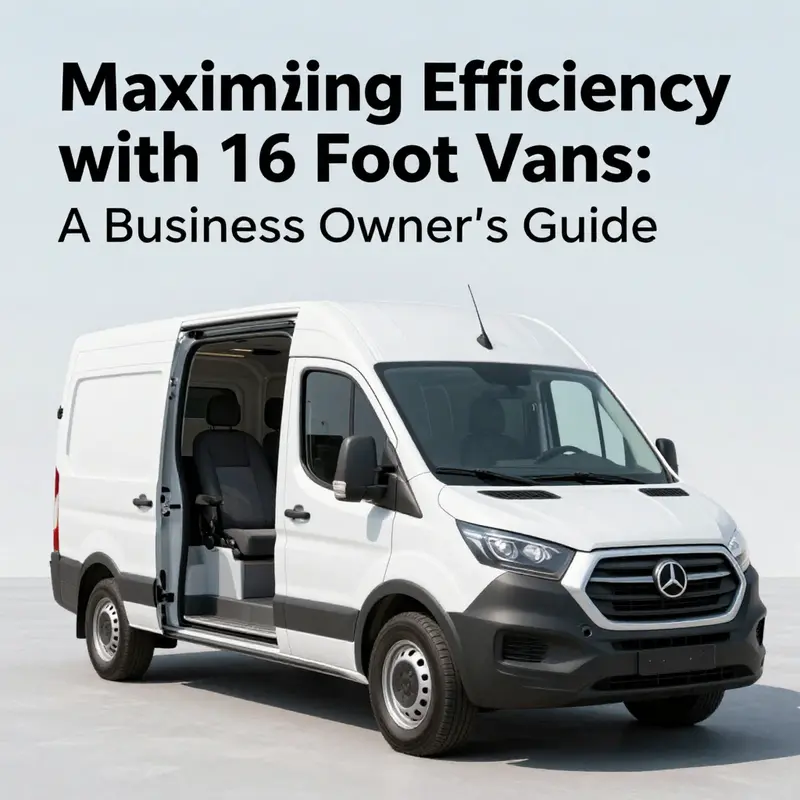
A compact 16-foot van can carry substantial cargo thanks to smart interior packaging and dimensions designed for urban and regional operations. Although shorter than full-size box trucks, it offers a practical balance of floor space, payload and maneuverability, making it a versatile backbone for fleets with tight loading docks and frequent stops.
Externally, typical 16-foot vans measure around 16 feet in overall length, about seven feet in width, and approximately seven feet in height, with roof options that may add extra headroom. Inside, usable cargo space focuses on maximizing floor area and vertical clearance, with interior lengths often in the 13.5–14.5 foot range, widths around six and a half to seven feet, and variable heights depending on the roofline. Payload commonly falls in the 2,000–3,500 pound range, while the GVWR sits in a six- to eight-thousand-pound band, depending on drivetrain and equipment. Proper loading emphasizes weight distribution, securing devices, and accessible aisle space for safe operation.
Powertrains typically include gasoline engines in a modest displacement range, paired with automatics suited for stop-and-go urban operation. Diesel options exist in some markets, delivering strong low-end torque. Drive layouts include front-wheel drive and rear-wheel drive, with suspension tuned to balance comfort and payload stability. The result is predictable handling, steady acceleration, and reliable performance under daily loads.
Beyond pure capacity, the 16-foot van shines in flexibility: easy access through a wide rear aperture, multiple tie-down points, and configurable shelving or pallet layouts that adapt to changing cargo mixes. This adaptability supports both B2B and B2C deliveries, cargo consignment, or technical service roles where tools and parts must be organized within quick reach. In fleet strategy, its size often yields lower daily operating costs and higher route density, while still providing meaningful cargo room to reduce the number of trips needed per day.
As fleets explore electrification and evolving regulatory environments, the 16-foot van remains a practical test case for balancing energy use, maintenance simplicity, and total cost of ownership. Route analysis, charging planning, and driver training all play into realizing the vehicle’s full efficiency potential while preserving reliable service levels.
For practitioners seeking a quick reference on procurement and practical usage, this overview aims to ground decision-making in real-world dimensions, capacity, and operational considerations rather than brand specifics. See also general guidelines on 16-foot box truck rentals as a practical starting point for evaluating options and aligning acquisition with service goals.
The Quiet Backbone: How the 16-Foot Van Powers Last-Mile Delivery, Regional Freight, and Mobile Workspaces
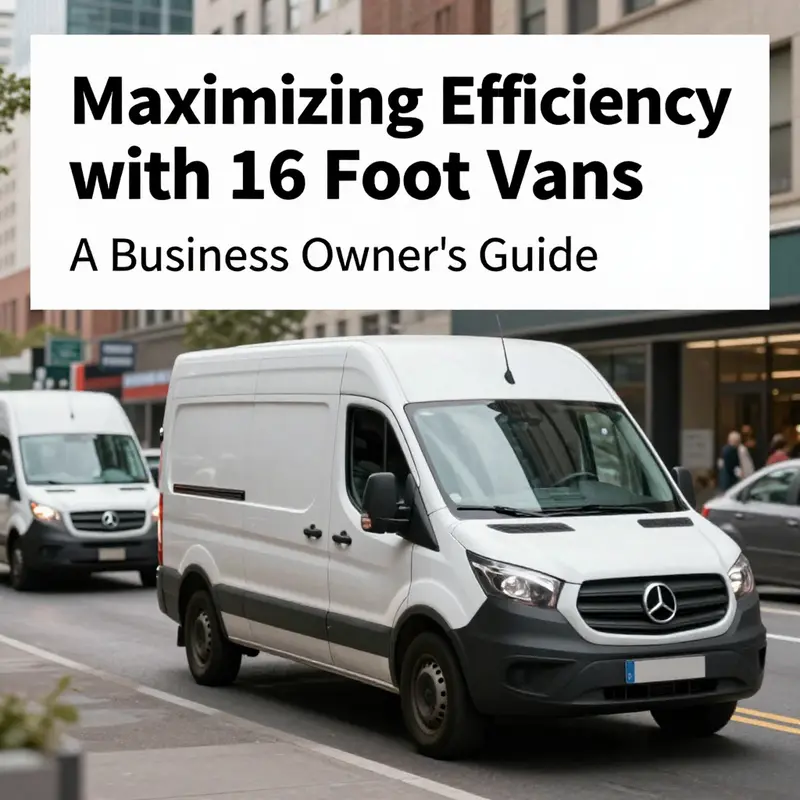
In the landscape of modern logistics, the 16-foot van sits at a crucial crossroads. It is not the smallest fleet workhorse nor the largest freight mover, but its size—compact enough to flirt with city streets and tall enough to swallow meaningful cargo—gives it a distinctive versatility. Picture a box truck that can thread through tight urban corridors, squeeze into a crowded loading dock, and still carry multiple pallets or a bulky assortment of consumer goods. That blend of maneuverability and capacity is what makes the 16-foot van a staple in everyday distribution, a dependable carrier for last-mile fulfillment, regional dry freight, and even specialized roles that look more like a service vehicle than a traditional truck. This chapter follows that through-line, showing how the 16-foot van has become the quiet backbone of many modern supply chains while retaining flexibility that larger rigs struggle to match.
The defining feature of the 16-foot van is its practical footprint. Its cargo area, just shy of five meters in length, bridges the gap between compact panel vans and longer, heavier box trucks. Inside, the space is designed with a straightforward geometry: tall enough to stack standard pallets, wide enough to accommodate stacks of boxes, and with a configuration that can be adapted to suit a wide range of loads. Depending on the model and chassis, the vehicle can handle roughly 5,000 to 7,000 pounds of payload. That range matters because it sets the upper limits for what a typical last-mile route or a small regional run can carry without requiring a partner vehicle or a transfer hub along the way. In practice, many shippers use the 16-foot box truck to move furniture, home improvement products, appliances, and other large consumer goods that benefit from an enclosed, secure interior.
The interior dimensions and the enclosed cargo hold offer protection against weather, theft, and the wear-and-tear of rough handling. For a consumer goods shipment, the box’s rigidity and the secure doors translate into less damage risk and easier loading and unloading with standard equipment such as pallet jacks and lift gates where equipped. The external footprint—narrower than a full-size delivery tractor-trailer but longer than a compact cargo van—gives fleets a flexible option in city centers, where access is tightly controlled, parking is scarce, and maneuverability can determine the economics of a delivery route. In many urban networks, the van is small enough to move with relative ease through congested streets, yet large enough to consolidate multiple small shipments into a single, efficient run. That blend of capabilities is precisely why the 16-foot van is so prevalent in last-mile and regional logistics.
Payload capacity aside, the 16-foot van’s value emerges through the total cost of operations, not just its sticker price or its fuel consumption. The economics of running a fleet rest on a delicate balance: the vehicle’s purchase or rental cost, its maintenance profile, insurance, depreciation, driver wages, and, crucially, the cost per mile or per pallet moved. In this balance sheet, the van’s efficiency shines. It consumes less fuel than a full-size box truck or a tractor-trailer in many typical urban and short-haul scenarios, translating into meaningful savings on frequent, high-volume routes. For fleets that rely on tight route planning and rapid turnarounds, even a small improvement in fuel economy compounds into a larger impact across dozens or hundreds of daily trips. At the same time, the van’s reliability reduces downtime—an essential factor when service-level commitments depend on predictable delivery windows.
The versatility of the 16-foot van extends beyond traditional freight. In moving and storage operations, its enclosed interior provides a secure, weather-proof space for household goods and office equipment during transit. The same enclosure that protects fragile items can also house a compact mobile workshop or service unit for tradespeople who need to transport tools, spare parts, and supplies with speed and organization. Electricians, plumbers, and HVAC technicians frequently convert a van into a mobile workspace, a role that is increasingly practical as service businesses expand to meet growing demand. In those contexts, the vehicle becomes less about moving bulk commodities and more about enabling a workflow: a portable workspace that travels to the job site rather than forcing customers to come to a fixed location.
Within regional freight networks, the 16-foot van fills an essential niche. It can act as a backbone for shorter-haul, high-frequency movements that keep shelves stocked and production lines running on a tight cadence. Short-haul networks often hinge on reliable transfer points between warehouses and local distribution centers, or between manufacturers and regional retailers. The 16-foot van’s size makes it easy to slot into distribution centers with limited yard space, and its cargo area’s adaptability supports a variety of cargo shapes and configurations. In supply chains that value just-in-time inventory, the ability to deliver small, steady loads on a regular schedule can be more valuable than a single, high-volume shipment. This is where the 16-foot van earns its keep: not by maximizing one-off capacity, but by delivering consistent, predictable throughput.
Another enduring advantage is flexibility. The same vehicle that serves as a last-mile courier can quickly transition to a pickup-and-delivery operation for a local business, a temporary external storage unit, or a temporary mobile storefront during events or seasonal campaigns. Because the van’s length makes it easier to maneuver than longer rigs, fleets can tailor routes to the local geography without forcing a wholesale adjustment to their entire fleet. This adaptability translates into real-world savings: fewer specialized vehicles needed on the road, fewer trips with empty space, and faster cycle times that translate into more deliveries per day. In markets where real-time demand shifts with weather, holidays, or regional promotions, the ability to flex the fleet quickly is a significant competitive advantage.
As electrification accelerates in the light-commercial-vehicle segment, the 16-foot van has become a focal point for new energy solutions. New, electrified variants are entering the market, designed to address the urban reality of zero-emission delivery and the need for quiet operation near residential neighborhoods. For fleets evaluating a transition, the 16-foot category offers an attractive proposition: a balance of payload and range that can be tuned through battery capacity and roof-height configurations. The shift toward electrified vans also highlights a broader strategic trend—the convergence of fleet optimization with environmental responsibility. Electric drivetrains can reduce maintenance demands in dense urban routes, contribute to lower total cost of ownership over the vehicle’s life, and help meet increasingly stringent city-level emission targets. At the same time, the traction benefits of electric motors—immediate torque and smooth acceleration—can improve handling in stop-and-go conditions, further enhancing the van’s practical value in city logistics.
For operators, managing a mixed fleet that includes 16-foot vans requires thoughtful consideration of tire wear, brake life, and interior layout. Load planning remains essential; because the cargo area is enclosed and rugged, fleets can standardize pallet configurations, securing methods, and cargo enclosures to streamline loading and unloading. This standardization reduces dwell time at customer sites, a critical factor in keeping routes on schedule. In turn, drivers benefit from consistency: familiar vehicle dimensions, predictable space, and known handling characteristics, all of which reduce operator fatigue and help maintain high safety standards. Indeed, the driving experience of a 16-foot van—weight distribution, braking response, and steering feel—often translates into fewer incidents and quicker, more efficient deliveries. These operational attributes are why many logistics operators lean on these vehicles for routine routes and day-to-day tasking, where consistency matters just as much as capacity.
The path to a well-run 16-foot van operation also involves practical considerations about loading, routing, and training. Loading efficiency matters because the cargo that fits in the van has a direct impact on the number of trips required to complete a given day’s work. Pallet placement, weight distribution, and securing practices must be standardized to prevent shifting during transit, which can compromise safety and increase insurance costs. When pallets or large boxes fill the space, drivers benefit from well-planned order selection and route sequencing to minimize empty miles between stops. The role of a logistics planner becomes central here: matching the cargo mix to the vehicle’s geometry, aligning pickup and drop-off windows, and coordinating with distribution centers to maximize the number of delivered pallets per trip. In densely populated areas, the planner might pair a 16-foot van with digital routing tools that factor in traffic patterns, curb-space availability, and loading zones, turning a potentially chaotic city run into a predictable, repeatable routine.
The human element, too, matters. A dependable driver pool is essential for capitalizing on the 16-foot van’s strengths. Training focuses not only on safe operation and defensive driving but also on efficient cargo handling, sign-off procedures, and on-site coordination with store managers and warehouse personnel. Drivers who understand the nuances of urban delivery—where to park, how to stage a curb, how to communicate with unloading teams—tend to perform better, with fewer delays and less incident-based downtime. This human-vehicle synchronization is a recurrent theme in fleets that prioritize reliability and customer satisfaction. When the vehicle itself supports the work style of the drivers, the result is a more resilient and more scalable operation.
In that light, the 16-foot van is less an isolated tool and more a component of a broader logistics ecosystem. It interfaces with warehouse management systems, route optimization software, and real-time telematics that monitor load and route progress. The vehicle’s role in the chain is not to carry the maximum possible weight on every trip, but to deliver the best combination of speed, coverage, and cost per stop. The chain isn’t broken when a single van is idling because of a loading delay or a traffic bottleneck; the strength of the system lies in the predictability of the fleet as a whole. When fleet managers single out a few key workhorses—the 16-foot vans that repeatedly handle reliable, high-frequency routes—they can tune staffing levels, maintenance schedules, and insurance parameters to fit actual operating conditions. In this way, the van contributes to a lean, resilient logistics architecture that remains flexible in the face of demand fluctuations, seasonal peaks, and the evolving needs of e-commerce and regional distribution.
For readers curious about the practical dimensions and how a 16-foot box truck fits into a modern rental fleet, a concise reference point is available online. See the overview of the 16-foot truck for a straightforward sense of its specifications and use cases: 16-foot truck.
As the industry continues to evolve, the 16-foot van will likely gain even more importance as a bridge between the efficiency of small vans and the capacity of larger trucks. Its ability to adapt to different roles—from urban last-mile duties to regional service and storage tasks—positions it as a flexible, scalable option for fleets seeking reliability without overextension. The trend toward electrification will only intensify this role, as cities push for quieter, cleaner deliveries and as fleets seek to balance upfront costs with long-term savings in maintenance and energy expenditure. The 16-foot van, with its balanced proportions, will be among the vehicles that shape how goods move in the next decade, turning every stop into a structured, repeatable step in a broader, more resilient logistics choreography.
External resources that provide industry-standard context for the scope and capabilities of box trucks, including the 16-foot category, can offer additional depth. For a broader look at standard specifications and service interpretations for box trucks, refer to industry documentation and cross-carrier references available online: https://www.ups.com/parcel/boxtrucks
Rising in the Street: The 16-Foot Electric Van and the New Frontier of Urban Delivery
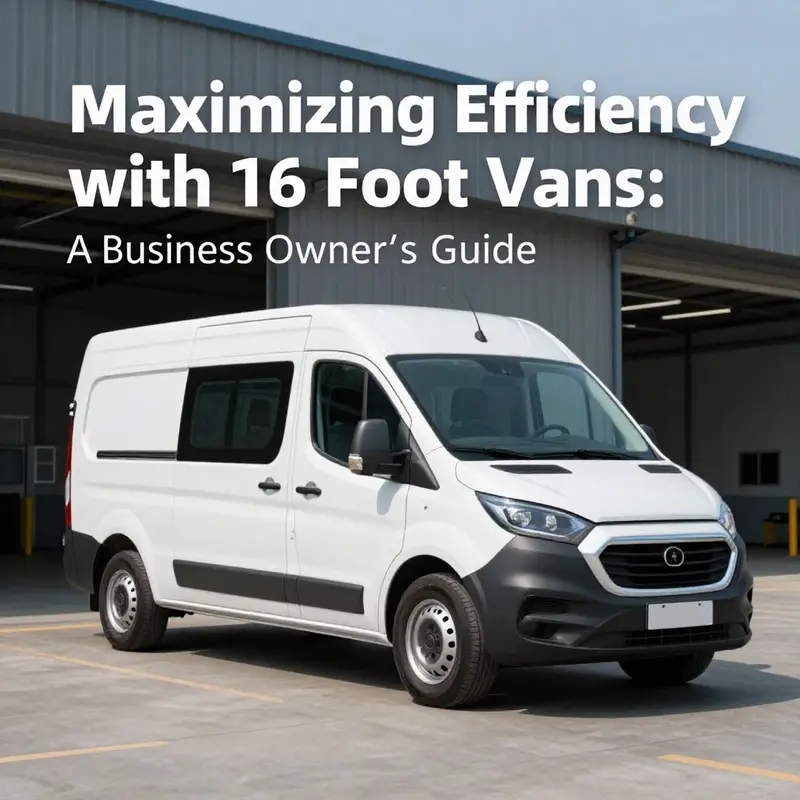
A compact, boxy silhouette that once felt anti-climactic now stands at the center of a city-wide shift in how goods move from storefront to doorstep. The 16-foot van, long a staple of regional and local freight, is being reimagined as a nimble, battery-powered workhorse for dense urban environments. Its size positions it between the smallest cargo vans and the larger, longer-wheelbase trucks, giving operators a rare blend of cargo capacity and maneuverability. In a world where every curb and narrow street is a potential bottleneck, the 16-foot electric variant emerges as a pragmatic compromise: enough interior space to carry a meaningful quantity of pallets, yet compact enough to navigate congested lanes, loading docks, and tight loading zones with relative ease. As e-commerce continues its relentless ascent, the demand for last-mile solutions that can reliably deliver large, multi-item orders without imposing heavy urban strain is driving this segment toward a more prominent role in city logistics.
The fundamental appeal of the 16-foot van in an electric configuration lies in its balanced footprint. Its cargo area can accommodate multiple standard pallets, a standard for many merchants who ship furniture, home goods, appliances, and building materials. Yet its footprint remains manageable within metropolitan traffic patterns. This dual capability matters not only for the end customer but also for fleets seeking to optimize utilization. When a single vehicle can perform multiple functions across a workday—home delivery, regional pickup runs, or mixed-use intra-city trips—the math of fleet uptime improves. The practical reality of daily routes reveals the van’s adaptability: it can complete a grocery and home-improvement delivery in urban cores while still serving as a small-scale trunk route for nearby commercial customers. The design supports a natural model of split shifts, where fleets exploit depot-to-downtown runs and backhaul opportunities, all while shrinking the total distance traveled per delivery.
In electric form, the van’s economics are shaped by a careful alignment of energy capacity, charging practicality, and duty-cycle planning. Typical payload ranges for 16-foot configurations hover around 5,000 to 7,000 pounds, a window that includes cargo, driver, and the occasional auxiliary equipment. This payload capacity is especially meaningful when the interior can be configured to maximize space without compromising accessibility. The interrelationship between payload and range becomes a central planning constraint. A daily route that centers on urban corridors often demands a balance: a high enough payload to justify a round trip, paired with a battery capable of delivering a reliable schedule without frequent, lengthy stops for charging. The growing availability of rapid charging and higher energy density packs is altering that equation, making longer daily cycles more feasible while protecting the vehicle’s total cost of ownership. For operators, the practical question becomes not just how far the van can go on a single charge, but how efficiently it can be recharged during downtime at a packed city depot.
The narrative around urban electrification is inseparable from the evolution of smart fleet management. Modern 16-foot EVs do not run on a closed loop of mechanical reliability; they operate within networks of sensors, telematics, and AI-assisted routing that optimize every mile. Real-time tracking and route optimization reduce idle time, help avoid congestion, and improve on-time delivery metrics. Predictive maintenance, driven by data streams from battery management systems, thermal controls, and drive-line telemetry, minimizes unexpected downtime. The result is a fleet that behaves more like a living ecosystem than a collection of individual trucks. When a van can report battery health, thermal load, and route feasibility ahead of departure, dispatch teams can reallocate tasks swiftly, preserving service levels while shrinking energy waste. This orchestration is especially crucial in dense metros where even a small delay can cascade into a chain of missed deliveries. The integration of AI-driven planning with the practical realities of city streets is turning the 16-foot EV into a pivotal node in the modern urban logistics network.
Battery technology is the heartbeat of this transformation. The current wave of compact electric vans leverages improvements in energy density, thermal management, and charging speed to push the envelope on daily duty cycles. The focus has shifted from simply maximizing range to balancing range with payload and charging practicality. In many urban contexts, a range that covers typical daily routes with a comfortable margin for contingency is more valuable than a best-case, long-range claim. The push toward solid-state chemistries and ultra-fast charging infrastructure promises to shrink downtime between trips, allowing fleets to complete more deliveries in a shorter window. Even modest advances in charging speed and energy throughput translate into meaningful gains in daily productivity. The broader implications touch on depot design, electrical capacity planning, and grid resilience in districts where delivery demand spikes at specific hours. A city’s ability to support dense charging networks will influence which routes are viable and how fleets schedule their shifts.
A modular interior design emerges as a practical strategy to expand a 16-foot EV’s applicability across industries. If one vehicle can be configured to carry refrigerated goods for a small-scale cold-chain operation, or retooled to accommodate shelves and secure compartments for hardware and furniture, the vehicle becomes a platform rather than a single-purpose tool. Such modularization reduces the capital cost of fleet diversification and simplifies maintenance by standardizing core systems while enabling interior customization. Operators can tailor the cargo bay to optimize pallet organization, securing methods, and product protection. This versatility matters not only to logistics providers but also to last-mile businesses that might periodically need cold storage, hazard-free packaging, or high-security compartments for valuable shipments. The potential for interior reconfigurability makes the 16-foot EV a flexible asset in a market where customer expectations are diverging and the range of product sizes is expanding.
Regulatory dynamics are quietly reshaping the incentives and constraints facing 16-foot vans. Cities with stringent air quality standards and low-emission zones push fleets toward zero-emission personnel and freight transport. In these environments, the total cost of ownership and the reliability of charging infrastructure become more decisive than the nominal purchase price. Incentive programs, whether in the form of subsidies, tax credits, or access privileges in restricted zones, tilt the economics in favor of electric propulsion. Conversely, a patchwork regulatory landscape can complicate deployment if charging opportunities are scarce or if grid capacity is strained during peak hours. In this context, the 16-foot EV sits at the intersection of technology and policy: a vehicle that can meet urban air goals while delivering predictable service with manageable operating costs. As policymakers plan for future fleets, they consider not only the environmental benefits but also the system-level impacts, such as charging demand curves, energy procurement strategies, and the resilience of urban logistics in weather-driven contingencies.
From the operator’s standpoint, the market implications of this evolution are nuanced. The move to electric power in the 16-foot segment is driven by a blend of customer expectations, internal efficiency goals, and regulatory signals. Customers increasingly expect reliable delivery windows, transparent tracking, and minimal disruption from vehicle downtime. An EV that consistently meets delivery promises while reducing noise and air emissions speaks to the values of modern urban retail and services. Fleet managers, tasked with maximizing utilization, discover that the predictability of an electric van’s performance can improve planning accuracy for both inbound and outbound legs of a route. The charging schedule, once perceived as a potential constraint, becomes a controllable parameter in the same way fuel planning is for conventional vehicles. As a result, the economics of operation begin to favor the EV option, especially when the depreciation of the vehicle, future energy prices, and maintenance costs are projected over a typical asset life.
An important but often underappreciated consideration is how cities and businesses co-design the spaces in which these vans operate. Depot layouts, curbside loading zones, and micro-distribution hubs can be curated to optimize energy use and traffic flow. Efficient urban charging hubs near high-demand corridors can reduce vehicle downtime and minimize grid stress by coordinating charging with off-peak periods. Smart chargers, demand-response applications, and night-time charging strategies allow fleets to participate in grid balancing efforts while ensuring readiness for daytime operations. The 16-foot EV thus becomes not only a supplier of goods but also a small-scale, adaptable energy consumer integrated into the urban energy system. In time, this integrated approach may influence the way cities plan curb space, loading dock access, and the allocation of on-street parking to support continuous, low-emission deliveries.
To illustrate the practical framing, consider the idea of a common reference point for interior layouts and cargo space. The interior is often imagined in terms of a few standard configurations that can be swapped as needed for specific tasks. For example, a configuration optimized for porch-ready furniture deliveries will prioritize wide cargo doors, reinforced tie-down points, and high-security compartments for valuable items. On the other hand, a refrigerated variant might demand an insulated, climate-controlled zone with easy-clean coatings and precise thermal sensors. The ability to switch between these modes within the same platform lowers the barrier to offering a wider range of services with a single fleet, reducing capital and training costs while maintaining reliability. For those who want a tangible reference, a practical visualization can be found in the widely cited dimensions guide used by many operators to plan pallets, aisles, and stacking patterns within a 16-foot box truck framework: 16-foot box truck dimensions. This reference point helps teams understand how many pallets can be accommodated, how cargo should be oriented for efficient loading, and where to locate equipment or accessories that improve ergonomics and safety.
Looking ahead, the trajectory for the 16-foot electric van rests on a converging set of advances. Battery chemistries that push energy density higher while reducing weight and cost will broaden the practical range and payload capacity. Charging innovations—particularly faster, more resilient charging networks and improved vehicle-to-grid capabilities—will reduce the downtime associated with recharging. The modular interior concept will mature into a standard toolkit of configurations, enabling fleets to adapt rapidly to new business lines or seasonal demand without purchasing new vehicles. Regulatory environments will continue to shape incentives and access, rewarding fleets that demonstrate emissions reductions with operational advantages and more favorable capital terms. Through all of these forces, the 16-foot electric van is likely to become a cornerstone of urban delivery, a vehicle that can deliver the goods that shape daily life while doing so in a way that respects the crowded, energy-conscious, and policy-aware cities of the near future.
The broader market implications are substantial. As e-commerce intensifies, the need for efficient, zero-emission delivery options grows in tandem with consumer expectations for speed and reliability. The 16-foot EV fits squarely into this niche, offering a viable option for regional and local transport that can scale with demand while aligning with environmental standards. Operators who recognize the value of data-driven routing, modular interiors, and proactive maintenance will be better positioned to reduce total costs and to respond to market shifts with agility. The combination of interior flexibility, smarter fleet management, and robust energy solutions positions the 16-foot electric van not simply as a tool for today’s deliveries but as a scalable platform for tomorrow’s urban logistics ecosystem. In such a system, every route, every pallet, and every charging event becomes part of a larger choreography aimed at delivering efficiency, reliability, and cleaner air for cities that deserve both progress and livability.
As with any significant shift in heavy transportation, the path forward is iterative. Fleets will pilot different configurations to understand how best to balance range, payload, and velocity across varying urban topographies. Municipal planners will test micro-hub concepts to determine the most efficient way to stage energy use and curb access. And manufacturers will pursue new materials and designs that optimize weight, safety, and thermal performance. The 16-foot electric van embodies this iterative mindset: a platform that can adapt, learn, and improve as data pours in from streets, warehouses, and cities themselves. The result is a vehicle that not only carries goods but also embodies the evolving relationship between urban life, energy systems, and the complicated, dynamic flows of modern commerce. For readers seeking a broader frame of reference on the energy and policy backdrop shaping these developments, an external resource offers a comprehensive view of global electrification trends: https://www.iea.org/reports/global-ev-outlook-2023
Final thoughts
The 16 foot van stands out as a versatile solution for business owners in the logistics realm. With its solid technical specifications, it offers substantial cargo capacity and adaptability for numerous applications from urban deliveries to inter-business transport. As the industry moves towards sustainability, the emergence of electric variants will redefine operational efficiency and reduce environmental impact. Embracing the 16 foot van not only meets current business needs but positions owners to thrive amid evolving market trends, making it an ideal investment.