
For business owners navigating the complex world of logistics, the choice of vehicle can make a significant impact on efficiency and cost. The 16-foot truck, a medium-duty cargo vehicle, stands out as an optimal solution for various commercial needs. Its versatile size is ideal for urban deliveries and small-scale logistics, making it a go-to for businesses in retail, courier services, and construction. In this article, we’ll delve into three crucial chapters: the specifications and uses of a 16-foot truck, current market trends affecting truck rental and sales, and important environmental considerations relevant to transportation. By understanding these aspects, business owners can better leverage the potential of 16-foot trucks to enhance their operational capabilities.
A Compact Workhorse: Understanding the Specifications and Practical Uses of the 16-Foot Box Truck
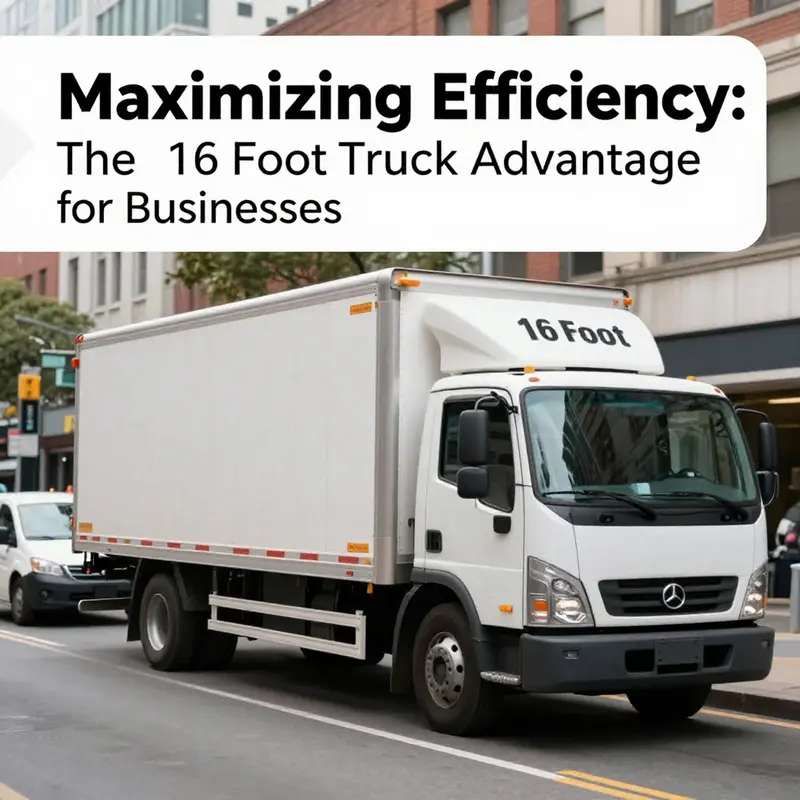
A 16-foot box truck sits at a unique intersection of cargo capability and urban agility. It is not the oversized hauler that crowds the street with a broad wake of diesel and a cavernous interior; it is a precise tool designed to squeeze through city streets, slip into tight loading docks, and deliver a reliable volume of goods without the heft and expense of a full-size tractor-trailer rig. In the everyday rhythm of moving projects, small business logistics, or last-mile delivery, the 16-foot box truck becomes a dependable companion—one that balances footprint, payload, and efficiency in ways that larger vehicles often struggle to match. The appeal of this size is not merely the exterior measurement; it is the way that measurement translates into practical, repeatable performance on the road and on the job site. When a driver slides behind the wheel and surveys the urban canyons and shopping districts that define modern logistics, the 16-foot truck offers a predictable scale that aligns with both the needs of moderate shipments and the constraints of city streets. Its design invites a straightforward approach to loading, securing, and transporting goods, a simplicity that can yield real time savings across a week of work by reducing dwell times, cutting downtime at docks, and smoothing the flow of inventory from origin to destination. The result is a vehicle that feels purpose-built for the kind of tasks that sit between hand-to-hand moving and full-scale commercial distribution. To understand its total value, it helps to move beyond the numbers and envision how the truck behaves in practice, how its space is managed, and how it adapts to a spectrum of use cases—from furniture relocation and retail restocking to perishable goods delivery and on-site material handling at constrained sites.
From the outset, the core specifications of a 16-foot box truck set expectations for both capability and maneuverability. The most widely cited exterior footprint is a length of 16 feet, paired with a width of about 8 feet and a height near 8 feet. Those dimensions are not arbitrary; they map directly to urban tolerances—parking spaces, curbside loading zones, and tunnel clearances—while still delivering a lined interior where cargo can be organized and secured with structure and care. Inside, the cargo volume is the centerpiece of real-world planning. While some broader references highlight a range that begins in the neighborhood of 500 cubic feet and climbs toward 700 cubic feet, others describe configurations that can approach 900 to 1,000 cubic feet under high-ceiling models or specialized layouts. The truth is that cargo volume depends on the exact box configuration, the ceiling height, and how the interior is configured with shelves, tie-downs, and loading barriers. The practical takeaway is that a 16-foot box truck offers more than enough space for a modest furniture move, a few pallets of inventory, or a compact storefront restock, yet it remains small enough to navigate urban corridors without becoming a traffic bottleneck or a parking liability.
Equally central is payload capacity, which typically falls in a wide range from roughly 2,000 to 3,500 pounds. That span reflects differences in chassis strength, box design, and the way a manufacturer engineers the undercarriage to balance weight with fuel efficiency. In the real world, this means that a 16-foot box can handle a couple of heavy appliances, a handful of cabinetry components, or an assortment of household goods with confidence. It can also cover a substantial portion of small-business inventories, depending on the mix of items and their packaging. The margin between gross vehicle weight and payload is a practical consideration that informs loading strategies, equipment needs, and insurance planning. A well-planned load, with items secured and distributed to maintain stable weight across axles, reduces the risk of shifting cargo during braking or cornering and helps ensure safe, predictable handling on crowded streets.
If a truck is destined for food service, pharmacy, or other temperature-sensitive tasks, a refrigerated (reefer) variant adds another layer of capability. A 16-foot reefer box truck brings a climate-controlled cargo area with insulation and a powered cooling system that maintains precise temperatures regardless of ambient weather. The refrigeration unit changes the calculus of operation by aligning the vehicle with cold-chain requirements: perishable groceries, frozen items, and time-sensitive pharmaceuticals all have transport needs that a standard dry van cannot satisfy without compromising product integrity. The presence of a reefer system also influences maintenance and energy planning, because the refrigeration unit draws power and adds considerations for fuel or battery management, depending on the vehicle’s architecture and whether the reefer operates while driving or only when stationary. The ability to switch between dry and refrigerated configurations—where available—expands the modularity of the 16-foot platform, enabling a single chassis to cover multiple lines of business without a full fleet swap.
Beyond the box itself, the chassis and wheelbase play a critical role in how a 16-foot truck behaves in the street ballet of urban logistics. The wheelbase is typically tuned to support tight turning radii, a feature that is especially valuable when negotiating residential streets, loading docks with limited space, or parking bays tucked between storefronts. This emphasis on maneuverability is balanced against stability and load distribution, ensuring that operators can maneuver with confidence and maintain control when encountering uneven pavement or sudden traffic dynamics. Powertrains are chosen with city driving in mind, favoring engines and transmissions that deliver steady torque at low to mid-range RPMs, good throttle response for stop-and-go traffic, and respectable fuel efficiency given the weight of the cargo and the urban environment. While some models lean toward gasoline configurations for cost and maintenance reasons, others incorporate diesel options for higher torque and range, all in service of a predictable daily operating profile rather than showroom performance.
The practical use cases for a 16-foot box truck cover a broad spectrum, but the through-line is a combination of controlled space and predictable load management. Retailers needing to restock stores within a metro area often rely on a vehicle light enough to be nimble yet capacious enough to deliver a meaningful quantity of goods in a single trip. Moving professionals frequently use a 16-foot truck for mid-sized relocations that lie between “small” and “large” transfers—think apartment or condo moves where furniture and boxes fill a box truck without filling to the brim. Small businesses that maintain inventories, bring equipment to client sites, or run on-site installations benefit from a platform that is easy to load, quick to unload, and quick to reposition for successive jobs. In these contexts, the interior layout matters as much as the exterior. The combination of cargo ties, fixed anchor points, non-slip floors, and protective lining helps secure items and minimize damage during transit. The interior can be configured with adjustable shelves, bulkhead dividers, and cargo nets that tailor the space to the week’s typical load, reducing the need for last-minute improvisation and enhancing safety during transport.
The topic of space and payload is inseparable from the realities of vehicle operation. A 16-foot box truck must contend with the realities of parking rules, loading dock access, and the on-ramp tempo of a workday that rarely stays on a single schedule. In practice, drivers learn to plan around peak loading times, identify docks with compatible heights, and carry essential tools for securement—ratchets, straps, blankets, and edge protectors—so that every loading or unloading sequence proceeds with discipline. The modular nature of the interior encourages crews to think in terms of zones: a loading zone for furniture or crates, a secondary zone for fragile items, and a staging area near the rear doors where pallets can be placed for easy handling. This zoning not only speeds up operations but also reduces the likelihood of cargo damage, which in turn lowers insurance costs and improves the reliability of service levels.
For industrial applications beyond simple transport, the 16-foot chassis can be adapted with add-ons that extend its utility in confined spaces. Smaller crane configurations, often built on similar chassis, enable precise lifting and material handling where a larger crane would be impractical. Manual mini truck cranes, which rely on mechanical leverage rather than heavy hydraulics, offer a safe and cost-effective solution for moving loads in indoor warehouses, on construction sites with limited clearance, or in environmentally sensitive settings where footprint and noise must be controlled. The appeal of these adaptations lies in their ability to keep the same undercarriage and body while expanding the range of tasks that can be accomplished with a single vehicle. In practice, this translates into reduced equipment inventories for a business and faster job completion on tight sites, where every minute of crane-assisted lift counts toward meeting tight deadlines.
Another dimension of the 16-foot truck’s story is the financial and transactional framework that supports its use. For many operators, the decision between purchase and rental hinges on the balance of utilization, maintenance costs, and capital requirements. The capacity to rent a short-term vehicle during peak seasons or to test a particular configuration before committing to a purchase can provide much-needed flexibility. In cross-border or international logistics scenarios, a payment framework that offers security and clarity—such as payment guarantees in widely accepted currencies—can reduce friction when moving goods across regions. The point is not to convert the 16-foot truck into a financial instrument but to acknowledge that the economics of use matter just as much as the physics of the cargo space. In real terms, the cost-per-use of a 16-foot truck can be lower than expected when there is careful planning around loading efficiency, fuel management, and maintenance scheduling, and when the operator adopts a modular approach to interior setup that aligns with different job types.
The relevance of the 16-foot box truck in today’s logistics landscape is enhanced by its compatibility with digital marketplaces and rental ecosystems. Buyers and renters can find a wide array of configurations and options, allowing them to tailor the vehicle to the specific demands of a given project. When planning a move, restock, or regional delivery, a simple, well-structured load plan—one that accounts for item dimensions, weight distribution, and securing methods—can translate into smoother execution and fewer surprises on the road. It is, after all, the synergy between the physical space inside the box and the intangible variables of time, route, and weather that determines the success of a given operation. In practice, the 16-foot truck invites a disciplined approach to logistics: measure the space before loading, map the route with an eye toward dock access, and maintain a constant readiness to adapt to unforeseen changes in schedule or cargo mix.
To connect the practical with the aspirational, consider how a small business might frame a typical week around a single 16-foot truck. Monday might begin with a delivery route that replenishes several neighborhood stores, followed by a mid-day restock at a warehouse or showroom. The truck’s interior could be organized with a lightweight shelving system that keeps heavier items toward the bottom, with straps and nets that secure everything snugly. Afternoon hours could be reserved for a targeted move—relocating office equipment or transporting a storefront display to a pop-up location. On days when perishable items are part of the load, the refrigerator option becomes central, with temperature logs and battery checks integrated into the day’s pre-trip routine. The beauty of this workflow is the predictability: a vehicle size that fits the job, a set of practices that keeps cargo safe, and a route plan that minimizes unnecessary detours. For teams that operate on a lean schedule, the 16-foot truck can deliver consistent performance without the overhead of larger fleets, enabling a steady cadence of work with a predictable depreciation timeline.
As the chapter closes on the essence of specifications and uses, it is useful to anchor this knowledge with a simple, practical mindset: know the space you have, respect the load limits, and plan the trip with an eye toward dock access and parking. This is not about feeling compelled to choose one exact model or to memorize a long list of variants; it is about understanding the trade-offs inherent to the 16-foot class and using that understanding to select a configuration that aligns with your operation’s demands. If you are evaluating whether a 16-foot box truck is the right tool for your needs, begin with a clear assessment of the items you move most often, the typical weight you carry, and the environments in which you operate. Then balance those factors against the interior options—the presence or absence of temperature control, the layout of tie-downs, and the potential for modular upgrades such as shelves or lightweight crane attachments. The goal is to arrive at a configuration that feels natural to your workflow, minimizes downtime, and enhances reliability across your typical cycle of trips. In this sense, the 16-foot box truck is less a single product and more a versatile platform—one that can be tuned to the rhythm of your business while preserving the agility that makes it valuable in the first place.
For readers who want to explore a concise, model-focused overview of 16-foot configurations, see the 16-truck overview. 16-truck overview.
External resource for broader context and listings of 16-foot box trucks: https://www.truckscout24.com/en/vehicles/trucks/box-trucks/16-ft/
Riding the Curve: The 16-Foot Box Truck in Modern Delivery
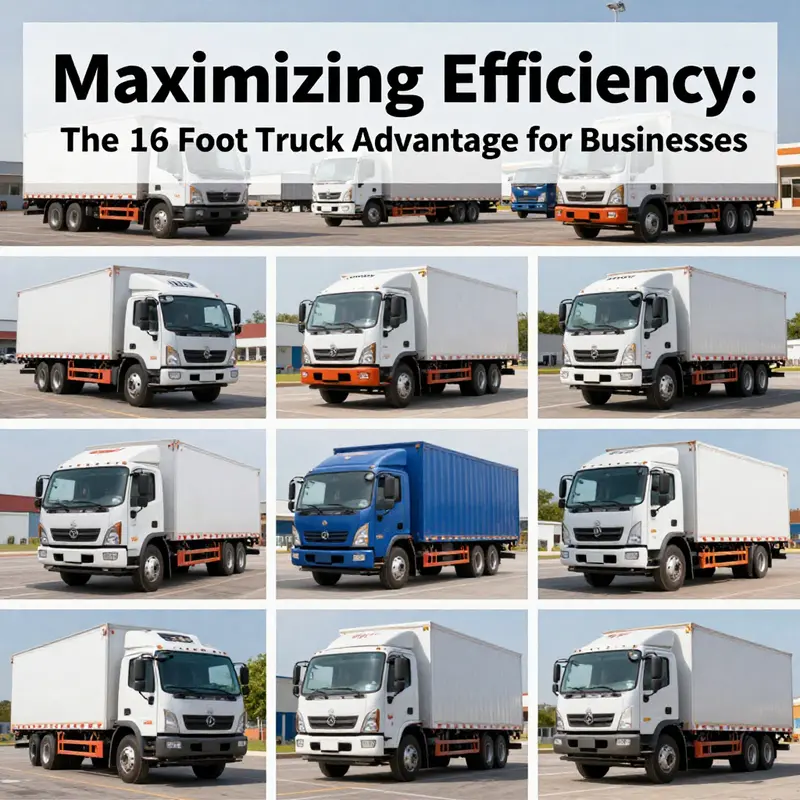
In urban logistics, the 16-foot box truck combines maneuverability with usable capacity. Its size enables efficient urban routes while carrying a substantial payload. As e-commerce and service fleets optimize for on-time delivery and flexible capacity, this vehicle type has shifted from niche to mainstream. Internally, typical cargo space ranges around 900 to 1,000 cubic feet with payloads suitable for mid-sized loads. The result is fewer trips, lower backhaul risk, and improved route density in crowded markets. This makes the 16-foot box truck a versatile asset for couriers, retailers, tradespeople, and regional distributors who need reliable, scalable transport without the overhead of larger fleet assets.
Market dynamics reflect growing demand: urban logistics constraints reward smaller, more agile vehicles; asset-light models enable faster scaling; and digital platforms simplify rental and plan-based ownership. Manufacturers respond with fuel-efficient engines, smarter telematics, and options for temperature-controlled configurations to expand applicability across groceries, pharmaceuticals, and sensitive equipment. In parallel, rental and fleet-sharing ecosystems reduce barriers to access, letting businesses experiment with capacity and align costs with demand.
For managers evaluating this asset, key considerations include total cost of ownership, maintenance and uptime, driver comfort, and compatibility with loading docks and city routes. The trend toward electrification and alternative powertrains is gaining momentum, driven by regulatory pressure and long-term operating savings. Ultimately, the 16-foot box truck offers a practical bridge between small-town versatility and urban-scale delivery capability, able to support both everyday operations and peak-period surges.
Greener Miles in a Narrow Lane: Environmental Pathways for the 16-Foot Box Truck in Urban Freight
In the anatomy of city logistics, the 16-Foot box truck sits at a critical crossroads. It is compact enough to navigate crowded streets and loading zones, yet robust enough to move a substantial payload in a single trip. Because it operates primarily in last mile corridors, the 16-Foot box truck is both a workhorse of urban commerce and a focal point for environmental policy, urban air quality, and public health. The chapter that follows examines why these mid sized vehicles matter beyond the curb, how their emissions accumulate in dense neighborhoods, and what practical strategies can reshape their impact without sacrificing service levels. The aim is to connect the mechanics of a single truck with the broader ambitions of greener freight, so operators, planners, and policymakers can see a coherent path from route optimization to electrification, from load density to modal shifts, and from maintenance routines to corporate responsibility. In this light, the environmental considerations surrounding a 16-Foot box truck are less about a single technology and more about a system of choices, choices about when to drive, how to carry, and which progress we choose to harmonize with the rhythms of a city.\n\nTransportation, at its core, is a flow of energy, and energy is a currency. The 16-Foot truck converts fuel into movement, sound into speed, and cargo into commerce. The emissions profile of this vehicle does not exist in isolation; it emerges from a web of route structures, traffic conditions, idle times, maintenance practices, and the mix of goods moved over the course of a typical workday. In urban environments, where air quality already tethers public health outcomes to the pace of daily life, even a fleet of mid duty trucks can become a sizable contributor to smog, particulate matter, and noise pollution if not managed with care. Yet the same vehicle can be steered toward significantly lower environmental footprints when operators adopt a blend of strategies that address both the micro and macro scales of freight movement. The following narrative weaves together the science, the engineering, and the operational pragmatism that underpins a more sustainable use of 16-Foot box trucks, with attention to how small scale decisions accumulate into meaningful change over time.\n\nAt the heart of mitigation is the principle of load efficiency. If a truck runs with high payload density on each trip, fewer trips are required to move the same amount of goods. This principle resembles the logic of high capacity trucks, which in theory can reduce emissions per ton of cargo by cutting the number of trips and increasing load per mile. While a 16-Foot box truck is not typically classified as a high capacity vehicle, the essence of the idea is to maximize payload per trip and minimize empty or partial runs. Through better shipment consolidation, smarter routing, and collaboration across supply chains, fleets can raise load factors and thus lower the average fuel consumed per ton of goods moved. The operational implication is straightforward: invest in planning tools, train drivers to execute efficient stops, and cultivate partnerships that enable more complete deliveries. In practice, this translates to route planning that clusters drop offs with nearby destinations, standardized packaging that reduces waste and time in loading, and shared staging facilities that reduce backtracking and idle time in congested cores.\n\nElectrification emerges as a natural complement to load optimization, especially in dense urban cores where noise and local air pollution matter most. The newest generation of smaller electric drive systems is designed to handle repetitive short range routes with frequent stop starts, delivering near zero tailpipe emissions for urban operations. The transition entails more than swapping a diesel for an electric motor; it requires rethinking energy use at the fleet level. Urban charging needs, battery thermal management, and fleet turnover cycles influence the timing and pace of electrification. For many operators, a staged approach works best: introduce electric units to the most congested routes with predictable, lower daily mileages; integrate telematics to monitor energy use; and pair electrified vehicles with optimized routes to maximize daily miles driven on a single charge. The public health dividend is clear: reduced local pollutants and a quieter street environment that benefits pedestrians and vulnerable populations in high-density neighborhoods.\n\nEven with electrification, the footprint of a fleet remains tied to the broader system in which freight moves. The science suggests that cleaner outcomes are achieved not merely by replacing engines but by reconfiguring the logistics network itself. This is where the concept of modal shift—moving some freight from truck to rail or other lower-emission modes for short- and medium-haul segments—enters the discussion with practical gravity. Shifting a portion of movements away from road corridors can produce disproportionate gains in emissions reductions because rail, when utilized efficiently, displaces many individual truck trips that would otherwise negotiate the same distance with a fraction of the efficiency. In this sense, the environmental calculus for a 16-Foot truck expands beyond the vehicle itself to encompass the supply chain architecture around it: how shipments are bundled, how distribution centers are located, and how completed routes interact with other modes of transportation.\n\nThe broader environmental implications extend into the physical environment as well. Transportation systems contribute to soil and water contamination through fuel spills, tire wear particles, and road runoff. In the urban context, where streets double as the stage for commerce and daily life, maintenance and prevention become expressions of environmental stewardship. A well maintained fleet reduces not only mechanical failures but also the risk of leaks and spills that can contaminate drainage systems and surrounding soils. The use of eco friendly materials, improved containment practices at loading docks, and robust spill response protocols are essential elements of a comprehensive environmental strategy. Fleets that embed these practices into their daily routines demonstrate that environmental responsibility is an ongoing discipline rather than a one-time compliance checklist.\n\nThe encouragement to act on environmental metrics rests on credible measurement. Operators should establish transparent baselines for fuel consumption, tailpipe emissions, and total energy use per cargo ton. These metrics feed into science-based targets that align corporate practice with climate goals at local, regional, and national levels. When suppliers and logistics partners share data, the picture becomes clearer and more actionable. A chain that openly tracks emissions from origin to final delivery can identify hotspots—perhaps a corridor with disproportionate idling, or a hub where dock efficiency slows operations—and then apply targeted improvements. The value of such reporting is not only environmental; it also strengthens resilience by revealing bottlenecks that erode reliability and raise costs. In this sense, greener freight is not merely a moral aspiration; it is a practical route to steadier service and long-term competitiveness.\n\nThe cultural dimension of environmental progress should not be overlooked. In practice, the best outcomes emerge when a fleet treats sustainability as a shared obligation across the network. Cross-functional teams within a company—logistics planners, fleet managers, maintenance technicians, and front-line drivers—can converge around a common playbook that rewards efficient driving, careful maintenance, and proactive planning. This collaborative mindset makes it possible to pursue incremental gains—like routinely removing unnecessary trips, tightening idle times, and capitalizing on load-sharing opportunities—while building trust with customers and communities that rely on predictable, responsible service.\n\nThe practical implications of these ideas for the 16-Foot truck operator are concrete. Route optimization software can identify multi-stop itineraries that minimize miles while preserving service windows. Maintenance programs that emphasize fuel efficiency—such as tire pressure management, engine tuning, and brake systems inspection—have direct and measurable effects on fuel economy and emissions. Training programs for drivers that emphasize eco-driving techniques, smooth acceleration, and efficient braking can reduce fuel use by a meaningful margin within a few weeks of implementation. For fleets moving perishable products or temperature-controlled cargo, electrification offers additional advantages: lower ambient heat emissions from the vehicle itself, reduced noise around loading zones, and the possibility of operating under stricter urban environmental stewardship standards.\n\nThe narrative also benefits from a cautionary note about scale and context. It would be easy to assume that a single vehicle’s impact is negligible, but the urban fleet landscape is a mosaic of many such vehicles, each contributing a tile to the city’s air quality and noise profile. When viewed collectively, even modest improvements per vehicle multiply into meaningful population health benefits and improved urban livability. Conversely, neglecting the environmental dimension invites reputational and regulatory risk, as cities increasingly pursue aggressive air quality targets and community health protections. The bottom line is that the environmental performance of 16-Foot box trucks is a tangible parameter of city sustainability, not an abstract ideal. It is a parameter that operators can influence through deliberate choices, even as the broader freight system evolves.\n\nTo connect the thread from operations to policy, imagine a city that rewards efficient, low-emission last-mile practices with streamlined permitting or preferred loading zones. Imagine a supply chain where commercial buyers value lower carbon footprints as part of procurement criteria. Imagine that a carrier’s commitment to green freight becomes part of its brand promise, attracting customers who need predictable, compliant, and environmentally responsible service. These visions are not distant or theoretical. They are emerging realities that can accelerate the adoption of lower-emission fleets, smarter routing, and collaborative logistics, each a lever for the 16-Foot truck to be part of a cleaner, healthier urban ecosystem.\n\nFor readers seeking a deeper dive into the environmental considerations of freight, a useful external resource provides a rigorous synthesis of transport emissions and mitigation strategies. It offers historically grounded analysis and contemporary perspectives that illuminate the kinds of system-level changes discussed here: Environmental Considerations Regarding Freight. Finally, for anyone curious about practical avenues to learn more about how a 16-Foot truck fits into broader fleets and operations, an accessible overview is available at an internal resource that compiles practical guidance and fleet-level insights. It provides a concise, readable entry point for readers seeking to understand the role of a 16-Foot box truck within a modern, sustainability-minded logistics operation: 16-truck overview.
Final thoughts
Understanding the specifications, market trends, and environmental implications of 16-foot trucks empowers business owners to make informed decisions for their logistics strategy. These vehicles not only provide ample cargo space and manageable dimensions for urban driving but also come with competitive rental options suited to various budgets. Moreover, becoming aware of the environmental standards surrounding modern trucks allows for improved sustainability practices in logistics. By incorporating a 16-foot truck into their operations, businesses can enhance efficiency, reduce costs, and contribute positively to environmental efforts. The advantages are clear, paving the way for growth in an increasingly competitive marketplace.