
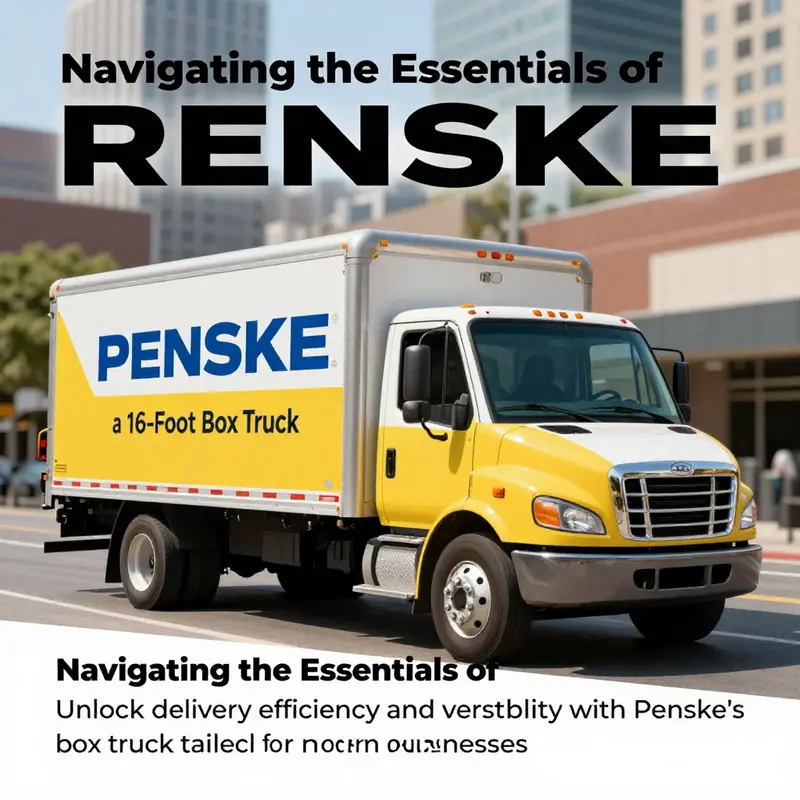
The 16-foot box truck from Penske is a versatile tool for business owners seeking effective delivery solutions. With a spacious cargo area of 800 cubic feet, it effortlessly meets the demands of small to medium-scale operations. Combining ease of maneuverability with sufficient power, this truck is ideal for urban driving and last-mile logistics. Throughout this article, we will delve into the specifications and features that set this truck apart, explore its various applications, discuss the benefits of rental, and provide a comprehensive economic analysis to aid business owners in making informed decisions.
Urban Reach and Last‑M mile Precision: The 16‑Foot Box Truck for Small‑Business Deliveries
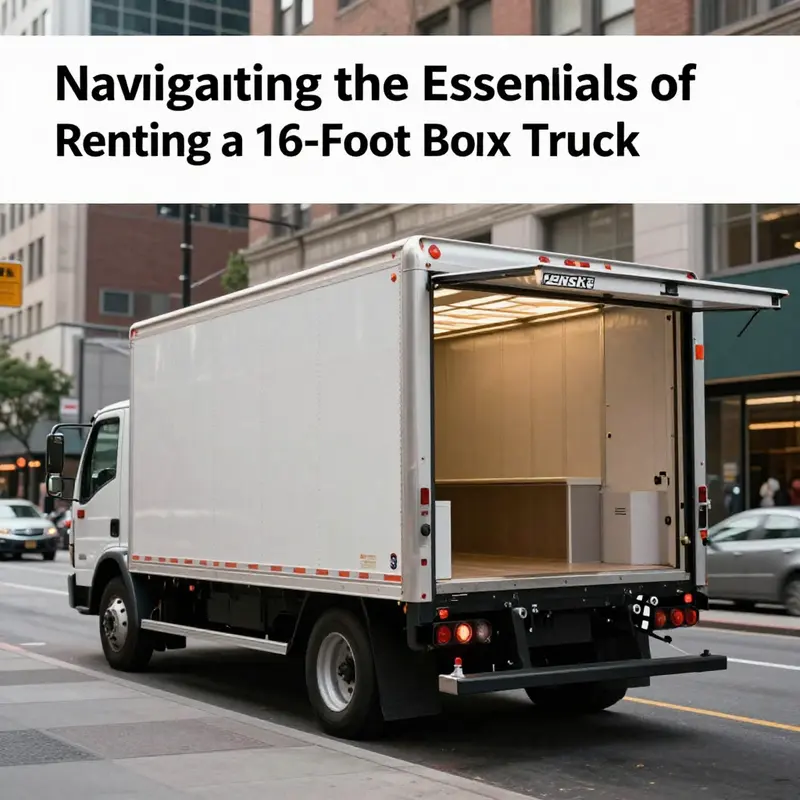
In the world of last‑mile delivery, where tempo and reliability determine a business’s reputation as surely as its products do, a compact, capable workhorse can redefine how small and mid‑sized operations move goods from a storefront or warehouse to a customer’s door. The 16‑foot box truck offered by Penske emerges as a deliberate answer to that challenge. It is designed not as a flashy showcase of power, but as a practical, urban‑ready tool that balances size, capability, and maneuverability. For many businesses, this balance translates into lower operating costs, faster loading cycles, fewer missed deliveries, and a smoother day on the road—a combination that matters as much in a crowded city street as it does on a quiet suburban lane. The configuration centers on efficient use of space, a driver’s need for control, and the logistics demands of contemporary orders that arrive with tight time windows and varied contents. In that sense, the vehicle is less about horsepower and more about predictability, reliability, and the ability to make the most of every mile driven.
At the core of its appeal is the cargo area. The truck offers up to 800 cubic feet of loading space, a figure that, to the uninitiated, might sound abstract until you picture the daily realities of moving inventory, equipment, or supplies for a small business. That space translates into real world payload flexibility: pallets stacked with care, boxes arranged to maximize vertical space, and irregular cargo tucked into nooks and crannies where a larger truck would waste time and fuel seeking a dock or open street. The size is intentionally compact for urban operation. It fits neatly within many city street profiles, allowing drivers to access tight delivery locations that larger rigs would struggle to reach. This is not a vehicle chosen for grand highway hauls but for the steady cadence of same‑day routes, multi‑stop schedules, and the frenetic rhythms of dock loading in dense neighborhoods.
The vehicle’s design emphasizes accessibility and ease of use, both for the driver and for the crew that loads and unloads. Inside the cargo hold, durable interior linings protect against the bumps and scrapes that come with frequent loading cycles. The linings serve a practical purpose beyond aesthetics: they help preserve the integrity of goods during transit, reducing the likelihood of scuffs, dents, or moisture transfer that can occur when items shift during stops and starts. This focus on cargo protection matters whether a business is delivering consumer electronics, home goods, or contractor supplies. Keeping contents intact supports customer satisfaction and reduces the cost associated with returns or replacements. In that context, the truck’s interior is not merely a container; it is a controlled environment engineered to support steady, predictable delivery performance over a working week, a month, and beyond.
A key feature that reinforces efficiency is the hydraulic liftgate. The liftgate reduces the physical strain on drivers and crew members who are tasked with lifting heavy loads from ground level to the truck bed. In practical terms, the liftgate shortens loading times, enabling routes to stay on schedule even when a dock is unavailable or when a customer requires curbside service. The mechanism moves goods smoothly and securely, minimizing the risk of injury or product damage that can arise from manual lifting and awkward handling. For businesses that rely on fast turnarounds at customer sites—think same‑day delivery or time‑sensitive replenishments—the liftgate becomes more than a convenience; it is a proven contributor to on‑time performance and worker safety.
Safety, too, is woven into the truck’s everyday use. Modern safety systems help drivers negotiate busy streets with a degree of foresight that was previously unavailable on a vehicle of this size. Backup cameras provide a clear view when backing into driveways, loading bays, or tight alleyways. Collision mitigation technology adds a layer of proactive awareness, alerting drivers to potential conflicts and helping to dampen the impact of sudden changes in traffic patterns. In urban environments where pedestrians, cyclists, and other vehicles share the road with delivery trucks, such systems can be the difference between a smooth delivery day and a stressful, high‑risk one. These features do not exist in isolation; they integrate with the driver’s training, route planning, and daily workflow to create a safer, more reliable operating culture.
From a driving perspective, the 16‑foot box truck is engineered to strike a balance between compactness and capability. It offers maneuverability that makes city streets, tight intersections, and loading zones manageable rather than punitive obstacles. The shorter footprint relative to larger box trucks helps with parking in commercial areas and reduces the time spent maneuvering into and out of loading docks. This agility extends to the way the vehicle handles on typical routes: steady acceleration, predictable braking, and a suspension system tuned to smooth out patchy urban pavement. The driver experiences a sense of control that translates directly into confidence when approaching a customer’s doorway or navigating a congested corridor on a weekday afternoon. It is not a vehicle designed to dominate the highway; it is a tool built to dominate the short‑haul tasks that define modern small‑business logistics.
Another dimension of its practicality is its integration with everyday business practices. For many operators, the decision to rent or lease a 16‑foot box truck hinges on the flexibility it provides: the ability to scale up during peak seasons or to adjust fleet composition to match changing demand without committing to long‑term ownership. The balance of size, power, and agility supports a wide range of tasks—from inventory replenishment at a local retailer to service calls that require transporting tools and parts to a job site. In this sense, the truck functions as a flexible platform that accommodates evolving needs without forcing a business to overextend its capital or its schedule. That adaptability is a central advantage in a market where customer expectations continually rise and delivery windows shrink.
To deepen the reader’s understanding of the practicalities behind these capabilities, consider the broader context of how a 16‑foot truck fits into a small‑business logistics strategy. Cargo space at the scale of 800 cubic feet means a business can consolidate multiple shipments into a single route, reducing trips to multiple smaller trucks or more costly transportation options. Efficiency improves when a driver can complete more stops per hour without sacrificing safety or cargo integrity. Route planning becomes less about compensating for a lack of space and more about optimizing time, energy use, and customer satisfaction—factors that play directly into a company’s bottom line. The truck’s design supports this shift toward smarter, more predictable routing by keeping the physical constraints of urban deliveries at the forefront, rather than forcing operators to improvise with equipment that was never intended for such urban realities.
The practical implications extend to maintenance and lifecycle planning as well. A well‑maintained 16‑foot box truck can yield dependable service across many years of daily use, provided operators give attention to regular servicing, tire health, brake performance, and electrical system checks that support the modern safety features. With fewer surprises on the road, a business avoids the disruptions that come from breakdowns or failed components at critical moments. The overall value proposition, then, rests on a blend of cargo capacity, driver safety, operational reliability, and the ability to adapt to shifting market demands without sacrificing performance or incurring excessive overhead.
For readers seeking a clearer sense of the vehicle’s specifications and configuration options, a deeper dive is available through the official source that consolidates the data on dimensions, payload, fuel efficiency, and rental terms. Tactical reading aside, the day‑to‑day reality remains straightforward: you measure success in on‑time deliveries, intact cargo, and the smooth, efficient flow of goods from point A to point B. When those elements align, a 16‑foot box truck becomes not just a tool for moving inventory but a strategic partner in a business’s growth—an enabler of dependable service, scalable operations, and, ultimately, customer trust.
For readers who want to explore how this truck can be positioned within a broader fleet strategy or who wish to compare its characteristics with other options, a practical path is to consult a concise, focused guide on 16‑foot trucks. In this context, a readily accessible overview can be found at the following resource: 16-foot truck guide. This companion piece offers a useful frame of reference for understanding how a mid‑sized box truck stacks up against other configurations and how small businesses make decisions about truck specifications, routes, and load profiles.
Beyond the numbers, the real story is about how a single vehicle shapes daily work. The Penske 16‑foot box truck embodies a choice to optimize for urban realities: frequent stops, tight parking, and the need to protect valuable goods while moving quickly through a crowded landscape. It stands as a practical platform built to support reliable service delivery, operational discipline, and an approach to logistics that treats each delivery as a deliberate, repeatable event rather than a one‑off sprint. In a marketplace where customers expect fast, accurate fulfillment, having the right vehicle can be a differentiator—reducing delays, improving driver morale, and ultimately strengthening the relationship between a business and the community it serves.
In concluding, the 16‑foot box truck’s most compelling attribute is its synergy of space, safety, and urban agility. It is a focused tool built for the realities of modern commerce: the last‑mile leg where everything depends on timely, careful handling, and where a well‑organized cargo hold and a well‑considered loading process can translate into measurable gains in efficiency and service quality. For small businesses that require a dependable, versatile vehicle to handle a spectrum of daily tasks—from inventory delivery to contractor assignments—the Penske 16‑foot box truck offers a disciplined, practical solution that aligns with contemporary logistics expectations without demanding an oversized capital commitment. The result is not merely a means of transportation but a means of delivering on promises—one stop, one load, and one satisfied customer at a time.
External resource: for official specifications and terms, visit the Penske site: https://www.penske.com/.
Beyond the Box: The 16-Foot Penske as a Fleet-Wide Solution for Real-World Logistics
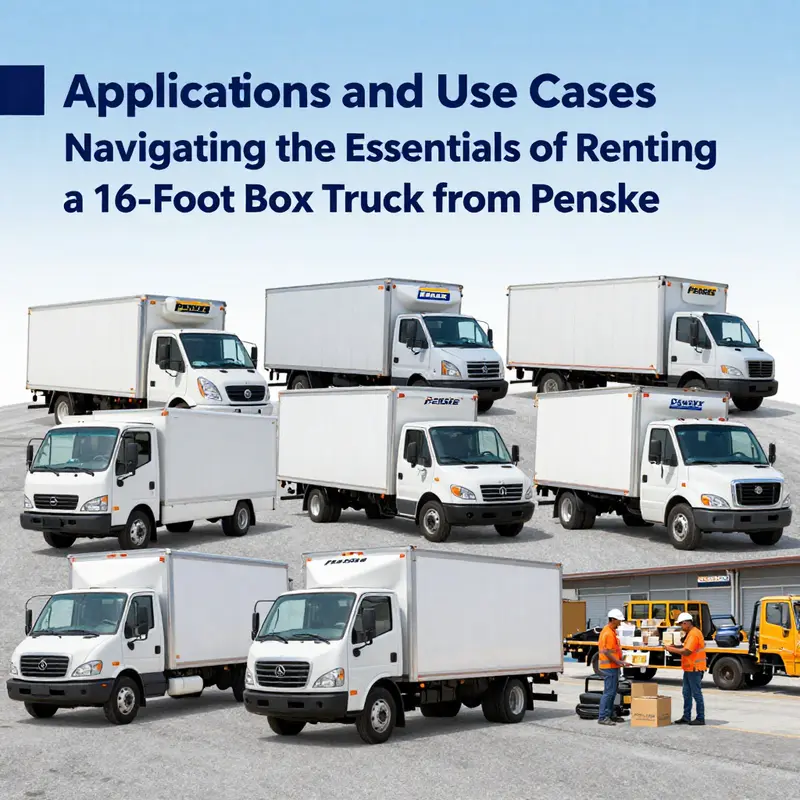
A 16-foot box truck from Penske is not merely a vehicle with a cargo bay measuring up to 800 cubic feet. It is a deliberately designed instrument for movement that blends capacity, maneuverability, and reliability into a single, dependable partner for a wide range of tasks. When a small business owner, a contractor, or a professional needs to translate plans into tangible results, this truck serves as a compact yet capable mobile workspace. Its design anticipates the common frictions of day-to-day logistics—the crowding of city streets, the pressure of tight parking, the need to protect a varied cargo, and the expectation of straightforward, efficient loading and unloading. The result is a balance that often makes the 16-foot box truck the preferred choice for those who want a practical bridge between a personal vehicle and a full-size fleet vehicle. The following discussions trace how this balance translates into concrete applications, and why it matters for anyone contemplating last-mile delivery, a household move, or a rotating inventory strategy for a growing enterprise.
Relocation and household moves reveal one of the most intuitive uses for a 16-foot Penske box truck. The interior dimensions provide enough room for furniture, boxes, and large appliances, while the truck’s overall footprint remains manageable enough to navigate typical urban streets. A resident tasked with moving a home or an office finds that the vehicle’s interior space supports efficient stacking and secure arrangement of items. Instead of multiple trips with a smaller cargo van, a single outing with the 16-foot truck can minimize handling, reduce risk to belongings, and lower the cumulative time spent in transit. With careful packing, fabric coverings, and a simple plan for loading and unloading, movers can keep breakables protected, electronics shielded, and furniture oriented for easy reassembly at the destination. Even when stairs or elevators are part of the transition, a well-planned loading sequence becomes a predictable workflow rather than a frantic, ad-hoc process. The vehicle’s accessibility and the reliability of the loading area reduce the anxiety associated with moving day, enabling clients to focus on the bigger picture—getting settled with as little disruption as possible.
For entrepreneurs and small business owners, the 16-foot box truck can function as a crucial transport node for deliveries and storefront replenishments. The cargo space is large enough to handle a broad mix of items—retail inventory, packaged goods, electronics, and other merchandise—while still delivering a degree of nimbleness that larger fleet trucks cannot maintain in dense urban corridors. The mid-size scale allows drivers to negotiate busy streets and crowded loading zones without the same degree of cautionary hesitation that accompanies longer, heavier rigs. This makes it easier to place inventory directly at customer locations, to stock pop-up events, or to move goods between multiple points of sale with fewer stops and less downtime. When a business operates on a just-in-time or weekend-peak rhythm, the box truck becomes a flexible instrument for maintaining continuity between supply and demand. It is not simply about moving goods; it is about preserving a consistent service level in a delivery ecosystem that rewards speed, accuracy, and reliability.
The rise of e-commerce and direct-to-consumer fulfillment has further expanded the relevance of a 16-foot Penske truck as a temporary, mobile warehouse. In many scenarios, the truck serves as a floating inventory hub capable of transferring stock between locations, staging items for specific campaigns, or serving as a temporary depot during peak seasons. The capacity to consolidate multiple shipments into a single trip reduces the carbon footprint of logistics and streamlines operations for teams managing scattered inventories. For a small business sending out daily orders or coordinating weekend promotions, a single vehicle can inventory-pack, label, and dispatch without the need for a larger distribution center. The truck’s size supports a practical balance: enough space to handle a meaningful volume, yet not so large that it becomes unwieldy or costly to operate in metropolitan environments. The practical implications are clear: a mover’s schedule can become more predictable, and the business can respond to demand spikes with agility rather than aggression.
A key feature that amplifies the usefulness of the 16-foot box truck is its ability to accommodate specialized cargo through temperature-controlled configurations. Temperature-controlled (reefer) models extend the truck’s applicability far beyond standard dry goods. When the need arises to transport fresh produce, frozen foods, pharmaceuticals, dairy products, or even floral arrangements, the reefer capability helps preserve cargo integrity throughout the journey. The ability to maintain specific temperatures in transit can mean the difference between timely delivery and spoiled goods, especially for time-sensitive or high-value shipments. In sectors where product quality is non-negotiable, the availability of a refrigerated model translates into operational resilience. It broadens the customer base for a small business and enables partnerships with suppliers and retailers who demand a certain standard of cold-chain compliance. This versatility also provides a practical edge for seasonal businesses that manage fluctuating demand for perishable or temperature-sensitive items, allowing them to adjust logistics without investing in a second class of vehicles.
Beyond the physical dimensions of the cargo hold, the user experience associated with Penske’s platform contributes significantly to the truck’s practical value. The operator’s confidence is reinforced by digital tools that support loading, tracking, and roadside assistance. The Penske Truck Rental App, with its loading guides and real-time tracking, turns a potentially unpredictable logistical day into a manageable sequence. When a driver begins a route, the ability to reference a loading guide can ensure that items are placed securely, with proper weight distribution and clear visibility. Real-time tracking enables a business or an individual to monitor progress, anticipate delays, and communicate effectively with customers or teammates. If a hiccup arises—a detour on a delivery route, a parking constraint at a pickup point—the system provides a transparent line of sight to prompt corrective actions. The promise of 24/7 roadside assistance further reduces risk and reinforces the sense that help is available when it is needed most. For anyone managing multiple tasks, such features can translate into higher uptime, fewer disruptions, and a smoother flow of operations.
While the technical and experiential advantages are compelling, the practical decision to choose a 16-foot box truck should also consider the broader dynamics of fleet management. In many cases, a single Penske truck operates as a core component of a small fleet, a bridge between the personal vehicle and the larger commercial vehicle used for longer-haul work. The compact footprint relative to a full-size truck means easier parking, simpler licensing requirements in some jurisdictions, and lower operating costs when compared with larger alternatives. This is particularly meaningful in cities where curb space is at a premium and parking resources are tightly regulated. The truck becomes a flexible asset that can be deployed across diverse jobs—from a relocation project to a weekend market stall replenishment to a midweek B2B delivery run. The result is a practical, cost-conscious approach to logistics that does not force a business to compromise between capacity and maneuverability.
From a maintenance and usability perspective, the vehicle’s routine upkeep is designed to be straightforward, contributing to a reliable day-to-day experience. Routine inspections, tire care, brake checks, and fluid level assessment are familiar, predictable tasks that enable operators to stay on schedule with minimal downtime. The simplicity of these maintenance routines is a meaningful advantage for small teams that do not operate with a full-service maintenance department. When the market demands rapid deployment and quick turnarounds, the ability to perform essential maintenance in-house or with a small network of trusted partners helps ensure that the vehicle remains available when it is needed most. The calm, predictable nature of a well-maintained box truck supports the broader objective of delivering dependable service.
In thinking about rental options, the process can feel almost as important as the vehicle itself. A straightforward booking—where a client can reserve a unit that aligns with the planned route, cargo type, and time windows—reduces friction and accelerates the path from decision to deployment. The rental ecosystem can also contribute to a sense of continuity: a familiar vehicle, a known loading configuration, and a consistent user experience thanks to digital tools. For customers managing multiple trips, or for contractors who need to schedule a series of deliveries, the predictability of the rental experience translates into greater operational confidence. The combination of a well-designed truck, thoughtful equipment, and an accessible support network yields a reliable solution that is greater than the sum of its parts.
As one considers the broader implications for logistics planning, the 16-foot Penske box truck embodies a strategic middle ground. It is large enough to handle meaningful loads but compact enough to navigate urban obstacles with relative ease. It can function as a mobile storefront, a temporary distribution hub, or a staging area for events and promotions. It offers the capacity to consolidate, protect, and move items in a single well-executed trip. It can support temperature-sensitive shipments when equipped with the appropriate reefer unit, preserving product quality when it matters most. And it can do all of this while being supported by an app and service network designed to remove uncertainty from the day-to-day routine. The chapter’s central takeaway is not merely about the volume of cargo or the vehicle’s dimensions; it is about how a single, well-conceived tool can enable a broader pattern of reliable, flexible, and scalable logistics—one that helps individuals and small teams transform plans into outcomes.
For those who want to explore how this specific vehicle compares with other options or who seek a deeper dive into loading configurations and capacity planning, a practical reference is available in the broader ecosystem of moving and trucking resources. The 16-foot truck guide provides a detailed look at dimensions, loading configurations, and best practices for ensuring safe, efficient transport. This resource acts as a useful companion to the real-world narrative described above, offering a concrete framework for planning and execution. A quick look at the guide reinforces the idea that the right vehicle choice can streamline operations, reduce fatigue, and improve delivery reliability across a spectrum of tasks. The goal is not to advocate for a single solution but to illuminate how a mid-sized box truck can fit into a variety of workflows, from a one-time relocation to an ongoing, multi-location delivery cadence. If you are considering this path, the link below offers a practical starting point for understanding how dimensions, payload, and loading strategies intersect with your specific needs. 16-foot truck guide
As the narrative on today’s logistics reveals, the 16-foot Penske box truck is more than just a vehicle. It is a portable, adaptable solution that aligns with the realities of modern operations—where speed, safety, and service quality converge. The truck’s interior space invites thoughtful organization, while its exterior dynamics encourage efficient route planning and disciplined driving. The integration of technology, such as loading guides and real-time tracking via the Penske Truck Rental App, turns a simple rental into a measurable performance upgrade. In a world where last-mile delivery and local moves are central to everyday commerce, equipment that can be deployed quickly without sacrificing care or control becomes a strategic asset. The Penske box truck embodies that balance, offering a dependable, clean, and well-maintained platform that can support a wide array of tasks with confidence and clarity.
In closing, whether your work involves moving a household, delivering inventory to customers, staging goods for seasonal campaigns, or supporting a temperature-sensitive supply chain, the 16-foot Penske box truck provides a thoughtful blend of space, maneuverability, and user experience. This combination is what makes it a practical, scalable solution for individuals and small teams who must translate plans into efficient, reliable execution on the road. If you want to learn more about rental options, dimensions, and how to book, the Penske Truck Rental site offers detailed guidance and support. External resource: https://www.pensketruckrental.com
Sizing Up Efficiency: Why a 16-Foot Box Truck from Penske Elevates Last-Mile Deliveries
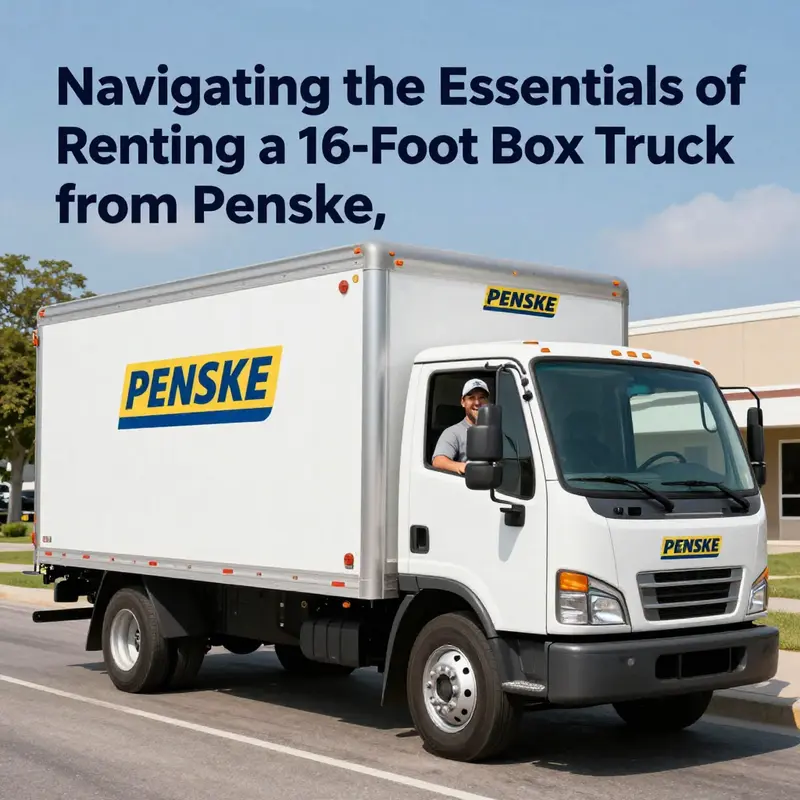
When small and mid-sized moving tasks become a regular part of business life, the choice of vehicle is less about flair than about timing, reliability, and the peace of mind that comes with predictable performance. In the world of last-mile delivery, the 16-foot box truck from Penske occupies a uniquely practical space. It is large enough to move more in a single trip than a compact van can handle, yet compact enough to navigate crowded streets, negotiate tight loading zones, and fit into parking spaces that would give a full-size tractor-trailer pause. This balance is not mere happenstance; it is a carefully engineered sweet spot that aligns with how small and growing enterprises actually operate. In practice, it means fewer trips, shorter dwell times, and a smoother workflow for everything from local furniture refreshes to apartment transitions and office equipment swaps. The interior of a Penske 16-foot box is designed to maximize usable space without forcing drivers to contort themselves around awkward wheelbases or cramped cabins. The cargo area, typically around 700 cubic feet, provides generous headroom and a wide floor for bulky items, which is essential when the job involves large appliances, modular furniture, or stacked equipment cases. It is a reminder that the right vehicle can transform a two-step operation into a single, decisive move. This is not purely about size, though; it is about how that size translates into safe, efficient handling. The 16-foot models often feature a standard rear lift gate, a feature that quietly changes the math of loading and unloading. Heavy items—think refrigerators, pianos, stacked crates, or wheeled equipment—no longer demand a riser of back strength and a helper with a dolly. The lift gate reduces the risk of strain and injury and minimizes the time that crew members spend wrestling with gravity and gravity’s stubborn pull on heavy loads. With a lift gate, the driver can raise a bulky object from ground level to the truck bed in a controlled, consistent motion, and the next step can proceed without multiple manual lifts. It is a practical detail that pays dividends in both safety and productivity, especially on days when the schedule is tight and the to-do list is long. The lift gate also smooths the process of return trips to the loading dock or warehouse, because it eliminates the need to stage heavy items on pallets at curbside. A standard feature on the 16-foot class becomes a meaningful differentiator when the job calls for repeated large-item loads. Beyond the lift gate, the overall design philosophy of the Penske 16-foot box truck is to provide a comfortable, efficient platform for drivers who frequently tackle city routes and suburban corridors. The cab is typically modern and well-kept, with air conditioning and ergonomic seating that reduce fatigue on longer days. A comfortable cabin is not a luxury in this context; it is a practical element that contributes to safer driving and better decision-making during tight turns, lane changes, and parking maneuvers. The result is a vehicle that feels predictable, which matters when time pressure is a constant companion on dense urban streets. In terms of navigation and planning, Penske’s 16-foot box trucks shine through a combination of standardized dimensions and a reliable drivetrain. The compact footprint allows the vehicle to keep pace with frequent stops and starts, and the engine and transmission are matched to deliver steady power for climbing hills or accelerating out of stop-and-go traffic. The vehicle’s balance of payload capacity and curbside maneuverability ensures that drivers can adapt on the fly to changing job requirements. The practical implications of this balance extend to the bottom line as well. In a world where every mile and every minute counts, a 16-foot box truck provides a favorable cost-to-capacity ratio. The truck can carry a substantial amount of cargo in one trip, reducing the number of trips needed for a given move. Fewer trips means less fuel consumption per item moved, lower labor costs associated with multiple trips, and a smaller cumulative risk profile from repeated loading and unloading cycles. The result is a leaner operation that can scale up or down with relative ease, depending on the week’s demands. One important advantage that often becomes a deciding factor is Penske’s broad network. Across the United States, Penske locations are positioned to support both local moves and one-way rentals. This means a customer can book a 16-foot box truck for a specific duration and then drop it at a different location, which is a common requirement for office transitions or multi-site deliveries. The convenience of online booking and flexible rental terms adds a level of predictability to project planning. The ability to reserve a vehicle in advance, confirm it on the day of the move, and adjust terms if the job grows or shrinks brings a level of reliability that smaller operators often struggle to match. In practice, that reliability translates into fewer last-minute scrambles and less downtime waiting for a vehicle to become available. The Penske fleet is widely recognized for its up-to-date maintenance and clean, well-kept condition. When a small business relies on a tool to move goods rather than a tool that moves people in a hurry, the state of the equipment matters. A well-maintained 16-foot box truck minimizes unplanned visits to the roadside and reduces the risk of breakdowns that can derail schedules. The emphasis on reliable performance is complemented by a suite of modern features that enhance the driving experience and the safety of cargo. Air conditioning, comfortable cab seating, and well-integrated controls make for a more efficient driving day, especially in peak heat or inclement weather. The cargo area is designed with practicality in mind: tie-down points placed along the walls provide flexible, secure anchoring; load-floor materials minimize slipping and allow for easier sliding of heavy items; and the interior height, while not cavernous, is sufficient to stack and organize items without resorting to awkward stacking methods. When packing for a move or a delivery route, the organizational logic matters as much as the physical space. The 700- to 800-cubic-foot range (depending on model and configuration) gives crews room to separate goods by destination, weight, and fragility. It invites a systematic approach: heavier items should go toward the front near the cab, with lighter, more fragile pieces toward the rear and upper areas secured to prevent shifting during transit. Bins and moving blankets can be arranged in a way that makes the most of the vertical space without compromising access to the rear doors. In short, the 16-foot box truck from Penske is purpose-built for a class of operations that requires reliable capacity without surrendering agility. The vehicle’s size is large enough to handle meaningful moves and substantial deliveries, while still offering the precision and ease of operation needed to negotiate busy street scenes. This is especially important for last-mile work, where the difference between a well-planned, well-executed route and a mismanaged one can be measured in minutes, not miles. Yet the practicalities extend beyond the vehicle itself. The broader rental ecosystem—Penske’s network, flexible terms, and consistent vehicle quality—plays a critical role in how effectively a business can deploy a 16-foot box truck. Online booking platforms enable quick confirmation and tighter scheduling windows, making it easier to align vehicle availability with shifting job calendars. The option for one-way rentals adds an additional layer of efficiency when a task requires moving goods from a customer site to a warehouse, or when a move involves multiple destinations that would otherwise require back-and-forth travel. From a risk-management perspective, renting a Penske 16-foot box truck can also simplify insurance considerations. Since the vehicle comes from a reputable national fleet, there is typically a clear policy framework, predictable coverage levels, and a straightforward process for handling incidents or gaps in service. That clarity matters when a business is juggling multiple vendors and schedules, and it contributes to smoother financial planning and fewer surprises on the day of the move. For many operators, the decision to rent a 16-foot box truck is part of a broader logistics strategy that aims to keep commitments to customers intact while protecting margins. The vehicle’s size and features align with common delivery scenarios—furniture delivery to apartments, equipment transport to job sites, short-haul relocations, and the safe handling of bulky items that don’t easily fit in smaller vans. A driver armed with a Penske 16-foot box truck can approach these tasks with confidence: the truck’s dimensions facilitate careful, measured maneuvers in tight spaces; the lift gate handles heavy items with less strain on backs and knees; and the space itself helps crews stay organized as they work through packing, loading, transit, and unloading. That confidence is not merely a personal feeling; it translates into measurable operational benefits. Fewer trips mean lower labor costs; fewer damaged items mean reduced loss and replacement expenses; and steadier scheduling means more predictable cash flow. For teams that balance multiple jobs against a single day’s timeline, those improvements compound, shaping a company’s reputation for reliability as well as its bottom line. In the broader discourse on equipment selection for last-mile work, the Penske 16-foot box truck exemplifies how a well-chosen tool supports a larger strategy. The vehicle provides a dependable foundation on which smaller, episodic decisions—route optimization, loading order, crew assignments, and load securement—play out with greater clarity and fewer contingencies. To learn more about the practical specifications and to compare with other box truck configurations, one can explore targeted resources that explain the sizing spectrum from 12 feet up to 26 feet. And for professionals who want to see concrete examples of how teams implement 16-foot box trucks in real-world workflows, there are case studies and blogs that illuminate the hands-on aspects of planning, packing, and executing a successful delivery episode. If you want a deeper dive into the specifics of the 16-foot configuration and how it compares with other sizes, see Penske truck rental—16-foot. This resource helps translate the general advantages described above into concrete expectations about payload limits, door openings, and handling characteristics that matter when you’re on a tight schedule and a tight street. In the end, choosing a 16-foot box truck from Penske is not about chasing the largest possible vehicle. It is about finding the grade of vehicle that supports consistent, on-time service without imposing unnecessary complexity on drivers or operations. It is about the confidence that comes from predictable equipment, backed by a national network that can respond with availability and flexibility when a job changes shape. It is about safety, efficiency, and the ability to deliver in a way that safeguards both people and cargo. When the goal is to complete more with less risk and to keep customers satisfied by meeting deadlines, the Penske 16-foot box truck performs as more than a means of transportation. It becomes a strategic tool—a compact, capable, well-supported platform that enables a business to grow its delivery capability while maintaining control over costs, timelines, and quality. External resources remain a practical anchor in the decision-making process. For a broader look at how box trucks fit into a fleet strategy and to compare features across sizes, refer to manufacturer guides and fleet-management resources, including Penske’s official box truck overview. External resource: https://www.penske.com/truck-rental/box-trucks
Weighing Miles and Money: The Economics of a 16-Foot Box Truck Rental for Small Moves
When small businesses, contractors, and households face a move or a tight last-mile delivery window, a 16-foot box truck often emerges as the quiet workhorse. It sits between the compact, city-savvy van and the larger, heavier truck that demands more planning and parking space. The 16-foot box truck offers a practical compromise: enough cargo space—roughly 800 cubic feet in the wagon area—to handle a two-bedroom apartment’s contents or a modest stock of inventory, while still offering maneuverability and visibility suited to urban streets. The decision to rent one is rarely about sticker price alone. It is about how the truck’s size, fuel profile, and rental terms align with the specific logistics of the job, the expectations of the crew, and the rhythm of the workdays ahead. In a field where timing can translate into revenue, understanding the economics of the rental becomes as crucial as the mechanical reliability of the vehicle itself. This chapter follows the thread from rate cards to day-to-day cost drivers, and it situates the 16-foot box truck rental within a framework of planning, risk management, and practical optimization that small operators can apply as they prepare for a move, a delivery window, or a routine business rotation.
From the outset, the obvious question centers on the base cost. The base rental rate for a 16-foot box truck commonly starts in a range that is accessible for individuals and small teams. Numbers float in the realm of a modest daily outlay, typically around the mid forties to the low sixties, with the precise figure shaped by where the vehicle is picked up, the demand at that location, and the length of the rental. This seemingly narrow window can widen quickly once the other components of the cost structure come into play. A single day of use might look affordable, but once mileage, fuel, and insurance enter the ledger, the total cost of ownership for a short-term, one-location operation can become more complex than it first appears. The distinction between what seems like a straightforward daily rate and what the job ends up costing in real terms hinges on the mile count and the operational footprint of the work to be completed.
Beyond the base rate, mileage costs represent the most variable portion of the equation. The rental model commonly includes an allocation—an allowance—of miles per day, with a per-mile charge applied to miles beyond that threshold. The range for those mileage fees tends to sit between roughly three-quarters of a dollar and a dollar twenty-five per mile, depending on the market and the terms of the agreement. This structure rewards efficient planning: a job that stays within the daily allowance can stay closer to the base rate, while longer routes or multiple stops can push the total cost upward. For teams moving goods from a storage room to a storefront, or for contractors delivering to several clients in a single day, the mileage component quickly becomes the largest swing factor in the overall price. In practice, it is not merely about the miles traveled, but about how those miles align with the job’s schedule—whether the truck’s path minimizes backtracking, consolidates stops, and reduces deadhead running between the job site and the next pickup location.
Fuel is another obvious line item. The 16-foot box truck’s gasoline or diesel consumption depends on its engine, weight, and driving profile. Urban driving with frequent stops and idling can lower fuel economy compared to steady highway cruising; yet city blocks and parking maneuvers often demand slower speeds and more careful maneuvering, which can change fuel burn in less predictable ways. Fuel costs can accumulate quickly if the job involves a longer relocation or a day with numerous short trips between stops. The practical effect is that even when the base rate and mileage align neatly with a straight-forward plan, a sharp turn in fuel prices or a longer-than-expected route can appreciably inflate the total expenditure. It follows that budgeting for fuel is not an afterthought but a core element of a realistic cost forecast.
Insurance and protection plans—often called loss damage waivers or protective coverages—are the other recurring line items in the rental ledger. These options exist to shield the renter from liability and to address the financial risk of damage to the vehicle or cargo. Depending on the renter’s existing auto insurance or credit card protections, some customers may elect to decline or minimize this coverage, while others prefer the peace of mind that LDW or liability options can provide. The daily addition for insurance can sit in a range that feels manageable on a long-term contract but can loom larger on shorter assignments, where one misjudged lane change or a minor scrape could have outsized consequences. The decision here is not simply about price; it is about risk tolerance, the value of the cargo, and the degree of control a team wants to exercise over potential disruptions. In a well-planned operation, a renter will weigh the incremental cost of insurance against the potential cost of an accident or cargo loss, then decide which protections align best with the job’s risk profile.
To illuminate how these costs accumulate in a real-world context, consider a typical two-day window where a small business moves inventory from one facility to another and completes a handful of scheduled deliveries along the way. The base rental might sit around the mid-point of the quoted range for a single day, say about $55 per day, resulting in roughly $110 for two days. If the project includes a modest daily mileage allowance of 150–200 miles, and the team ends up traveling closer to 260 miles per day due to detours, the mileage component could bring an extra cost of around $0.95 per mile beyond the allowance, translating to roughly $247 for the two days in a scenario where extra miles accumulate. Add LDW at around $25 per day, then the insurance overlay could be an additional $50 for the two days. Fuel could range from one to two full tanks depending on the diesel or petrol configuration and the distance driven, and spillover costs might occur if traffic or idling add to trip duration. The math is rarely a single line item; it is a mosaic of small, additive costs. When these pieces are aggregated, a seemingly modest rental can become a meaningful line item on the move plan, especially if the project stretches into a longer period or requires more miles than anticipated.
The practical implication is that price transparency and availability can become critical pain points in the rental process. A cautionary anecdote from a prior experience illustrates the friction that can appear when a booking is placed through a central system but the local fleet cannot fulfill it. In that case, a customer ended up scrambling to switch to a different provider, incurring additional travel costs, fuel, and lost work time. The financial impact went beyond the purely financial price tag to include time, logistics, and opportunity costs—the intangible costs that accumulate when plans falter at the point of execution. This kind of disruption underscores why the economic calculus of a 16-foot box truck rental is not just about the published rates; it is about reliability, communication, and the certainty that a unit will be ready when the clock starts ticking.
With these realities in mind, several practical strategies emerge for renters seeking to optimize cost-effectiveness without sacrificing reliability. First, advance booking is not merely a convenience; it is a safeguard against price spikes and last-minute shortages. Entry into the queue early creates an opportunity to select favorable locations, favorable pickup times, and, ideally, favorable terms. Second, renters should confirm vehicle availability directly with the local branch in addition to checking corporate quotes. A quick phone call or in-person confirmation can prevent a scenario where the corporate system shows availability, but the local inventory sits depleted. Third, the use of the official mobile app can yield real-time pricing and promotions that may not be visible through other channels. These digital tools can uncover discounts or bundled options that reduce the overall cost or provide better terms such as reduced insurance premiums or waived LDW under certain conditions. Fourth, the value proposition often improves when renters leverage existing protections. If a renter’s auto policy or credit card benefits include rental coverage, there may be room to avoid duplicative insurance charges, provided that exclusions and limitations are understood. While some readers may be cautious about this approach, a careful audit of current protections can reveal genuine savings while preserving risk management. Finally, consider the seasonality of demand. Moving peaks in spring and summer tend to push base rates upward and tighten vehicle availability. If the schedule allows, shifting a move or a set of deliveries to a shoulder period can yield meaningful price relief and easier access to preferred branches.
A practical way to frame the decision is to connect the dots between a job’s requirements and the truck’s capabilities. The 16-foot box truck’s cargo space, roughly 800 cubic feet, is a decisive factor for moves and deliveries that would otherwise require multiple trips with smaller vehicles or the overhead of trailer towing. In business terms, consolidating work into a single vehicle can translate into labor savings, fewer coordinating headaches, and less downtime between stages of the job. The economic benefit emerges when the time saved on labor and the reduced risk of missed windows offset the incremental costs of a longer rental or more miles. For many small operations, the balance sheet reveals that the 16-foot box truck earns its keep by enabling a more predictable workflow, shorter completion times, and a smoother customer experience. The challenge is to manage the variables—distance, mileage, fuel, and insurance—in a disciplined way that preserves the intended financial advantage.
To support readers who want a concrete, actionable path, consider how a typical move could be planned with cost in mind. Begin with a clear travel plan that minimizes backtracking and consolidates stops into a logical route. Map the job to reduce miles that do not contribute to the primary objective. Track daily mileage against the allowance to anticipate overages and negotiate or adjust routes before the rental period begins. Use the app to compare pricing scenarios across pickup locations and times, and be ready to adapt if a preferred branch runs into capacity constraints. In addition, assemble a checklist that includes confirming vehicle availability, clarifying what insurance is included in the base rate, and identifying any promotions that apply to the dates of the rental. A salience of this approach is that it converts an opaque quote into a transparent plan, making it easier to communicate with customers, staff, or team members about how the rental choices will impact the overall project cost and timeline.
For readers seeking a concise reference, the following approach often yields the most reliable outcome: secure the rental well in advance, confirm with the local branch, use the official app for real-time pricing, and exercise restraint on optional insurance by aligning it with existing protections. These steps reduce the risk of adverse price surprises and support a more predictable budget. The 16-foot box truck proves its value not merely because it can carry a substantial load, but because its operating economics can be managed with discipline and foresight. When paired with a careful route plan and a robust communication framework with suppliers and customers, the rental becomes a lever for efficiency rather than a cost center that spirals into uncertainty. As with any capitalized resource, the key lies in recognizing which costs are controllable, which costs are contingent, and which costs are often overestimated in the heat of a busy schedule.
For readers who want to dig deeper or compare related scenarios, a practical overview is available in a focused guide that discusses Penske’s 16-foot truck rental in detail. This resource emphasizes the balance between cargo capacity and drivability, and it anchors the discussion in real-world pricing and availability considerations. Penske truck rental 16-foot guide. While the market for box-truck rentals continues to evolve, this guide provides a solid baseline for planning and negotiation. To complement the chapter’s economics, it is helpful to consult the official source for current terms and conditions and to validate any assumptions against the latest pricing and policy updates. The external pricing and policy landscape can shift with market dynamics, location-specific demand, and fleet adjustments, so couples of days or weeks can make a meaningful difference in what a renter ultimately pays.
In sum, the economic calculus of renting a 16-foot box truck is a balance between the predictable components—the base daily rate and the fixed costs that accompany any rental—and the variable elements that respond to the job’s geography, pace, and risk profile. When planning is thorough, the truck’s modest size can become a reliable platform for efficiency, enabling small teams to execute moves and deliveries with a clarity of cost and a cadence of operation that supports timely, professional outcomes. The discussion above shows that pricing transparency and early, direct communication with the local fleet are not luxuries but essential practices. They turn what could be an opaque price into a well-structured plan and make the 16-foot box truck not just a vehicle, but a strategic asset for efficient, economical work. For the most current pricing and terms, visit the official site: https://www.pensketruckrental.com.
Final thoughts
Renting a 16-foot box truck from Penske offers a blend of reliability, efficiency, and flexibility tailored to the demands of modern businesses. From its impressive specifications to diverse applications and cost-effective rental benefits, this vehicle is a valuable asset for any operation in need of dependable transport solutions. As you consider your transportation needs, the Penske box truck stands out as a strategic choice to enhance your logistical capabilities.