
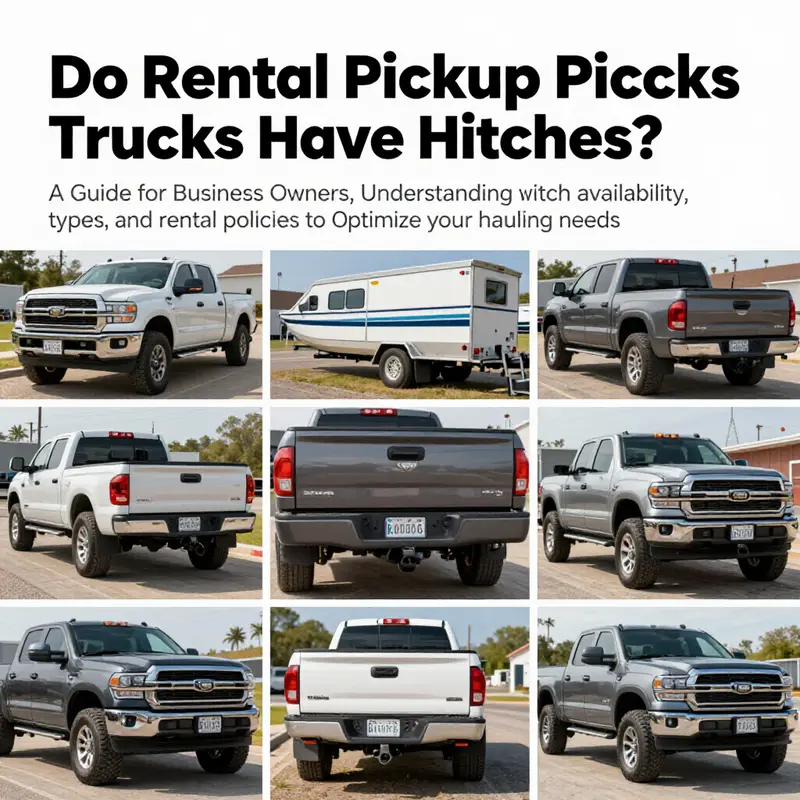
For many businesses that rely on transporting goods, the ability to tow with a pickup truck rental can be crucial. This article explores whether rental pickup trucks come equipped with hitches, highlighting their importance for towing needs, the role of rental companies, and the types of hitches available. Each chapter delves into rental policies and compares offerings from different rental providers, equipping business owners with essential information for making informed decisions about their hauling needs.
Tow Points of Truth: How Hitches Shape the Power and Practicality of Rental Pickup Trucks
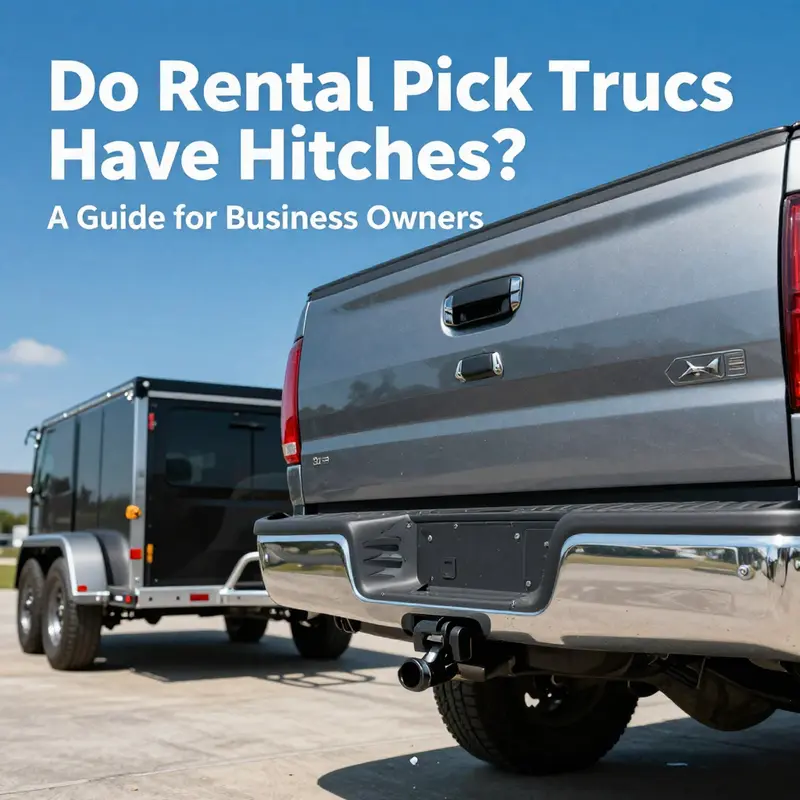
Hitches are not just decorative metal at the rear of a rental pickup; they unlock a wide range of tasks, from moving a household to towing equipment, trailers, or campers. In rental fleets, the hitch is a foundational component that determines what can be towed safely and efficiently. When renters understand the hitch, the vehicle becomes more than a moving box; it becomes a versatile tool for projects, whether moving, hauling building materials, or towing a trailer to a yard. The practical implications are straightforward: a hitch enables the vehicle to perform as a mobile platform capable of carrying loads that would otherwise require a second vehicle or equipment transport. The presence of a hitch signals towing readiness, but it is not enough to rely on appearance. The hitch must be correctly rated for the trailer and load, and the vehicle configuration must align with the towing plan. For this reason, renters should approach hitch availability with a careful, numbers-first mindset, especially for heavier tasks.
The most common hitch configurations on rental fleets are Class III and Class IV, with the former featuring a 2-inch receiver and the latter a 2.5-inch receiver. These classes handle substantial loads and are compatible with a wide range of trailers and attachments. In practice, many rentals can support modest to moderate towing needs—car trailers, utility dollies, or small campers—without aftermarket additions. However, the exact weight rating, tongue weight, and overall capacity depend on the specific truck and model. A marked hitch is a good sign, but the rating matters most. To tow safely, confirm the rating is appropriate for your trailer. Some fleets offer hitches as standard equipment on certain classes of trucks, while others may require a separate rental or vehicle to ensure towing capability. If towing is part of the plan, seek a hitch-equipped vehicle and confirm the exact rating before finalizing the rental.
Beyond the receiver, factory-installed Class III or IV hitches provide two key benefits: alignment with the vehicle’s structural limits and compatibility with the vehicle’s electrical, brake, and lighting systems. This reduces the risk of mismatched components that could complicate the tow. Different trailers demand different alignment: weight distribution, tongue weight, and even braking systems influence how easily a given hitch configuration can handle the load. For heavier payloads, weight-distribution kits or sway-control devices may be needed. These accessories may not be included by default and might require an extra rental or purchase. Consider the total towing package—the hitch, the receiver size, the load rating, and any add-ons that contribute to stability and safety.
Even with a capable hitch, safety and regulatory requirements apply. The maximum weight rating published for a hitch is a hard limit, and exceeding it affects handling and hitch integrity. Heavier loads demand proper coupling, tongue weight, safety chains, and functional trailer lights. Trailer brakes, if present, matter as some combinations rely on electric brake controllers. Heavier or more complex towing scenarios are less common in standard rental fleets, but they are possible. In those cases, renters may encounter specialized hitch configurations or the option to add distribution or braking systems. The takeaway is simple: if the plan involves anything beyond a basic trailer, verify what the rental can provide, what must be added, and how it affects the towing experience. The emphasis remains on safety and realistic expectations.
A practical approach: confirm, inspect, and plan. Confirm at booking that the pickup includes a factory-installed hitch of appropriate class for your intended load. If you will tow a trailer approaching or exceeding 3,500 pounds, discuss weight-distribution or stabilization equipment with the rental agent. Inspect the hitch at pickup: look for a clean, unlabeled receiver in good condition with no visible damage. Check the rating label if available, and verify it matches the trailer. Inspect the hitch ball and coupler alignment, ensure electrical connections work, and confirm safety chains are attached. If you are unfamiliar, ask staff or refer to the owner’s manual. When in doubt, defer towing until you can confirm the right hitch configuration and all supporting systems. The emphasis on verification is a practical safeguard against misjudging payload or uneven weight distribution, ensuring a safer tow.
For readers who want more, practical guidance on hitch installations and compatibility exists beyond the rental counter. A hands-on resource on hitch installations can illuminate why rental fleets emphasize standardization and safety around hitch systems. External resources can provide complementary perspectives on ratings, compatibility, and safety for rental fleets and private towing. See resources such as a general overview of hitches and towing practices for rental pickup trucks to inform planning and decision-making in real-world scenarios.
Bridge to the Road: How Rental Companies Supply Hitches, Installation, and Safe Towing Access
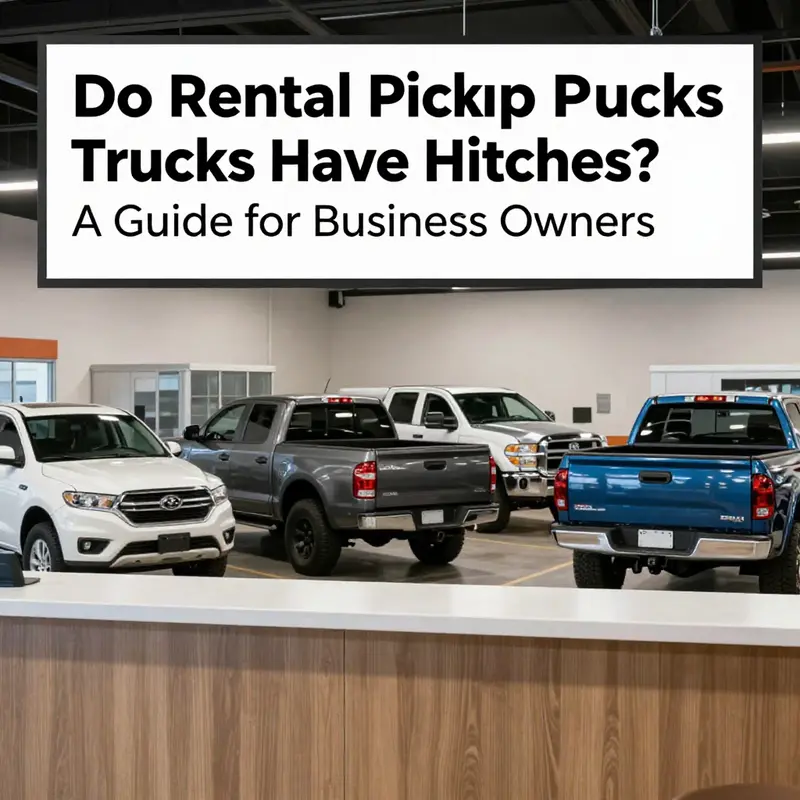
Rental companies act as the practical bridge between a vehicle and the gear needed for towing. They supply hitches, offer installation, and remove one of the biggest obstacles to towing for occasional users. For someone who needs a hitch for a single project, a weekend trip, or to test a towing setup, these providers make the equipment accessible without a long-term purchase.
Fleet-based providers approach hitch supply in two main ways: equipping specific vehicles with factory or aftermarket receiver hitches, or offering removable hitches and installation services on request. That distinction matters. Vehicles with factory-installed hitches arrive ready for towing. Request-based solutions allow a wider range of vehicles to be adapted temporarily. Either approach reduces the need for buyers to store, maintain, and install heavy hardware.
A major advantage of using rental providers is convenience. The hiring process can bundle the trailer, the hitch, and the installation. That single transaction saves time and avoids the learning curve. Many customers lack the tools or experience to install a hitch safely. Professional installers ensure the hitch is compatible with the vehicle frame and electrical system. They can also wire trailer lights and confirm the correct ball size and weight-rated components are in place. This hands-on service reduces guesswork and improves safety.
Safety and compatibility must be central to any towing solution. Rental providers typically follow a set of established standards for weight ratings, attachment points, and electrical connections. These standards protect the renter and other road users. When a provider installs a hitch, they check vehicle specifications and towing capacities. They match the hitch class to the intended load and ensure the trailer and truck ratings align. Simple mismatches—such as using a Class I hitch for a heavy load—can cause dangerous failures. Professional oversight prevents those mistakes.
Cost factors influence how rental companies offer these services. Some firms include hitches and installation in the basic rental package for certain vehicle types. Others list hitches as optional add-ons with a daily or flat fee. Pricing may vary by location, vehicle model, and the type of hitch required. For occasional users, paying a modest fee to rent and install a hitch is often more economical than buying new hardware plus paying for installation.
Liability and insurance are additional considerations. Reputable firms typically inspect the trailer, hitch, and wiring before release. They document the condition of the tow vehicle and the trailer connection. That documentation helps resolve damage claims. Renters should always ask about insurance options and damage responsibility. Some companies offer supplemental coverage for towing-specific incidents. Understanding the limits of coverage helps avoid costly surprises after an incident.
For people testing a long-term towing solution, rentals provide a low-risk trial. Trying a hitch and trailer combination before buying can expose issues with handling, braking, or fit. It also lets drivers practice coupling and backing without committing funds to hardware that might not meet their needs. A successful rental test can inform the right hitch class, ball size, or weight distribution system to buy later.
Variety in hitch types is another strength of rental providers. They commonly stock receiver-style hitches for light- to medium-duty towing. Some locations can supply heavier options such as gooseneck or fifth-wheel setups, though those require specialized vehicles and expertise. Access to a range of hitches lets customers match equipment to the task. Staff guidance can help novices choose the correct setup for trailers, campers, or utility loads.
The installation process itself removes a lot of friction. Professional installers verify torque specs, mounting hardware, and safety chains. They confirm the electrical connector type and test brake controllers where required. These steps matter because many towing issues stem from poor installation or incompatible electrical systems. When installers complete this checklist, renters gain confidence that their rig will perform as expected.
Logistics and availability do vary. Some branches in a rental network carry limited hitch stock. Others operate full-service centers with installation bays. Availability often depends on regional demand, local regulations, and the fleet mix. That variability is why it is important to confirm hitch availability at booking. Calling ahead or reserving the hitch service online helps ensure the vehicle arrives ready to tow.
Training and user support amplify the value of rental-based towing. Many providers offer brief tutorials on coupling, safety chains, and load distribution. A short walkthrough can prevent common errors, like forgetting to connect the breakaway switch or neglecting to check tire pressures under load. Staff can also demonstrate the operation of weight-distribution systems and sway control devices. This hands-on coaching is especially valuable for first-time towerers.
Adapters and supplemental gear are often available too. Ball mounts, electrical adapters, and sway control devices can be supplied as part of the rental. This reduces the need for renters to bring specialized components. It also helps when a trailer uses an unusual connector or ball size. When adapters are provided, installers ensure they are rated for the load. Using rated adapters avoids improvised solutions that compromise safety.
Records and documentation are practical benefits of professional installation. Rental providers keep service logs that note hitch type, installed hardware, and any special instructions. Those records can be useful during roadway inspections or in the event of an accident. They also help with post-rental questions about whether equipment was used within safe parameters.
Environmental and storage considerations play a role as well. For urban residents with limited storage, renting eliminates the need to store a heavy hitch and related components. Seasonal users also benefit because they can access the right gear when needed, without year-round ownership. This model reduces waste and encourages efficient equipment use across a community.
Finally, rental companies help preserve vehicle warranties and resale value. Improper DIY installations can damage frames or electronics. Professional installation avoids drilling mistakes and ensures the mounting hardware is correct. When original equipment manufacturers require specific fasteners or mounting points, certified installers can comply. This care protects the vehicle and reduces post-rental disputes.
For practical next steps, renters should confirm hitch availability when they book. Ask about installation timing and any fees. Request an explanation of coverage and liability for towing incidents. If possible, schedule a short walkthrough of coupling and lighting checks. These small actions protect safety and ensure a smoother towing experience.
For more information about professional trailer hitch installation and how rental services often manage that process, see this resource on trailer hitch installation: penske-trailer-hitch-installation.
For reference from an established hitch and towing accessories resource, visit: https://www.uhaul.com/trailer-hitches
Tow-Ready on Demand: Reading the Hitches on Rental Pickup Trucks and What It Means for Your Move
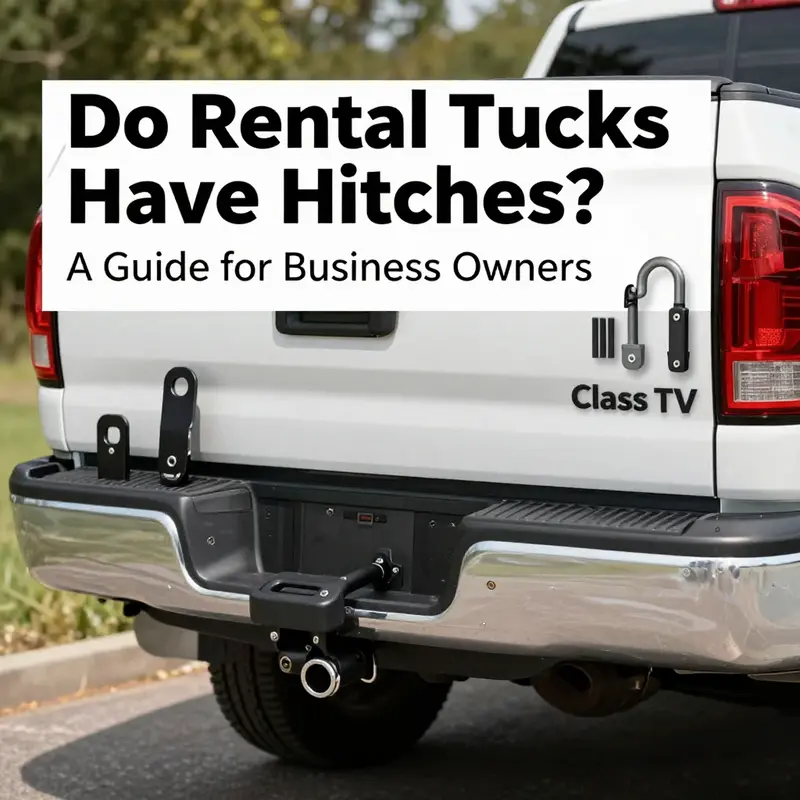
When you plan a move or a heavy haul with a rental pickup, the hitch is the often overlooked hinge between plan and execution. The hitch determines what you can tow, how stable the setup will be, and how smoothly the connection between truck and trailer performs on the road. For most renters, the hitch is a built-in convenience rather than a feature to be chosen. Yet the truth is more nuanced: while many rental fleets stock receiver hitches as standard equipment, the exact configuration, capacity, and even availability can shift from one vehicle to the next and from one rental agreement to another.
The backbone of most rental pickup hitch setups is the receiver hitch. This is the square-tube opening into which a ball mount, a drawbar, or a specialized hitch insert can be fitted. The receiver hitch is widely used because it offers modularity and a straightforward connection point for a range of trailers. In many fleets, these receivers are Class III or Class IV, a designation that denotes their towing capacity and the size of the hitch opening. Class III and Class IV receiver hitches are designed to handle substantial loads, typically in the neighborhood of 7,000 pounds to well over 12,000 pounds depending on the exact truck, the configuration, and the trailer. That range covers common light-to-medium trailers, boat trailers, and larger campers used by families and small businesses alike.
Of course, the whole experience hinges on confirmation. Availability of a hitch is not always guaranteed across every rental vehicle or every rental company. Some fleets may ship with a hitch as part of a standard package, while others may have models without hitches or with a hitch that requires a separate rental add-on. The safest step is to confirm hitch availability when you book and to document the exact vehicle you’ll be picking up. This is more than a detail; it can be a determining factor for planning a move that involves a sizable trailer, equipment trailer, or large cargo loads. And because fleets can vary by model year, trim level, or regional inventory, a quick call or a note in the reservation can save surprises at pickup. When you’re arranging the rental, ask the agent to specify the hitch class and capacity for the exact truck you’ll be driving. If you have a specific towing job in mind—say a heavy-duty trailer or a large travel trailer—state that up front so the rental team can confirm that the chosen truck can handle the task. For renters who need more than a basic hookup, some fleets offer higher-class receivers or bulkier configurations on certain models, while others may require you to choose a different vehicle altogether.
The practical implications of a Class III or Class IV receiver hitch become clear once you start planning the tow. Class III hitches, with their larger receiver opening, are built to accommodate medium to heavy trailers, often using a standard 2-inch ball mount. Class IV receivers share the same 2-inch opening but are engineered to handle higher hitch weights and heavier trailers. In both cases, the rated towing capacity is not merely a number on a brochure; it reflects the combination of the truck’s engine strength, frame, suspension, and the hitch itself. A trailer’s gross trailer weight, plus the vehicle’s own weight, must stay within the truck’s gross combined weight rating. Exceeding those limits doesn’t just hamstring performance; it can compromise braking, steering, and overall stability, particularly in windy conditions or on grades. Even when the hitch is technically capable of supporting a load, you still need the truck to be prepared—proper braking, lights, and weight distribution all matter.
Within this landscape, a crucial distinction emerges: gooseneck and fifth-wheel hitches, though capable of far higher towing capacities and better stability for certain loads, are not standard features on typical rental pickups. These configurations usually require a bed-mounted installation and are more common on dedicated heavy-duty trucks or specially prepared rental offerings. If your job calls for a gooseneck or a fifth-wheel setup, you will likely need to supply your own hitch hardware, or seek a vehicle that has one installed already. For most everyday needs—moving a car with a tow dolly, hauling a utility trailer, or towing a small to midsize camper—the receiver hitch remains the practical, readily available option.
This is where the guidance of the rental provider becomes valuable. The precise hitch type—Class III, Class IV, or another variant—depends on the truck model and the rental package. If you’re unsure, consult the fleet’s official specifications for the exact vehicle you plan to rent. The fleet’s online spec sheet or a quick conversation with the rental staff can confirm whether the truck includes a factory-installed receiver hitch and what class it belongs to. The most straightforward way to ensure you’re getting the setup you need is to request a vehicle with a documented hitch type and capacity, and to verify that the accessory you require (ball mount, wiring harness, brake controller compatibility) is compatible with the rental truck’s electrical system. In some cases, you may also need to verify that the truck has the appropriate electrical connectors—commonly a 4-pin or 7-pin connector—for trailer lights and braking.
For those who want to see the nuts-and-bolts of hitch systems, a practical resource is the hitch installation guide that covers common rental fleet configurations. It provides details on how receiver hitches are mounted, how to select a ball mount that matches the trailer, and how to confirm that the electrical connections work properly. This is a useful reference point when you’re discussing options with a rental agent or looking at a truck’s posted specifications. If you want to explore a targeted installation guide linked to fleet configurations, see the hitch installation resource here: penske-trailer-hitch-installation.
Beyond confirming the hitch type, there’s a practical, day-to-day dimension to towing that renters should keep in mind. Even with a Class III or IV receiver hitch, trailer selection matters. The trailer’s weight, tongue weight, and the distribution of that weight across the axles influence handling, braking, and fuel efficiency. When you plan a trip that involves a trailer, compute the tongue weight—the downward force the trailer exerts on the hitch—and ensure the truck’s hitch and suspension can accommodate it without compromising stability. If your trailer has built-in brakes, you may also need to consider a compatible brake controller in the truck’s cab—some rental models come with integrated braking systems prepared for towing, while others require an aftermarket controller that you install or configure before departure. The umbrella of safety extends to the electrical system as well: check that the trailer lights illuminate in sync with the truck’s signals, and ensure you have a functioning wiring harness that matches the trailer’s connector type. It’s a small checklist that pays off in big ways on the highway, especially when road conditions are less forgiving.
For those who anticipate a heavier load or a more demanding towing scenario, the temptation to seek a vehicle that has a gooseneck or fifth-wheel setup can be strong. It’s worth noting again that these configurations are not typical on standard rental pickups. If your project truly demands that level of capability, consider two paths: either arrange a vehicle with a factory-installed heavy-duty hitch or plan to bring your own hitch system that is compatible with the truck bed’s anchoring points. In either case, it’s essential to discuss your needs openly with the rental provider so you’re not surprised at pickup. The goal is to align your towing plan with the truck’s actual capabilities and the trailer’s requirements, rather than trying to retrofit a setup after the fact. The fleet’s staff can guide you to the most suitable option or propose alternatives that better fit your load, route, and timing.
As you weigh these factors, remember that the hitch is more than a simple attachment point. It is a safety-critical interface that connects mass on the road to your vehicle’s steering, braking, and stability systems. The best way to approach this is to treat the hitch as a core component of your rental plan, not as an afterthought. Confirm the hitch class and capacity at booking, verify the truck’s wiring and electrical compatibility, assess the trailer’s weight and tongue weight, and ensure there is a clear plan for securing, braking, and signaling everything behind you. If you’re unsure about any aspect of the setup, ask for a dedicated walkthrough at pickup. A few minutes spent verifying means a safer, smoother ride and helps keep everyone on the road safer as well.
In summary, for most rental pickup scenarios, the hitch you’re likely to encounter is a receiver hitch, most commonly Class III or Class IV. These hitches provide the towing capacity needed for a broad range of trailers and are broadly compatible with standard towing accessories. Gooseneck and fifth-wheel hitches, while offering higher capacity and stability for specialized hauling, are not standard on typical rental pickups and usually require a different vehicle or an owner-supplied setup. The most reliable approach is to confirm hitch availability when you book, review the vehicle’s exact specs, and prepare your towing plan with the hitch’s limits in mind. For ongoing accuracy on the precise hitch types and configurations offered by a given fleet, consult the rental company’s official specifications. The broader message remains clear: a well-matched hitch, properly connected and maintained, is a quiet but essential enabler of a successful move or haul.
External resource: For a detailed overview of hitch types and recommendations, see this guide: https://www.uhaul.com/trailer-hitch-guide/
Hitch Ready: Navigating Rental Policies for Tow-Ready Pickup Trucks
When you rent a pickup truck with towing in mind, the hitch is not just an add-on—it’s a core capability that shapes what you can haul, how safely you can do it, and what you’ll pay for the privilege. The reality is that hitch availability and the policies surrounding its use vary widely from one rental company to another, and even among vehicle models within a single fleet. Some fleets come with factory-installed Class III or IV hitches that are clearly built for towing, while others may offer a hitch as an optional feature or require you to use a separate rental component to enable towing. Because these differences are not uniform, the smart renter starts the process with awareness rather than assumption. A quick call to the rental desk or a careful read of the booking terms can save you from surprises that would otherwise derail a move or a job that depends on towing capabilities. In practice, this means asking three pivotal questions before you commit to a vehicle: Is the hitch included in the base price, or is there a separate towing charge? Which hitch type is installed on the truck I’m selecting, and is it suitable for my trailer or equipment? And does the specific truck meet the towing capacity required for my load, with room for contingency should conditions change in transit.
Beyond the numbers, the hitch is also a point of responsibility. When you sign a rental agreement, you are agreeing to return the vehicle with the hitch in the same condition you received it. A casual hitch can suffer from bent shanks, worn pins, or corroded mounting points that aren’t always obvious at pickup. A careful visual inspection—and, if permitted, a quick functional check—can help you avoid disputes when returning the truck. A hitch is not merely a connector; it is a critical safety feature. Faults in alignment, ball mount wear, or a loose receiver can have consequences that ripple through trailer stability, braking response, and overall control on the road. The best practice is to document everything with notes and photos at pickup, then to confirm any observed issues with the rental agent so they’re captured in the vehicle’s condition report.
Towing is powered by more than a hitch, however. The capacity of the truck—its maximum towing rating—sets the boundary for what you can haul safely. Even if a truck has a hitch, you must verify that the combined weight of the trailer and its payload does not exceed the truck’s towing limit. Fleet specifications are typically accessible online and are printed on the rental agreement forms you sign. The prudent renter cross-checks the trailer’s gross vehicle weight rating (GVWR) with the vehicle’s gross combined weight rating to ensure a margin for dynamic factors such as wind resistance, road grade, and brake efficiency on long pulls. In many cases, a half-ton pickup or larger is recommended for a stable towing experience, especially when you are moving anything heavier than a small utility trailer or a large cargo trailer. Some rental companies may request proof of insurance or additional coverage for heavier tows, a precaution that reflects the higher risk profile associated with heavier loads. The policy language exists to protect both you and the fleet, and the upfront disclosure helps prevent coverage gaps if an incident occurs.
The use of the hitch also comes with boundaries that are easy to overlook until they matter. Usage restrictions are common in rental agreements and can cover where you plan to operate the vehicle and what you plan to tow. Cross-border travel into neighboring countries is frequently restricted or requires special authorization. Off-road use, certain road conditions, and even driving on unpaved surfaces might be disallowed when a hitch is engaged, largely because towing dynamics change with surface texture and traction. The policy framework is designed to make it clear where you can and cannot tow, which routes you can take, and how far you can venture from your home base with a trailer attached. It is not merely bureaucratic gatekeeping; it is about ensuring the vehicle, the trailer, and the road conditions align with the safety margins that towing demands.
Another layer of complexity concerns hitch type restrictions. Many rental fleets operate standard pickups with conventional hitch configurations, and they may prohibit specialized hitch setups—notably gooseneck or fifth-wheel arrangements—on conventional rentals unless the provider explicitly approves them. If you anticipate needing a more versatile or heavier-tow configuration, you may have to seek a fleet or service that explicitly supports that type of setup. In practice, this means articulating your towing goals during the booking process and confirming that the vehicle you choose can accommodate them. When you need a specialized hitch, the rental agreement may spell out whether such configurations are permissible, whether installation is required on the premises, and whether it affects the rental rate or liability coverage. These considerations can influence your overall budget and logistics, especially if the job hinges on precise tow capacity, balance, and maneuverability.
Documentation is the quiet backbone of any hitch-related rental decision. The policy section that describes hitch type, usage limitations, and required documentation is worth more attention than it often receives. At minimum, you should expect to see: the hitch class and capacity, the trailer coupling compatibility, any added insurance or waiver requirements for towing, and clear conditions that would trigger additional fees or penalties. If you are hauling a trailer with its own braking system, auxiliary lighting, or breakaway features, you may be asked to provide documentation that demonstrates compliance with safety standards and state or provincial regulations. Preparing this information ahead of time helps you avoid delays at the counter and reduces the risk of a last-minute policy race that could interrupt a move or delivery schedule.
All of these layers—availability, condition, capacity, usage, hitch restrictions, and documentation—coalesce into a practical framework you can use when selecting a truck. The practical takeaway is simple: do not assume that a hitch is present or that a particular truck will automatically meet your towing needs. Confirm with the rental desk, review the vehicle’s specification sheet, and request a transporter or a towing checklist if you want a structured way to verify every important detail before you drive away. If your plan involves heavier towing, consider a vehicle that explicitly lists its towing class and offers a ready configuration for that purpose. This avoids surprises when you drive onto the job site or onto a highway stretch where the reliability of your towing setup becomes a central concern.
In the course of planning, you may come across guidance that touches on towing configurations and hitch compatibility that can be helpful as you prepare your rental. For readers who want a practical, hands-on reference to hitch configurations and how they relate to different towing setups, there is an accessible resource that delves into the subject further. This resource offers a concise overview of gooseneck and other specialized arrangements, helping you gauge whether your intended trailer setup aligns with what the rental fleet can support. Tow-dolly guide provides a focused look at towing accessories and configurations, which can complement the policy details discussed here.
All of this reinforces a simple truth: a hitch on a rental pickup is not a universal given. It’s a feature whose availability, type, and limitations are defined by the rental company, the particular vehicle model, and the terms of the rental agreement. Your best approach is to treat the hitch as part of the equipment you are renting rather than an afterthought. When in doubt, ask, verify, and document. This makes it easier to align your planning with the truck’s capabilities, secure the appropriate insurance or coverage if needed, and ensure that your trailer, cargo, and route are all within a safe and legal operating envelope. The result is less stress at pickup, fewer last-minute changes, and a smoother, safer towing experience from departure to delivery.
External resource: https://www.hertz.com/rentacar/vehicle-types/pickup-trucks
How Rental Fleets Differ on Hitches: What to Expect When You Need to Tow
How rental fleets differ on hitches: what to expect when you need to tow
When you need a pickup for work or a weekend move and plan to tow, the hitch question quickly becomes central. Rental companies approach towing equipment very differently. Some operate like marketplaces, arranging a vehicle and letting the renter manage any special equipment, while others focus on towing infrastructure and offer hitches, installs, and accessories as part of their service ecosystem. Understanding those differences helps you pick the right provider, avoid surprises at pickup, and make sure the truck you reserve will legally and safely tow your load.
At the highest level, rental providers fall into two broad categories: vehicle-first platforms and towing-first specialists. Vehicle-first platforms list a wide variety of vehicles and emphasize booking convenience, pricing, and support. They may include optional add-ons or offer vehicles that are factory-equipped with hitches, but hitch availability is not guaranteed across every model or location. Towing-first specialists emphasize hitches, trailer rentals, and installation services. Their inventory and services are designed for people who need to move trailers or heavy loads and often include compatible hardware and professional installation.
This distinction matters because it shapes how hitches are supplied. A vehicle-first platform might rent a pickup that happens to have a factory-installed hitch, but they often do not warrant the hitch for towing beyond what the vehicle manufacturer specifies. A towing-first provider, by contrast, typically offers rated hitches, installation, and guidance on correct ball sizes and wiring. That means with a towing-focused provider, you can expect a clearer path to matching tow capacity with trailer weight and safety equipment.
Hitch class and compatibility are the technical heart of the issue. Most light- and medium-duty pickups, when equipped, carry Class III hitches. These are suitable for many towing tasks, including small utility trailers and car dollies. Some trucks have Class IV receivers for heavier towing, while compact models may only accept small receivers or lack a hitch entirely. Even when a hitch is present, its electrical connector, ball mount size, and tongue weight capacity must match your trailer. Rental agreements rarely allow on-the-fly modifications, so verifying receiver size and wiring compatibility before you pick up the truck is essential.
Because rental fleets often contain mixed vehicle models from different model years, hitch presence and rating can vary by unit. Factory-installed hitches are common on full-size pickups, but they are not universal. Some rental locations attach aftermarket hitches for specific tasks, and those may be installed to meet local demand. The catch is that not all locations maintain the same accessory stock. A branch near a construction hub might frequently outfit trucks for towing. A downtown tourist branch might not. So, while brand-wide claims about hitches provide a starting point, branch-level confirmation is the reliable path.
Booking policies can introduce additional complexity. Many vehicle-first platforms do not include hitches in their standard reservations. Instead, they may list hitches as optional accessories or require you to call the branch. Towing-first businesses usually produce clearer, itemized options for hitch installations or trailer rentals. In practice, that means when hooking up a trailer, one provider will hand you a truck that already matches your needs, while another will expect you to secure the correct equipment separately or decline towing entirely.
Insurance, liability, and damage responsibility are another important axis. If a rental company provides a hitch or installs it before your rental, their installation standards and maintenance records matter. Liability for trailer damage, frame stress, or electrical faults may hinge on whether the hitch was factory-installed, professionally installed by the rental firm, or added afterward. When a provider supplies or installs a hitch, ask about inspection records and whether towing was considered in the vehicle’s maintenance schedule. If you install aftermarket equipment yourself, your rental contract may shift responsibility for any related failure to you.
Practical compatibility and safety checks are non-negotiable. Confirm the truck’s tow rating and match it to the trailer’s gross vehicle weight rating (GVWR). Check the receiver size—common options are 1.25″ and 2″—and the correct ball mount and wiring for braking systems and lights. Ask whether the truck includes a weight-distributing hitch if your trailer requires one. Without these checks, you risk unsafe towing and potential penalties under the rental terms.
When a rental provider does not supply a hitch, there are alternatives to consider. You can rent a trailer and tow vehicle together from a towing specialist, use a dedicated trailer rental service, or hire a local hitch installer to fit a receiver if the rental agreement allows it. Some customers choose tow dollies or car carriers offered by specialty outlets; others opt to hire professional transport for heavy items instead of towing them themselves. Each route has trade-offs in cost, convenience, and liability.
Booking strategy becomes a practical tool for ensuring the hitch you need. Start by searching for providers that explicitly list hitch-equipped trucks or show towing accessories as options. If the provider’s website does not make hitch details clear, call the location where you plan to pick up. Ask specific questions: Is the hitch factory-installed? What class is the receiver? Is wiring for trailer lights present and functional? Can the branch supply a ball mount or weight-distributing hitch? Is there an extra fee for towing equipment? Keep notes of agent names and reservation numbers to avoid confusion later.
On pickup day, perform a quick but thorough inspection. Confirm the receiver size and that the hitch appears professionally installed. Test the trailer lights and electric brakes using a lamp or a test plug. Look for maintenance stickers or service records attached to the hitch; these indicate the equipment has been inspected. Photograph the hitch and the truck’s rear before you leave the lot. These simple steps protect you from being held responsible for preexisting issues and give you evidence if disputes arise.
If your move or job requires consistent towing, prefer providers that treat towing as part of their business model. Those companies maintain compatible hardware, can advise on load limits, and often have accessory stock for last-minute needs. For one-off towing jobs, vehicle-first platforms can still be workable—if you confirm hitch availability and verify compatibility ahead of time.
Understanding the practical differences among rental providers lets you match your towing needs to the right company. Verify hitch class and wiring, confirm who is responsible for installation and maintenance, and choose a branch that routinely services towing equipment. When in doubt, contact the location directly and get written confirmation. That extra effort saves time at pickup and reduces the likelihood of costly problems on the road.
For more on installing hitches and preparing a vehicle for towing, see this resource on trailer hitch installation: penske-trailer-hitch-installation.
External resource for detailed hitch types and installation guidance: https://www.uhaul.com/trailer-hitches/
Final thoughts
Understanding whether rental pickup trucks come equipped with hitches is vital for business owners seeking reliable towing solutions. This article outlined the significance of hitches, the involvement of rental companies in their provision, and the various types available. By reviewing rental policies and conducting a comparative analysis, businesses can optimize their truck rental decisions to meet specific hauling needs efficiently.