
Understanding the costs associated with renting a Penske truck is crucial for business owners looking to manage logistics effectively. This guide explores varied factors affecting pricing, helps you anticipate additional fees, and evaluates how location and promotional offers can impact rental costs. Each chapter is crafted to provide a comprehensive outlook, enabling you to make informed decisions when renting a truck for your business needs.
Sizing, Miles, and Money: A Practical Guide to Penske Rental Truck Costs
Choosing the right Penske rental truck is a balance of capacity and dollars. When planning a move, size often drives cost as much as distance or duration. Penske offers trucks from a studio-sized load to a full two-bedroom, but two sizes stand out for most moves: the 12-foot and the 16-foot models, favored for their manageability and enough cargo space to avoid a second vehicle. The baseline figures are roughly $45 per day for a 12-foot and about $70 per day for a 16-foot. These numbers give you a frame of reference as you compare dates, locations, and promotions. Prices shift with demand, seasonality, and regional factors, so the exact quote remains the best guide. If you have a sofa, a bed, and a couple of dressers, the 12-foot can feel cramped. The 16-foot, by contrast, often accommodates larger items and a solid stack of moving boxes with a little extra room to spare. Beyond those middle sizes, Penske offers smaller and larger options. A compact 10-foot truck can be around $29.95 per day, while the largest 26-foot trucks can run into the $70s or higher per day, with some models reaching $91. These figures illustrate a practical rule: paying more per day often means you can cover more in a single trip and avoid several trips. For moves involving larger households or longer distances, the 16-foot model often provides an efficient balance of space and trips. In practice, location matters—urban markets during summer tend to see higher daily rates, though promotions can offset the premium. Mileage is a factor. Pricing structures vary; some base rates include unlimited mileage within the United States, which can be a significant advantage for long moves. In other cases, there is a per-mile charge, sometimes around a dollar per mile, a figure that appears in older cost references. The key takeaway is to verify whether your quote includes mileage and how far the all-inclusive price extends. If you anticipate a lengthy move, unlimited mileage can blunt the per-mile cost and simplify budgeting. Some buyers negotiate mileage credits or opt for weekend pickup to maximize value on their terms. Pricing at the local level can shift with seasonal demand and local competition. In some markets, mid-month moves may cost less than weekends or month-end deadlines. Fuel policy is another practical concern. You are typically required to return the truck with a full tank; otherwise, you’ll be charged for the missing fuel at a higher rate. This means planning fueling stops and refilling before return. It’s a small step that prevents a surprise invoice and helps keep your total cost predictable. The same attention should be paid to insurance options, which can add to the daily rate but offer peace of mind. If you’re moving a long distance, choosing a plan that balances deductible with premium can save money over the course of the rental. Promotions and loyalty programs can tilt the math in your favor. Penske frequently runs promotions that target students and military personnel, among others, often timed with the academic calendar or holidays. A quick check of current offers can reveal discounts or bundled services that lower the daily rate or reduce out-of-pocket costs for extras. For a concise overview of discounts, see Penske truck rental discounts. This resource groups common savings and helps you decide when promotion timing matters most. Note that some deals require verification of student status or military eligibility to apply. To maximize value, consider the whole moving plan rather than the sticker price of the daily rate. If you’re moving from a one-bedroom, the 12-foot model is often a fit, and its allowance for more miles can be a strong point. For larger apartments, the 16-foot model usually offers a solid balance of space and driveability—enough cargo and still easy to navigate city streets. If you anticipate needing space for several days or prefer a reserve, a larger truck may cut the number of trips, even if the daily rate is higher. The best choice aligns with your loading plan, distance, and whether you want to minimize days on the road or trips to reload. For a tighter campus move, the 12-foot can be ideal; for a family moving a few rooms, the 16-foot often saves time and reduces back-and-forth travel. Getting a precise quote is straightforward. The best path is to visit the Penske Truck Rental online calculator, which prompts you to enter your pickup and drop-off locations, dates, and the truck size you have in mind. The result is a detailed cost breakdown that factors in base rates, mileage, insurance, fuel, and promotions. While the exact numbers are location-specific, the calculator helps you compare scenarios quickly, so you can pick the option that fits your budget and timeline. You’ll get a sense of how much flexibility you have to adjust dates or trims on the load to achieve a better price. The calculator’s line items also show how adjustments in pickup date, drop-off distance, and duration change the final bill, which can help you time a promotion window. Beyond the price, Penske’s service ecosystem adds value that’s easy to overlook. A guarantee of 24/7 roadside assistance can be a comfort on a long journey, and the ability to manage the rental via a mobile app keeps you informed of status changes, drop-off deadlines, and charges in real time. The combination of accessible help and digital tools can reduce moving stress and keep you on budget. The real relationship between cost and experience isn’t just the daily rate; it’s the total package of reliability, support, and predictable billing that comes with a major truck rental provider. In adverse weather or during a tight timeline, that support can be the difference between a smooth plan and a scramble. Preparing for a move is about logistics as much as dollars. Start by making a compact inventory of what you plan to move and sort items by what truly needs a moving truck, what can fit in a car, and what should be discarded or donated. Pack efficiently, label clearly, and plan loading sequences that minimize time behind the wheel. The more precise your load estimate, the closer your quote will be to the final cost, and the less likely you’ll pay for unused space. In practice, the biggest levers are truck size, mileage policies, and fuel handling. The right balance rarely comes from the sticker price alone, but from a clear view of what you’re carrying and how far you’ll drive with it. A room-by-room inventory, careful measurement of doorways and stairwells, and realistic pacing can save both time and money on moving day. With this approach, you can navigate the pricing landscape with confidence. Remember that the base-rate numbers are starting points, not final bills. Distances, locations, and demand can push prices up or down, and promotions can tilt the scale toward a cheaper solution. Lock in a quote a few days before you move while staying flexible to capture a promotional window. If you can align your move with a promotion period, you can lock in a lower daily rate and still preserve the flexibility of choosing different pickup dates. External resource: https://www.pensketruckrental.com
Counting Every Mile: Understanding the Real Cost of a Penske Rental Truck
Moving costs rarely come in a single figure you can memorize. They arrive instead as a spectrum that starts with a base daily rate and widens with the size of the truck, the length of the rental, where you pick up and drop off, and the promotions in play at the time you reserve. This reality is true for a Penske rental truck, one of the better known options for do-it-yourself moves. The sticker price you see when you click through is just the tip of the iceberg. To plan responsibly, you have to look beyond the base rate and map out the potential add‑ons and situational charges that can change the total from day to day and location to location. The same factors that influence the price of a small move can multiply quickly when households with more belongings or longer distances enter the picture. A practical approach is to imagine the move as a sequence of choices, each with its own cost implications, then assemble the total from those parts rather than rely on a single estimate.
In terms of the base, Penske typically offers a range of truck sizes to cover everything from compact apartment moves to full-house relocations. The smallest common option sits around the $29.95 per day mark, a price designed to move a modest load without forcing you into a larger vehicle than you need. A step up—the 16-foot truck—usually lands in a broader band, roughly $45 to $55 per day, reflecting the extra space and payload. The largest standard model, the 26-foot truck, carries a higher daily rate, often around $70 or more, with instances reaching into the $90s depending on the exact model and market conditions. These figures are representative rather than universal, and the real quote you receive will depend on your pickup and drop-off locations, the dates you need, and any current promotions you may be able to apply.
Even when the daily base price seems straightforward, the total cost can escalate through mileage. Penske typically includes a set number of miles per day or per rental period, which increases the value of the base rate when your move is brief and within that allowance. When you exceed those included miles, you’ll face a per‑mile charge. In practice, many renters see roughly $0.75 to $1.00 per mile as the common overage range, though exact figures can vary by location and contract specifics. This means a longer trip can swing the cost substantially, especially if you are moving across town on a sunny weekend or planning a longer out‑of‑state transfer. It is easy to underestimate how quickly mileage adds up if you aren’t tracking it in real time, which is one reason it pays to review your plan and the expected distance before you commit.
Fuel is another practical consideration that affects the final tally, though Penske does not bill you a separate fuel charge in the traditional sense. The policy is simple and widely used in the industry: you return the truck with a full tank. If you don’t, you’ll incur the cost to refill at a rate that is higher than retail prices, effectively padding the bill with a markup on fuel. The exact price you pay for the missing fuel depends on the local station and market, but the rule itself is consistent: keep the tank full or plan for a top‑up charge that reflects a premium on gasoline. It’s a small detail that can become a significant line item if you’re rushing and forget to estimate the fuel you’ll actually need.
Beyond the basics of vehicle size and mileage, there are protection options that you may choose, or opt out of, depending on your risk tolerance and liability coverage. Penske offers a suite of insurance and protection choices, including loss damage waiver, liability protection, and personal accident coverage. Each option adds to the daily cost but can provide peace of mind when you’re transporting valuable belongings or navigating unfamiliar roads. If you decline protection, you’ll reduce your immediate outlay but assume more responsibility for any damage or loss that might occur during the move. Your decision may be influenced by your personal auto policy, existing renters’ or homeowners’ coverage, or a desire for extra assurance during a high‑stakes relocation, so it’s worth weighing the trade‑offs as your dates approach.
Taxes and government fees are the other layer that can shift the total. Sales tax is applied where the rental occurs, and local regulations can introduce additional charges. The variation can be surprising—from city to city and state to state—so it’s not unusual to see a price that looks different when you change your pickup location even if everything else remains the same. One‑way rentals add another dimension entirely. If you plan to drop the truck at a different location from where you picked it up, one‑way rental fees are typically applied, and they can be substantial depending on the distance and the route. It’s a reminder that the logistics of a move—especially one that spans regions—often carry a price tag that isn’t obvious until you map the route and the timing.
Late returns compound the cost further. If you miss your scheduled return window, many rental agreements enforce hourly or daily late fees. In a tight moving schedule, those charges can accumulate quickly, effectively turning a small delay into a meaningful increase in the total. Because every move has tempo, it helps to reserve a concrete plan and communicate any changes as soon as you know them. The goal is to minimize surprises and keep the total within a reasonable range of your budget. For a precise quote that reflects your exact dates and location, the most reliable path is to go straight to the source. The Penske site and app are designed to provide real‑time quotes based on your actual pickup and drop‑off details, so you can see how each component—truck size, days rented, mileage, and optional protections—shows up on the final bill before you commit.
If you are hunting for savings beyond the base rate, there is value in exploring available discounts and promotions. While the specifics shift with time and location, many renters discover worthwhile reductions by checking active offers and promotions. For a consolidated overview of current savings, you can explore Penske Truck Rental Discounts. This resource aggregates available promotions and can help you determine whether a smaller truck with a tighter schedule might deliver a lower total than a larger vehicle used for a longer window. The practical takeaway is simple: promotions can move the effective daily rate enough to alter the size choice, the timing, or even the geographic plan of your move. Plan to compare a few scenarios, so you’re confident you’ve chosen the most economical path for your particular move.
To keep the planning anchored, consider the real‑world steps: start with a realistic distance estimate and a truck size that matches the load you’re carrying. Then, use the official quote tools to lock in a baseline for your dates, and add the mileage allowance, the fuel policy, and any protection options you’re willing to carry. Don’t overlook taxes and the potential for one‑way fees if you’re relocating between regions. If the numbers don’t align with your budget, revisiting the move plan—adjusting the truck size, shortening the rental period, or shifting pickup timing to a price‑friendly window—can yield meaningful savings without compromising the move itself. For a sense of how others have navigated similar decisions, consider exploring related resources and discounts mentioned in the industry discussions that accompany these rental decisions. In the end, the total you pay is a mosaic built from the size you choose, the miles you travel, the protections you select, and the place you end up. The more deliberate you are about each piece, the closer your final number will be to the amount you expect—and the less you’ll feel surprised when you see the bill.
For readers seeking a targeted savings route, a practical option is to reference one of the dedicated discount pages that compile current offers. It’s a straightforward way to gauge whether a smaller truck reserved for a shorter window, coupled with a promotional code, could meet your needs at a lower total. Penske Truck Rental Discounts can be a helpful waypoint in this planning phase, guiding you toward promotions that are active at the moment of booking.
As you finalize the plan, remember that the most accurate pricing comes from the official source. The Penske Truck Rental App and the Penske website allow you to input your exact pickup and drop‑off locations and dates, generating a real‑time quote that includes base rates, mileage charges, taxes, and any eligible promotions. The app also adds convenience features such as loading guides and 24/7 roadside assistance, which can ease the stress of moving days that don’t go exactly as planned. When you translate this information into a written budget, you’ll be able to forecast not only the dollars you’ll spend on the truck itself but also the ancillary costs that tend to accompany a successful move. By embracing the full cost picture—truck size, mileage, fuel, protections, taxes, and location—your estimate becomes a reliable compass for the entire relocation.
External resource: https://www.pensketruckrental.com
Sizing the Cost: How Location, Size, and Timelines Shape Penske Rental Truck Pricing
When you ask how much a Penske rental truck costs, you’re really asking for a moving equation. The answer isn’t a single fixed price but a composition of variables that shift with size, duration, and place. The same truck parked at a bustling city branch can carry a different price tag than the same model tucked into a quieter town. The equation begins with the truck size that best fits your load. Penske offers a spectrum from compact 10-foot movers to the expansive 26-foot workhorses. The base daily rate scales with that size: a compact truck tends to sit in the lower end of the price spectrum, while the largest models command higher daily rates. As of early 2026, the most common picture shows 10-foot trucks starting around the mid‑$20s to the low $30s per day, 16-foot models hovering in the mid‑to‑high $40s or low $50s per day, and the 26-foot giants commonly landing in the $70s to $90s per day. Those ranges aren’t universal; they reflect local market conditions and the specific rental terms in effect at a given location and time.
The second major piece of the puzzle is duration. Short, one‑way moves booked for a single day can look different from longer, multi‑day arrangements that stretch across a weekend or a full workweek. In many markets, there is a generous inclusion of miles in the base daily rate, typically on the order of 100 to 150 miles per day. The moment you start driving beyond that daily allowance, the clock starts ticking on additional mileage charges. A common ballpark for per‑mile fees over the included allotment is around a fraction of a dollar per mile; in some regions, customers report charges near $0.85 per mile or similar rates. The important takeaway is simple: the more you drive beyond what the base rate includes, the more your total climbs, and the rate can vary by location just as the base price does.
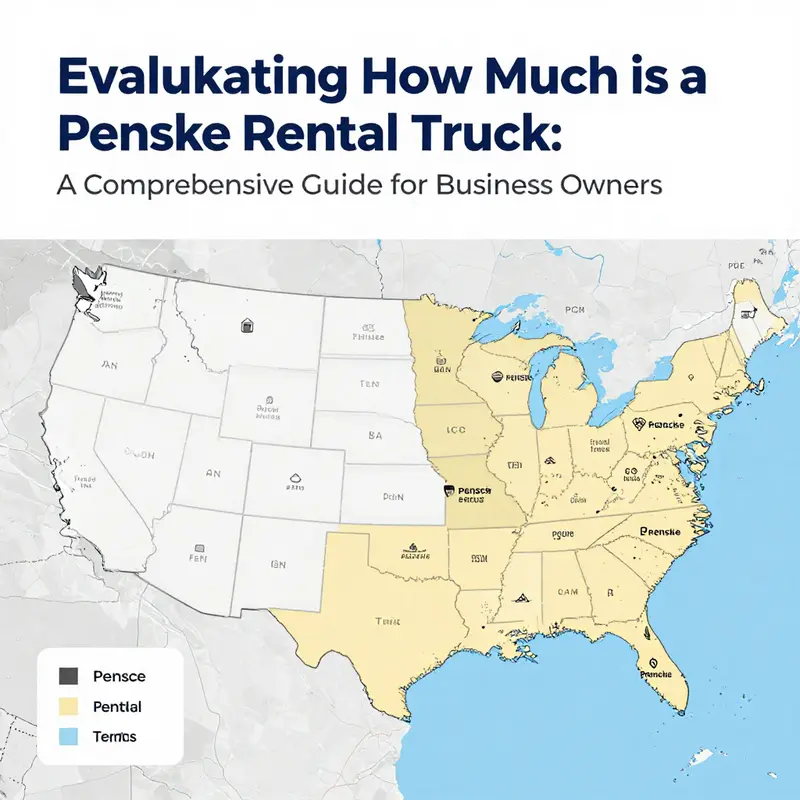
Location itself plays a subtle but powerful role. metropolis‑adjacent branches with high demand, elevated operating costs, and intense scheduling pressures will naturally price higher than rural or smaller‑city counterparts. Even within the same state, one branch might set a different daily base rate than another, depending on local competitive dynamics and how the fleet is allocated. This variability means you’ll often see a similar truck size priced differently if you compare the same dates across two nearby neighborhoods. In other words, the sticker price isn’t just about the truck; it’s about where you pick it up and when you book it.
Beyond the bare daily rate and mileage, there are other charges that can tilt the overall cost. Fuel policy is a straightforward example: return the truck with a full tank, and you’ll avoid a fuel surcharge or the higher default rate that applies to missing fuel. If you don’t refill, expect a fuel charge calculated at a premium rather than a simple offset. Taxes and fees add another layer that isn’t always obvious at the outset. Some locations list taxes as a separate line item, while others roll them into the final total. Add insurance options, tolls, and optional equipment like dollies or straps, and you have a cost structure that can surprise if you don’t plan ahead.
The practical upshot for someone planning a move is to treat pricing as a planning variable rather than a fixed number. If you’re coordinating a short, local move with a reasonable load, a smaller truck could deliver the most economical daily rate. For longer hauls or larger apartments and homes, weighing whether a longer rental with the same daily rate but a favorable weekly discount might beat a tighter schedule with more days can be worth it. Penske’s own promotions matter here as well. Some locations offer discounted weekly or monthly rates that reduce the effective daily cost when you commit to a longer rental window. The savings from such plans can be substantial when the move spans more than a few days, especially if you anticipate returning the vehicle with a lot of miles already accumulated or if you expect to utilize the vehicle over multiple days with steady use.
To translate these generalities into something actionable, the best approach is to obtain a real‑time quote that reflects your pickup and drop‑off locations and your exact dates. Penske’s official booking tools are designed to do precisely this. By entering your ZIP code or city, dates, and the truck size you’re considering, you’ll see the live price that includes any local taxes and fees, as well as any applicable mileage allowances and surcharges. This is the most reliable way to compare options without guessing, since prices fluctuate with demand and availability across branches. In practice, many moves benefit from a quick check of a few size and date combinations to see where the balance of convenience and cost lies.
Even for someone who is trying to minimize expense, it’s worth noting the pathways to savings. If your move isn’t time‑critical, opting for a longer rental with a weekly or monthly rate can reduce daily costs, especially if you have a built‑in window that allows you to stretch the move across several days rather than cramming into a single day. Early planning to secure a pickup in a location with lower base rates or better mileage inclusions can also trim the out‑of‑pocket price. And for those who enjoy hunting down promotions, there are often discount codes and negotiated offers that can shave a bit more off the total. For readers seeking targeted savings, consider exploring resources that aggregate current promo options and discount ideas; these can illuminate options that might otherwise be overlooked while browsing through the base rates. One useful resource aimed at consolidating such savings is Penske truck rental discounts, which collates current offers and makes them easy to compare as you refine your plan. Penske truck rental discounts provide a practical way to see potential reductions while you map out your move.
Finally, when you compare quotes, don’t forget to factor in the full lifecycle of the rental. Taxes, insurance options, and any roadside assistance or service plans may be optional but they alter the total cost and the level of protection you’ll have on moving day. The fuel policy remains a simple but critical detail. Returning the truck with a full tank is a straightforward rule, yet failing to meet it can create a sizable extra charge that compounds across a multi‑day rental. The overarching lesson is clear: the price you finally pay is the sum of the size you choose, the time and distance you actually use the truck, the local pricing dynamics, and the ancillary terms you select at checkout. To minimize surprises, approach the process with organized planning, ready to compare live quotes, and a reasonable expectation that the number you see is not a single fixed value, but a price that reflects a combination of logistical choices.
For the official, up‑to‑the‑minute pricing that reflects your precise pickup and drop‑off locations and dates, consult the Penske Truck Rental site. There you can work through your move in real time and capture the exact total you’ll pay, inclusive of the taxes and any location‑specific fees that apply. External pricing resources and internal discount pathways together can help you approach your move with both clarity and confidence.
External resource: https://www.pensketruckrental.com
Pricing the Move: Understanding Penske Truck Rentals, Promotions, and the Real Cost of Moving
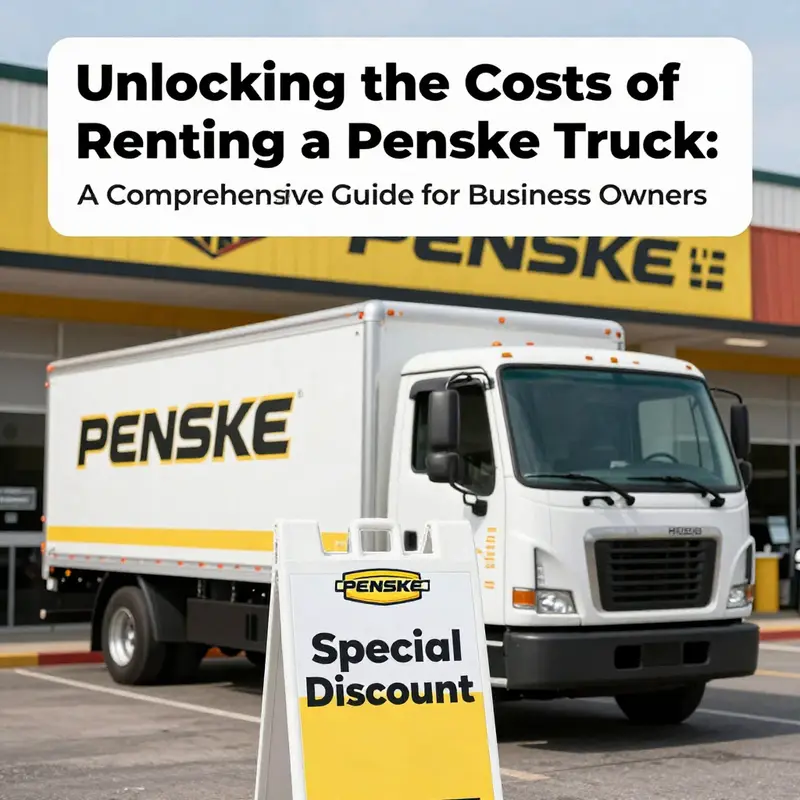
When planning a move, one question dominates the planning stage: how much will a Penske rental truck actually cost? The short answer is that price isn’t a single number. It depends on the size of the truck, how long you need it, where you pick it up and drop it off, and whether you can take advantage of current promotions. The base daily rate is only the starting point. From there, mileage charges, fuel requirements, and extra services such as insurance or equipment add to, or in some cases reduce, the final bill. The numbers you see in a quick online quote reflect a snapshot of a much larger decision matrix. Historically, the smallest truck typically starts around the high twenty dollars per day, a mid-sized truck lands in the forties to mid-fifties per day, and the largest moving truck tends to sit in the range of seventy dollars or more per day, with peak models occasionally exceeding ninety dollars daily. These ranges provide a sense of scale, but the exact figure for your move will depend on location, season, and the precise rental window you choose. A per-mile charge is often applied to cover the wear and tear on longer trips, with typical rates hovering around eighty-five cents per mile in past user reports. And there is the fuel policy: you’re usually required to return the truck with a full tank, or you’ll absorb the cost of the missing fuel at a higher rate than the pump price. It’s a straightforward policy in theory, yet it can surprise first-time renters who misjudge how much fuel they’ll actually need for a given route, especially when traffic patterns or detours extend the trip. The practical takeaway is simple: before committing, run the numbers for the exact route, the number of days you’ll need the truck, and the miles you expect to accumulate. The official Penske site provides real-time quotes based on your pickup and drop-off locations and dates, which is the most reliable way to lock in the current numbers rather than rely on anecdotal memories of past trips. The cost picture becomes clearer when you factor in additional services. If you choose to purchase insurance through Penske, or to add mileage packages for longer moves, the daily rate can be supplemented by a flat fee or a per-mile premium that changes with the chosen coverage and the planned distance. You’ll also want to watch for miscellaneous charges that can appear on the final invoice, such as administrative fees, one-way drop-off fees if you’re not returning the truck to the same location, and taxes that vary by state. None of these are hidden traps, but they are important elements of the total owned cost—costs that a quick one-line quote may not reveal in all its complexity. The most effective approach is to build a comprehensive cost estimate that combines the base rate with these potential add-ons, then test several scenarios. If your move is tightly scoped, a longer rental with more days can sometimes unlock a lower daily rate, offsetting the higher time cost with a reduced per-day price. Conversely, a move that requires a late return or a one-way trip can trigger additional charges that push the total beyond the apparent base price. This is where promotions become a real lever. The most notable offer is a New Customer Discount, which provides a 20% reduction on your first rental when you mention the promotion code PTLAU. It’s a powerful incentive, but it comes with an important caveat: it cannot be combined with any other offer or promotion. If you’re new to Penske, that 20% can still be a meaningful savings, particularly on a larger truck where the daily rate is higher. For students, there’s another practical option: a 10% discount simply by showing a college ID. If you reserve online, you can receive an extra 10% off, and those promotions can stack in a way that brings total savings up to about 20% in the right combination of circumstances. Members affiliated with AAA also qualify for a 12% discount, making it one of the more accessible discounts for frequent movers who belong to that program. Taken together, these promotions can substantially lower the base rate, but the most important reminder is that the promotions have specific eligibility rules and, in some cases, stacking limitations. It’s essential to read the terms carefully and to confirm the latest offers on the official site or with a local branch before booking. In practice, a careful buyer can plan for a scenario like this: pick a 16-foot truck for a move that spans three days in a metropolitan corridor with a moderate mileage expectation, apply the online-booking discount, and, if eligible, pair it with a student or AAA discount. The result is a meaningful reduction of the daily rate, potentially nudging a mid-range cost into a more comfortable middle ground. Yet even the best-case promotional math needs a reality check. Independent user feedback from late 2025 notes that while the Penske app can manage basic reservations, there are usability quirks—such as autofill pulling in old reservations and the reservation page sometimes lacking essential contact details for urgent changes. Those operational frictions can affect how smoothly plans proceed after the booking, especially if your move timeline changes unexpectedly. The message here isn’t to discourage using promotions; it’s to emphasize that the total cost hinges on a clear plan and an up-to-date quote. The most reliable path is to start with a real-time quote, then apply eligible discounts in a way that respects the rules for stacking. If your goal is a transparent, comparatively low-cost rental, consider beginning with the base rate, add your anticipated mileage, factor in fuel costs for the expected distance, and then layer in the promotions you qualify for—keeping in mind the restriction that the new-customer 20% promo cannot be combined with other offers. For those who can, online booking plus student or AAA discounts can meaningfully reduce the cost without sacrificing the size or capability you require. Finally, as you lock in a plan, maintain a buffer for potential fuel surcharges or administrative fees that appear on some rental agreements. It’s easy to overlook these line items, but they matter at the end of the day when the truck is unloaded and the invoice lands. The best practice is to treat the real price as a composite of several elements rather than a single line item. A careful approach to pricing—grounded in an up-to-date quote and a thoughtful appraisal of the promotions you are eligible for—will yield the most accurate picture of “how much is a Penske rental truck” for your specific move. For ongoing accuracy, consult the official site and, when in doubt, contact a local Penske representative who can walk you through the current terms, rates, and any location-specific promos. And if you want a direct, relevant reference to current promotions, you can explore Penske truck rental promotion code resources at Penske truck rental promotion code. For the most up-to-date information on current promotions and pricing, visit the official Penske site: https://www.penske.com
Real-Time Pricing Unpacked: How to Nail Penske Truck Quotes, Availability, and Reservations

Pricing for a Penske rental truck is not a single number you can memorize. It is a moving target that shifts with the size of the truck, how long you need it, where you pick it up, and what promotions are in play at the moment. To understand what you’ll actually pay, it helps to think in layers: base daily rate by truck size, then add-ons like mileage and fuel, plus any location-based fees or promotional discounts. When you start from this framework, real-time quotes begin to feel less like a guess and more like a precise plan you can act on. If you are moving locally and keep the truck for a few days, you will see a simple daily rate that increases with truck size. The smallest typical option starts around the upper twenties per day. The mid-sized trucks hover in the forties to mid-fifty range per day. The largest standard work trucks tend to sit in the seventies or higher per day, and some modern configurations can push toward the upper end of the price spectrum. These figures are useful as rough benchmarks, but the moment you factor in mileage, fuel, taxes, and fees, the total can look very different from a single daily rate. A per-mile charge is common, often disclosed as part of the quote. In past reviews this mileage fee has hovered around eighty-five cents per mile, but rates change with supply, demand, and promotions. Fuel policy adds another practical constraint: you must return the truck with a full tank, or you will incur a charge that is sometimes higher than standard fuel prices. The combination of mileage cost and the fuel policy means that even a seemingly inexpensive daily rate can balloon if you rack up miles or forget to refill before you drop off the vehicle. You can avoid surprises by using the official quote tool, which automatically accounts for your specific pickup and drop-off locations and dates. The principle is simple: the more precise your inputs, the closer the estimate will be to the actual amount you pay when you walk through the counter. The real-time quote is designed to reflect your exact circumstances rather than a generic template. The process begins with a straightforward size comparison. Most people begin by considering a small 10-foot truck, a standard 16-foot truck, or a larger 26-foot truck. On the Penske site, you can quickly compare these sizes side by side, so you can see how the base price changes with capacity and how that interacts with your moving plan. Availability is the second critical element. Not every truck is on every lot every day. The site’s availability checker lets you see which trucks are open on your moving date and at nearby locations. If a particular time is booked out, you will notice changes in the available sizes. This is especially true during peak moving seasons or in busy urban corridors. Real-time pricing is then tailored to your exact pickup and drop-off details. The instant pricing you see reflects not just the truck size, but the exact location, the date range, and any promos tied to your rental, whether seasonal or location-specific. Across the board, you can count on a straightforward set of features on the Penske platform: a clean comparison of sizes, a simple availability check, and a pricing display that updates as you adjust dates or locations. This fluid pricing environment is complemented by practical resources that help you move efficiently. The Penske site and app include loading guides that walk you through packing and loading strategies. These guides can help you optimize space and protect fragile items, which, in turn, can influence how much truck you actually need. There is also a 24/7 roadside assistance option. If you encounter a hiccup during your rental period, you can reach out for help at any hour, which reduces the stress of long moves. The combination of real-time quotes and helpful resources makes it easier to plan without double-checking every price facet in your head. For anyone who loves to optimize costs, promotions can be your biggest lever. Discounts may appear tied to the time of year, the length of the rental, or even a particular pickup location. Some readers keep a sharp eye on coupon and promotion blogs or membership programs that compile current offers. If you are aiming to reduce the total, it can be worthwhile to compare the base daily rate across truck sizes with the total after mileage and fuel—sometimes a smaller truck brings the best balance of daily price and mileage allowance. When you see a favorable combination of truck size and days, you can lock in the rate as soon as you confirm the details. If you want a quick shortcut to savings, consider checking for ongoing promotions or discount opportunities that might apply to your rental window. You can explore this topic on dedicated discount pages that discuss how to maximize Penske rental savings and how promo codes can be applied to your quote. For a concise snapshot of discounts and how they’re applied, many movers find value in reviewing Penske-specific savings content. If your plans include a one-way move, the pricing dynamics shift again. One-way rentals often feature different pricing structures because of the repositioning of the truck between locations. The real-time quote tool handles this by letting you select a one-way route and showing you the pricing associated with that configuration. This ensures you aren’t surprised by a higher daily rate or an unexpected drop-off fee when you reach your destination. The practical steps to obtain an accurate quote are simple: head to the official rental site, select your pickup location, choose your desired truck size, enter your moving dates, and indicate whether you will return the vehicle to the same place or a different location. The system will present you with a tailored price that factors in the exact terms of your trip. When planning a move, it can be easy to fixate on the sticker price. Yet the total cost sits on a spectrum that includes the distance you travel, how many days you keep the truck, and how closely you adhere to the fuel policy. A responsible approach is to map out your route, estimate miles, and compare a few configurations before you finalize the booking. The real-time quote tool is designed to support this exploration, so you can flip between sizes and dates and watch the total price adapt in real time. It is also worth noting that customer support remains available if you want a human check on your quote or help with a complex move plan. The Penske team provides a dedicated customer service line for quick assistance at 1-844-847-9517. In many cases, talking through your specific needs with a live agent can yield insights that the online quote alone cannot, such as understanding how a promotion code would apply to your exact dates or whether a local waiver or insurance option makes sense for your move. As you finalize your reservation, you may encounter small but meaningful decisions. Do you choose a slightly larger truck with a lower daily rate because the extra capacity will prevent extra trips? Or do you stay with a smaller truck and drive back and forth, potentially increasing mileage? The real-time quote system helps you test these scenarios side by side, so you can optimize for both time and cost. The balance between rental duration and the miles you cover often dictates whether a particular size appears as the most economical choice. For readers who want to know more about promotional nuances and how to apply codes, there are dedicated resources that discuss discount opportunities and the mechanics of discount stacking. These discussions can be a helpful companion to the real-time pricing experience, offering practical ways to minimize spend without sacrificing reliability. To bring this full circle and keep the experience grounded in the practical, the most reliable step is to use the official Penske quote tool for your exact move. Start with your size, then confirm availability and the precise dates. Review the instant price, including any mileage or fuel charges, and check for any eligible promotions. If everything aligns, you can reserve with confidence, confident that your price reflects real-time conditions rather than a generic estimate. As you proceed, keep your contact and payment details ready, and consider saving a copy of the quote for your records. The process is designed to be straightforward, with clear lines of support if anything goes awry. With this approach, the question “how much is a Penske rental truck?” shifts from a guess to a precise, actionable figure that you can base a moving plan on. Internal links can guide you toward savings, and an external resource can provide broader context on rental truck choices and policies as you finalize your decision. For a focused look at current discounts, you can explore this resource: Penske truck rental discounts. External resource: https://www.pensketruckrental.com
Final thoughts
In summation, comprehending the nuances of Penske truck rental costs helps business owners make strategic decisions that align with budgetary constraints and logistical needs. By evaluating truck sizes, understanding additional fees, and remaining cognizant of geographical price differences, you can optimize your rental choice. Don’t forget to leverage available promotions or discounts for cost savings, and utilize the Penske site for up-to-date quotes tailored to your unique requirements.