
For business owners looking to transport goods efficiently, Home Depot truck rentals offer a practical and cost-effective solution. Understanding the rental costs, the variety of trucks available, and the rental requirements can significantly enhance your logistics strategy. This guide will explore essential aspects such as the pricing structure, types of trucks you can rent, requirements for renting, and the convenience factors of using Home Depot’s services. Each chapter will equip you with vital information, ensuring your rental experience is smooth and tailored to your business needs.
Decoding the Price Tag: A Comprehensive Look at Home Depot Truck Rentals for Your Move
When you plan a local move, the word that circles most often is cost. The way a rental fee is presented can feel like a knot of numbers that shift as you move from one rental counter to another. For anyone evaluating Home Depot’s truck rental options, the goal is simple: understand how the price accumulates, what’s included, and how to avoid surprise charges when the paperwork is signed and the key is handed over. The reality is that pricing isn’t a single number on a sign. It is a small ecosystem: the size of the vehicle, the duration of use, the time of day you pick up, the location, and the policies that govern gas, mileage, and deposits. The broad arc of Home Depot’s truck rental pricing centers on three tiers of usage. There is the option billed by time in increments, commonly described as 75-minute blocks. Then there are daily rates, typically designed for a single day’s use, ideal for quick moves or transporting a couple of sizable items. And for longer moves or repetitive trips, a week-long rate can become more economical. The exact figures can shift by market and season, but the pattern remains consistent enough to map out a useful framework. For the most reliable numbers, you’ll want to check the official site before you lock in a plan, because the quotes you obtain online or at the counter reflect current promotions, inventory, and local policy that can vary from one Home Depot to another. In some cases, what you see on a third-party rental listing is not guaranteed to be the price you’ll pay when you arrive at the store.
The time-based option, which many customers first encounter, is often pitched as a block of 75 minutes. The idea is straightforward: you pay a base rate for that window, and you can drive within a defined area without worrying about mileage caps during that block. In some markets or promotional periods, the price for that 75-minute window can be quoted as something like $19, with unlimited mileage bundled into the block. In other periods, a higher introductory block price such as $29 for every 75 minutes has appeared in published materials. The key takeaway is that the base rate is not a one-size-fits-all figure; it has historically fluctuated and is highly sensitive to location and time, while the concept of unlimited mileage within the block has been a common feature. If you only need a few trips or a short move, this can be a cost-effective option because you’re not paying for each mile separately, and you can time your driving to fit within the block’s window.
As the clock ticks past those initial blocks, the pricing structure broadens into a daily rate. A typical daily rate is designed for a full day of use, with the vehicle returned by the end of the day in exchange for a single day charge. In many cases, the daily rate sits at roughly the same order of magnitude as several block-of-75-minute purchases combined. The daily figure, often cited around the mid-to-upper hundreds for all vehicle options, is meant to cover a full 24-hour period and includes the flexibility of returning the vehicle at the end of the day rather than being forced into precise blocks. You may also encounter a weekly rate, which is designed to provide a substantial discount for longer projects or repeated trips over the course of a week. The weekly rate can appear as a sharply reduced figure when compared with paying by the day, but keep in mind that the total cost will still reflect the accumulated days and any applicable fees. In practice, a weekly rental can be attractive for weekend moves that stretch into multiple days or for short renovations that require frequent trips.
A critical line in any Home Depot rental agreement is the deposit. Across the board, a deposit is typically required—historically around $150—for all rental options. This deposit is not the rental fee; rather, it’s a hold placed on your payment method to cover potential damages, fuel imbalances, or late returns. The exact amount and the method of return can vary by location and by the terms in force at the time you rent. When you return the vehicle in good condition, with a full tank of gas and on time, you’ll usually receive the deposit back in full on your original payment method. If you fail to meet the fuel policy or if there are excessive damages, the deposit can be partially or fully withheld to cover those costs. Because the deposit is a variable element that can be influenced by location-specific policies, it’s wise to confirm the exact amount and the refund timeline when you reserve the truck.
The list of requirements for renting a truck is short but non-negotiable: a valid driver’s license and proof of insurance. The license confirms you are legally permitted to operate the vehicle, and the insurance proof helps ensure coverage in case of incidents. For many renters, these are straightforward to provide, but they underscore a broader reality: truck rentals are not a casual add-on to a day’s errand. They are a transportation tool with real liability attached to it, and stores will verify credentials and ensure the renter has access to adequate coverage before handing over the keys.
Fuel remains a variable you’ll want to monitor closely. The expectation at many locations is that you return the truck with a full tank. If you don’t, you’ll face refueling charges that can be higher than what you’d pay at a typical gas station. The risk here isn’t only the cost of the fuel; it’s also the possibility of late return charges if the refueling process takes longer than expected or if the staff notices that you arrived with a low fill and left with a higher due to the refuel requirement. The policy on fuel is a practical reminder that the price tag on the sticker is only part of the total cost of ownership for a rental truck.
One of the most practical aspects of planning is understanding how these pricing tiers intersect with the scope of your move. A small apartment move on a weekend might be efficiently handled with a short block price or a single daily rate, especially if you can complete the haul in a single window. A larger apartment or a small home with several heavy items will probably lean toward a daily or even weekly plan, particularly if it requires multiple runs or extended loading and unloading sessions. In those scenarios, you will likely find that the daily or weekly rates offer better value per hour or per mile, especially when the vehicle’s fuel efficiency and the labor costs you’d avoid by not renting a larger truck are factored in.
For anyone comparing options, it’s important to note that third-party platforms sometimes display rates that are not guaranteed at the counter. You may see a range or highlighted discounts on aggregator sites or rental comparison services, but the actual price you pay can vary by location, vehicle availability, and any added fees that the store may apply. The ecosystem of moving tools often includes other channels—moving trucks from different brands, trailer rentals, or hitch options—that can look comparable on the surface but diverge once the final terms are signed. When the goal is predictability, the safest path is to consult the Home Depot rental center’s official portal or call ahead to get a written quote that reflects your exact pickup location, date, and vehicle size.
The broader implication for cost-conscious movers is that price transparency matters as soon as you start to plan. You’ll want to estimate not only the base rental fees but also the possible add-ons: fuel surcharge if you don’t return full, potential late return fees, and any administrative charges that can surface if the rental center has to perform extra processing. A practical rule of thumb is to map out your move timeline with a margin for contingencies and to compare the total estimated costs across different rental options. If you know you’ll be making multiple trips, tallying up the block-based charges ahead of time can reveal whether a daily or weekly rate is more economical in your specific scenario. It also helps to consider alternative vehicle sizes. A too-large truck can waste fuel and time, while a too-small vehicle can force multiple trips or risky loading. A brief, honest assessment of the load you expect to carry will shape the best match between cost and utility.
To connect the two threads—the numbers and the real-world steps—think of your move as a story told in chapters. The opening chapter is the decision to rent, anchored by the deposit and the basic eligibility requirements. The second chapter is choosing the rental time structure. Will you invest in a handful of 75-minute blocks, embrace a full day, or commit to a week if you foresee a string of small trips? The final chapter is the actual execution: fueling, returning the vehicle with the tank topped up, and settling the bill with a clear sense of what you paid for. And all along, remember that the price you see in the moment is a snapshot. Seasonality, inventory, and local promotions shift the frame. A good plan is built on flexible expectations and a precise estimate that you’ve verified with the official rental center.
If you’re curious about how this approach translates to smaller, more maneuverable options, you can explore broader guides on related truck sizes and their typical uses. For readers who want a concise reference to a six-teen-foot or similar compact option, this resource offers a detailed overview: 16-foot truck guide.
When all is said and done, the bottom line is that Home Depot’s truck rental pricing isn’t a single fixed figure. It’s a framework built around block-based time, daily and weekly rates, and a deposit charged to secure the agreement. Fuel policy, insurance proof, and a valid license round out the conditions that shape the final total. For the homeowner who wants to plan with confidence, the prudent course is to sketch a few scenarios: a short move with a couple of stops using the block rate; a medium move with a single long day; and a longer series of small trips that might justify a weekly or multi-day plan. In every case, confirm the latest figures on the official site or by contacting the local rental center. And if you’re cross-shopping, keep in mind the tangible differences between a ticket price and a true, out-the-door total that covers every practical cost you’re about to incur.
In the end, the price tag is a tool, not a prison. It guides you toward the right vehicle, the right duration, and a disciplined plan that minimizes trips and reduces wasted time. It also invites you to consider the broader logistics of your move: the order of loading, the route you’ll take, and the sequence of unloading at your new place. When you bring all these elements into alignment, the Home Depot truck rental option becomes a transparent instrument rather than a mysterious price speck on a wall. And if you want to peel back more of the practicalities and explore related moving truck capabilities, the right-sized link can illuminate the options that pair best with your specific move. For continued exploration of related truck sizes and usage, see the concise guide on the 16-foot truck referenced above.
External resource: Home Depot official truck rental pricing and policies can be found at https://www.homedepot.com/c/ab/truck-rental/.
Choosing the Right Moving Vehicle: A Practical Guide to Home Depot Truck Rentals, Sizing, and Pricing
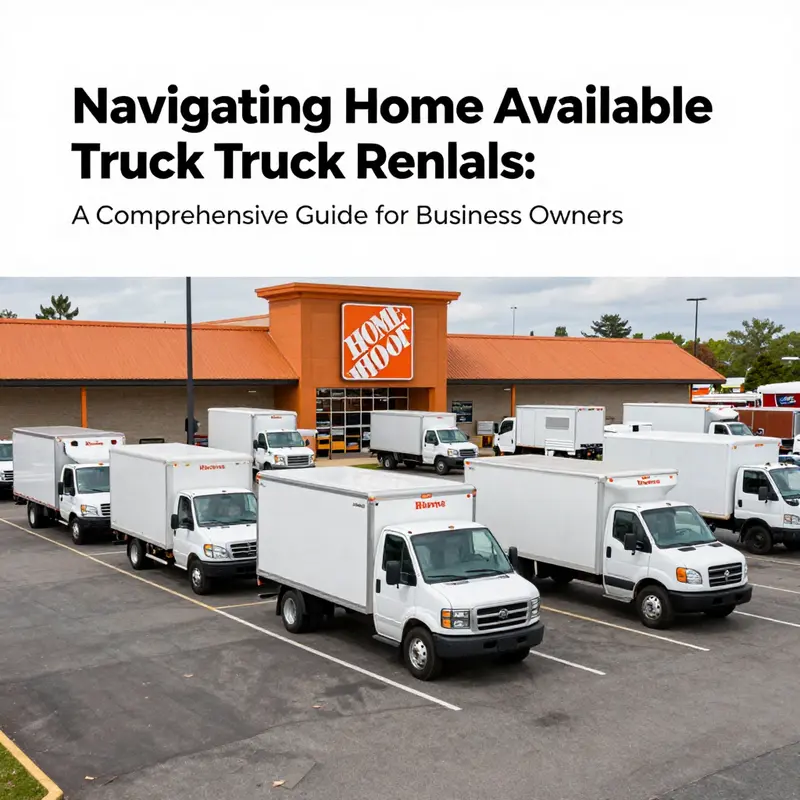
When planning a move, the vehicle you choose can shape the day. Home Depot’s truck rental options cover a spectrum of needs, from a tight one bedroom relocation to a larger household haul. The core idea is simple: pick a size that fits your load, understand the pricing for the duration you need, and know the essential terms that keep the process smooth from pickup to return. The practical approach is to use the online rental portal to estimate the truck size you’ll need based on the number of rooms and the items you expect to relocate.\n\nAt the heart of the lineup are moving and utility trucks that balance capacity with manageable handling. For small moves, the 20-foot class and the cargo van are popular for their maneuverability and fuel efficiency. The apartment-friendly 20-foot option can carry a bed, a couch, and boxes without overshooting cost or space. A slightly larger 17-foot utility van serves well for tools and materials when a full truck feels excessive but you still need reliable transport.\n\nFor bigger moves, 26-foot trucks are common for two- to three-bedroom homes, with lift gate variants available for easier loading of heavy items. If you anticipate stairs or bulky pieces, a lift gate can save time and reduce strain. The 17-foot van remains useful for tight urban moves, quick haul projects, or jobs where parking is challenging.\n\nPricing generally follows a simple pattern: the most common option starts around 19.00 per 75 minutes with short moves often including unlimited mileage. Day rates may hover around 139.00 and weekly rates around 973.00, with a deposit typically around 150. Availability and exact numbers vary by location and season, so it is wise to verify on the official Home Depot truck rental pages before reserving. Returning a truck with a full tank avoids refueling charges, and most locations allow returns at any Home Depot site, which adds convenience for local moves.\n\nFor accuracy, rely on the official pages for current pricing and terms. Many renters also use the online sizing tool to map your load to a truck size, reducing the risk of too little space or paying for more truck than you need.
Pricing, Permits, and Practical Moves: Understanding Home Depot Truck Rentals
When you start budgeting a move or a big haul, the price tag on a truck rental can feel like a moving target. At first glance, Home Depot’s truck rental lineup appears simple enough: a couple of truck sizes, a few duration options, and a deposit that’s meant to keep the wheels turning smoothly for both renters and the retailer. But the true cost picture reveals a few layers beyond the sticker price. A careful view of the pricing structure, the rental terms, and the fuel and insurance policies helps you forecast total costs and avoid surprise charges when you return a truck late, tanks half-full, or underinsured. The practical takeaway is not that Home Depot truck rentals are mystifying; it’s that they are transparent in a way that rewards careful planning and a clear sense of what a local move will require in time, distance, and coverage.
The core price structure hinges on two early decisions: the size of the truck and how you plan to use it. The most commonly rented option is the box truck, which also includes a practical carryover with the larger flatbed variant. The baseline offer starts at a relatively modest rate of $19.00 for 75 minutes, and that block explicitly includes unlimited mileage. That introductory window is designed for small, quick moves or in-town errands where the clock runs short and the distance is minimal. It’s easy to picture it as a fast run to haul a few items, load them efficiently, and get back before a daily schedule takes over. The unlimited mileage element within that 75-minute frame matters because it reduces a potential friction point for cost: you’re not paying extra per mile within that window, which makes the initial price feel straightforward and predictable for short tasks.
As soon as the rental extends beyond 75 minutes, however, the pricing shifts toward longer-duration terms, and the math changes accordingly. The standard long-hold options listed by Home Depot are $139 per day or $973 per week. These figures are more than a simple multiply of the 75-minute rate; they reflect the pragmatic reality of keeping a truck at your disposal for the bulk of a day or a full week. In practice, that means if you’re coordinating a larger move, loading a multi-room space, or shuttling furniture from one residence to another across town, you can expect the daily or weekly rate to be your baseline. The weekly rate is especially attractive if you have a sizeable load, numerous trips, or a configuration where schedule flexibility matters more than hitting a precise hourly marker. The upshot is that you can tailor the rental duration to fit your moving window without paying the mileage penalties that sometimes accompany longer projects with other rental providers.
The flatbed option, specifically the F250, mirrors the 75-minute starting point of $19.00 with unlimited mileage within that window as well. This parallel structure is helpful for those who need a bit more capacity or prefer a more open cargo area for oversized items. The unit’s larger frame can alter handling, maneuverability, and loading strategy, but the pricing framework remains aligned with the box truck in the sense that the short-term block comes with that same unlimited-mileage perk, while longer-term use slides into daily or weekly terms. In both cases, the initial minutes or hours give you the sense of whether your job fits into a brief, cost-efficient window or requires a more extended commitment. It’s a neat reminder that, when you plan, you can often chart a precise course for expenses rather than guess about how many miles you’ll accumulate.
A crucial price component that often trips up first-time renters is the deposit. Home Depot requires a deposit of $150 for all rentals. This is typically held as a security deposit and is released after the vehicle is returned in acceptable condition and with the agreed-upon fuel level. The deposit acts as a buffer for the retailer and a signal to the renter that the vehicle is intended for careful use and proper return. It’s worth factoring this into your budget and your payment method choices. When you’re planning multiple moves or running a sequence of loads in a single day, the deposit may appear multiple times if you’re handling separate reservations, so it pays to keep your payment method aligned with your planned rental cadence.
Beyond the base price and the deposit, there are a handful of requirements you’ll need to meet to rent a Home Depot truck. The first is a valid driver’s license—specifically a government-issued license that is valid in the United States. This is a non-negotiable safety and identity checkpoint. You’ll also need a major credit card in your name. The credit card serves as the payment method and the security deposit, so having it in your own name helps streamline the process and minimizes friction at pickup. The age requirement is a bit nuanced. The standard minimum is 25 years old to rent a truck. Some locations may allow renters aged 21 to 24, but with additional fees and restrictions. If you’re in the 21–24 bracket, it’s important to check the specifics for your local store because the rules can vary by region, and the optional insurance or liability terms can be more stringent for younger drivers.
Insurance is a key area where policy nuance matters. Home Depot offers optional insurance coverage, such as liability protection, but you are required to carry personal auto insurance or proof of financial responsibility. If you don’t have your own insurance, you can purchase it through Home Depot at checkout. This arrangement protects both you and the rental agency but also reinforces the point that driving a rental truck is not a casual risk; it’s a liability-bearing activity that benefits from proper coverage. If you already have a personal auto policy that includes rental coverage, you’ll want to confirm that it extends to commercial or heavy-duty rental use. If not, the in-store option provides a straightforward path to adequate protection.
Fuel policy is another practical element that affects the total cost. The trucks are best treated as respectable workhorses, and the expectation is that you return the truck with a full tank of gas. If you don’t, the renter will be charged a refueling fee. The documented figure is typically around $6.90 per gallon. This rate is higher than a consumer-friendly gas station price and is charged to recover the cost of fuel refill and the associated administrative costs. For planning, you’ll want to estimate your return-to-full tank scenario and factor in this potential upcharge into your moving budget. Returning the vehicle with less than a full tank can be a common but avoidable source of surprise costs if a move runs longer than anticipated or you misjudge the distance.
Where and how you return the truck can influence convenience and cost as well. The good news, from a logistical standpoint, is that you can typically return the truck at any Home Depot location. If your move arcs from one neighborhood to another within the same city or region, this flexibility can save backtracking time and excess mileage. It’s a practical feature for local moves, enabling you to drop off the vehicle near your destination without being tethered to a single depot. The same broad policy applies, even as local policies may vary slightly by region. If you’re coordinating a weekend project or a day of errands, that flexibility can significantly ease the planning burden and reduce downtime between trips.
To translate all of these pieces into a clear, usable budget, treat the rental like a modular equation. Start with the 75-minute block at $19. If your job requires more time, you immediately compare the longer-term options: $139 per day or $973 per week. If you anticipate needing a truck for a couple of angles—one day for a loading session and another for a separate trip later in the week—you can map out whether a daily rental or a weekly rental yields a lower combined cost. If your actual use ends up folding into multiple short sessions, a sequence of 75-minute blocks could be a practical approach, provided the location’s terms permit this pattern and the total time remains within the allowed window on a single rental agreement. The deposit of $150 is a constant across rentals and should be set aside as a temporary hold rather than a final expense, depending on how you manage returns and fuel.
From a planning perspective, it’s worth acknowledging a quiet truth: the Home Depot pricing is designed to be straightforward for simple jobs and transparent enough for extended planning, yet it invites careful consideration when you have a larger move. The unlimited mileage inclusion for the initial 75-minute block is a helpful perk for very short trips, but real-world moves frequently require longer blocks or multiple reservations. In that context, it can be practical to calculate a rough hourly and daily average, then compare that to the weekly option if you foresee a longer time horizon. It’s not just about the headline price; it’s about the sum of the parts: the base cost, the fuel you’ll burn, the refueling charge if you forget to top off, the insurance or liability costs, and the deposit that acts as your security hold.
For those who want to save further or tailor the rental to a more exact financial plan, there are avenues worth exploring without straying far from the core policy. Some renters look to third-party discounts or promotional codes, a practice common in the broader truck rental ecosystem. If you’re curious about pricing strategies that extend beyond the Home Depot framework, you’ll find cost-comparison content that discusses discounts and promotions from other providers. For readers who want a sense of how promotions can influence overall cost across rental brands, see discussions like those found in Penske rental discount resources, which occasionally surface in moving-truck community blogs. A practical anchor for this kind of research is this overview of discount options: Penske truck rental discounts. The intent is not to substitute one brand’s policy for another but to offer a broader lens on how promotional pricing can interact with base rates, insurance requirements, and fuel costs in the total-moving-budget equation.
In terms of reliability and consistency, Home Depot’s policy framework emphasizes a few consistent themes: the need for a valid license and a name-matched credit card; the standard age floor with some regional flexibility; the optional but available insurance along with a requirement to carry personal auto coverage; a clear fuel-return policy with a specifically stated refueling charge; and the practical flexibility of returning the vehicle at any participating location. These elements combine to create a predictable framework you can lean on when mapping out a move, even if you’re coordinating around a weekend schedule or juggling multiple stops during a single project. As with many service interactions in the moving world, the real skill lies in translating the published rates into a practical daily plan—knowing when a direct 75-minute rental suffices and when a longer window or multiple blocks makes more sense.
If you want to see the official terms directly and verify the current numbers before you book, the most up-to-date details are on the official Home Depot Truck Rental page. There you’ll find the latest rates, available vehicle sizes, deposit requirements, and any location-specific notes that could affect your plan. The page serves as the anchor point for anyone trying to translate the general framework described here into a concrete reservation. For a broader context about cost-saving opportunities in truck rentals, you can also explore related discussions on promotional opportunities and discounts, including provider-specific offers.
For those considering alternatives or supplementary options as they craft their moving budget, it helps to keep a single, clear question in mind: what is the cheapest way to accomplish the move while meeting the essential safety and insurance requirements? The answer often rests on the scale of the move and the time pressure you’re under. If you’re moving a few items locally and you can complete the job within a 75-minute window, the base rate with unlimited mileage can be quite economical. If you’re coordinating a more expansive project, a daily or weekly package may ultimately yield the lowest total cost, provided you have the time to fill those blocks without rushing. Regardless of the path you choose, you’ll be aligned with a straightforward policy framework and a set of charges that are clearly defined in advance, with the understanding that fuel and insurance will add to the baseline.
For a concise summary of the key numbers you’ll likely encounter, keep these takeaways in mind: the most common truck rental starts at $19 for 75 minutes with unlimited mileage; longer use is priced at $139 per day or $973 per week; a $150 deposit applies to all rentals; a valid US license and a major credit card in your name are required; you must meet the age threshold of 25 (with possible exceptions for 21–24 in some locations); you’ll need proof of personal auto insurance or you can purchase insurance at checkout; the fuel policy requires returning with a full tank or you’ll pay a higher refueling cost; and you can return the vehicle at any Home Depot location to preserve convenience. These pieces come together to shape an approachable, practical, and transparent rental experience that helps you move with confidence rather than guesswork.
For readers who want to verify the specifics or see any policy nuances for their local store, the official page remains the best source. It’s the reliable touchpoint where price, duration, and policy details are laid out in the same place you’ll collect the keys. Finally, if you’re curious about how rental costs can be optimized across providers, a quick look at discount options on related rental blogs can provide additional context while you compare, plan, and finalize your moving budget. For further reading on discounts, see the Penske discounts article linked above. And for the latest on Home Depot’s pricing and terms, consult the official Home Depot Truck Rental page.
External resource: For the latest and most accurate pricing and policy details, visit the official Home Depot Truck Rental page: https://www.homedepot.com/c/truck-rental
The Convenience Equation: How Home Depot Truck Rentals Streamline Local Moves
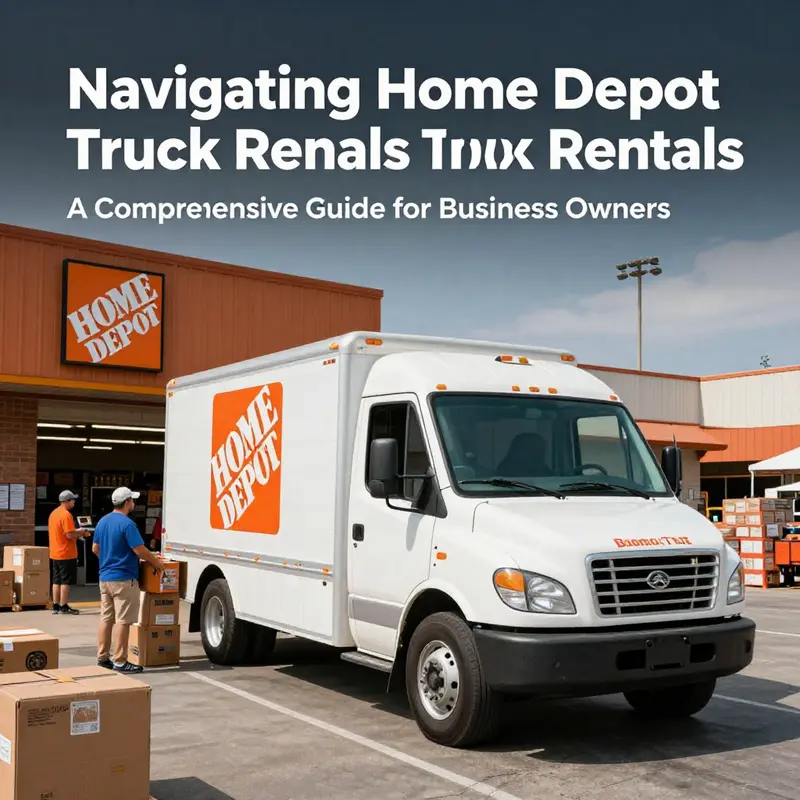
When you set out to move locally or haul materials from a project site, the way you acquire a truck matters just as much as the load you carry. The convenience built into the store’s truck rental option becomes a quiet engine behind a smoother day. The rental experience is designed to reduce friction at every turn, starting with pricing that aims to be predictable for short trips while still flexible enough to cover longer hauls without forcing you into a maze of add-ons or hidden charges. In practice, that means a visible starting point, straightforward terms, and a logistics flow that keeps your plans from spiraling into a scramble.
Consider the starting point. The most commonly chosen option carries a starter rate around $19 for the first 75 minutes, and that price includes unlimited mileage. In plain terms, you can grab the vehicle for a quick local move, load up what you can, and not worry about extra miles. If your plan extends beyond that initial window, the pricing tends to settle into a daily rhythm rather than a per-mile deluge. Long rentals have commonly reported daily rates around $139 to $149, with weekly options hovering near $973 in some markets. These figures are not universal or immutable; they shift with seasonality and location, but the underlying orientation is clear: the system favors simple budgeting for short windows and predictable blocks for longer work, avoiding surprise mileage costs for routine local trips.
Alongside price, the deposit acts as a quiet gatekeeper. A typical policy requires a deposit—often around $150—that is returned after the rental is complete, provided the vehicle is brought back in good condition and within the terms. This small yet meaningful hold is a reminder that the rental arrangement is formal, not a casual loan of a vehicle. The deposit exists to cover potential damages and incidental issues, but it is also a signal that the provider has structured its risk in a way that keeps the model sustainable for busy weekends when demand spikes. Knowing there is a safeguard helps movers plan with confidence, especially when the job includes a mix of heavy items and delicate loads that require careful handling.
From there, the practical requirements align with the day’s mission. To rent a truck you need a valid driver’s license and proof of insurance. These non-negotiables anchor the rental to safety and accountability, a straightforward barrier that most weekend movers accept as part of the process. The safety net continues with the fuel policy. The guidance is simple: return the truck with a full tank. If you do not, refueling is billed at a higher rate, and that refueling charge can quickly erase the savings from the initial bargain. The logic is uncomplicated and rarely debated: fuel costs are part of the moving cost, but you should not be penalized for forgetting to gas up if you plan ahead and time the return with a full tank. This approach rewards careful planning, especially for schedules that hinge on precise loading and unloading windows.
The store’s convenience extends beyond the station’s doors. One of the most practical aspects for local moves is that you can usually return the truck at any location within the chain’s network. Local logistics become less ambiguous when the final stop is still within the same geographic ecosystem. This flexibility matters when your route weaves through several neighborhoods or when you want to drop off near your new door rather than a distant depot. It is not just about dropping off; the experience is designed to feel seamless, with clearly marked rental counters and a customer flow that aims to minimize the time spent in line or waiting for a vehicle to become available.
A central pillar of that ease is the breadth of vehicle options. The fleet is designed to match the scale of the task. For small items and tight spaces, a compact pickup can suffice. For a larger, more awkward load—furniture bits, heavy tools, or a batch of home improvement materials—a cargo van or a box truck can be the better fit. For even more space or specialized needs, a flatbed truck is available to provide a broader surface area and easier handling of bulky items. The assortment makes the selection process itself an exercise in pragmatism: you measure the load, estimate the space, and choose a vehicle that minimizes the number of trips and the time spent moving, all within a budget that feels manageable.
The partnership layer adds yet another degree of convenience. In some markets, the store’s truck rental program partners with a national fleet operator, expanding the options and often the terms available to customers. This partnership effectively extends the reach of the local rental desk, ensuring that even if the store’s own fleet is temporarily allocated, there is a parallel lane of availability that aligns with the day’s schedule. The net effect is a more reliable plan rather than a best-guess scenario, which matters when a weekend window depends on a precise pickup and return. It also broadens the geographic footprint of service, so a move that starts in one neighborhood can have a smooth end in another without forcing a detour to a distant hub.
Beyond the bricks-and-mortar logistics, the rental process itself is engineered for speed and predictability. The counters are clearly marked, usually near the store entrance, which makes the initial interaction straightforward. More and more locations offer online booking and pre-approval tools that reduce the check-in time on the day of the move. Pre-approval is especially valuable during peak moving seasons when demand surges and lines can grow long. The ability to reserve a truck in advance, to confirm the required insurance documents, and to pre-fill essential information in a secure online flow translates into a smoother on-site experience. When you walk into the store with a clear plan, you can move through the process with a quiet confidence, knowing you have a vehicle waiting or at least a precise window for pickup.
The in-vehicle experience is not just about the mechanical act of driving with a rented truck; it is about safety and confidence on the road. Modern trucks, like those commonly available through the program, include features that support safer operation. Backup cameras help you line up with the loading dock or curbside parking, while lane departure warnings provide a gentle reminder if you drift from your lane while negotiating unfamiliar streets with a load. For some users, CarPlay integration has become a notable convenience, allowing a familiar navigation and media environment to stay with you during the move. These elements collectively reduce stress, making the act of moving feel more controlled and less chaotic, which is a meaningful but often overlooked aspect of convenience.
The practical takeaway is that convenience in this context is a sum of its parts. You are paying not just for a vehicle but for a predictable budget, straightforward terms, flexible drop-off, and a set of tools that help you stay organized. That combination matters particularly for do-it-yourself movers who are balancing the logistics of a work schedule, family commitments, and a mounting list of supplies. The pricing structure itself reflects this ethos: an accessible starting point for short windows, paired with longer-term daily or weekly options that keep the overall costs readable and avoid the complexity of per-mile charges for local trips. The no-mileage penalty for the initial block of time is a recurring theme across many readers’ experiences, and the absence of hidden mileage costs is often the deciding factor when comparing a local truck rental to other options that rely on a per-mile model.
For readers who want to explore alternatives or broaden their horizons within the same ecosystem, there is an avenue worth noting. Some customers discover value in a one-way option that suits particular move logistics, especially if the plan involves starting in one neighborhood and ending elsewhere without a second return trip. For those curious about how a one-way strategy could fit their plan, the idea of a dedicated fleet that handles the transfer from origin to destination can be appealing, and there is a resource that delves into how such a move might be coordinated. See Penske one-way moving truck rental for a perspective on how one-way arrangements can integrate with a local rental plan and help reduce backtracking.
This broader view of convenience also includes an emphasis on planning and timing. Even with flexible drop-off policies and online booking, the best outcomes come from aligning the rental with your actual moving window. If you have a Saturday morning slot and you realize you can reserve a truck for a couple of hours without a long wait, you are more likely to feel satisfied with the overall cost and the effort saved. Conversely, arriving at a peak hour without a reservation can erode the convenience advantage, turning a straightforward task into a scramble for a vehicle. The understanding that the system is designed to reward planning and early commitment underscores a larger point: the convenience is less about a single feature and more about how all the moving parts—pricing, deposit, eligibility, fuel, pickup and drop-off logistics, vehicle variety, and on-board technology—work together to create an experience that is predictable enough to plan around, with enough flexibility to adapt if plans shift.
The question of cost inevitably arises for readers who are careful about their budgets. The chapter on convenience would be incomplete without connecting those ease-of-use features to real-world outcomes. If you can lock in a short window at a low starter rate, you gain a margin that can offset the cost of a larger truck for a furniture-heavy haul or the fuel needed for a longer trip. If your load requires extensive driving, a daily or weekly rate may be preferable and not ruin the savings achieved from avoiding mileage charges. In practice, the best approach is a quick calculation: estimate the load’s volume, match it to a vehicle type, and compare the expected time on the road with the chunked pricing options. In many cases, the starting rate for a compact period will appear as a compelling baseline, while the longer blocks offer a predictable cap on the day’s total spend. The absence of per-mile bleeding—one of the more frustrating hidden costs in other rental options—becomes a recurring conversation among enthusiasts who value the clarity of a flat- or time-based pricing structure.
Ultimately, the convenience narrative here is about empowerment. A DIY mover can shape a successful plan by combining clear terms, local flexibility, and a thoughtful selection of vehicle sizes. You can reserve in advance, check in with a few taps, and then execute a straightforward loading and unloading process. You can choose a vehicle with a size that matches the job without overpaying for capacity you do not use. You can drop the truck at a nearby location, close the loop without running all over town. The result is a moving day that does not feel like a marathon but rather a sequence of controlled steps that lead to a successful, organized outcome.
For readers who want a concise view of the current terms and options, you can count on the idea that the store’s truck rental program is designed around flexibility, simplicity, and safety. The pricing language emphasizes an accessible entry point, with longer durations offering predictable daily and weekly structures. The deposit is a straightforward safeguard, and the required documentation aligns with standard safety practices. The fuel policy rewards planning and careful fuel management. And the fact that the fleet includes multiple vehicle types—ranging from small pickups to larger vans and specialized flatbeds—means you are not forced into a one-size-fits-all approach.
In short, the convenience of truck rentals in this context rests on an orchestration of practical levers that work together to support local moves, quick pick-ups, and medium-to-large loads. The outcome is a service that can be dependable and relatively straightforward to use, provided you plan ahead, know the terms, and assess your load against the vehicle options. As with any rental decision, the clearer your expectations and the more you prepare, the more you gain from the convenience the program promises. The overall effect is less about any single feature and more about how the whole ecosystem aligns with real-world needs—speed when you need it, clarity when you don’t, and a logistics framework that keeps the workday moving rather than stalling it.
To verify the most current terms and fleet, visit the official truck rental page.
Final thoughts
Understanding the dynamics of Home Depot truck rentals empowers business owners to optimize their operational logistics. With transparent pricing, a diverse fleet of trucks, simple rental requirements, and the convenience of location options, Home Depot stands out as a reliable choice for transporting goods. By leveraging these resources, you can significantly enhance your delivery capabilities, ensuring your business runs smoothly. Make the most of your logistics efforts today to drive your business forward.