
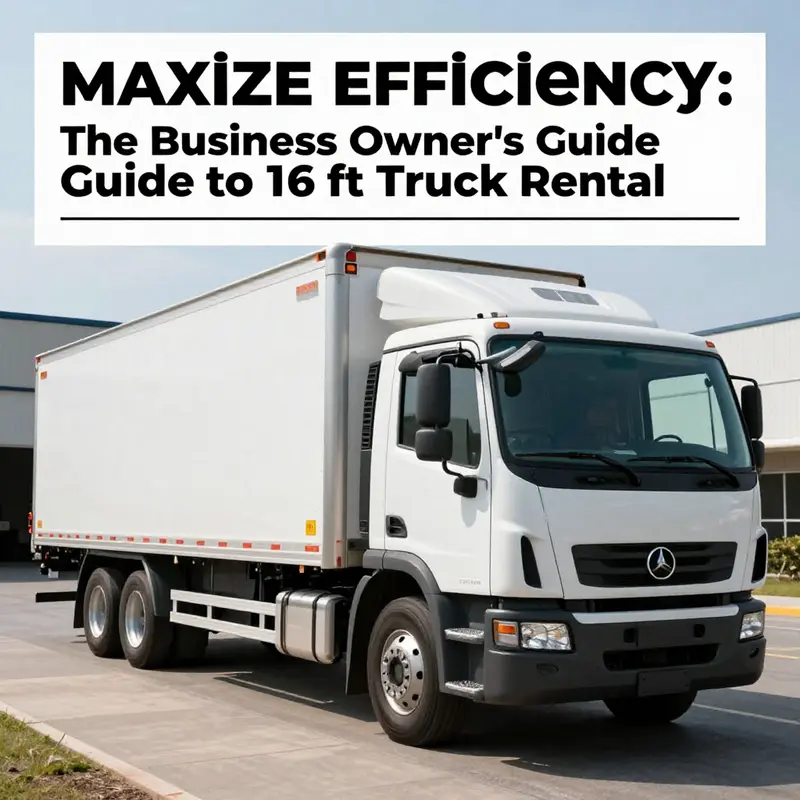
For business owners, the efficient transport of goods is crucial to success, whether moving inventory, handling deliveries, or transitioning to a new location. Renting a 16-foot truck offers a practical solution that balances size, capacity, and cost. This guide will delve into the key benefits of renting a 16-foot truck, explore pricing and cost factors, assess cargo capacities and features, and compare the considerations for local versus long-distance rentals, providing a comprehensive understanding of how a 16-foot truck rental can streamline your logistics operations.
The Practical Case for a 16-Foot Truck: Balance, Cost, and Maneuverability
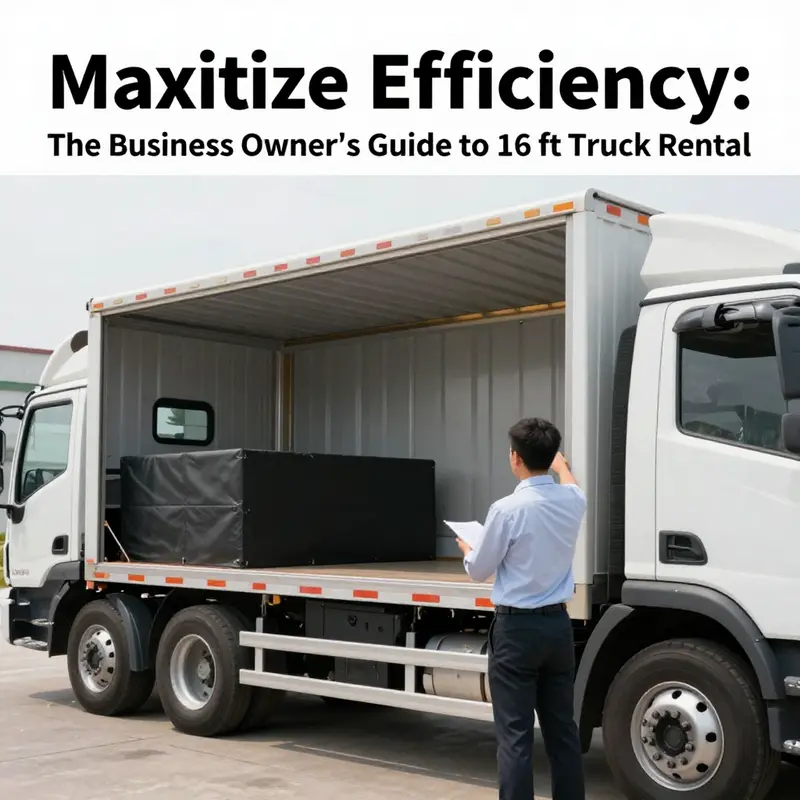
Choosing a 16-foot truck for a local move comes down to a practical balance of capacity, maneuverability, and cost. The typical cargo space runs around seven hundred to eight hundred cubic feet, which is enough for a two- to three-bedroom setup when you load efficiently. It sits between smaller city vans and larger box trucks, offering ample room without turning a simple block move into a parking lot scavenger hunt.
Beyond capacity, the 16-foot truck shines in maneuverability. Its size is friendly to urban streets, tight cul-de-sacs, and crowded apartment complexes, with a wheelbase and turning radius that let you navigate turns and corners with confidence. This translates into fewer off-street maneuvers, less back-and-forth shuffling, and a calmer driving experience on moving day.
Fuel efficiency and operating costs matter in a local move, and the 16-foot option often drinks less fuel per mile than larger fleet trucks. Over a weekend move or a small business restock, the savings compound, helping justify the rental if you factor in labor and time as well. The practical takeaway is not just the sticker price but the overall cost of getting everything loaded, transported, and unloaded in a sensible time frame.
Safety features and add-ons further enhance practicality. Tailgates, ramps, and tie-down kits speed loading and protect contents. A ramp reduces lifting risk for heavy appliances, while tie-downs keep boxes and furniture stable in transit. Insurance packages cover the unexpected, allowing you to use the truck with confidence when items are valuable or fragile.
From a planning perspective, the key is discipline. Create a loading order, secure heavier items toward the cab, and place lighter boxes and fragile pieces toward the rear in a way that preserves balance. Moving blankets, pads, and corner protectors turn the cab and cargo area into a protective cocoon that preserves finishes and minimizes damage. The outcome is a move that proceeds with fewer surprises and a smoother transfer from old residence to new one.
If you’re choosing between sizes, the 16-foot truck often represents the sweet spot for studios through small homes. It accommodates most belongings while preserving nimble handling and predictable scheduling, helping you keep to a plan and stay on budget.
null
null
null
null
Between Local Handoffs and Long Hauls: Mastering the 16-Foot Truck Rental Decision
Choosing a 16-foot truck for moving or hauling invites a careful balance of space, maneuverability, and cost. The size sits at a practical sweet spot for many households and small businesses: large enough to cradle a substantial part of a living space or inventory, yet compact enough to navigate urban streets and park in residential driveways. When you pair that size with the realities of local versus long-distance moves, the decision becomes less about choosing a vehicle and more about designing a plan. The days of simply renting a truck and loading it without a blueprint are rare in this context. Instead, the local-versus-long-distance distinction becomes a guiding framework for every subsequent choice—from how you load the truck to how you plan your fuel stops, tolls, and overnight stays. In this sense, a 16-foot truck is not just a vehicle; it is a moving strategy with a defined footprint, typically offering around 700 to 800 cubic feet of cargo space. That space is enough for a small apartment or studio’s essentials, plus a generous cushion for boxes, small furniture, and the inevitable miscellaneous items that accumulate during a relocation. Yet the same size that makes the process manageable for a short move can raise questions when the journey stretches across state lines or inches into multi-day travel. How you approach the move—locally or across longer distances—shapes what you load, how you drive, and how you budget for fuel, time, and potential contingencies. The distinction matters not only in logistics but also in the mental preparation that accompanies moving. Instead of viewing the rental simply as a means to an end, think of it as a project with its own cadence and checkpoints, where each choice echoes across the miles of your route. If you want a quick reference to the specific vehicle profile, you can explore a dedicated page that outlines the 16-foot truck’s dimensions and capabilities. This resource serves as a convenient anchor for readers who want to verify the practical fit before they finalize a booking. For a quick overview, see the dedicated page on the 16-foot truck. 16-foot truck. Beyond the baseline capacity, the local-versus-long-distance framework helps you align expectations with reality. Local moves, typically within 50 to 100 miles within the same city or metro area, reward you with fewer unknowns. The truck experiences less wear, you burn through less fuel, and the logistics stay relatively simple. A 16-foot truck often remains a comfortable choice for a one-bedroom or a small two-bedroom setup, particularly when you’re facing stairs, tight hallways, or apartment complexes with restricted loading zones. This scenario emphasizes planning around time, access, and coordination with building management, which can be as critical as securing the truck itself. The driver’s comfort behind the wheel matters here. The 16-foot rig is generally easier to maneuver than larger box trucks, yet it still demands attention to blind spots, lane changes, and parking constraints. You may find yourself juggling a tighter turn radius than you expect, especially in older neighborhoods or busy downtown corridors. Those local moves benefit from a well-structured loading plan, where you prioritize heavier items first and keep the heaviest items low and close to the cab. When you place boxes, you want taller items toward the front and smaller, lighter boxes toward the back, ensuring the load is secure and not prone to shifting during the drive. It is also wise to reserve a few feet of space behind the last row of furniture to allow for air circulation and to reduce the risk of items hitting one another during minor bumps. The local path, though shorter, is not immune to potholes, construction detours, and unpredictable street parking. The right loading strategy plus careful route planning makes the trip smoother and less fatiguing for the driver. Long-distance moves, by comparison, extend beyond 100 miles and can travel across state lines. They demand more rigorous preparation and a broader calculation of expenses, time, and logistics. Long hauls amplify fuel consumption and toll exposure, and they introduce considerations that don’t always appear in local moves. You may need overnight accommodations, more frequent fuel stops, and a careful review of driving hours to maintain safety and compliance with regulations that govern commercial vehicles or rental terms. The truck’s capacity, though still ample for many smaller homes, might require staging and selective packing. If you have a smaller home, a 16-foot truck can still fit the majority of belongings with disciplined loading, but you must evaluate whether the volume and weight distribution align with your route, fuel targets, and the anticipated miles per gallon. A thoughtful plan for long-distance moves includes an explicit loading sequence, clearly labeled boxes, and a packing sheet that assigns weight and fragile items to specific zones within the cargo area. Think of it as mapping your cargo to your itinerary: you want fragile items secured toward the cab and near anchor points, with heavier items placed low to maintain a stable center of gravity. The trip’s length influences more than just fuel expenditure. You should account for tolls, potential overnight stops, and the possibility of weather-related delays. These factors are not merely inconveniences; they can affect the timing of your arrival, the sequencing of unloading, and the overall stress level of the move. In this context, a 16-foot truck remains a flexible solution, but its suitability depends on a person’s inventory, the complexity of the route, and the willingness to adapt plans in response to real-world conditions. Understanding the cost structure helps illuminate the decision-making process. Local moves typically yield lower fuel consumption and shorter rental periods, translating into a simpler price scenario. Long-distance moves, on the other hand, bring mileage charges, higher gas expenses, and sometimes higher insurance costs. Rental agreements often bundle base rates with mileage allowances, one-way options, and promotions that can soften the total bill. For many readers, promotions and coupons become a practical lever to reduce the overall expense, especially when the distance or the duration of the rental stretches. It is worthwhile to explore available promos or codes before you commit to a date. The plan should also include a contingency fund for unexpected costs, such as last-minute changes in pickup times, additional packing materials, or minor repairs that aren’t covered by insurance. Speaking of insurance, coverage is an important piece in both local and long-distance moves. While some basic policies might come with the rental agreement, additional protection can be a prudent choice when you are moving fragile items or valuable furniture. The decision to opt into enhanced coverage often depends on the relative value of the cargo and your personal risk tolerance. Another practical consideration is how you actually operate the truck. The 16-foot profile is manageable for many drivers who have experience behind similar vehicles, but you should be mindful of the vehicle’s height and width when navigating garages, driveways with trees, or narrow streets. Pre-trip checks should be a routine ritual: verify tire pressure, fluid levels, brake function, and the condition of rear doors and ramps if your cargo requires a ramp for loading. A deliberate, methodical approach to loading and securing items reduces the risk of damage during transit and makes unloading at the destination more predictable. The long horizon of a long-distance move also calls for route planning that emphasizes efficiency. A well-planned route minimizes backtracking and unnecessary detours, which translates into lower fuel and time expenditures. It also helps you allocate more predictable unloading windows at the end of the journey, which can be crucial for coordinating with landlords, property managers, or business partners who expect inventory or belongings at specific times. For readers seeking a broader framework on how to balance these considerations, the literature on moving tips and best practices provides a structured approach to local versus long-distance planning. A widely used resource you may consult offers practical guidance on how local moves differ from longer relocations, including how to manage time, cost, and logistics. This external reference presents a clear overview of the factors that shape moving decisions over distance and can complement the specific, vehicle-centered insights here. For a broader view of local versus long-distance moves, see this external resource: https://www.uhaul.com/moving-tips/local-vs-long-distance-moves.aspx. If you want to explore more about the 16-foot truck’s capabilities and how it fits into a larger fleet strategy, you can also look at related content on the internal site. A concise, vehicle-focused overview is available here: 16-foot truck. The interconnected nature of moving decisions means that every choice—from the vehicle to the route to the packing plan—creates a ripple effect across time, cost, and effort. By treating the 16-foot truck as a tool within a larger relocation strategy, you can maintain flexibility while ensuring you do not overextend capacity or budget. In the end, the decision between local and long-distance use of a 16-foot truck comes down to a disciplined assessment of your inventory, the distance you will cover, and the environment in which you will drive and unload. Local moves reward quick wins: faster turnover, lower risk, and simpler logistics. Long-distance moves reward careful planning, more time blocks, and a willingness to adapt to a changing itinerary. The vehicle’s space, the ease of handling, and the balance of costs all inform that decision. The aim is not only to move belongings but to move with a plan that respects safety, efficiency, and budget. As you proceed, keep your focus on the practical constraints—the cubic footage, the route complexity, and the time you can allocate—and you will find that the 16-foot truck can be a surprisingly adaptable ally, whether you stay close to home or cross a few state lines on the way to a new chapter. External links and internal references should guide you toward a more detailed understanding of both the vehicle and the process, helping you prepare for a move that is as smooth as possible. External resource: https://www.uhaul.com/moving-tips/local-vs-long-distance-moves.aspx.
Final thoughts
In conclusion, renting a 16-foot truck can significantly benefit business owners seeking to enhance their operational efficiency. Understanding its advantages, pricing, capacity, and the differences between local and long-distance rentals allows for informed decision-making that aligns with business needs. Equip your business with the right resources for smooth logistics and reliable transport solutions that make every move a success.