
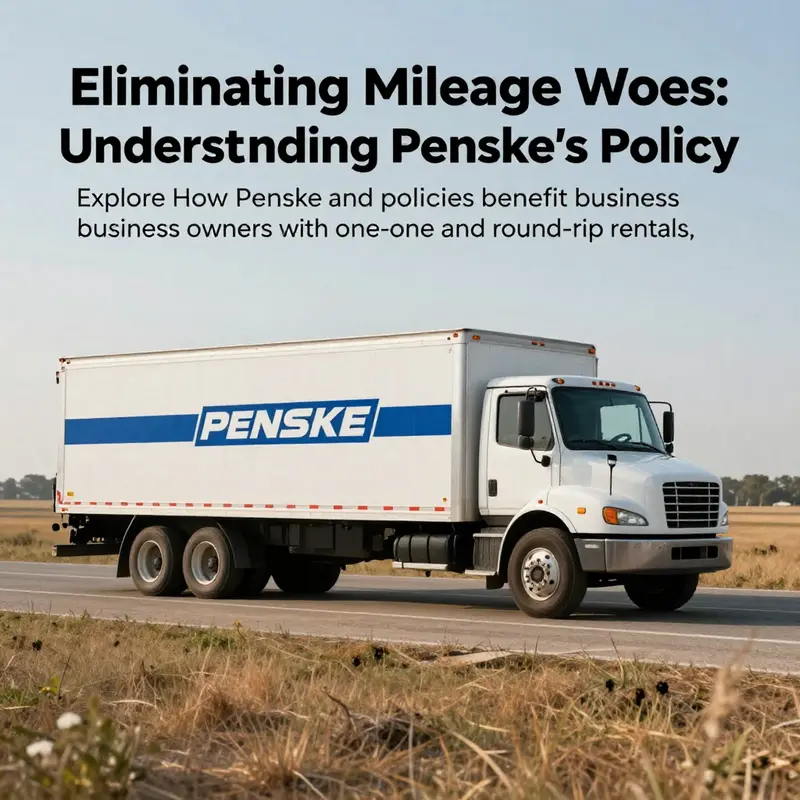
As business owners frequently make logistical decisions, understanding truck rental policies is essential. One major concern is whether rentals accrue charges per mile driven. Penske’s mileage policies offer distinct options, especially for one-way and round-trip rentals. This article breaks down these policies chapter by chapter, helping business owners navigate their truck rental needs without worrying about unexpected costs.
Unlimited Miles on One-Way Rentals: Demystifying Per-Mile Charges and What It Means for Your Move
When planning a move or a long-distance haul, a single question often shapes the whole budgeting process: will I be charged per mile, or is mileage bundled into the daily rate? In the world of one-way truck rentals, the answer is typically clear: most major operators offer unlimited miles on one-way trips. That means you can drive as far as your itinerary requires without facing a creeping per-mile charge. This policy can transform a potentially volatile cost into a predictable daily investment, especially for anyone facing a cross-country move, a multi-day relocation trip, or a route that requires substantial mileage. The unlimited-mile promise is generally tied to the one-way rental arrangement, where the core price is the daily rate. It’s not a separate add-on that ticks up with every mile; rather, miles are part of the package that enables flexibility and breadth in your planning. This clarity matters because it shifts the budgeting risk from distance to duration, a meaningful difference when your schedule is fluid and the road map is not a straight line from point A to point B.
To understand why that unlimited-mile policy exists in one-way pricing, it helps to look at how the rental is structured. The daily rate—a familiar figure in truck rental conversations—typically sits in a range around $150 to $220, plus tax, depending on factors such as vehicle size, location, demand, and the time of year. The unlimited miles that accompany the one-way arrangement are designed to let you focus on getting to your destination rather than watching a mile counter. For movers, this is a practical advantage: distance becomes a given, not a variable that multiplies costs. In contrast, some rental types—particularly local or round-trip arrangements—may impose mileage limits. Once you exceed those allowances, charges can accumulate. In those scenarios, distance becomes a direct driver of the total price, which is precisely what the unlimited-mile model for one-way trips seeks to avoid. The upshot is straightforward: on a one-way rental, mileage does not factor into the price as a per-mile line item; instead, you pay for the vehicle and the days you need it, and miles ride along for free within the rental window. This separation between distance and daily access is what makes the policy so attractive to those facing long drives or complex itineraries.
Yet, reality rarely lives in absolutes. Unlimited miles on one-way rentals are compelling, but they don’t erase every other cost or constraint. The rental itself remains a package with multiple components that can shape the final bill. Taxes will apply, and optional insurance or protection plans can alter the daily rate. Fuel policy is practical and consequential: you’ll generally be expected to return the vehicle with a full tank, or you may be charged for the fuel you used. Add-ons such as equipment like moving dollies, hitch accessories, or roadside assistance can appear on the invoice, and these items may carry separate fees. While miles won’t accumulate, the rental period will. A longer-than-anticipated move or an extended loading phase translates into more days at the base daily rate, and that translates into more money out of pocket. For anyone weighing options, the key takeaway is that unlimited miles reduce one variable, but they don’t guarantee a rock-bottom total. The final price depends on how many days you need the truck, what extras you accept, and the broader terms of the rental.
To bring this into sharper relief, consider a practical example. Suppose a one-way rental is needed for a roughly 600-mile journey. If the daily rate hovers around $180 and the vehicle is required for three days, the pre-tax base would be about $540. In a scenario where mileage were billed per mile, a hypothetical rate of, say, 0.59 dollars per mile could add roughly 354 dollars to the bill, pushing the bottom line above what the unlimited-mile daily package would suggest. This is a simplified illustration, and real-world pricing will vary by location, vehicle class, and timing. The core message holds, however: unlimited miles can yield meaningful savings when distance is substantial, because distance does not directly inflate the cost as it does under per-mile schemes. For long moves, the difference between a bundled unlimited-mile policy and a per-mile fee can be the single biggest factor in the total price.
With that in mind, it’s important to acknowledge the practical realities that accompany any rental decision. Fuel costs, tolls, and regional charges can alter the final tally, even when miles aren’t billed separately. If you extend the rental period to accommodate loading, down time, or a staged move plan, the daily rate compounds and the total price rises accordingly. Insurance choices, sometimes recommended or required based on the vehicle and your profile, add another dimension to the cost structure. If your move requires special equipment—such as towing gear or car carriers—those items may come with their own fees. The promise of unlimited miles does not insulate you from these other variables, so prudent budgeting means looking at the entire package rather than focusing on mileage alone. You should also be attentive to any location-specific restrictions that might affect eligibility for certain promotions or mileage terms. Some regions or programs may place limits on where or how you can drive certain trucks, even within an unlimited-mile framework, and knowing these nuances helps prevent unexpected charges or logistical snags.
Given these realities, the prudent step is to verify the exact policy for the specific rental type and location you’re considering. One-way rentals are designed to be straightforward, but the terms can vary by market. The most reliable approach is to evaluate the total cost of the package, not just the headline daily rate. If your route includes detours, multiple staging points, or a schedule that spans several days, the unlimited-mile feature becomes especially valuable. When in doubt, consult the rental terms and compare the total package across options. A practical reference point is a concise guide to one-way moving truck rental that discusses typical pricing, mileage terms, and how to interpret them in real planning scenarios. See this resource for context on one-way options and how they’re commonly priced: one-way moving truck rental.
Beyond the policy itself, the bigger takeaway is this: the value of unlimited miles lies in enabling room for maneuver. A move rarely unfolds exactly as planned. Road closures, traffic, weather delays, or an unplanned stop to stage belongings can turn a multi-day itinerary into a longer process. In such cases, the certainty of unlimited miles helps you stay flexible without the fear of an escalating per-mile bill. For some readers, that flexibility is worth more than any potential savings from a lower daily rate with mileage caps. For others, especially those with tight schedules or shorter moves, a shorter rental with a capped mileage plan might align better with their needs. The core idea, again, is that one-way rental pricing is most transparent when you consider distance as a fixed variable embedded in days, rather than an ever-growing bill per mile.
If you want a broader perspective that situates this model within the wider landscape of rental pricing, an external resource on the unlimited-mile concept can be helpful. It highlights how the idea of charging for distance evolves across vehicle types and rental contexts, providing useful context for what to expect in practice. You can consult this external guide to see how the unlimited-mile approach is applied in real-world scenarios: unlimited mileage guide.
Penske Mileage Policy Demystified: One-Way and Round-Trip Rentals

Penske’s mileage policy is designed to give customers budgeting simplicity for both one-way and round-trip rentals. For many one-way moves, Penske offers unlimited miles as part of the standard rate, so you pay mainly for the days you need the truck rather than the miles you drive. This means your total cost is driven by the daily rate, with mileage effectively included in most common one-way configurations. However, terms can vary by location, vehicle size, season, taxes, and optional add-ons. Always confirm the mileage terms in writing on your specific rental agreement before you sign.
For round-trip rentals, the typical pattern also leans toward unlimited miles in many markets, but it is essential to verify the exact terms for your dates and route. Review the contract carefully for any location-specific exceptions or limits on mileage, and ask the agent to spell out any caps or surcharges.
Overall, the key takeaway is that if your plan involves long distances, the unlimited-mile policy can simplify budgeting and planning, letting you focus on timing and route rather than counting miles.
Miles Without a Meter: Demystifying Penske’s Mileage Policy and Pricing
When people ask whether Penske charges per mile, the answer hinges on the type of rental. For many customers, especially those moving across longer distances, Penske’s one-way rentals are designed to be mileage-friendly. In practice, the core message is simple: one-way Penske rentals typically come with unlimited miles. This means you can drive as far as you need within the rental period without distance-based surcharges. The trade-off you will feel more directly is the daily rate itself, not the mileage tally. The standard daily rate for a Penske rental, before tax, generally sits in a range that roughly spans from about $150 to $220 per day. That band provides a predictable baseline for budgeting, with the miles you accumulate not adding to the bill in a way that surprises most customers. Within this framework, the total cost of a move or longer trip becomes a function of how many days you rent the truck, rather than how far you drive. It is a subtle but important distinction that can reshape how you plan a move, a cross-country haul, or a week-long business trip that relies on a moving-capable vehicle.
This clarity does not apply to every Penske scenario, however. When the rental is local rather than one-way, the mileage policy can look different. Local rentals often carry mileage limits as part of the agreement. If you exceed those established miles, additional charges can apply. The upshot is straightforward: for one-way rentals, unlimited miles are typically included; for some local or alternative rental arrangements, you’ll want to confirm the exact mileage terms before you sign. By understanding this difference up front, a customer can avoid a surprise fee that might otherwise erode the apparent savings of a seemingly low daily rate.
Beyond the mileage policy, the pricing framework invites a broader view of the total cost of renting a Penske truck. The daily rate is only part of the equation. Taxes, insurance options, fuel policies, and potential surcharges all shape the final bill. For a straightforward one-way move, the day-by-day cost can be anticipated by multiplying the daily rate by the number of rental days, then adding tax. If your plan remains strictly within one-way use, you’ll benefit from unlimited miles while watching the clock tick on the calendar. A three-day one-way rental at a $170 daily rate, for example, would yield a base of about $510 before tax. But your actual total would depend on local tax rates and any optional protections or services you choose.
To illustrate how a typical scenario can play out, imagine you are relocating from a city on the east coast to a midwestern town. You need a one-way truck for five days to accommodate loading, travel, and unloading. With unlimited miles, you don’t have to estimate mileage or second-guess a long detour to avoid fees. The policy’s simplicity helps planners and families alike, especially when routes are unpredictable or weather might push you to take a longer but necessary path. The flexibility can be worth more than a modest savings seen in a weekly fare with mileage caps. It’s not just about speed or convenience; it’s about the freedom to choose the route that works for the job and for your schedule.
That said, it is wise to approach any rental with a plan. If you expect to return the vehicle in an area far removed from your starting point, or if you anticipate a stay that extends beyond the original date, revisiting the terms before you commit can save disappointment later. The unlimited-mile benefit applies within the constraints of the rental period. Extensions, changes in vehicle class, or shifts in pickup and drop-off locations can alter the terms. If a local rental or a different rental type is involved, confirm whether miles are truly unlimited or if a daily or per-mile fee applies after a certain threshold. Having this awareness before you book keeps expectations aligned with the actual terms of the agreement.
In parallel with understanding the mileage policy, drivers and fleet coordinators should consider the tools Penske provides to manage the operation. The Penske Driver App is designed to help drivers stay organized on the road. It includes features such as logging Hours of Service to meet electronic logging device requirements, submitting roadside assistance requests, and checking in for service visits. It also enables the digital capture and upload of fuel receipts, eliminating the burden of paper records and simplifying expense tracking. Real-time vehicle information and service history are accessible through the app, which can be a valuable resource as a trip unfolds, especially for businesses that rely on a fleet trustee perspective. The app’s 24/7 support is a notable asset, but industry users sometimes report challenges. Some drivers notice occasional inaccuracies in mileage logging, occasional misalignment between vehicle status and actual conditions, and occasional system glitches that could potentially trigger compliance concerns if left unchecked. This is not a fatal flaw in the policy, but it is a reminder that no digital tool is perfect. It underscores the importance of validating app data against the actual vehicle logs and maintaining manual backups for critical records. A cautious approach—using the app as a guide while cross-checking with paper notes or a secondary log—can help prevent problems if the software behaves unexpectedly on the road.
Insurance and liability coverage form another essential dimension of the rental decision. For businesses and individuals alike, Penske offers optional coverage to reduce exposure to unexpected costs in the event of damage. One widely used option is the Limited Damage Waiver, priced at around $30 per day, paired with a deductible of $1,000 for light- and medium-duty vehicles. This coverage can be particularly valuable in high-risk environments or long-distance travels where the consequences of a mishap might be costly. The decision to opt into this protection hinges on risk tolerance, the value of the vehicle, and the specific operational context. For some operations, a higher deductible or a different liability arrangement may be a smarter fit; for others, the peace of mind provided by the waiver is worth the daily premium. The key is to evaluate the total risk picture—what could be lost, what the company or personal risk appetite looks like, and how much cost is acceptable in exchange for potential protection—and then decide accordingly.
To ensure you have the most accurate and up-to-date information, it helps to consult a reliable source. Penske maintains a detailed guide on truck rental terms and policies that reflects current offerings and regional differences. For a deeper dive into how one-way and local terms differ—and to confirm any changes in daily rates, mileage allowances, or insurance options—you can visit the official guide. As you explore, keep an eye out for wording that describes mileage allowances explicitly and any caveats that apply to specific vehicle classes or rental agreements.
If you want a concise, topic-focused resource about how one-way arrangements typically operate, consider this overview: Penske One-Way Rentals. The page explains in clear terms how unlimited miles are commonly included with one-way bookings, and it places the pricing discussion within the real-world context of a moving or relocation timeline. For readers who want to cross-check or deepen their understanding, this internal reference can be a useful companion to the broader chapter on mileage and pricing. Penske One-Way Rentals
For readers seeking the official line directly from the operator, the most authoritative details are found on the Penske site. The Penske Truck Rental Guide is the primary source for terms, definitions, and the latest pricing structures. When planning a move or a business operation, taking a moment to review the exact language of the agreement—such as mileage allowances, extension policies, and any regional variations—can prevent misunderstandings at checkout and at return. Online, in the store, or over the phone, these terms anchor decisions and help set expectations for the total cost.
In sum, for most one-way rentals, Penske’s mileage policy is designed to prevent per-mile charges, allowing you to focus on the journey rather than the distance. The daily rate remains the primary driver of cost, with taxes and optional protections shaping the final tally. The Driver App offers a practical toolkit for on-the-road management, though it is wise to corroborate its data with independent records. Insurance options like the Limited Damage Waiver provide a way to manage risk in exchange for a predictable daily cost. As you plan, balance the flexibility of unlimited miles against the predictable budgeting of a daily rate, and lean on official resources to confirm current terms. For more precise and up-to-date information, refer to the official guide and trusted user resources. External reference: For the most accurate current terms, see the official Penske Truck Rental Guide: https://www.penske.com/truck-rental.
Miles Without Boundaries: How Penske’s Unlimited Mileage Policy Shapes the Cost of Long-Distance Moves and Its Standing Against the Field
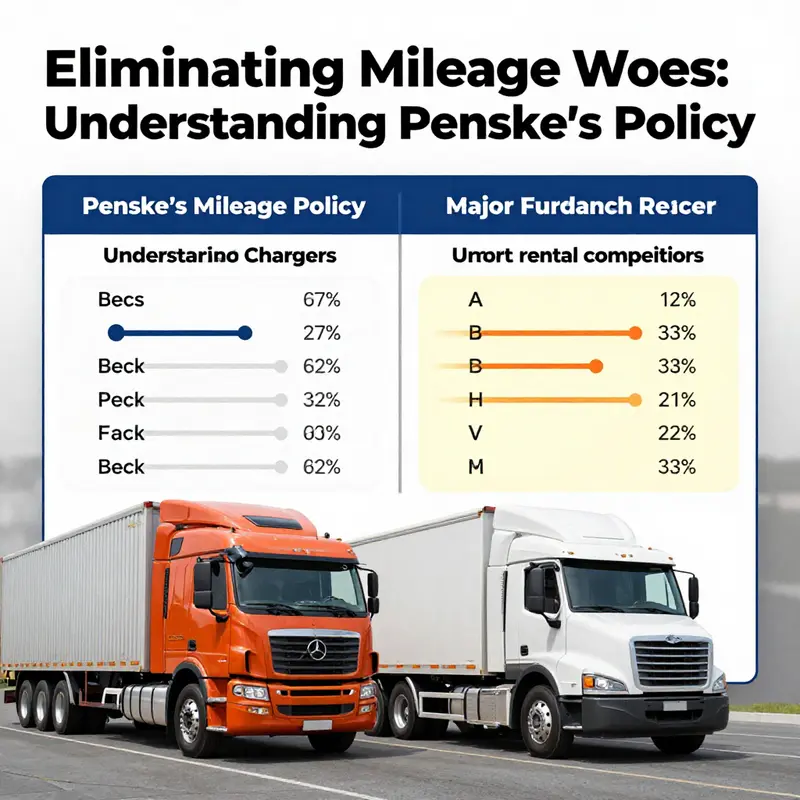
When you ask whether Penske charges by the mile, the simplest answer is the most striking one: for one-way rentals, Penske includes unlimited mileage. The policy translates into a straightforward premise—drive as far as you need on a single rental period and you won’t pay extra for miles. That single feature can tilt the math decisively in favor of long-distance moves or road trips, where distance can be a moving target and every mile begins to add up. The price you see on the rental agreement isn’t billed per mile in the classic sense; instead, you pay a daily base rate, typically in a band that sits around the mid-to-high hundreds of dollars, and you carry the freedom of unlimited miles with that rate. In practical terms, the daily rate common to one-way Penske rentals ranges roughly from $150 to $220, before tax. For many customers, that means a long-haul move or a cross-country trip is less about the miles and more about the days of use and the reliability of the truck you’ve chosen, with unlimited miles providing a kind of distance insulation from the budget math that miles can create elsewhere. The effect is not just convenience; it’s finance, especially when every mile could have tacked on a fee that multiplies with the length of the trip.
Yet the landscape isn’t that simple. The Penske policy that promises unlimited miles on one-way rentals does not universally blanket all rental types or all trip configurations. When a rental instance shifts from a one-way move to a round trip, or when the rental type falls outside the standard one-way framework, mileage limits may come back into play and fees can resurface. In those cases, the cost structure might resemble what many others in the truck rental market employ: mileage is capped or is charged per mile beyond an allotted allowance. For customers planning multi-city trips or a round trip that stretches the truck’s use beyond a single route, the mileage policy needs to be read carefully, because the unlimited-mile advantage might disappear or shrink in practice. This distinction, though subtle in some rental scenarios, is crucial for a buyer who wants to model the total cost of moving or travel.
To place Penske’s approach in sharper relief, it helps to compare it to a well-known set of peers in the moving-truck arena. The core contrast often comes down to whether miles are bundled into the daily rate or priced as an added line item. A number of competitors, including some popular regional and national brands, price the base rental aggressively but attach a per-mile fee for every mile driven. A typical figure that’s often cited in consumer guidance is around $0.40 per mile, though rates can vary by truck size, location, and time of year. That per-mile approach can be highly economical for short moves where distance is limited and days aren’t many, but it becomes less predictable when your route is long or when you’re unsure how far you’ll actually travel. In those cases, the cumulative effect of miles can overshadow a low base rate, making the total cost rise quickly with distance.
Penske’s edge in this space—its unlimited mileage on one-way rentals—appears even more pronounced when you consider the broader fleet and the purchase of convenience. Penske has cultivated a reputation for newer trucks and a clean fleet, which translates into comfort and perceived reliability on the road. For some customers, that newer asset pool matters almost as much as the policy itself, because a reliable truck can minimize the chance of a breakdown that would otherwise complicate a move or trip and potentially add hidden costs such as delays and alternative transportation. However, this asset advantage comes with a geographic trade-off: Penske tends to operate with fewer locations than a sprawling competitor network, which can influence the total cost and the convenience of pickup and drop-off points. In practical terms, the route you plan may determine whether Penske’s unlimited mileage policy is worth the premium that sometimes accompanies newer trucks and a potentially smaller network.
The subjective value of unlimited miles becomes clearest when you anchor it to a concrete scenario. Consider a long-distance move that unfolds over several days and thousands of miles. Under Penske’s one-way policy, you could lock in a single daily cost and then drive the truck across state lines and coast to coast without contemplating mileage surcharges. The clarity of this model makes budgeting easier: you know your base rate in advance, and miles won’t surprise you at the end of the trip. In contrast, a company that charges by the mile can deliver an attractively low daily rate, but the total cost will hinge on how far you end up traveling. If your move veers into long distances, the per-mile charges accumulate quickly and can eclipse any apparent savings from a lower daily rate. In this context, Penske’s policy doesn’t just affect price—it reshapes the risk profile of a move, turning mileage from a potential hazard into a non-factor.
The trade-offs don’t vanish merely because Penske offers unlimited miles. There are practical considerations that savvy renters weigh in the same breath as the mileage policy. For one, Penske’s one-way rental extensions—stretches beyond the original end date—carry a daily penalty of a different kind. Reports in consumer guidance indicate that extending a one-way rental can incur a charge, which, in the documented comparisons, has been cited as around $100 per day for an additional day. By contrast, a typical extension fee at some competing firms is lower, for example around $40 for the same service. Those figures illustrate a broader point: even when you don’t pay extra for miles, there are other lines in the contract that can push up the cost of a move if your schedule changes. In other words, unlimited miles solve one problem—distance cost—but they can reveal another: the cost of changing plans and extending usage.
In analyzing total cost, it’s essential to account for the daily rate, the extension policy, and the way mileage is treated across different rental types. The math isn’t about a single dial you can turn to see your price drop. It’s a composite equation: daily rate, insurance or protection plan choices, fuel considerations, occupancy taxes, and, importantly, the mileage policy dictated by the rental type. For a one-way rental that stays within the unlimited-mile framework, the miles won’t add to the price tag. If, however, the trip toggles into a multi-city itinerary or a return trip, the policy’s edges can soften or sharpen the financial outcome in ways that aren’t obvious until you map the entire route and duration.
For readers who want to see how this policy translates in practice, there is a detailed explainer that drills into Penske’s pickup-truck-unlimited-miles approach and how it stacks up against conventional mile-by-mile pricing. That guide lays out the core differences between unlimited mileage and per-mile charges, and it’s a useful companion to the high-level comparison here. unlimited rental truck mileage provides a focused look at how unlimited mileage can alter the budgeting calculus and highlight why distance alone doesn’t always tell the full story of a rental’s cost.
The broader lesson here is that the choice between unlimited miles and per-mile pricing isn’t purely about dollars and cents. It’s about risk, predictability, and the type of trip you’re planning. If you anticipate a long-distance move or an extended road journey, the freedom to travel without a mileage clause can translate into peace of mind and a simpler budget. If your itinerary is tightly scoped, and you’re unlikely to exceed a modest distance, the lower base rate that accompanies per-mile pricing could still be attractive, provided the anticipated mileage stays within a comfortable limit. The optimal decision, then, is to model your trip with and without miles, factoring in the full range of potential endpoints and the likelihood of extensions. In practice, that modeling often reinforces the value of Penske’s policy for long hauls and flexible schedules, even if the sticker price is occasionally higher at the outset.
For readers who want to explore related topics or see practical examples of how these policies play out in real moves, there are several practical resources within the broader site ecosystem. These pieces help connect the policy dots to the day-to-day realities of renting, moving, and planning a road-based relocation. As you weigh your options, consider how the extension costs, fleet age, and location density affect your total cost of ownership for a move, not just the daily rental rate or the per-mile price alone. The chapter that follows will build on this foundation by drawing more explicit comparisons between Penske and two widely cited competitors, focusing on how the unlimited-mile promise interacts with other facets of the rental experience and what that means for different move profiles.
External resource for further reading: https://www.carinterior.com/penske-pickup-truck-rental-unlimited-miles-guide/
Final thoughts
In conclusion, understanding Penske’s mileage policies for both one-way and round-trip rentals provides valuable insight for business owners in managing costs effectively. With unlimited miles on one-way rentals and clear structures for round trips, Penske offers flexible options. Comparing these policies to competitors further demonstrates the advantages of choosing Penske for logistical needs. For business owners seeking rental solutions, this knowledge can lead to savings and more efficient planning.