
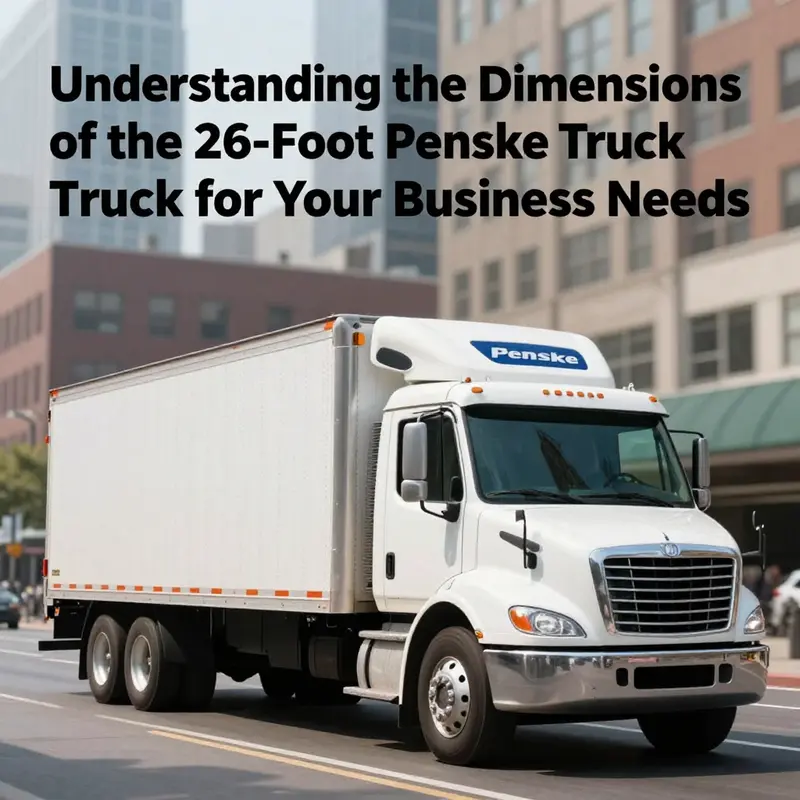
For business owners navigating the complexities of transportation, understanding the dimensions of the 26-foot Penske truck is crucial. This vehicle stands as a versatile solution for a range of logistical needs, from local deliveries to larger regional transportation tasks. In the chapters that follow, we’ll explore the truck’s external and internal dimensions, unpack its weight capacity and loading specifications, and discuss practical applications that can enhance operational efficiency. Each section will provide insights on how this truck can meet diverse business demands.
Sizing the 26-Foot Box Truck for City Streets: External Dimensions, Clearance, and Freight Potential

The dimensions of a 26-foot box truck define more than just a number on a spec sheet. They shape every decision a mover makes, from the route chosen through a crowded downtown to the way a pallet of goods sits on the floor and how quickly a crew can swing open a doorway and begin loading. When a fleet vehicle is chosen for local or regional work, the external envelope—its length, width, and height—becomes a practical constraint and a strategic tool at the same time. Understanding these numbers is not a dry exercise in geometry; it is a way to translate a truck’s physical footprint into real-world performance, safety, and efficiency for both residential moves and small-batch commercial deliveries. For many operators, the 26-foot class represents a sweet spot: large enough to carry meaningful loads, yet compact enough to navigate streets, parking lots, and loading docks without needing a second vehicle or a long lead time for permits.
Among the most immediate dimensions to grasp is the external length, which clocks in at about 26 feet, or roughly 7.92 meters. That length is the backbone of how the truck sits on the road and how much curb space it will require at a loading zone or a street-side curb. In urban settings, this translates into a need for careful planning: where a standard car can park in a bay, the truck may require a pull-through space or a designated loading zone. The extra length also informs the approach to intersecting traffic where turns demand more room and time. Width follows close behind, at about 8 feet, or approximately 2.44 meters. That width includes the overtures of mirrors and the truck’s own fender lines, but it remains a test of the kind of street you can fit through without scraping a curb or passing a tight clearance sign. Height, too, matters—generally between 8 and 9.5 feet (about 2.44 to 2.9 meters), depending on the specific model and whether a high-roof option is chosen. A higher roof offers more vertical space inside, which makes stacking goods and accommodating taller pallets easier, but it also increases the risk of hitting bridges, overpasses, or low-hanging signage if a route hasn’t been pre-cleared.
These external dimensions sit alongside a set of internal measurements that traders, drivers, and dispatchers use to gauge load plans and safety margins. While the truck’s exterior sets the stage, its interior tells the true story of capacity and flow. The cargo length inside is typically around 6.10 meters (20 feet), a figure that matters when you’re deciding how many pallets you can line up along the cargo floor. The internal width of about 2.34 meters (92 inches) is what determines the possible arrangement of items side by side, and the internal height of roughly 2.39 meters (94 inches) dictates vertical stacking options. The difference between exterior and interior measurements is not merely a curiosity; it’s a practical reminder that every inch of steel and insulation reduces the space available for goods, so the layout must be optimized for the types and sizes of items the crew handles most often. The resulting interior volume, commonly around 33 cubic meters (about 1,165 cubic feet), remains a key planning metric when forecasting how many shipments can be accommodated in a single loading cycle without compromising safety or speed.
Weight capacity constitutes another fulcrum of planning. The typical maximum load is around 10,000 pounds (approximately 4,536 kilograms), with exact limits shaped by the vehicle configuration and the weight distribution across axles. This is not just a matter of the entire product’s heft; it is a worry about axle load, suspension behavior, and tire wear, all of which influence handling, braking, and stability as the truck makes its way through traffic. The number of pallets the truck can carry is equally consequential. With standard pallet dimensions of 48 inches by 40 inches, a 26-foot box truck can accommodate about 11 to 12 pallets, depending on how those pallets are arranged and whether a liftgate is employed. That liftgate—present on roughly eight out of ten models in this category—transforms heavy loads into a manageable, ground-to-vehicle transfer. It reduces the risk of injury and speeds up the loading and unloading process, particularly when dock access is limited or when dock height differs from the truck bed. Where a liftgate is not installed, crews must rely on ramps, portable lifts, or manual handling, which adds time and energy to what is already a physically demanding operation.
The external dimensions also intersect with operational realities—the infrastructure of the routes and the constraints of the dock. City streets rarely mirror the wide, uninterrupted lanes shown on maps. Street signs, parking meters, bus stops, and delivery zones can all encroach on the space a truck needs to maneuver and position. The truck’s width, while comfortable enough for most urban arterials, must be weighed against the turning geometry. A 26-foot box truck typically requires more space to complete a turn than a smaller van, especially when entering a narrow alley or a loading dock tucked between parked cars. The height dimension introduces yet another layer of consideration. Overhead clearance in parking garages, underpasses, and overhead doors demands route preplanning and sometimes a call to locate alternate routes during a busy schedule. A model with the high-roof option, while beneficial for taller cargo, can limit access to low-clearance structures and require extra caution when choosing a loading site. These are not theoretical concerns, but day-to-day realities when planning a schedule that relies on timely deliveries and efficient pickups.
Carrying capacity and load configuration—pallets in particular—become practical guidelines for choosing between a liftgate-equipped model and a non-liftgate alternative. If palletized goods represent a large share of the daily load, the liftgate becomes nearly indispensable. It is not an ornament; it is a workhorse that reduces physical strain on personnel and minimizes the risk of injury or damage when moving heavy items from curb to cargo floor. The pallet footprint interacts with the internal width in a way that shapes how many rows of pallets can be laid down along the cargo floor, and how many layers can be stacked safely without impeding visibility or the ability to secure the load. The typical pallet size—1.22 by 1.02 meters (48 by 40 inches)—fits well within the interior width, but the exact stacking depends on the goods’ shape and fragility. In practice, drivers and loaders quickly learn the art of arranging items with a careful balance: maximizing space while leaving adequate room to strap and seal the load.
If you want a quick, practical reference to see these dimensions translated into real-world numbers, you may consult a concise overview on box truck dimensions. This resource can help you compare how different configurations line up with the external envelope described above, and how you might translate a given shipment profile into a viable loading plan. The link provides a compact, side-by-side sense of how the internal and external measurements align to form a usable workspace for loading teams and a predictable footprint for dispatch planning. For more context on the general sizing and capacity considerations that accompany these dimensions, you can explore this overview on box truck dimensions: box truck dimensions.
The external dimensions are not just numbers; they are a practical framework for decision-making. They inform what kinds of neighborhoods are accessible, what kinds of docks are suitable, and what kinds of loads can be managed in a single trip. They shape how a crew will approach a drive through a dense grid, how long a delivery window might be, and how much time will be needed to stage items at a dock before and after the trip. They influence the choice of equipment, from trolleys and dollies to liftgates and load ramps. They guide safety protocols, since a misjudged clearance can result in contact with overhead obstructions or curb damage, which in turn impacts liability, insurance considerations, and vehicle downtime. In other words, the external envelope is the first layer of a multi-layered decision-making process that begins on the street and ends when the last strap is cinched and the vehicle is parked in its designated spot.
In framing the external dimensions within the broader article topic of 26-foot Penske truck dimensions, these figures help us paint a clear picture of where this truck fits in the landscape of local and regional logistics. It is not the largest, nor is it the smallest in its class. It occupies a position that is particularly well-suited to small-batch, city-focused movements and regional deliveries. Its height and length offer enough space for a meaningful number of cartons, crates, and pallets, while its width and maneuverability remain workable in most urban environments where traffic and space are at a premium. The liftgate option emerges as a defining feature for operations that emphasize efficiency and labor safety. The decision to select a high-roof configuration carries implications for stacking and overall capacity but introduces route considerations to avoid height restrictions. Every route, dock, and loading scenario will tilt toward a slightly different balance of risk, speed, and cost.
As the chapter continues to unfold in the broader article, the external dimensions will anchor comparisons with other truck sizes, helping readers understand trade-offs between carrying capacity and the practical realities of urban driving. The interplay of length, width, and height with interior volume and weight limits makes clear that the 26-foot class is not a one-note solution; it is a versatile tool whose value becomes most evident when planners and drivers align the vehicle’s physical footprint with the specific needs of the move, the layout of the goods, and the constraints of the operating environment. In practice, realizing the full potential of these dimensions means coupling precise route planning with thoughtful loading strategies, an eye for safe handling, and a willingness to adapt to the unique quirks of each client’s inventory.
For readers who want to connect these ideas to hands-on practice, the next sections will explore how to translate external dimensions into concrete, time-saving routines—how to pre-plan a dock schedule, how to stage items for efficient loading, and how to anticipate bottlenecks before they arise. The overarching goal is to provide a holistic sense of what the 26-foot box truck can do in the real world, and how its external envelope acts as both constraint and enabler in the daily cycle of pick-ups, deliveries, and redeployments. The numbers are durable—around 7.92 meters in length, about 2.44 meters in width, and 2.4 to 2.9 meters in height—yet their true value shows up in the margins: the minutes saved, the injuries avoided, the pallets safeguarded, and the schedule that stays on track in the face of urban complexity. By keeping the external dimensions in clear view, operators can maintain a steady rhythm of dependable service while adapting to the evolving needs of small- and medium-scale commerce that relies on fast, flexible local transport.
External resource: https://www.penske.com/trucks
Reading the Inside: How the 26-Foot Penske Truck’s Cargo Dimensions Shape Moves
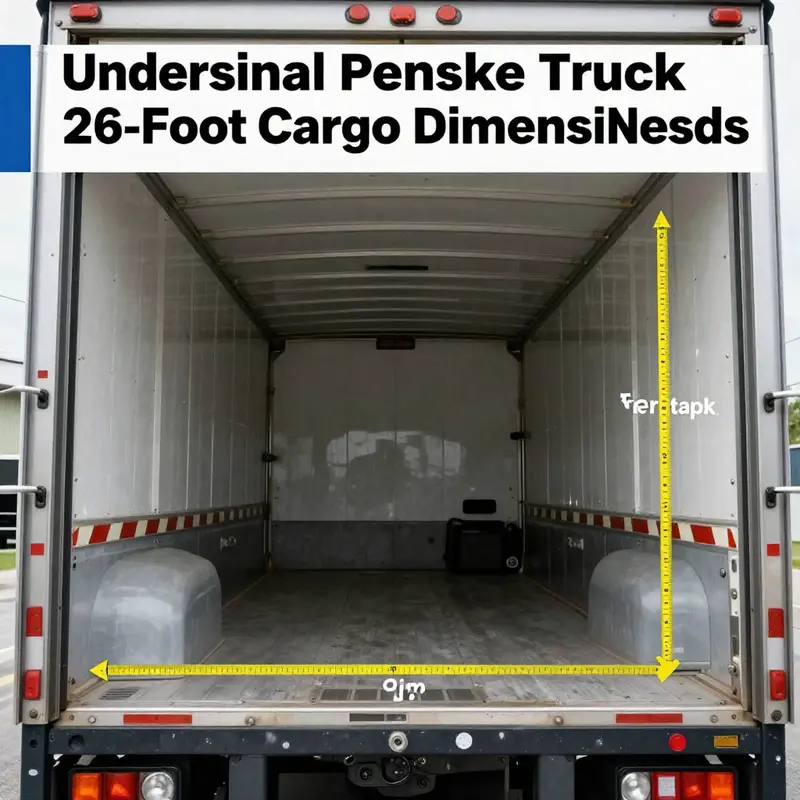
The 26-foot Penske truck sits at a practical crossroads for moving and local delivery alike. On the surface, its size suggests capacity and efficiency, a balance that makes it a workhorse for small businesses and households moving within a city or across a few counties. But capacity is not only about the number of items a truck can hold. It’s about how that space is shaped, how items fit into that space, and how the space can be tamed to minimize trips, protect goods, and streamline a route. The internal cargo dimensions are the quiet engine behind every successful move or delivery. They determine how many pallets you can stack in a single trip, how much protection you need for fragile items, and how carefully you must choreograph the loading sequence. They also shape the day-to-day decisions that owners and operators face, like whether a liftgate is worth the extra cost or how to plan a city run that avoids backtracking and congestion. In short, the interior numbers are not abstract mathematics; they are a translator, turning planning into action and action into savings in both time and labor.
The internal space of a typical 26-foot straight truck is a rectangular, almost uncluttered stage. The official interior length, width, and height often cited in general discussions hover around a few consistent figures: a usable length near 23 feet (about 7.01 meters), a width around 8 feet (approximately 2.44 meters), and a height close to 8 feet (also about 2.44 meters). These measurements describe the cargo area as a working volume, the space available to hold items from boxes and crates to larger, pallet-sized goods. It is essential to note that these interior numbers sit within a larger chassis. The exterior length, which is typically reported as about 26 feet (or roughly 7.92 meters), includes the cab and the spaces that aren’t directly usable for cargo. The discrepancy between exterior and interior dimensions is not a flaw but a natural result of the truck’s design: the cab, wheel wells, wheel arches, and doors all shave away a portion of the total footprint so the cargo area remains manageable and accessible to drivers who navigate city streets and loading docks alike. This distinction matters when you’re planning capacity and efficiency; a truck that is the right length for the route can still feel smaller inside when you factor in the wall thickness, anchor points, and the space those large doors require.
If you visualize the interior as a stage where the loader’s performance determines the show, the size of that stage becomes the primary constraint. A depth of about 23 feet translates into a long runway for stacking pallets and crates. The width of roughly 8 feet defines the side-to-side choreography: two standard pallets across the width is feasible in most layouts, and it leaves a margin for hand trucks, shrink wrap, and the occasional awkwardly shaped item. The height of around 8 feet creates vertical possibilities that can transform a mere cargo room into a vertical warehouse on wheels. With these dimensions, the cargo area can typically accommodate 11 to 12 standard pallets, depending on how those pallets are oriented and the exact footprint of loaded items. Orientation matters because pallets that are 48 inches by 40 inches can be rotated to optimize the available floor space. In practice, many loads are arranged with two across the width and multiple pallets in a lengthwise stack, leaving a corridor for operators to walk and secure goods. The ability to stack or nest cases, crates, and furniture with consistent protection hinges on this width and height, along with effective tie-downs and protective moving blankets that prevent shifting during transit.
The numbers matter even more when you consider the volume—the air the truck claims as its own in a given trip. Rough estimates place the usable interior volume at around 33 cubic meters, or about 1,165 cubic feet, though exact numbers will vary a bit by model and configuration. That volume isn’t just a cold figure; it’s the measurable space that translates into how many shipments can ride in a single trip and how much air circulation you must leave to prevent heat damage, moisture buildup, or compression of delicate items. Volume matters most when your operation leans on batch shipments, when you’re importing or exporting crates with consistent dimensions, or when you’re orchestrating a mix of box goods, furniture, and equipment. It is this blend of length, width, height, and volume that makes the interior practical and predictable, rather than a guess about how many boxes will fit.
Weight capacity is the other side of the internal coin. The typical maximum load for these 26-foot trucks hovers around 10,000 pounds (approximately 4,536 kilograms), though exact limits depend on the vehicle’s configuration, axle setup, and the presence or absence of options like a liftgate. When you multiply the number of pallets by their average weight, you quickly see how a seemingly generous space can turn heavy if the load consists of dense boxes or industrial components. The practical takeaway is simple: plan loads with the weight distribution in mind. Place heavier pallets toward the axle that supports the primary load and ensure the heaviest items are secured low and centered. The combination of space and weight distribution is what lets a single 26-foot truck perform a precise balancing act between capacity and safety.
Pallet loading capacity—roughly 11 to 12 standard pallets—rests at the heart of how the interior space is used. Pallets measure 48 inches by 40 inches, and two across the width fits snugly within the typical 8-foot interior, leaving a corridor for loading and securing. The lengthwise accumulation of pallets depends on how the pallets are oriented and whether items can be stacked in two layers, weather permitting. In many city logistics scenarios, the arrangement hinges on the ability to navigate loading docks with standard dock heights and to place pallets in a manner that minimizes the need for reshuffling at destination. When liftgates are present, which is the case on about 80 percent of 26-foot models, heavy pallets can be raised from ground level to the truck bed with a single operation. Liftgates don’t just ease labor costs; they reduce the risk of injury and damage to items that are awkward to handle by hand. The presence or absence of a liftgate can tip the decision between a two-person loading operation and a one-person approach, especially for repeated, high-frequency local deliveries.
These interior dimensions do more than shape how a truck is loaded; they shape the entire flow of a move or a route. A precise map of usable space helps the crew decide what to bring, what to leave behind, and how to schedule back-to-back deliveries. If you are planning a local run for a small e-commerce operation, the interior figures matter at every juncture: when you pack, when you secure the load, and when you estimate delivery windows for customers who count on predictable arrival times. The “how many pallets” question translates directly into “how many trips will I need?” and, by extension, into labor costs, fuel consumption, and overall reliability of service. The more accurate your understanding of interior space, the more confident you can be about meeting customer expectations and maintaining a schedule that doesn’t bend under the weight of miscalculated capacity.
For readers who want a practical, visual breakdown of how interior dimensions translate into real-world layouts, a detailed guide on pallet arrangements can be instructive. A reliable reference is the Penske box truck dimensions resource, which offers a clear look at how the standard footprint can be optimized for pallet-based loads. This page explains how the desk-sized math of pallets, gaps, and clearance converts into a workable layout on the floor of a 26-foot truck. It’s a helpful companion to the numbers above, offering the kind of concrete guidance that makes planning tangible rather than theoretical. Penske box truck dimensions.
Beyond the numbers, the interior dimensions influence the operational tempo of moving and delivery. In city environments, the interior space interacts with traffic and street constraints. The truck’s exterior length translates into a longer turning radius and a more cautious approach to busy intersections. It also means that parking on a narrow street can feel like a strategic chess move. Drivers need to be mindful of overhead hazards, curb clearance, and the potential need to adjust the loading plan on the fly when access to a building is restricted or when a dock is unavailable. The interior’s predictable height and width help crews stack items in a way that maximizes available space while preserving reach and access to every pallet. The consistency of internal dimensions across many 26-foot models is a boon to operators who rely on repeatable loading patterns to save time and reduce stress on days with tight deadlines.
Variations exist, of course. The internal length numbers can drift by a few inches depending on the exact model, the presence of additional equipment, or the design of the cargo partitions. The height can be affected by the configuration of shelving, tie-down rails, and any extra clearance you might need for oversized items. The number of pallets you can carry can swing a little with the thickness of pallet collars, the use of dollies, or even the kind of shrink wrap used to stabilize loads. The literature and manufacturer notes acknowledge these variations. That transparency matters because it signals a need for practical, on-site verification during a loading shift. Before a big move or a major delivery run, it’s wise to measure the actual cargo area, confirm the floor’s flatness, and check for any obstructions that could shrink usable space. Such diligence turns generic specifications into a reliable operating plan.
In the end, interior cargo dimensions do the heavy lifting for a 26-foot Penske truck. They define what count, what can be stacked, and how many trips a client can expect in a given day. They shape the financials by influencing load efficiency and labor requirements. They shape safety, too, by clarifying how goods must be secured and how much room a driver has to maneuver in tight dock spaces. The numbers provide a shared language for movers, drivers, dispatchers, and customers. When everyone speaks that language well, moves become predictable, and the experience feels less like a gamble and more like an orchestrated routine. And as with any language, context matters: a single set of dimensions is most valuable when paired with a thoughtful loading strategy, a clear understanding of weight distribution, and a plan for adaptivity should a destination present unexpected constraints. If you’re evaluating a 26-foot truck for ongoing city delivery or local moving needs, the interior dimensions are not a footnote; they are the backbone of efficiency, reliability, and customer satisfaction. For more practical insights on translating these numbers into concrete loading patterns, the referenced dimensions guide provides a helpful, concrete starting point. External resources, such as the official manufacturer information, can further validate the choices you make as you prepare for the next move. You can consult the Penske official site for the most current specifications and configuration options.
External resource: Penske official site: https://www.penske.com/
Carrying Capacity in Motion: Weight Limits, Pallet Strategy, and the Spatial Reality of the 26-Foot Penske Truck
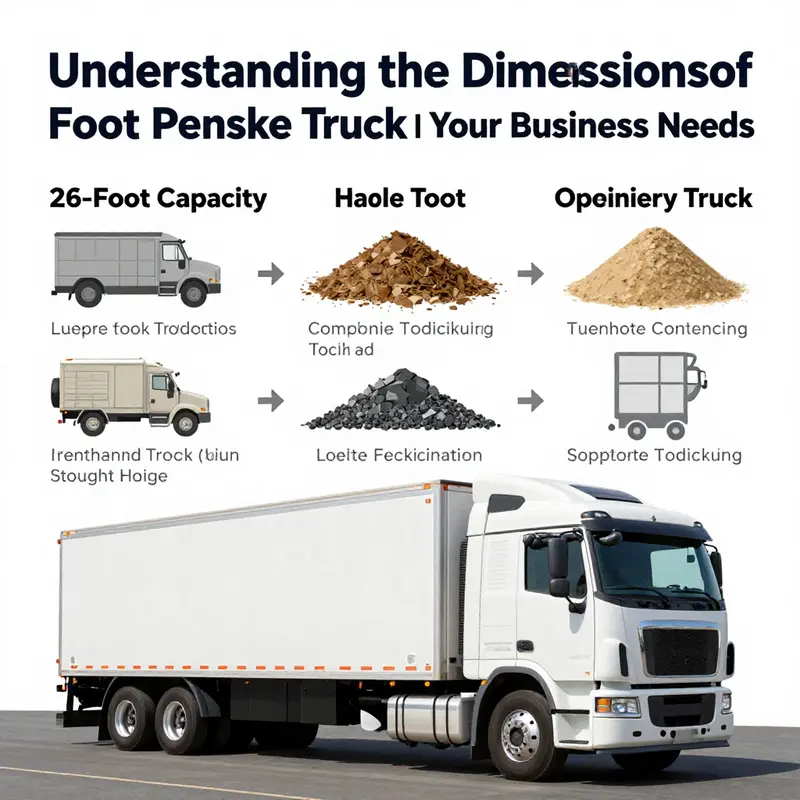
The 26-foot Penske truck is a deliberate balance of exterior reach and interior capability, a vehicle designed to move goods efficiently within urban corridors and regional corridors alike. The weight capacity, properly understood, is not just a number on a spec sheet; it is a constraint that shapes every loading decision, from how many pallets you can safely stack to where the heaviest items should sit along the cargo floor. The commonly cited payload limit of 10,000 pounds (4,536 kilograms) matters profoundly. It is the ceiling that governs what you can pile in, how you arrange it, and how you secure it for a trip that may involve bustling city streets, uneven loading ramps, and quick turnarounds in tight neighborhoods. This payload figure includes the weight of the goods, packaging, and any equipment placed inside the cargo area. Surpassing it is not simply unwise; it can be unsafe and may run afoul of transportation regulations and the vehicle’s designed performance envelope. In practice, the number becomes a planning tool. It prompts a careful inventory of what is being moved and how much of it can be distributed across the available floor space without compromising handling, braking, or tire endurance.
The interior dimensions of the Penske’s 26-foot chassis contribute directly to how weight is distributed and how the space is used. The cargo length, 20 feet (6.1 meters), provides room for long items or a sequence of pallets arranged end-to-end. The width, 92 inches (2.34 meters), gives just enough side-to-side room for pallets and wrapped bundles to sit flat on the floor, with time-saving access crucial for quick breaks between delivery stops. Height, at 94 inches (2.39 meters), determines not only the ceiling for stacked loads but also how much vertical space is available for packing materials, totes, and shelving that keep goods from shifting during transit. Taken together, these interior measurements translate into a practical volume of about 1,165 cubic feet (33 cubic meters). That volume is not a luxury; it is the tangible space that shapes what can be boxed, wrapped, palletized, and placed on the truck with confidence. When planning a move or a regional delivery run, those dimensions become the baseline for every loading plan, every strap, and every potential rearrangement.
Within that 1,165-cubic-foot interior, the number of pallets you can secure depends on their size and how tightly you can group items. A standard pallet, measuring 48 inches by 40 inches, is the most common unit in commercial logistics. In a 26-foot Penske, you can typically fit roughly 11 to 12 such pallets, depending on the configuration and the presence of any bulky items that disrupt a clean, grid-like stacking pattern. The practical takeaway is that the pallet count is a direct proxy for how much weight you can carry while preserving a stable center of gravity. Pallets are not mere containers; they are the floor-level scaffolding that helps you build a predictable load. Each pallet’s weight varies with the contents, but the underlying principle remains the same: maximize space without sacrificing balance or the ability to secure the load with straps and load bars.
The lifting mechanism available on these trucks also plays a critical role in how weight is moved into the cargo bay. Roughly eight out of ten 26-foot models are equipped with a liftgate, which significantly reduces manual handling and the risk of injury when heavy items like appliances or dense boxes must be moved from curb to floor level. For operations that do not include a liftgate, the loading equation shifts. You become more reliant on hand trucks, dollies, and careful team coordination to lift and position items, all while maintaining safe posture and control. The liftgate option, when present, lowers the strain on personnel and enables faster turnarounds at loading docks, which in turn reduces exposure to weather and traffic risks during the move. The choice between liftgate and non-liftgate configurations, therefore, is not merely a matter of convenience; it is a critical factor in how efficiently you can approach the payload limit, how precisely you can distribute weight, and how safely you can secure items for transit.
Understanding the interplay between interior dimensions and weight capacity is essential for anyone planning a move or a small-scale commercial shipment in a 26-foot Penske. The floor is not a blank slate; it is a defined plane with a finite length and width, designed to hold a predictable mass in a given configuration. It is possible to—within the 10,000-pound payload ceiling—arrange items so that the heavier pieces sit lower, toward the floor’s center of gravity, and toward the vehicle’s stronger structural points. Heavier items, such as large appliances, machinery, or densely packed crates, should typically be placed on the truck floor and near the forward third of the cargo area to help ensure that the center of gravity remains within a stable zone. Lighter, bulky items can occupy the rear and sides, filling the remaining volume without creating significant lift risk. A well-balanced load improves braking performance, steering response, and overall ride quality, all of which matter greatly in urban settings where stop-and-go traffic and tight turns demand precise vehicle handling.
Load planning is not a futuristic concept; it is a practical discipline that begins long before the truck leaves the dock. It starts with an accurate tally of items, their weights, and their dimensions. Each box or crate contributes to the total weight, and every pallet adds mass and a footprint on the deck. The responsibility of the loader is to ensure that, as the load grows, its distribution remains uniform enough to avoid a forward or rearward tilt that would compromise control if the truck is moving at city speeds or navigating a crowded street. A simple guideline, though conservative, is to keep substantial weight toward the middle and forward sections of the cargo bay, with secure straps passing over the load to prevent shifting during transit. It is also wise to consider the sequence of unloading at delivery points. If some items are intended for a particular stop, placing them in accessible locations helps minimize rearrangement on the road and reduces the risk of last-minute weight shifts that could occur when doors are opened and closed in succession.
The pallet strategy deserves particular attention because it blends the dimensions with the payload. The typical 11 to 12 pallet capacity offers an efficient path to maximize space while maintaining a safe, manageable weight per pallet. If each pallet carries roughly 700 to 900 pounds depending on contents, a 10,000-pound ceiling could be reached with as few as 12 pallets if heavily loaded. Conversely, a lighter mix of items might allow more pallets to be loaded, but the weight balance becomes the governing constraint rather than the sheer number of pallets. The math, while straightforward, should be treated as a dynamic planning exercise: count by weight and footprint, then adjust by repositioning items to preserve a stable center of gravity during tilts, accelerations, and decelerations. A well-executed loading plan reduces the risk of shifting cargo during cornering or abrupt stops, which in turn preserves the integrity of boxes and the safety of drivers and pedestrians alike.
For readers seeking a broader sense of dimension-to-capacity relationships across the Penske fleet, a look at other truck dimensions can illuminate how similar principles apply in different footprints. Penske box truck dimensions provide a framework for comparing how interior lengths and widths influence pallet configurations and load stability across sizes. See Penske box truck dimensions for a complementary perspective that helps decision-makers choose the right vehicle for a given shipment. Penske box truck dimensions. This cross-reference emphasizes that the 26-foot model sits at a particular intersection of space and weight coverage, optimized for mid-size loads that demand efficiency without overreaching the payload ceiling.
In practical terms, the 26-foot configuration shines when you need a reliable middle ground: substantial space, predictable handling, and a straightforward loading philosophy that respects weight limits and the realities of city logistics. It is not designed to be a giant freight carrier, nor is it a fragile courier vehicle. It is a truck built for small businesses making frequent, local deliveries, as well as for households undertaking organized moves where efficiency matters as much as cost. The interior dimensions enable a logical stacking plan; the weight limit keeps those plans from becoming fantasy, and the liftgate option (when present) makes the execution more accessible to teams with varying levels of physical strength. The resulting operation is one where time is saved because the space is maximized in a way that keeps staffing lean and loading operations swift. The emphasis on space, weight, and secure attachment translates directly into a smoother, safer, and more predictable turnover on streets that demand careful navigation and quick decisions.
The chapter of loading is not finished with numbers alone. It must be anchored by a disciplined approach to safety, planning, and verification. Before the first box leaves the dock, workers can benefit from a quick weigh-in or a rough estimation to confirm that the mass remains within 10,000 pounds. After the load is secured with multiple tie-downs and load bars, a final check should confirm that the load remains stable under gentle rocking motions and typical road-induced vibrations. Even with a careful plan, conditions on the road can shift the balance in subtle ways, and crews should be prepared to adjust by repositioning items or tightening straps. In this way, weight capacity and loading specifications are not abstract numbers; they are working guidelines that translate into practical, actionable steps for a successful move. The aim is to maximize every cubic foot without compromising safety or performance, recognizing that volume and mass together define the real-world capabilities of the 26-foot Penske truck.
External reference and further details can be found on Penske’s official information about the 26-foot truck, which provides the most up-to-date specifications and safety guidelines. https://www.penske.com/rent-a-truck/26-foot-truck
Sizing the Route: The 26-Foot Penske Truck Dimensions in Local and Regional Transport
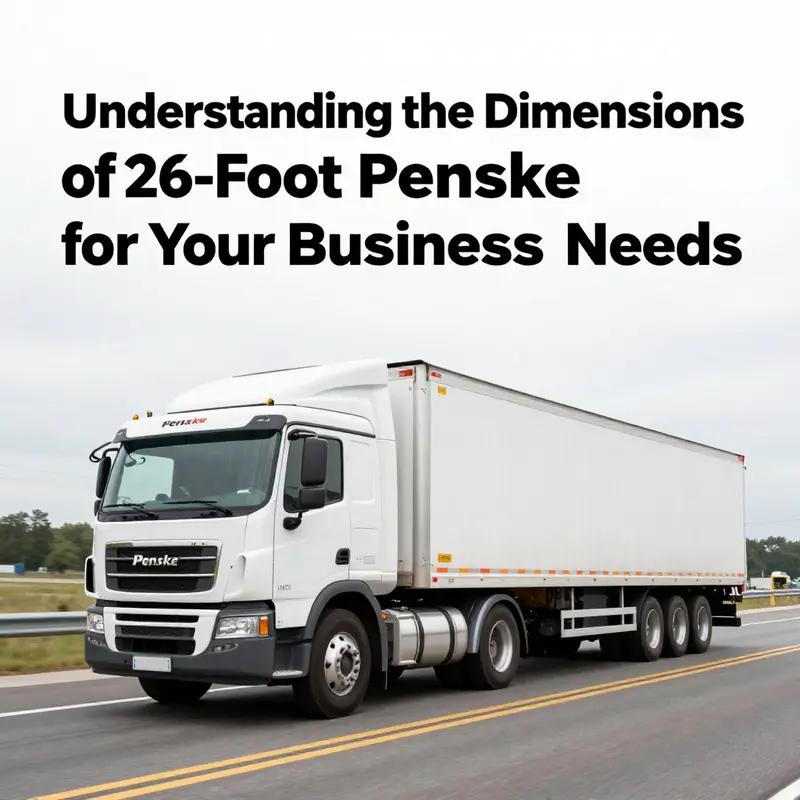
Every transportation decision starts with the space you can rely on. The 26-foot Penske truck sits at a strategic crossroads between compact city-boxes and the larger regional movers. Its size is not an afterthought but a core part of how a business or a family moves goods, equipment, or furniture with confidence. When you understand the dimensions—both external and internal—you begin to see why this vehicle regularly earns a place in local fleets and regional shifts alike. The external total length hovers around 7.92 meters, a length that translates into a front-end profile you can manage on crowded streets without sacrificing the cargo you need to carry. The internal cargo length, about 6.10 meters, provides a robust stretch of space for longer items, while the internal cargo width of roughly 2.34 meters and height of about 2.39 meters define the vertical and lateral envelopes that shape loading plans. In practical terms, this adds up to roughly 33 cubic meters, or about 1165 cubic feet, of usable space. Those numbers guide everything from pallet configurations to how you secure a load for the road. Yet space is only part of the story; payload matters just as much because a truck’s usefulness hinges on the lightness of its cargo, the heaviness of its items, and how you stack them without compromising stability or safety. A commonly cited ceiling for weight on a 26-foot model sits near 10,000 pounds, or around 4,536 kilograms. This limit is not arbitrary; it reflects axle ratings, tire capabilities, and the engineering that makes the truck nimble enough to negotiate tight turns while still delivering dependable payload management. Within these boundaries the truck can function as a moving workshop, a small-batch logistics platform, or a family’s transition vehicle with surprising efficiency. The internal footprint accommodates approximately 11 to 12 standard pallets, each 48 inches by 40 inches, with exact numbers dependent on how goods are arranged and what is strapped down for transit. That pallet capacity is more than a statistic; it translates into real-world workflows. A last‑mile operation can move a week’s inventory in a single day if the goods are well organized and properly loaded. A small job shop can transport tools, parts, and materials to multiple sites, keeping crews supplied without requiring a second truck or an expensive rental fleet. The liftgate option, which about eight out of ten 26-foot models offer, expands accessibility for loading heavy items at curbside or in locations without a dock. Liftgates reduce manual lifting, limit the risk of injury, and speed up handoffs, especially in urban settings where every minute counts. Of course, not every job needs a liftgate, and non-liftgate configurations remain common for lighter or more compact loads. This combination of features—length, interior dimensions, volume, weight capacity, pallet compatibility, and liftgate availability—gives the 26-foot Penske truck its practical edge for a broad spectrum of uses. The advantage comes into sharper relief when you compare it to larger, harder-to-navigate box trucks or to smaller, more limited textures of space. In dense city blocks, every inch of turning radius, every centimeter of curb clearance, and every degree of slope matters. The 26-foot truck is large enough to handle meaningful shipments, yet it retains creature comforts that assist a driver negotiating busy streets. The interplay between exterior footprint and interior staging becomes a kind of playing field for delivery strategy. This is particularly true for small e-commerce operations and regional distributors whose rhythms are built around high-frequency, reliable service rather than a one-off big-batch move. The nimble scale lends itself to a predictable service window: you schedule regular pick-ups, you optimize routes for dense corridors, and you maintain a steady cadence that customers come to expect. The way the space is organized inside matters as much as how it is measured on the curb. A thoughtful layout—arranging items by size, weight, and fragility, then securing them with straps and load bars—reveals whether the available 6.10 meters of cargo length can accommodate a dozen pallets standing upright in two or three tiers, or a longer single run of items laid out side by side along the full length. A dozen pallets lined along the floor might occupy about half the interior length, leaving room for additional crates, boxes, or equipment. The width, at 2.34 meters, supports careful, even stacking while leaving enough space for walkways or hand access for employees during loading and unloading. These practical considerations are not abstractions; they translate into the day-to-day realities of planning a move or a distribution run. Operators think of the truck as a mobile workspace. They imagine how many pallets will fit, how the goods will be strapped to prevent shifting, and whether the items require climate considerations or added protection against moisture and impact. The load plan often starts with the heaviest items placed at the bottom, toward the center of gravity, with lighter items layered above and toward the doors. Secure tie-downs, edge protectors, and corner protections become essential tools, ensuring that the interior dimensions are used efficiently without inviting shifting that could threaten safety or damage in transit. This careful balance between allocating space and preserving integrity is at the heart of practical logistics. The Pallet Loading Capacity figure—roughly 11 to 12 standard pallets—becomes a working constraint that instructs a planner on how many shipments can be consolidated in a single trip. It is not just a question of stuffing pallets in; it is about the choreography of weight distribution, the sequence of loading, and the timing of deliveries, each step informed by the physical limits of the cargo area. The liftgate option can be a decisive factor for customers who anticipate frequent heavy loads at customer sites that do not offer dock access. If a project involves moving equipment or bulk supplies into commercial spaces where stairs, ramps, or limited entryways appear, a liftgate becomes more than a convenience—it becomes a safety and efficiency multiplier. The total package—the combination of external length, internal dimensions, volume, and the other attributes—becomes a lens through which to view the broader logistics ecosystem. It influences the channels a business chooses, the routes it can confidently execute, and the scheduling discipline that underpins on-time performance. For small businesses, the Penske 26-foot model offers a practical solution for a wide range of needs—from last-mile delivery to regional distribution, from contractor supply runs to household moves. The vehicle’s real-world utility becomes evident when one considers the rhythm of daily operations: customers expecting prompt service in congested urban corridors, crews needing reliable access to tools and materials without repeated trips, and families seeking to transfer belongings in a single, organized journey. Understanding the geometry of the truck—the way interior space relates to the length of the vehicle, the width that frames aisles and stacking, and the height that defines overhead clearance—helps planners avoid common missteps. It reduces the chances of overpacking, which slows loading and increases the risk of damage, and it clarifies how much inventory can be moved without resorting to additional trips or larger, more expensive vehicles. It also highlights the value of planning aids such as load diagrams, which sketch where each pallet sits, where the heaviest items go, and how to secure them for highway vibrations and stop-and-go city driving. As operations evolve, the 26-foot truck remains adaptable, allowing businesses to tune their approach to the realities of the streets they navigate. For those who want to explore optimization further, there are practical resources and promotions that can influence monthly planning and budgeting. For operators who need to dial in cost structures, promotional incentives and discount programs can shape decisions about fleet usage and rental frequency. See Penske truck rental discounts for more context on how cost-conscious planning can align with dependable service. The interior realities and external characteristics of the 26-foot Penske truck thus become a narrative of balance: space versus weight, flexibility versus control, and speed versus safety. In urban and regional operations, where access is often the limiting factor, this balance translates into a reliable tempo for moving goods, equipment, and household items. It is not a one-size-fits-all answer but a carefully considered instrument that, when deployed with a thoughtful loading plan and a well-tocused route, unlocks efficiencies that larger fleets cannot match and that smaller vehicles cannot always sustain. The practical implications extend beyond the physical measurements to the human and process elements of moving work. The driver’s familiarity with the vehicle’s dimensions, the crew’s discipline in securing loads, and the dispatch office’s ability to schedule multiple pickups along a corridor—all of these factors contribute to a smooth operation. The 26-foot model’s space is a platform for repeatable, scalable outcomes. It makes urban and regional logistics more predictable by providing a standard that operators can rely on for planning and execution. Its capacity supports a rational balance between inventory density and geographic reach, letting a business extend its service area without sacrificing reliability or speed. In the end, the value of the 26-foot Penske truck is not merely the numbers on a spec sheet. It is the practical intelligence behind those numbers—the how and why of using a medium-duty vehicle to sustain daily, diversified transport needs. Whether delivering consumer goods to a wary city market, moving equipment to a construction site across town, or helping a family transition to a new home with fewer trips and less stress, the truck’s dimensions shape the possibilities. For readers who want to explore more about how such rental options can impact budgeting and planning, consider reviewing related content such as Penske’s discount and policy materials, which often surface in guidance around fleet usage and cost optimization. And for a broader look at the value of thoughtful capacity planning in moving and logistics, the example of a 26-foot truck offers a clear template: understand the space, align it with the workload, and execute with discipline. External reference: https://www.pensketruckrental.com
Final thoughts
Understanding the dimensions and capabilities of the 26-foot Penske truck is essential for optimizing your business’s logistics strategy. From its external height and length to the generous internal cargo space and weight capacity, this truck offers flexible solutions for both small and medium-sized transport needs. By applying this knowledge, business owners can make informed decisions about their transportation requirements, enhance their efficiency, and maximize the utility of their logistics operations.