
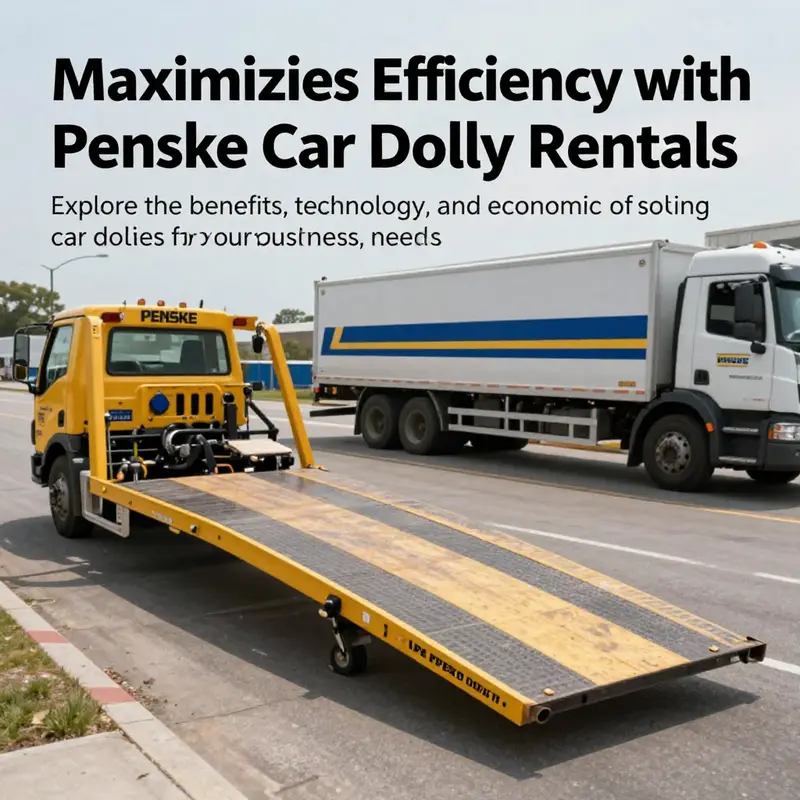
As businesses lean increasingly towards efficient transportation solutions, understanding the specifics of rental options like the Penske car dolly becomes essential. This versatile tool not only simplifies the moving process but also provides critical support for various business operations. From exploring rental options and the technology behind these dollies to assessing their economic implications and societal impact, a well-rounded view of the Penske car dolly’s role in logistics is vital. Additionally, by comparing Penske car dollies with other brands, business owners can make informed decisions that align with their operational needs. Each chapter of this article delves deeper into these aspects, ensuring a holistic understanding of the Penske car dolly and its advantages.
Vehicle Hauling Without the Hassle: Decoding Rental Options for Safe, Efficient Transport
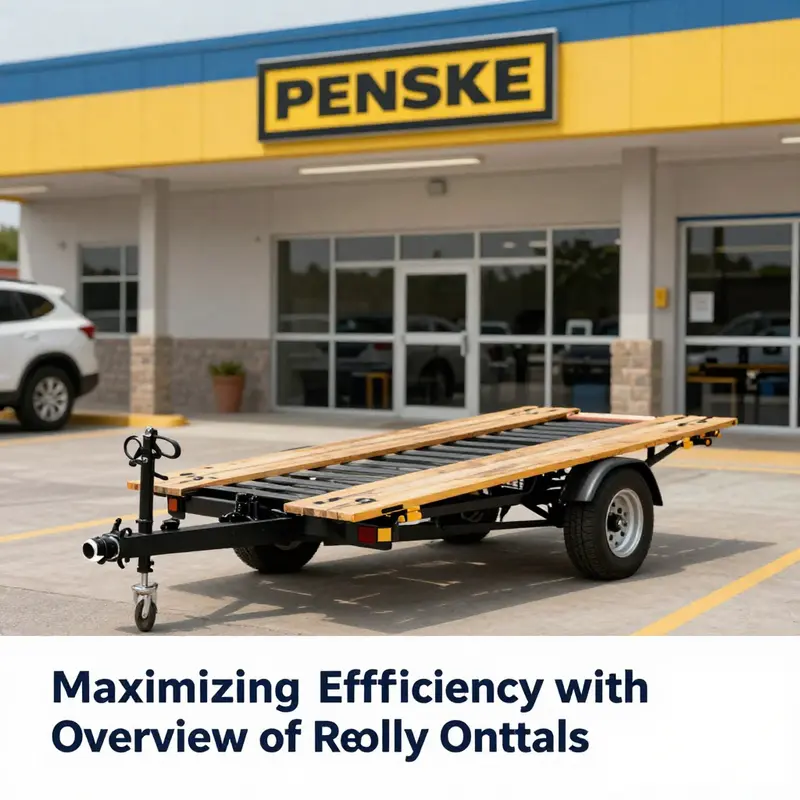
Move day often kicks up a cloud of questions about gear, capacity, and liability. When the goal is to move a car as part of a larger relocation or a sale, many people reach first for the most visible resource—a well-known national rental brand that moves boxes and furniture. The idea that this same fleet might serve as a one-stop solution for vehicle transport is appealing, but the reality is more nuanced. The equipment that makes a house move smooth—box trucks, utility vans, and step vans—does not automatically translate into a vehicle-hauling solution. In fact, the standard inventory rarely includes specialized apparatus like a tow dolly or car carrier. What you typically find are loading ramps, tie-down straps, and other loading accessories intended to secure items within the cargo area, not to facilitate highway-worthy vehicle transport. The result is a common misperception that a big rental truck can double as a trailer for moving a car. It cannot, at least not in the sense most people intend when they talk about vehicle transport. The distinction matters, because it shapes what you should plan for, whom you should consult, and how you should budget for the job.
To understand where rental fleets fit into vehicle transport, it helps to picture the typical rental lineup. A major provider’s catalog is built around the needs of households moving their belongings, businesses relocating equipment, and contractors transporting supplies. The core vehicles—box trucks designed to cradle furniture, utility trucks built for cargo and tools, and step vans optimized for access and payload—are chosen for their space, maneuverability, and ease of loading and unloading. These are not designed to serve as tow platforms or to carry a towed vehicle over long distances. The loading ramps that accompany some rentals are intended for loading furniture, appliances, and boxes, not for aligning a second vehicle with appropriate weight distribution and braking dynamics behind a moving truck. Because the primary use case is moving, the idea of adding a dolly or trailer is rarely embedded in the catalog.
This gap between expectation and inventory becomes critical when the goal is to transport a car. A vehicle, even if compact, has unique weight distribution, tire wear considerations, and sway dynamics that require dedicated equipment and careful planning. The front wheels of a car placed on a dolly, the coupling to a tow hitch, the balance of the towed load, and the braking and steering interfaces all create a separate safety envelope from moving a couch or a bookshelf. In practice, most rental fleets anticipate such needs through partnerships with specialized auto transport providers or through offers that are clearly labeled as towing-related equipment rather than generic moving gear. The upshot for a consumer is simple: if your objective is vehicle transport, do not assume a standard rental truck will double as a car-hauling solution without additional equipment, licensing, and liability considerations.
One practical path is to use a larger, capable truck from a rental provider and pair it with professional auto transport services. In this scenario, the truck serves as the power unit for the operation, while the transport service administers the trailer, the dolly or carrier, and the specialized tie-downs necessary to secure the vehicle in a highway-legal, insurance-compliant way. The advantage is clarity. You benefit from the reliability and nationwide support of a reputable rental company for the towing and logistics framework while relying on a company that specializes in vehicle transport for the vehicle itself. The cost is commensurate with the complexity of the job, but the peace of mind is meaningful, especially when timelines are tight or the car in question has sentimental or financial value.
If you choose to pursue vehicle transport through a rental company that does not directly list towing dollies or car carriers, the best course is to request a consultation with a rental associate who can outline compliant options. They may recommend an arrangement that includes a high-capacity tow hitch installed on a suitable vehicle, a tow dolly or car trailer from a trusted partner, and the right set of securement tools—wheel nets, axles, chains, and load-rated straps. It is essential to verify the capacity ratings, the warranty coverage, and the insurance terms for any equipment you plan to use. A well-informed conversation can help you avoid common pitfalls, such as underestimating gross vehicle weight, overlooking the need for brake and lighting hookups on the trailer, or assuming the rental agreement covers vehicle transport across state lines.
Beyond the mechanics of equipment, the planning phase is where most journeys diverge. Start by clarifying the distance, the vehicle’s current condition, and the route. If the car is operable, mounting it on a tow dolly behind a properly equipped truck is a feasible option for shorter, intra-regional moves. The process begins with a thorough inspection: tire condition, brake function, and steering ease. You should also confirm that the vehicle’s transmission is suitable for being towed, as some automatics require special adapters or driveshaft disconnects to prevent transmission damage. If the vehicle has sensitive systems—electronic parking brakes, advanced stability control, or all-wheel-drive traction—consultation with a professional transport provider becomes even more important. They can advise whether the car can be towed safely and within the mitigation strategies that reduce the risk of road hazards or mechanical failure.
Another layer to consider is the approach to securing the load. Proper tie-downs are non-negotiable. The dolly or trailer must be attached to a hitch that matches the weight of both the vehicle and the equipment, and the connection must be tested for play and security before departure. The car itself must be immobilized in a way that prevents wheel spin, steering movement, or suspension shift during transit. Tie-down straps must be rated for the load and placed at strategic points on the car’s chassis or axles. Wheel nets can help with wheel immobilization on a dolly, but they are only as effective as the installation. The chain of safety includes brake lights and turn signals that function correctly, ensuring other motorists can anticipate the towed vehicle’s movements. This is where the partnership with a transport professional becomes invaluable—they bring a disciplined checklist approach, route planning that accommodates tight bends or weight restrictions on bridges, and a liability framework that aligns with the realities of highway travel.
Insurance considerations are not merely formalities; they influence how you structure the move and what you purchase in terms of protection. When a vehicle is involved, many standard rental liability terms do not extend to damage incurred by the towed car or to the dolly itself. In practice, you may be asked to obtain a rider or a separate policy specifically designed for towing and vehicle transport. Working through this with a rental agent or a transport specialist helps you avoid gaps in coverage that could otherwise lead to disputes after the fact. Insurance clarity also shapes your decision on whether to use a rental car hauler service or to rent space on a purpose-built auto transport trailer. The goal is to align risk with the right level of expertise, ensuring that both the car and the equipment are protected throughout the journey.
From a budgeting perspective, the choice between using a rental truck with a separate towing solution and hiring a full-service auto transport provider hinges on a few variables: distance, vehicle value, time constraints, and the traveler’s comfort with handling complex equipment. A rental truck plus a tow dolly scenario can be cost-effective for a local move or a short cross-border transfer, especially when you already have access to a ramp and basic straps. The trade-off is the level of involvement and risk you assume. A dedicated auto transport service tends to be more expensive upfront, but it offers a turnkey solution with trained personnel, a route plan, and a higher degree of predictability. For a vehicle with limited accessibility or exceptionally tight deadlines, investing in a professional transport plan can translate into fewer headaches and faster delivery.
The guidance that emerges from this landscape is practical and boundaries-aware. If your objective is strictly to move household items, a standard rental truck will typically suffice, with accessories like loading ramps and tie-downs helping you secure boxes, appliances, and furniture. If your aim includes transporting a vehicle, you should treat the task as a separate transport project. Engage an auto transport partner or seek a rental option that explicitly supports vehicle transport with the appropriate trailer or dolly, plus insurance and a clear liability framework. Relying on ambiguous gear or hoping that a generic rental truck can handle a car on the back is not a risk worth taking. In other words, the right choice is to acknowledge the limits of standard moving fleets and plan for a solution that matches the complexity of vehicle transport.
As the day unfolds and plans crystallize, the most valuable takeaway is this: vehicle transport is a specialized operation that benefits from specialist equipment, proper partnerships, and a careful assessment of weight, route, and liability. It is not a one-size-fits-all task that any large rental fleet can support without additional hardware, permissions, or expertise. By approaching the move with a clear understanding of what is and isn’t included in standard inventories, you can prevent misaligned expectations and unlock a smoother, safer transport experience. The narrative around a brand’s rental catalog may be straightforward for boxes and furniture, but when a car enters the equation, the decision tree becomes a map of options, each with its own set of requirements. In the end, the path that preserves the vehicle’s integrity, protects you from financial risk, and respects the integrity of the road is the path that aligns with professional transport practices and thoughtful planning.
For readers seeking blunt, actionable next steps, start with a precise inventory of your vehicle’s weight, wheelbase, and overall condition. Consult a transportation professional about the feasibility of a tow dolly or car trailer behind a suitable truck, and ask about insurance coverage and required licenses. If you proceed with a rental provider, request a formal plan that includes the hitch rating, the trailer or dolly specifications, the securement strategy, and the end-to-end cost. With clarity on these points, you can choose a transport solution that fits your timing, budget, and risk tolerance—turning a potentially complicated move into a well-orchestrated operation that keeps your vehicle safe from origin to destination.
The Technology Behind Modern Car Dolly Rentals: From IoT Sensors to Predictive Maintenance
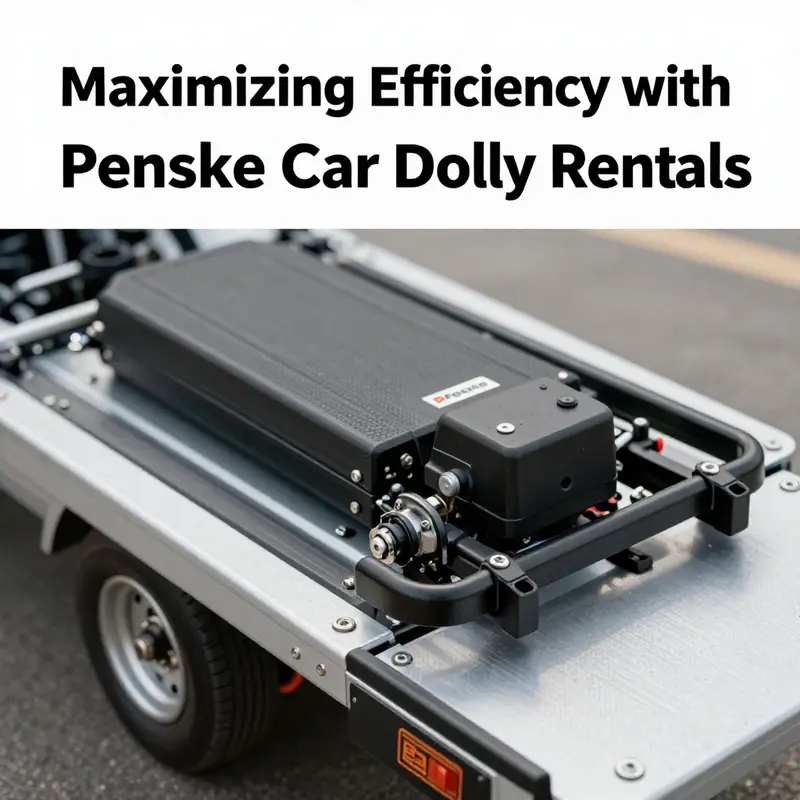
Car dolly rentals sit at the intersection of heavy equipment logistics and the practical demands of everyday moving. In fleets that move cars for dealerships, auto auctions, or consumer relocations, the equipment must be reliable, easy to deploy, and capable of collecting data that improves uptime. The technology behind these rentals isn’t just about the dolly’s mechanical strength; it encompasses how the asset is tracked, maintained, and dispatched within a broader network. While public information about a single operator’s dolly hardware isn’t widespread, the broader trajectory of fleet technology offers a clear picture: robotics-assisted handling, data-driven maintenance, and connected devices are shaping how customers access, reserve, and use these tools. The result is a rental experience that is faster to book, safer to operate, and easier to trust when time is of the essence.
Robotics and automation shift workflows in rental yards. When a customer arrives to pick up a dolly, automated docking guides the unit to the correct loading bay; robotic interfaces assist with securing the hitch, aligning the axle, and verifying wheel chocks and safety features. In the background, automation coordinates check-out, updates the booking system, and triggers a maintenance alert if a unit has rolled many miles since its last service. This reduces human error and speeds the handoff from reservation to vehicle. This streamlined flow reduces the time between booking and gear in use, a critical factor during peak moving seasons.
Predictive analytics sits at the heart of maintenance and availability. A dolly is not a single part; it is a system of axles, suspension, hydraulic brakes, and the frame that wear differently with weather and mileage. By aggregating usage data across thousands of units, operators forecast when bearings might seize, brakes may leak, or tires need tread. These insights drive proactive maintenance rather than reactive repairs. The result is higher uptime for customers and lower ownership costs for the operator. In practice, predictive maintenance also helps balance dolly availability across locations, preventing a surge in demand at one site from creating delays elsewhere.
IoT sensors embedded in the dolly provide the lifeline that connects the asset to the operations center. Telematics collect real-time data on load distribution, hydraulic pressure, brake engagement, and hitch alignment. That data feeds dashboards where dispatchers and technicians monitor status. When a panel shows abnormal torque or a temperature spike, alerts trigger maintenance before it returns to service. For customers, this means greater transparency: where the dolly is, its status, and when it will be ready. Data also supports safety by documenting securement practices and helping ensure compliance, while audit trails reduce disputes after moves. That transparency also helps teams plan resources more efficiently.
Artificial intelligence extends the utility of IoT data. AI models detect patterns that human analysts miss, such as correlations between ambient temperature and hydraulic viscosity or road profiles and tire wear. These insights inform route planning, staffing, and equipment sequencing. An AI system might propose the best pool of dollies to reserve, balancing proximity, type, and health scores, or simulate maintenance scenarios to decide whether to pull a unit now or wait for scheduled downtime. The goal is an experience where customers feel the service is anticipatory, not reactive, with precise ETAs rather than vague promises.
Looking ahead, some observers connect these trends to broader automation in logistics, including autonomous vehicle concepts and drone-enabled inspections. Fully driverless operations in this space remain aspirational, but the direction is clear: automation expands from the gate to the back end, guiding decisions and reducing manual touchpoints. For dollies, this could mean automated pre- and post-trip inspections using cameras and sensors, remote diagnostic checks, and remote-guided assistance for customers unfamiliar with hitching. The path isn’t about replacing workers but augmenting their capabilities: more accurate checklists, faster turnarounds, and safer handling. In the near term, expect better digital interfaces, enhanced telematics, and smarter maintenance calendars to prevent breakdowns during peak moving seasons.
Safety and compliance underpin all this. Heavy equipment on public roads requires documentation, proper securement, and adherence to transport rules. The sensors and analytics layers must operate within privacy and security boundaries, protecting customer data while keeping the service efficient. Data governance becomes tangible: who accesses load data, how long it is stored, and how it informs allocation decisions. Operators learn to design interfaces that reduce cognitive load for staff and customers alike. Clear visibility into dolly status, intuitive controls, and readable maintenance histories contribute to trust when customers rely on rented equipment for critical moves.
From a systems perspective, integrating dolly technology with the broader fleet management ecosystem matters as much as the hardware. Reservation platforms, kiosks, telematics dashboards, and maintenance systems must talk to one another through well-defined interfaces. When a customer books a dolly, the system should automatically reserve the best asset, alert the yard crew, and feed data back into maintenance schedules so the unit’s lifecycle is optimized across its service life. The result is a seamless flow: a simple booking, a precise handoff, and an asset arriving with a transparent readiness story behind it. This integration eliminates silos, ensuring a single source of truth for where assets are and when they are due for service.
To bring these ideas into a practical frame, consider how a customer could use a modern rental network to move a car with confidence. The user would interact with a clean digital interface that shows real-time inventory, confirms the dolly’s health, and schedules delivery and pickup with exact windows. It would include instructional content about secure loading and safe strap use, with warnings that appear as the checkout progresses. The underlying data would empower customer support with instant visibility into the equipment’s condition and location, reducing back-and-forth. In such a system, technology provides more than endurance; it offers clarity and reliability. If a customer encounters any hiccup, live chat or remote video guidance can walk them through the hitching sequence step by step, reducing misalignment risk. The interface can also display a quick loading checklist, flag wrong components, and provide safety reminders tailored to the vehicle size.
For readers who want to see a concrete expression of current rental offerings that include tow dollies, the practical example can be explored through one of the industry’s established rental networks: Penske Truck Rental Tow Dolly. This link illustrates how a major fleet operator integrates equipment-access design with a robust digital experience, bridging the hardware and the customer journey. Even if you are not in the market today, understanding the mechanical constraints, data signals, and service workflows helps explain why a trailer accessory now sits at the center of a broader digital transformation in vehicle logistics.
Beyond the operational details, the technology behind these rentals has broader significance for how we think about moving cars. A dolly is not merely a piece of hardware; it is a platform for data exchange, a node in a distributed network spanning yards, maintenance bays, customer sites, and highways. Each rental becomes an instance of a larger system that learns over time: which units return with issues, which regions experience peak demand, and which loading configurations yield better safety outcomes. The story is about resilience and trust. When you reserve a dolly with confidence, you experience the intersection of mechanical engineering and information systems that make modern logistics work in real time. The more these systems communicate, the more predictability, safety, and speed you can expect from your next move. For a broader view of how such technology initiatives unfold in fleet operations, see https://www.penske.com/technology.
Moving the Numbers: The Economic Case for Penske Car Dollies in Vehicle Transport
When a vehicle travels from one address to another, the tools and decisions chosen to move it shape the bottom line as surely as the distance itself. The economics of using a car dolly rented from a major provider center on three core ideas: cost efficiency, time savings, and the reduction of risk that can translate into avoided expenses. In practical terms, a Penske car dolly—used properly and under the right circumstances—can offer a flexible, low-commitment option for transporting a single car, a fleet vehicle, or a batch of deliveries without the upfront capital of owning a dedicated trailer. The rental model, at its core, aligns fixed costs with actual use. Rather than tying cash to equipment that sits idle much of the year, a user pays for the exact window in which the dolly is needed. This simple alignment has ripple effects across planning, cash flow, and capacity management that reach far beyond the driveway or the roadside stop.\n\nTo understand the economic appeal, it helps to unpack the main cost components. First, there is the rental rate itself. Rates vary by location, duration, and equipment type, but the central virtue of a rental in this context is predictability. You know when the dolly is needed and you know when it will be returned. The absence of long-term debt or depreciation means you do not bear the annualized capital costs that come with ownership. For small businesses and one-time moves, this can be a decisive factor. The model also reduces the risk of tied-up capital, enabling operations to respond more nimbly to changing demand. Second, there are operating costs that accompany the use of any tow-dolly solution. Fuel for the tow vehicle, wear and tear on the engine and brakes, tires, and potential insurance implications all accrue with usage. When the rental agreement includes insurance or when coverage is already bundled with other business policies, this can dampen the incremental expense of vehicle transport. If insurance is not included, it becomes a critical line item to estimate, especially for fleets that move multiple vehicles in a quarter. Finally, maintenance costs, while largely borne by the rental company, can still surface as indirect expenses in the form of downtime, service calls, or rescheduling. A well-maintained, modern dolly reduces the chance of on-road breakdowns, which translates into savings in labor hours and the costs associated with missed windows and late deliveries.\n\nThe value proposition becomes more compelling when one considers time as a monetary variable. Renting a dolly with tight turnaround windows can unlock the ability to complete more moves in a single day or week. This is especially true when transporting vehicles long distances or delivering cars to new owners across state lines. In those scenarios, the cost of hiring a professional towing service for each move, plus the added scheduling friction, can quickly exceed the rental price of a dolly and the time saved by having direct control over the timeline. In effect, the rental model acts like a project-management tool for logistics: it converts uncertainty about equipment availability into a measurable, controllable factor in throughput. The ability to set pick-up and drop-off times without coordinating with third-party haulers pays dividends in reliability and predictability, which in turn reduces the intangible but real cost of delays—hours or even days that might have to be allocated to re-planned routes, rebooked carriers, or customer coordination.\n\nOf course, the economic calculation must also account for the legitimate possibility of user error. A dolly is not a universal solution for every vehicle-transport challenge. Improper loading, inadequate weight distribution, or insufficient tie-downs can cause damage to the vehicle or the dolly itself, leading to repair costs, additional downtime, and potential liability. These risks, while real, can be mitigated through proper training, standard operating procedures, and the attention to pre-move inspections that any prudent transport operation should practice. The Penske rental ecosystem—like most reputable providers—emphasizes accessibility to well-maintained equipment, which dampens the risk of mechanical failure that would otherwise impose unplanned expenses. In this sense, the economic argument for car dollies also hinges on risk management. A dependable, clean, well-maintained dolly reduces the probability of a mid-move setback that can derail an entire schedule and inflates costs through idle labor and missed deadlines.\n\nThe business case gains additional depth when you scale beyond a single move. For a company that moves vehicles as part of a fleet operation, a car dolly can become a lever for operational efficiency. A fleet manager might deploy the dolly to reallocate vehicles during busy periods, perform local transfers between facilities, or complete last-mile handoffs that a larger trailer would complicate due to lane restrictions or maneuvering space. In such environments, the rental approach makes sense not only because it lowers upfront investment but also because it supports flexible capacity planning. The ability to scale up or down quickly, without the burden of ownership, aligns closely with the realities of seasonal demand and project-based work. When a business anticipates peaks in volume, it can rent additional dollies for the peak window and revert to baseline usage afterward. Conversely, if demand drops, the company can reduce its asset exposure immediately, maintaining cash flow while avoiding long-term underutilized assets.\n\nTo translate these qualitative benefits into a decision framework, many operators adopt a simple ROI lens. Start with the baseline: the cost of hiring a professional towing service for comparable moves, plus the labor and time costs associated with coordinating those services. Subtract the incremental rental cost of the dolly for the same window, and add in any savings from reducing schedule friction or avoiding labor bottlenecks. The result is a rough but tangible indicator of financial efficiency. Then layer in risk reduction: what is the expected cost of a damaged vehicle or a delayed delivery if the move is performed with less reliable equipment or with a less experienced operator? In many scenarios, the difference in risk-adjusted cost can be substantial, tipping the balance in favor of rental dollies even when sticker-price comparisons appear close on the surface. The key is transparency about all cost elements, from fuel and insurance to potential wear and tear and training needs. In this light, the Penske car dolly becomes not merely a tool but a strategic asset that aligns operational agility with disciplined financial planning.\n\nOperational discipline enhances the economics further. A well-structured protocol for loading and unloading, weight distribution, and routine checks can dramatically cut the chance of damage and delay. It is here that internal practices matter as much as the equipment itself. The user gains by building a standard operating rhythm around pre-move inspections, secure attachment of the towed vehicle, and post-move validation. Such discipline promotes smoother handoffs, reduces the incidence of failed deliveries, and supports tighter scheduling windows. When a company treats the dolly as a critical asset rather than a disposable convenience, it tends to retain better control over total costs and service levels. This kind of disciplined usage also makes it easier to compare the economics across different transport scenarios, whether moving a single car between residences or coordinating the transfer of multiple vehicles across a small regional network.\n\nFor individuals contemplating a one-off move, the math favors rental dollies for many scenarios. The upfront capital outlay of purchasing a dedicated tow dolly, or even a compact trailer, can be prohibitive for a single-use event. By contrast, renting for the exact period needed, while accounting for fuel and any necessary insurance, can deliver a predictable, contained expense. The flexibility to extend or shorten rental periods to fit a shifting timetable is a practical advantage when life events are inherently uncertain. The rent-versus-own calculation thus leans toward rental in many cases, particularly when the objective is to minimize idle capital and maximize schedule reliability rather than to acquire a long-term asset. The economic story is not about eliminating all costs; it is about choosing a delivery model that matches the scale and tempo of the task, while keeping risk, downtime, and capital commitment in check.\n\nFor those seeking more granular guidance on how to approach the decision, a concise reference exists that outlines practical considerations and operational tips for tow-dolly usage. For a detailed overview, see penske-truck-rental-tow-dolly.\n\nBeyond the numbers, the broader context matters. The idea of renting a car dolly fits within a shifting landscape of asset-light operations where flexibility and speed often outrun ownership narratives. In an era where transportation needs can swing quickly—from a sudden household move to a fleet logistic shift—the ability to deploy a small, focused asset for a defined period is a meaningful competitive advantage. The Penske model, when applied judiciously, can translate to faster project cycles, fewer deadhead miles, and more predictable customer experiences. The end result is not simply a cheaper move; it is a smarter allocation of time, money, and risk across the lifecycle of vehicle transport.\n\nAs with any tool, the key is context. A car dolly can be a powerful means to achieve cost efficiency and scheduling reliability, but it is not a universal solution. A careful assessment of the specific transport need, the distance involved, the number of vehicles, and the quality of the towing platform all feed into the final verdict. When used with proper training and disciplined operations, a Penske car dolly offers a compelling economic proposition for both individuals and businesses seeking to optimize their vehicle transport activities without committing to ownership or paying for premium service levels that may not align with every use case. External considerations, such as local regulations and insurance arrangements, should be incorporated into the planning model to prevent hidden costs from eroding the anticipated savings.\n\nExternal resource on the broader provider ecosystem can offer additional context about how the rental model compares with other options and how to structure charges and coverage. For a broader look at official service options and equipment details, you can visit the Penske Truck Rental information page: https://www.pensketruckrental.com
From Car Dollies to Community Roads: How Vehicle Dolly Usage Shapes Moving, Safety, and Sustainability
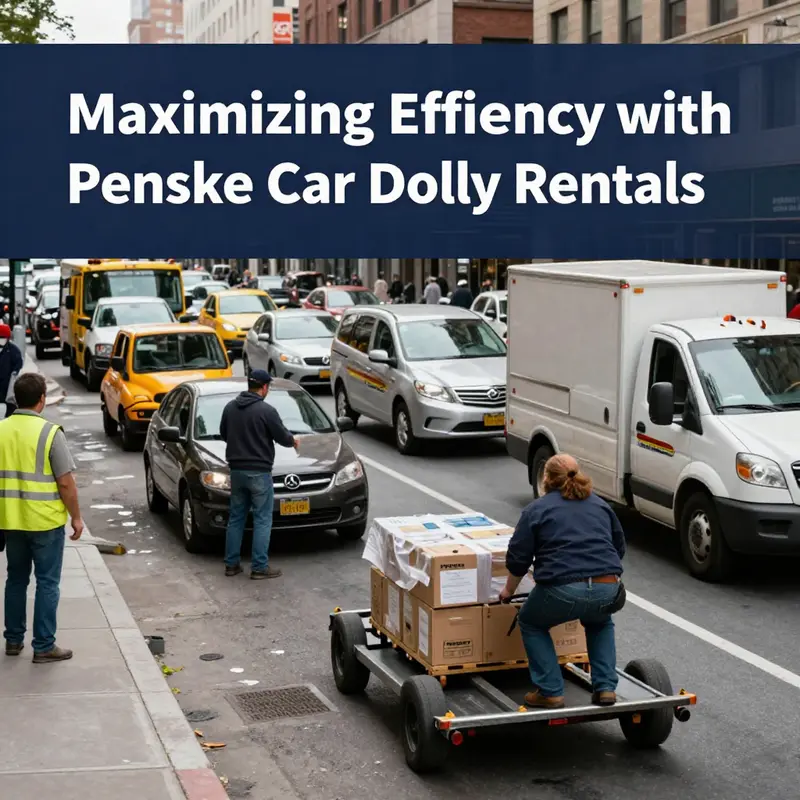
A car dolly operates as a quiet enabler within the moving economy. It is a compact, purpose-built platform that attaches a second vehicle to the front vehicle for transport along public roads. The idea is simple, but its practical consequences ripple through safety standards, service quality, and the health of urban life. In many relocations, dollies are integrated into workflows to move classic cars, high-value autos, or vehicles that require careful handling. Unlike larger towing rigs that haul vehicles behind a truck, a properly used dolly distributes weight on a stable cradle and allows controlled articulation. This is not merely a technical detail; it shapes how moving professionals schedule routes, allocate labor, and communicate with clients. When readers consider the broader picture, the dolly becomes a small device with outsized effects on reliability and public welfare.
Safety sits at the core of its appeal. A dolly provides a defined platform with tiedown points, wheel chocks, and secure load restraints that keep a vehicle tracking true behind the primary carrier. When operated by trained crews, it minimizes sudden braking, swerving, or tire heat that can occur with improvised towing arrangements. Because the towed car sits in a dedicated cradle, the probability of contact between frames, trim, or undercarriage components decreases. The result is fewer roadside incidents and fewer insurance claims. For communities, more stable moves translate into safer lanes, fewer surprises for other drivers, and less demand on emergency services that would otherwise be diverted from essential needs. This safety halo is subtle but potent, quietly elevating the standard of daily life on crowded roads.
Efficiency follows safety in a way that reframes the moving experience. A dolly can streamline relocations because a single crew can manage setup and breakdown with predictable, repeatable steps. It also enables the transport of a second vehicle without requiring a larger towing rig or a second operator, which can complicate routing and scheduling. In practical terms, that means fewer separate moves, shorter job durations, and more precise service windows for customers. The time saved translates into lower labor costs and the opportunity to handle more relocations with the same fleet. In markets with pronounced seasonal peaks, this flexibility strengthens the viability of smaller moving outfits and enables individuals to settle into new homes with less disruption. Readers who run lean operations will recognize how such efficiency translates into reliability and trust, the intangible currency that underpins repeat business.
The economic ripples extend beyond直接 the bottom line of individual moves. Reducing damage to vehicles and the resulting insurance friction can lower premiums over time for fleets and service providers. This cascade of savings—fewer claims, lower maintenance costs, and higher utilization of equipment—contributes to the overall affordability of professional moving services. A well-maintained dolly system requires ongoing upkeep—rollers, pins, and locking mechanisms demand periodic checks to prevent sudden failures. The investment in maintenance, in turn, strengthens the reliability of the moving ecosystem, enabling customers to plan more confidently and providers to allocate resources more efficiently. As the service becomes more professional, a broader network of drivers, technicians, schedulers, and coordinators grows, knitting together a local economy that relies on smooth, predictable vehicle movements.
From a sustainability standpoint, environmental benefits are meaningful even if incremental. Shorter, well-planned moves powered by lighter towing configurations can reduce fuel consumption and related emissions. When a second vehicle travels on a dolly behind a smaller carrier rather than being hauled on a heavier trailer, energy demand declines. In congested urban zones, this translates into less time spent idling and lower emissions for residents. While a single relocation may not shift the needle, multiplying this effect across thousands of moves creates a visible positive impact on air quality and climate goals. For city planners and operators alike, dollies represent one practical lever within the broader pursuit of cleaner, more efficient urban mobility, where the goal is to minimize environmental footprint without sacrificing service quality.
Socially, the adoption of car dolly practices builds trust with customers and communities. Clients experience smoother handoffs, clearer timelines, and reduced anxiety about vehicle damage—especially when the vehicle in question carries sentimental or monetary value. This reliability radiates outward, signaling professionalism and a commitment to best practices. Neighbors observe more predictable traffic during relocation windows, fewer surprises on narrow streets, and less disruption to daily life. The reputational effects extend into neighborhoods, where residents benefit from calmer streets and a more reliable flow of commerce during busy relocation periods. The social contract of moving improves when equipment is used with discipline and crews are well trained, reinforcing the sense that logistics can be both efficient and considerate of public space.
Despite these advantages, the realization of benefits rests on disciplined practice. Training, standardization, and routine maintenance are the invisible engines that keep dollies functioning safely. The technology is straightforward, but execution matters. Improper use—such as under-tying, neglecting wheel chocks, or ignoring load-capacity limits—can degrade safety and invite component wear. The lesson is practical rather than prestigious: pre-trip inspections, correct hitch alignment, and secure load straps matter. For communities, the difference between a calm relocation and a sudden roadside incident is often the result of these small decisions. Operators who invest in certification and ongoing refreshers contribute to a safer streetscape, where reliable equipment reduces accident rates and supports smoother daily life for all road users.
For readers planning a move that involves vehicle transport, a few practical considerations help bridge concept and execution. First, assess compatibility: not every dolly system suits every vehicle. Weight distribution, wheelbase, and hitch configuration must align with the relocation plan. Second, plan routes with spatial constraints in mind; the added length behind the primary carrier requires extra clearance in garages, driveways, and parking areas. Third, budget for maintenance: a modest upfront investment in quality tie-downs and wheel chocks pays dividends in reduced risk. Fourth, schedule time for hands-on training for all crew members involved in the move. A prepared team can anticipate bottlenecks, coordinate with clients, and adapt to unexpected situations with calm efficiency. For practitioners seeking a concise operational primer, see tow-dolly rental guidance. This resource distills practical tips into actionable steps that sit alongside the broader discussion of safer transport.
The broader arc of transportation and logistics suggests that the car dolly, modest in appearance, is part of a larger system that values safety, predictability, and responsible stewardship of public space. As cities grow denser and relocations climb in number, the role of compact, stable transport equipment becomes more important. It supports a service sector that aims to deliver vehicles intact, on time, and with minimal ecological footprint. The social story extends beyond owners and movers to neighbors, pedestrians, and local businesses that depend on efficient movement for daily operations. When a move proceeds smoothly, the entire community reaps benefits: less noise during peak hours, fewer roadblocks to commerce, and a shared sense that transportation can be reliable as well as practical. In that sense, the chapter on car dollies illuminates a truth about modern moving: small devices, used thoughtfully, can contribute to meaningful improvements in everyday life.
External resource: Environmental and social implications of incorporating carpooling service on a customized bus system. ScienceDirect. https://www.sciencedirect.com/science/article/pii/S235214652500078X
Tow Dolly Realities: Navigating the Car-Dolly Landscape in Vehicle Transport
Across the world of vehicle movement, a compact, wheel-based helper sits at the crossroads of practicality, safety, and logistics: the car dolly. It is a piece of equipment designed to carry a vehicle’s front wheels while the rear wheels roll along the road. Its purpose is straightforward, yet the implications of its use ripple through every phase of a move or transport—planning, loading, securing, and legal compliance. In public discussions, the term can blur with other related devices, such as heavier car carriers or flatbed trailers. Yet there is a clear distinction between a dolly that supports a front-wheel arrangement and other transport solutions. Understanding this difference matters not only for a one-off move but also for anyone who wants to engage a rental fleet with confidence, knowing that the equipment they obtain will perform as expected under real-world conditions. The literature and publicly available information note that car dollies, as a category, are widely used by moving services and auto transport professionals. What the public sources tend not to tie down is a single manufacturer or brand as the universal reference point. This ambiguity is not a failing of the industry but a reflection of a market that emphasizes compatibility, safety standards, and service quality over any one label. The broader context reveals that a major rental fleet—one that many households and small businesses rely on for short-term vehicle transport—offers online booking and roadside support as part of its service ecosystem. The practical consequences for a consumer are meaningful: when you rent a dolly, you are not just borrowing a metal frame with wheels. You are tapping into a system designed around modern logistics, where digital reservations, clear safety protocols, and rapid assistance converge. That convergence becomes especially important when one considers the technical demands of loading a vehicle onto a dolly and securing it for highway travel. The process requires a disciplined sequence of steps, a careful assessment of the towed car’s weight distribution, and a clear understanding of the dolly’s own limits. This is where the best practice emerges: move beyond a one-size-fits-all mindset and treat the dolly as a tool whose effectiveness rests on attention to detail, proper setup, and ongoing maintenance. For readers who want a deeper dive into tow-dolly options from a major rental fleet, this topic is explored in greater depth in a dedicated guide that discusses hitch compatibility, ramp access, and the range of tie-down configurations that different vehicles demand. To connect with that practical resource, you can explore the detailed discussion here: penske-truck-rental-tow-dolly. This reference underlines a central point: the devil is in the details, and those details begin with an honest assessment of needs and a careful reading of the equipment’s specifications before any rental agreement is signed. The absence of a singular, brand-specific blueprint in the public domain is not a sign of weakness; it is a signal that the core competencies in this area are universal: correct hitch selection, proper wheel anchoring, appropriate ramp geometry, and meticulous pre-use checks. With those pillars in place, the dolly becomes less a mysterious gadget and more a dependable instrument of transport. The design itself typically centers on a rigid frame, a robust hitch connection, and a series of wheel supports that cradle the towed vehicle’s front tires. The tongue weight—an oft-discussed parameter in vehicle-towing circles—must be considered in relation to the dolly’s capacity and the vehicle’s weight distribution. Tongue weight itself is a ratio: too light and the dolly can feel wandery at speed; too heavy and it can strain the hitch or affect steering dynamics in the towing vehicle. The right balance, typically a modest percentage of the towed vehicle’s mass, helps maintain stability, braking performance, and even fuel efficiency. These physics-informed considerations are not mere abstractions. They manifest when loading a car onto the dolly, aligning the front tires along the dolly’s wheel tracks, and securing the tires with appropriate straps or clamps. The process is aided by ramps that must be sufficiently long to reduce wheel-slip but compact enough to fit inside the overall transport footprint. The loading sequence begins with a clear staging area and a plan for the car’s approach angle. The driver guides the front wheels onto the dolly, gradually lowers the dolly’s ramps, and ensures that each wheel sits squarely in its cradle or on its track. As the wheels touch down, the operator begins to apply the tie-downs. These are not decorative; they are essential safety elements. Properly tensioned straps distribute clamping forces evenly around the wheel, restraining the tire’s lateral movement and protecting the wheel from side-to-side motion during transit. The tensioning process is as much about evenness as it is about strength. If one strap is significantly tighter than the others, it can create a wobble pattern that translates into an uncomfortable ride or, worse, a dangerous loss of control. In this sense, the dolly becomes a small classroom in physics: the way weight, friction, and restraint interact determines how smoothly the vehicle travels for the next leg of its journey. The operational reality is that many rental fleets, though brand-agnostic in the public sphere, provide a spectrum of options appropriate to a range of vehicles. The performance envelope of a dolly is defined by its maximum supported vehicle weight, the width of the wheel tracks, and the clearance beneath the vehicle’s undercarriage. Prospective renters must assess their own vehicle’s footprint against those specifications, ensuring that the dolly can accommodate not only the tire width but also the ground clearance and overall height. It is not unusual for a front-wheel-drive car to present a straightforward loading scenario, while a larger or taller vehicle might push the limits of ramp angle and tire clearance. In such cases, a careful read of the manufacturer’s guidelines, a pre-use inspection of all critical components, and, if needed, consultation with a rental agent, become indispensable. The interplay between safety and convenience is also reflected in the ancillary elements of the rental package. Many fleets offer accident and breakdown coverage, online checklists, and a remote assistance option should any difficulty arise on the road. Roadside support is not a luxury but a practical assurance that a user can count on when contingencies emerge. The literature on dolly use emphasizes routine maintenance as a cornerstone of reliability. Before each rental, inspect the dolly frame for any signs of bending or corrosion, check the ramp hinges for play, confirm that all fasteners are present and secure, and examine the wheel bearings for any unusual noise or resistance. Straps must be evaluated for fraying or sun-bleached webbing, and the vehicle should be parked on level ground with wheel chocks placed behind the still tires of the towed vehicle before loading begins. These steps may appear obvious, yet they are frequently neglected in the rush of time-sensitive moves. The consequence is not merely a mechanical failure but a potential safety risk for people on-site and other travelers on the highway. In practice, a dolly’s effectiveness is amplified when used as part of a broader transport strategy that accounts for the towed vehicle’s preparation, the towing vehicle’s capabilities, and the route’s geometry. A well-prepared car, when loaded properly, represents a balanced load that does not threaten the towing vehicle’s handling. The front wheels’ alignment with the dolly’s tracks, the securement of each tire, and the hitch connection all contribute to a cohesive system that behaves predictably on the road. The absence of a single industry standard branding in public discourse can actually be an advantage for users: it invites a consumer to focus on the fundamentals—what the equipment does, how it is used safely, and how it integrates with the broader moving plan. It also invites a more resilient approach: instead of chasing the latest model or brand badge, renters can prioritize fit-for-purpose equipment, clear safety protocols, and dependable support. As with many elements of logistics, the success of a dolly-based transport hinges on preparation, disciplined loading, methodical securing, and ongoing vigilance. The chapter’s exploration of the landscape reveals a practical truth: in the end, a car dolly is not a mysterious device but a portable, well-engineered solution for moving a vehicle when a full carrier would be excessive or impractical. The public materials underscore this reality by highlighting the equipment’s role within a complete rental ecosystem—one that combines online booking, roadside assistance, and service-level expectations that reflect real-world constraints. For readers who want to extend their understanding beyond the overview, trace the practical steps of selection, loading, and securing through the linked resource above, which anchors the conversation in a concrete example of how a major rental fleet discusses tow dolly options. The connective tissue between chapters in this article is the recurring emphasis on safety, clarity, and reliability. Whether you are planning a weekend move, coordinating a private transport, or supporting a small business that moves vehicles for clients, the car dolly can be an efficient and safe solution when used with care. It is a reminder that, in vehicle transport, the technology is only as good as the discipline with which it is applied. External reference: https://www.pensketruckrental.com
Final thoughts
In summary, utilizing a Penske car dolly rental can significantly elevate a business’s logistics operations by offering a flexible, efficient, and economically sound solution. From understanding what rental options are available to analyzing the dolly’s technological design, the information provided throughout this article equips business owners with the necessary insights to make informed decisions. The economic benefits, societal impacts, and brand comparisons all reinforce the versatility and importance of integrating the Penske car dolly into your transportation strategy. By taking these factors into account, businesses can not only optimize their moving processes but also integrate efficient solutions that benefit their bottom line.