
For business owners relying on transportation for logistics, understanding the gas mileage of Penske trucks is crucial for optimizing operational costs. Different truck sizes and types exhibit varying fuel efficiencies, significantly affecting budget management. This article delves into the fuel efficiency of Penske trucks, offering insights into the comparative analyses between gas and diesel options while also addressing the contributing factors influencing mileage. Each chapter aims to equip you with the knowledge necessary to make informed rental decisions that enhance your fleet performance and overall profitability.
Fuel-Efficient Miles on the Move: Understanding Real-World Gasoline and Diesel Mileage in Commercial Truck Rentals
When fleets, moving services, and one-way renters plan a relocation or a business delivery, fuel economy matters just as much as load capacity, reliability, and uptime. The miles-per-gallon metric, or mpg, becomes a practical compass for budgeting fuel, scheduling trips, and choosing the right truck for the job. In the world of rental and leasing fleets, where a mix of small vans and long-hood, bigger-box models share the road with diesel-driven heavy lifters, mpg is not a single number but a spectrum shaped by engine type, vehicle size, and how the vehicle is used in the real world. A careful look at the numbers reveals not only the expected ranges from different truck classes but also the many variables that turn an estimate into a useful, actionable plan for a fleet of moving operations and beyond.
At the light end of the spectrum, the smallest gasoline units used for moving and on-site deliveries are remarkably efficient in terms of their footprint and maneuverability, yet their mpg figures tell a story of scale and purpose. A typical 12-foot truck, often equipped with an automatic transmission for ease of use in mixed traffic and tight urban corridors, tends to deliver around 12 mpg under ordinary, real-world conditions. The tank capacity for these compact movers is usually about 35 gallons, a size that yields a practical range of about 420 miles per tank when the vehicle is operated close to its payload limits and balanced driving conditions. This combination of modest size, reasonable power, and a relatively tight turning radius makes the 12-foot class a practical choice for smaller moves, apartment-to-apartment relocations, or rapid delivery runs. Yet the true cost of fuel cannot be assessed in miles per gallon alone; it has to be integrated with the nature of the trip, the weight carried, and the route profile.
As fleets scale upward to handle larger jobs, the choice between gas and diesel, and among the various lengths and configurations, becomes more nuanced. A 16-foot utility truck with a larger footprint and a 33-gallon tank represents a distinctly different calculus. Its fuel efficiency tends to settle near 10 mpg, and the authorized range per tank—when the vehicle is loaded and operating under typical moving conditions—lands around 330 miles. The difference from the 12-foot class is not simply a matter of bigger tires or more horsepower; it reflects the physics of moving a larger mass and the aerodynamics of a more expansive cargo area. The heavier weight and longer wheelbase increase rolling resistance and change acceleration and braking dynamics, which in turn influences mpg in an everyday moving scenario. For operators, this means that while the 16-foot unit offers more cubic capacity and greater payload flexibility, it also imposes higher fuel costs per mile if the trip involves long distances with heavy loads.
Diesel-powered units, which generally occupy the 22- to 26-foot class, introduce a different trajectory for fuel economy. These larger trucks benefit from denser energy content in diesel fuel and more advanced engine technology tuned for long-haul and high-demand service. In practice, diesel configurations can exceed 500 miles per tank on typical routes, a range made possible by both better engine efficiency and the fuel’s higher energy density. The mpg for diesel models often surpasses that of their gasoline counterparts on similar frame sizes, especially on longer trips where sustained power and efficient turbocharging come into play. This is not simply a theoretical edge; it translates into meaningful cost savings and scheduling flexibility for fleets that must shuttle more goods over longer distances between depots, warehouses, and customer sites. The higher mpg of diesel units can offset the greater upfront cost and heavier maintenance profile often associated with these engines, but the balance depends on usage patterns, maintenance discipline, and fuel pricing.
Beyond the fuel type and the vehicle’s physical footprint, another layer of reality enters when fleets consider the data from 2026 on how the broader rental and leasing operations perform in the wild. A recent snapshot of the market shows that leased fleets managed by large truck leasing and rental operations achieve an average fuel economy of about 7.24 mpg. This figure suggests that within the managed fleet sphere, there is an emphasis on consistent, optimized driving practices, preventive maintenance, and route efficiency that collectively lift the average above older, less coordinated practice. In contrast, owner-operated fleets—where drivers may have broader autonomy in routing and fueling discipline—show an average closer to 6.84 mpg. The gap, while not enormous, underscores the value of structured fleet management: standardized maintenance cycles, controlled idle time, and data-driven trip planning can move the needle on miles per gallon over the long run.
What these numbers reveal is a picture of mpg as a moving target, not a fixed badge. The best-possible mpg is not a single rating but a product of how the vehicle is used, how well it is maintained, and how driving habits are shaped by the workday realities of moving and delivery operations. For a fleet operator, the practical takeaway is to align truck selection with the typical job profile. A fleet that handles many short urban moves and apartment-to-apartment transitions may find the 12-foot class and its roughly 420-mile range per tank to be the most cost-effective option, provided that trips are frequent but not unusually long. In contrast, a business that primarily conducts longer relocations, cross-town deliveries with heavy payloads, or warehouse-to-store runs may benefit from the larger 16- to 26-foot models and the diesel options that offer a longer range and more efficient fuel use on highway segments.
In this landscape, the fuel-efficiency story is also a story of dynamic optimization. It is essential to consider the average miles per gallon not as a universal truth but as a baseline that can be improved through disciplined practices. Even within the same truck class, mpg can vary by thousands of miles per month if a fleet implements a few focused strategies. Driver training that emphasizes smooth acceleration and steady-speed cruising, engine warm-up and cooldown routines appropriate for the climate, and the avoidance of unnecessary idling can yield meaningful gains. Load management plays a critical role as well. Uneven weight distribution can degrade handling, increase aerodynamic drag in subtle ways, and drive up fuel consumption. A cargo arrangement that minimizes wind resistance and keeps the center of gravity stable not only improves safety but also helps preserve mpg over the course of a shift.
Route planning is another lever that fleets pull to optimize fuel use. Modern routing tools that factor in traffic patterns, elevation changes, and the shortest viable paths often reduce idle time and avoid congested corridors that punish fuel economy with stop-and-go conditions. Even with a fixed vehicle, planning can cut fuel use by reducing the time spent in slow-moving traffic and by prioritizing routes with gentler grade changes. When a job requires a move with known elevations or a route with rolling terrain, the optimization problem becomes more about choosing the right truck for the job and the right trip timing rather than simply picking the largest vehicle at hand. The trade-off between payload capacity and fuel economy becomes a strategic calculation: a slightly smaller truck with a better mpg on the highway might outperform a heavier model on a mixed route if the trip includes long stretches of highway driving interspersed with brief city segments.
The broader fleet-management story reinforces that fuel economy is a lifeline for controlling operating costs and maintaining competitive pricing. The 2026 data, with its clear separation between leased and owner-operated mpg, points to a culture that values data-informed decisions. Fleet managers can leverage telematics to monitor fuel consumption in real time, flag anomalies such as excessive idling, and implement targeted interventions. For example, if mpg correlates with higher idle time during a particular shift or route, managers can adjust scheduling and ensure drivers have alternate workflows that minimize idle periods. Similarly, if certain routes consistently demand higher mpg losses due to terrain or road conditions, planners can reallocate loads or adjust the fleet mix to better match the profile of the job. This is not simply about chasing an abstraction of efficiency; it is about aligning the right vehicle with the right job and ensuring that maintenance keeps engines performing at peak efficiency.
The practical implications for a mover or small fleet operator, then, are clear. When selecting a truck, it is wise to go beyond the sticker mpg and consider range, payload, and the likelihood of back-to-back trips. A 12-foot unit provides excellent maneuverability and a solid perfomance envelope for tight urban moves, especially when fuel is tuned to a routine of efficient routing. A 16-foot model steps up in capacity and the range per tank, making it an attractive middle option for moderate-length moves or deliveries where payload flexibility matters. On longer routes or scenarios with heavier cargo, diesel-powered larger trucks deliver the mpg advantages of energy-dense fuel and robust engineering designed for sustained hauling. In all cases, the value of a well-managed fleet becomes apparent: routine maintenance, tire inflation checks, clean air filters, and engine care all contribute to sustaining mpg over time. The goal is not to maximize mpg in a vacuum but to maximize miles per gallon across a week or a month by coordinating vehicle choice, route planning, driver training, and maintenance discipline.
To move from theory into practice, operators have a few practical steps to consider. Start with a realistic assessment of typical trips: how often are the moves urban, suburban, or highway oriented? What is the average payload per trip, and how many refueling opportunities exist within a given workday? With these inputs, a planner can sketch a baseline mpg target for each truck class in the fleet and then track performance against that target. Even modest improvements in driving style or route efficiency can translate into meaningful reductions in fuel spend over a busy season. If data shows continuous underperformance in a particular class, reevaluate the mix: perhaps more trips could be assigned to a vehicle with better highway efficiency, or a route reconfiguration could reduce time spent in stop-and-go traffic. The end result is a more resilient operation that can adapt to changing demand while keeping fuel costs within predictable bounds.
For readers who want further technical detail or model-specific numbers, consult the official vehicle specifications page of the rental operator. While the general ranges discussed here reflect typical industry observations, the exact mpg for any given truck model depends on the engine, transmission, equipment, and the configuration of the cargo area. The official specifications guide offers model-by-model data, and local branches can provide the most current figures for available trucks. If you are curious about how a particular job might scale in fuel costs, a fleet manager can model several scenarios, comparing a compact gasoline unit against a larger diesel model, and weighing the fuel expense per mile against capacity and trip requirements. In other words, the decision is not purely about mpg; it is about achieving the best total cost of operation for the specific moving task at hand.
As you plan your next relocation or delivery, keep in mind that the numbers are best used as directional guidance rather than fixed rules. The mpg landscape is shaped by real-world choices—how a driver accelerates, how a load is staged, how fuel stops are scheduled, and how a vehicle is maintained. The biggest gains come from applying a disciplined, data-informed approach to every leg of a trip. The tiny daily adjustments—inspecting tire pressure before departure, keeping the cargo evenly distributed, planning refueling in low-price windows, and choosing routes that minimize unnecessary idling—add up quickly. In the end, the traveler who moves efficiently is not simply chasing a laboratory figure; they are constructing a path through miles that maximizes productively, minimizes downtime, and reduces fuel spend across an entire moving project.
For readers seeking a direct, quick-start connection to a broader library of practical moving truck resources, explore a guide that concentrates on the realities of smaller moving trucks. It offers a concise, field-ready overview of what to expect when selecting a 16-foot or smaller vehicle for moving tasks, with a focus on cost control, dispatch efficiency, and ease of use on busy streets. The guide is designed to complement the broader discussion of mpg by translating numbers into actionable decisions that improve real-world outcomes on both short hops and longer moves. See more at the linked resource: 16-moving-truck guide.
As you finalize the planning matrix for your next move or fleet deployment, remember that numbers are a starting point, not a verdict. The actual fuel economy you experience will depend on how well you pair the right truck with the job, how conscientiously you drive, and how effectively you manage maintenance and routing. The modern truck rental ecosystem provides the tools to measure, compare, and optimize. With the right data in hand, a moving operation can reduce fuel costs while preserving reliability and schedule integrity. The result is a smoother, more predictable operation that meets customer expectations and protects margins in a market where every mile—and every gallon—counts.
External resource: https://www.penske.com/vehicles
null
null
Miles, Tanks, and Fleet Strategy: Unraveling Penske Truck Gas Mileage at the Fleet Level
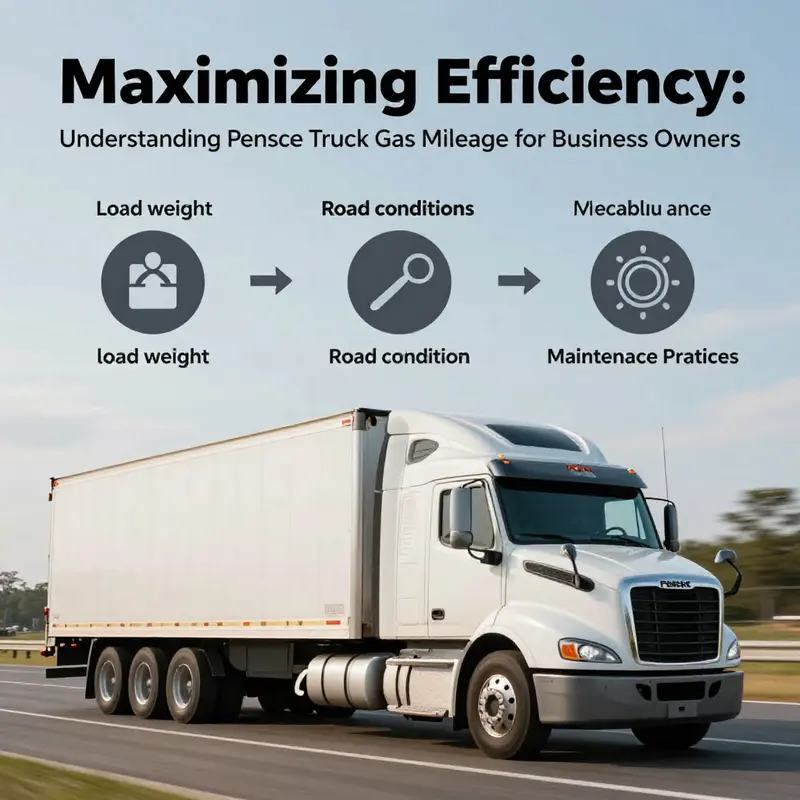
Fuel mileage is more than a single mpg figure; it is a living measure of how a fleet like Penske’s translates hardware, load, and daily logistics into miles per gallon and miles per tank. In practice, the gas-powered workhorse that moves households and businesses is a delicate balance between truck size, engine technology, and the way miles accumulate over the course of a typical shipment. Penske’s rental mix demonstrates this balance vividly. A 16-foot gas truck with a 33-gallon tank can cover roughly 330 miles when it is fully loaded, assuming an average fuel economy near 10 miles per gallon. In contrast, a smaller 12-foot Penske truck shows a different arithmetic: with a 35-gallon tank, it can travel about 420 miles, based on an estimated efficiency around 12 mpg. Those numbers are not just curiosities about the fuel tank and the odometer; they are the practical bedrock of how fleets plan routes, allocate assets, and price services. They also illuminate why diesel fleets—usually larger at 22 to 26 feet—tend to deliver higher range figures per fill, often exceeding 500 miles per tank due to both higher engine efficiency and larger tanks that extend operating windows before refueling.
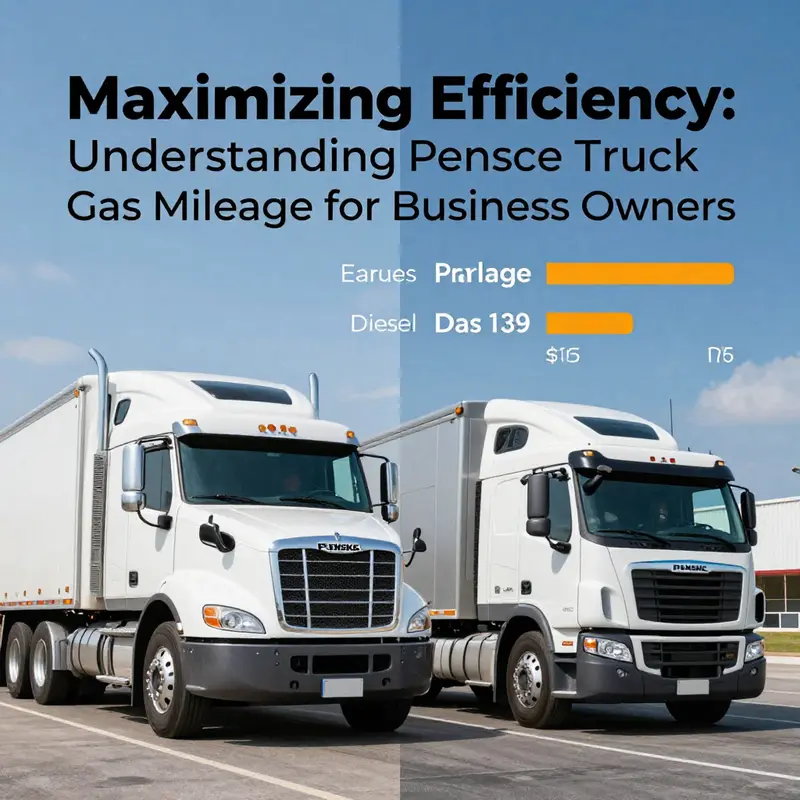
The divergence between gas and diesel, at a glance, looks straightforward: better fuel economy and larger tanks translate into longer ranges. But the story in practice runs deeper. Diesel engines, with their higher compression ratios and more efficient thermodynamics at highway speeds, typically sip fuel more slowly than their gasoline counterparts for the same power delivery. When you add the tank size into the equation, the difference becomes even more pronounced. A 22–26-foot diesel vehicle has the capability to travel well past the 500-mile mark on a single fill, a figure that translates into longer legs between fueling opportunities, fewer disruptive stops, and the potential for better utilization of time and network capacity. Fleet planners understand that this isn’t simply about the fuel price per gallon; it’s about the buffer the tank provides and the way that buffer aligns with customer delivery windows, driver hours, and maintenance cycles.
But to read Penske’s fuel picture accurately, one must consider the broader fleet context. Recent data from 2026 show leased Penske Truck Leasing fleets achieving an average fuel economy of 7.24 mpg, modestly higher than the 6.84 mpg seen in owner-operated fleets. These figures reflect more than the mechanical differences between engines; they reflect disciplined fleet management. Leased fleets tend to benefit from standardized maintenance schedules, more consistent tire pressures, and optimized routing that reduces unnecessary idling and detours. They also benefit from a shared knowledge base about when and where to refuel, how to schedule refueling during downtime, and how to manage payloads so that weight does not erode efficiency more than necessary. In short, excellent fuel economy on a Penske scale emerges not from a single best-in-class truck but from an integrated approach that treats mpg as a performance metric to be earned through process as well as powertrain.
To translate this into actionable understanding, consider the practical implications of the numbers. A 16-foot gas truck with a 33-gallon tank, delivering roughly 330 miles per tank when loaded, is a nimble mover well suited to tight urban relocations and small-to-medium moves. Its range is sufficient for a typical one- to two-day operation in a metropolitan corridor, where refueling opportunities are widely available and time pressures are high. A 12-foot gas truck, while smaller, demonstrates how efficiency scales with payload and tank capacity: about 420 miles per fill with a 35-gallon tank, highlighting how even small differences in tank size and load can yield meaningful range distinctions. The message here is not that one class is inherently superior; it is that each class has its optimal use case, and planners must align the truck choice with distance, density, and customer requirements. The reality is that the heavier, diesel‑equipped trucks—though fewer in some urban-rural mixes—step in when longer legs matter. For longer-haul tasks and operations that repeatedly cover the same regional corridors, the ability to stretch a single fill to more than 500 miles becomes a strategic advantage, reducing fuel stops, lowering downtime, and improving trip reliability.
The fleet-level murmurs, however, do not end with engine type and tank capacity. A broader lens reveals how supply and demand dynamics shape the mileage story. Freight rates, for instance, directly influence trucking capacity. When rates rise, new carriers may enter the market, boosting capacity and potentially affecting utilization and service levels. Conversely, in tight freight markets, fleets may optimize utilization to maintain margins, sometimes accepting longer vehicle cycles or tighter load factors. These dynamics inevitably ripple into fuel economy, because the way capacity is deployed, the length of hauls, and the frequency of trips per vehicle all influence cumulative miles per gallon and per-tank performance. Penske’s approach to fleet optimization—balancing capacity, routing efficiency, and maintenance—works as a natural amplifier of the inherent mpg advantages of diesel and the practical miles-per-tank benefits of larger tanks.
The discussion would be incomplete without acknowledging the alternative fuel conversation that Penske has highlighted in its broader operating playbook. The top five tips for companies considering natural gas point to a critical calculus: while natural gas vehicles may carry higher upfront costs or exhibit lower initial fuel economy compared with diesel, their long-term cost savings gain momentum with higher annual mileage. The math becomes clear when a fleet runs tens or hundreds of thousands of miles each year. In such cases, the cumulative fuel savings can offset the higher initial capital expenditures and provide a meaningful total cost of ownership advantage over the life of the asset. Fleet operators must, therefore, weigh their average driving distance, duty cycles, and maintenance expectations. If a typical week features long legs and high annual mileage, natural gas can offer favorable fuel-cost dynamics that narrow the gap with diesel and, in some scenarios, tilt the scale toward natural gas as the preferred long-term solution. What emerges is a pragmatic framework: engine choice, load, and duty cycle must be evaluated together, not in isolation, if a fleet is to extract the best possible fuel economy and reliability from its trucks.
In practice, those calibrated decisions ripple through maintenance culture and driver behavior as well. Penske’s ongoing internal storytelling about employee satisfaction and operational culture—while seemingly peripheral to mpg at first glance—shapes the everyday realities of fuel longevity. A fleet that invests in steady maintenance, timely tire rotations, and optimized alignment will see a more stable mpg profile than one where equipment wears unevenly or where drivers race to keep up with deadlines. The reported 3.3 out of 5-star rating for employee satisfaction is not merely a sentiment score; it hints at the human factors that touch every click of the odometer: how well vehicles are cared for, how consistently routes are planned, how effectively training translates into efficient driving practices, and how transparent communication about fuel strategies encourages drivers to adopt fuel-conserving habits. When maintenance quality and driver reliability align with well-chosen powertrains and payload strategies, fleet performance follows. In a Penske context, this means that the mpg figures are not only about engine cycles and tank capacities; they are about a culture that treats fuel economy as a shared objective rather than a fixed attribute of a single truck class.
One practical reflection from the fuel-range perspective is how fleets translate theoretical miles-per-tank into reliable daily operations. The range figures per tank establish a planning envelope, within which daily routes, loading schedules, and refueling stops must fit. A 330-mile per tank target for the smaller gas trucks can inform planners to cluster trips within a regional arc, ensuring that refueling opportunities align with breaks in the day and with the vehicle’s assigned routes. In longer regional runs or city-to-city moves with mixed payloads, the better range of the diesel 22–26-foot class translates into fewer refueling windows, higher job absorption rates, and a smoother schedule that reduces idle time during handoffs. This is not simply a mechanical advantage; it is an operational advantage that improves reliability, reduces dwell time, and ultimately supports a more predictable service level for customers.
The research results provide more than numeric benchmarks; they offer a narrative about how Penske’s fleet evolves with demand and with technology. The Guide’s emphasis on fuel range becomes a lens for the entire operations lifecycle—from how trucks are selected for a given move to how routes are optimized, how maintenance is scheduled, and how the fleet negotiates fuel pricing and availability. It is a reminder that mileage is a composite outcome: it reflects not only fuel efficiency, but the manner in which trucks are loaded, the road profile they traverse, the schedules they uphold, and the way fleets adapt to fluctuating freight markets. The 7.24 mpg average for leased fleets versus 6.84 mpg for owner-operator fleets emerges as much from meticulous maintenance and disciplined routing as from any single improvement in the powertrain taxonomy. In that sense, fuel economy becomes a performance metric akin to on-time delivery rates or customer satisfaction scores—an indicator that captures the health of logistics and the discipline of operations.
For readers who are curious about the hands-on side of this narrative, a practical anchor can be found in the world of real-world usage. The 16-foot moving truck, a unit frequently employed for compact relocations, embodies the flexibility and compact efficiency that many small moves require. A useful resource that offers a grounded, real-world look at this class can be found in the guide to the 16-foot moving truck, which provides accessible details about its payload, range, and daily applicability in move-heavy periods. This link serves as a bridge between high-level fleet economics and the on-the-ground realities that everyday customers experience when renting a truck for a local or regional move. 16-foot trucks serve as a reminder that even among small vehicles, the choice of engine, tank, and load discipline translates into tangible outcomes, and that fleets like Penske must optimize across a spectrum of sizes to meet a broad set of customer needs while maintaining favorable fuel economy profiles across the board.
From a strategic viewpoint, Penske’s mpg story is a case study in how scale and discipline intersect to drive efficiency. The numbers—from 330 miles per 33-gallon tank on the 16-foot gas truck to 420 miles per 35-gallon tank on the 12-foot unit and beyond 500 miles for larger diesel models—are not end points. They are reference anchors used to calibrate route design, maintenance schedules, and fuel procurement strategies. When coupled with fleet-management advantages observed in leased fleets, the mpg narrative becomes a keystone for operational excellence. It helps explain why certain fleet configurations are favored for particular markets, why some routes are matched with diesel trucks, and why others benefit from the nimbleness of smaller gas-powered units. It also frames the conversation about alternative fuels, where the long-term cost of ownership can swing in favor of natural gas in high-mileage scenarios. All of these threads come together to form a coherent picture: Penske’s aggregate fuel economy is the product of powertrain choice, tank sizing, load management, preventive maintenance, and a disciplined approach to routing and energy procurement.
As readers look to apply these insights, a practical takeaway emerges. When planning a move, it pays to consider not just the immediate fuel price per gallon, but how miles per tank align with traffic patterns, distance to next refueling, and the typical payload weight. A fleet with a diversified mix—small gas trucks for nearby, high-density moves; mid-sized units for regional flows; and diesel engines for longer legs—creates a balanced portfolio that maximizes total miles per fill while preserving service reliability. In this framework, the 7.24 mpg figure for leased Penske fleets is not merely a statistic; it is a north star for how to allocate assets, schedule maintenance, and price services in a way that aligns with actual driving patterns and customer expectations. The 6.84 mpg for owner-operator fleets, while lower, points toward the importance of consistent maintenance, route optimization, and the potential benefits of adopting standardized practices across a wider network. These numbers invite a holistic stance: fuel economy is a system property, not simply a property of a single truck class.
Ultimately, the Penske mileage narrative is a reminder that the economies of moving goods live at the intersection of engineering and practice. It is where tank size meets road, where maintenance meets mileage, and where fleet strategy meets daily operations. It is in this intersection that the value of fuel efficiency is realized—not just in dollars saved per gallon, but in the reliability of service, the predictability of schedules, and the confidence customers feel when a trusted mover arrives on time with the right truck, ready to roll. And as the market evolves—with ongoing conversations about natural gas adoption, fuel efficiency technologies, and smarter routing—the mileage story will continue to mature. The numbers now in focus give readers a practical, middle-ground understanding of how Penske navigates the trade-offs between power, weight, and miles, while keeping an eye on the broader costs and benefits of fuel strategy in a competitive, demand-driven logistics landscape.
External resources for broader context on fuel economy data and trends can further illuminate these patterns. For readers seeking an independent reference point for mpg benchmarks, fueleconomy.gov provides official estimates and updates that complement the fleet-specific figures discussed here, helping readers compare truck classes, powertrains, and real-world ranges across different duty cycles.
Final thoughts
Understanding Penske truck gas mileage is essential for business owners looking to optimize fleet operations and manage expenses effectively. By comparing gas and diesel options and recognizing the factors that contribute to mileage variations, you can make informed decisions that align with your business needs. Whether you’re considering short-term rentals or long-term leases, knowing the nuances of fuel efficiency will ultimately enhance your operational strategy and contribute to cost savings.